-
 DIY: Video master classes
-
 Aromatherapy
-
 Felting master classes
-
 Eating at home
-
 DIY cosmetics for children
-
 Cooking recipes
-
 Detergents, cleaning products with your own hands
-
 Soap making as a business
-
 Natural cosmetics. Raw materials for cosmetics and soap.
-
 Natural oils in cosmetics
-
 News
-
 Recipes for balms and conditioners
-
 Bath Bomb Recipes
-
 Cream recipes. Cream making.
-
 Lotion recipes. Gel recipes.
-
 Mask recipes
-
 Soap recipes. Base soap. Soap from scratch.
-
 Recipes for all occasions
-
 Natural shampoo recipes
-
 Healthy Nutrition Recipes
-
 Scrub recipes. Massage tiles. Ubtan
-
 DIY candles
-
 Reference materials, questions, tips
-
 Startup - soap production
-
 Hair care. Tips, recipes
-
 Facial skin care. Cleansers.
-
 Body care. Tips, recipes
-
 Photo Reviews
-
 Chocolate Handmade


Waxes in cosmetics and candles: lemon peel, rose, jasmine: uses and recipes
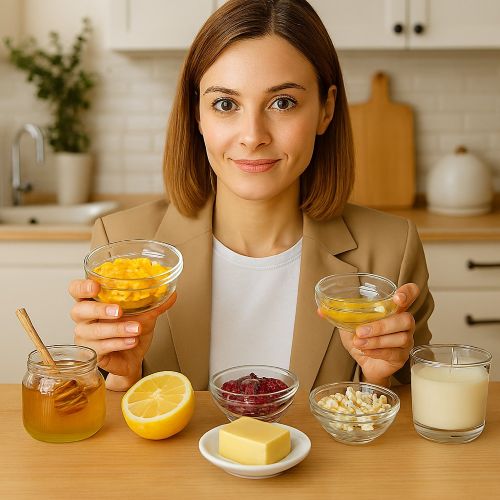 Waxes are the unsung heroes of natural formulation, providing structure, stability, and a rich, protective feel in cosmetics, and acting as the essential base for natural candles. From the barrier-forming properties of beeswax in balms to the clean burn of soy wax in aromatherapy, understanding these ingredients is crucial for creating high-quality, effective products. When combined with natural aromatic elements like lemon peel, rose absolute, and jasmine, waxes allow you to capture and deliver potent botanical benefits and luxurious scents. Crafting your own wax-based products ensures you use only pure, non-toxic ingredients and achieve the perfect texture, a distinct advantage over many industrial counterparts. This article details the properties of common natural waxes, outlines preparation nuances, and provides three unique recipes for cosmetic balms and aromatic candles.
The Role and Properties of Natural Waxes
Natural waxes serve two primary functions: providing structural integrity to solid cosmetic products and acting as a carrier for scent in candles.
Waxes in Cosmetics (Structure and Protection)
-
Beeswax: Excellent for forming a protective, occlusive barrier on the skin, sealing in moisture. It provides the firmest texture and is ideal for lip balms and salves. Its melting point is approximately $62$-$65$ degrees Celsius.
-
Candelilla Wax: A vegan alternative to beeswax, offering high gloss and good binding properties. It creates a firmer product than beeswax, with a melting point of about $68$-$72$ degrees Celsius.
-
Carnauba Wax: Derived from the leaves of the Brazilian palm tree, this wax provides the highest hardness and gloss, often used to boost the stability of lipstick and solid perfume. Its melting point is high, around $82$-$86$ degrees Celsius.
Waxes in Candles (Scent Throw and Clean Burn)
-
Soy Wax: Highly popular for its clean, slow burn and excellent "scent throw" (ability to release fragrance). It's derived from soybean oil and melts easily, typically between $49$-$82$ degrees Celsius depending on the blend.
-
Beeswax: While offering a clean burn, it has a subtle natural scent and can sometimes be more difficult to work with for scent retention compared to soy wax.
Nuances of Preparation: Working with Waxes
Successful wax-based formulation hinges on accurate measurement, controlled heating, and proper cooling.
Nuance 1: The Melt Point Rule. Always melt waxes using the water bath (Bain-Marie) method to prevent scorching, which can ruin the texture and scent. Always heat the waxes first, as they have the highest melting points.
Nuance 2: Adding Oils and Butters. Once the wax is completely melted, add your butters (like Shea or Cocoa) and fixed oils (like Jojoba or Coconut). This ensures everything reaches a uniform temperature without overheating the oils.
Nuance 3: Incorporating Scents (The Cool-Down Phase). Fragrance oils, essential oils, and delicate absolutes (like rose or jasmine) are highly volatile and heat-sensitive. They must be added immediately after removing the mixture from the heat, when the temperature drops to between $45$ and $60$ degrees Celsius. Adding them too hot will cause them to evaporate, losing potency.
Nuance 4: The Pour Temperature. For candles and balms, pour the mixture while it's still clear and liquid, but not boiling hot. Pouring at an optimal temperature (often around $55$ to $65$ degrees Celsius) minimizes cracking and ensures a smooth, even surface.
Three Aromatic Recipes Featuring Natural Waxes
These recipes leverage natural waxes with fragrant botanicals—lemon peel, rose, and jasmine—for both cosmetic and home use.
Recipe 1: Restorative Lemon Peel Lip Balm
This balm uses beeswax for protection and lemon peel oil for a bright, invigorating scent and antioxidant boost.
-
Weigh and Melt the Wax. In a water bath, combine $10\text{g}$ of Beeswax and $30\text{g}$ of Shea Butter. Heat gently until fully melted and clear.
-
Add the Liquid Oil. Remove from heat and add $55\text{g}$ of Jojoba Oil (or Sweet Almond Oil). Stir to combine and monitor the temperature.
-
Incorporate the Scent and Vitamin E. When the mixture cools slightly (around $50$ degrees Celsius), add $4\text{g}$ of Lemon Essential Oil (ensure it is non-phototoxic lemon oil) and $1\text{g}$ of Vitamin E (Tocopherol). Stir well.
-
Pour and Set. Pour the mixture immediately into clean lip balm tubes or small tins. Allow to cool completely at room temperature without disturbing them for several hours.
Recommendations for Use: Apply to lips as needed to lock in moisture and protect from the elements. Due to the presence of citrus oil, do not use a phototoxic variety before sun exposure.
Storage: Store in a cool, dark place. Shelf life is up to 1 year.
Recipe 2: Solid Rose Perfume Balm
This luxurious solid perfume uses a blend of waxes for firm texture and delicate rose absolute for a rich, long-lasting floral scent.
-
Weigh and Melt Waxes. In a water bath, combine $15\text{g}$ of Candelilla Wax and $5\text{g}$ of Carnauba Wax. Heat gently until fully melted.
-
Add Carrier Oil. Remove from heat and add $75\text{g}$ of Fractionated Coconut Oil (liquid at room temp) and stir until the temperature drops slightly.
-
Introduce the Rose Scent. When the temperature is approximately $55$ degrees Celsius, add $5\text{g}$ of high-quality Rose Absolute (diluted in a carrier oil or pure). The amount may vary based on the concentration of your absolute. Stir very gently to incorporate.
-
Pour and Cool. Pour the liquid balm into small, decorative jars or empty compacts. Allow to set for at least 6 hours.
Recommendations for Use: Rub a fingertip lightly over the balm and apply to pulse points (wrists, neck, behind ears). The solid balm provides a subtle, personal fragrance that lasts longer than spray perfumes.
Storage: Store in a cool, stable temperature environment. Shelf life is up to 1 year.
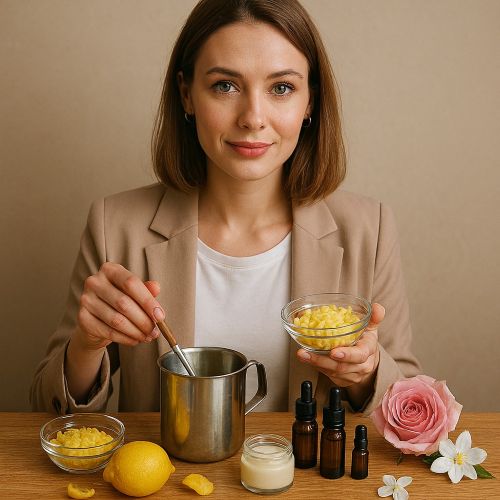
Recipe 3: Aromatic Soy Candle with Jasmine and Citrus
This recipe uses soy wax for a clean burn and excellent scent throw, perfect for filling a room with the exotic aroma of jasmine.
-
Prepare the Wicks. Secure your pre-waxed cotton wick to the bottom of the clean glass container using wick glue or a small piece of melted wax. Center the wick using a clip or pencil.
-
Melt the Soy Wax. In a water bath, gently melt $200\text{g}$ of Soy Wax flakes until fully liquid (around $75$ degrees Celsius).
-
Cool and Add Fragrance. Remove the melted wax from the heat and allow it to cool to the fragrance oil flashpoint temperature or below (typically between $55$ and $65$ degrees Celsius). Add $10\text{g}$ of high-quality Jasmine Fragrance Oil or Jasmine essential oil blend. Stir slowly for 2 minutes to ensure the oil binds to the wax.
-
Pour the Candle. Slowly and steadily pour the scented wax into the prepared container. Do not pour too fast, as this can create air bubbles.
-
Cure. Allow the candle to cool and solidify completely at room temperature for $24$ hours before trimming the wick. The candle should then cure for $1$-$2$ weeks before the first burn for the best scent throw.
Recommendations for Use: Trim the wick to $5$ millimeters before each burn. Allow the first burn to reach the edge of the container to prevent tunneling.
Storage: Store away from direct sunlight and dust. Shelf life is indefinite if stored correctly.
Advantages Over Industrial Wax Products
Choosing to make your own wax-based cosmetics and candles offers significant superiority over mass-produced items.
-
Purity and Non-Toxicity (Candles). Many industrial candles use paraffin wax, a petroleum byproduct that releases toxic soot and potential carcinogens. By using $100\%$ soy, beeswax, or coconut wax, you ensure a clean, non-toxic burn, which is vital for indoor air quality.
-
Control Over Scent Source and Concentration. Commercial products often rely on synthetic fragrances (parfum) and phthalates. Homemade products allow you to use pure essential oils, absolutes (rose, jasmine), or natural fragrance oils. You control the concentration, ensuring a potent but safe scent profile.
-
Tailored Texture (Cosmetics). Industrial balms may use mineral oil or cheap petroleum jelly. By blending specific natural waxes (beeswax for firmness, carnauba for hardness), you can precisely customize the texture of your lip balm or salve to be firm, creamy, or slick, perfectly suited to your preference.
-
Elimination of Filler Ingredients. Homemade formulations typically contain only the wax, natural butters, liquid oils, and scent. You eliminate unnecessary colorants, chemical stabilizers, and artificial preservatives found in many store-bought products.
By working with natural waxes, you step into a world of crafting that is pure, customizable, and vastly superior in quality and therapeutic benefit to anything found on the mass market.


Cosmetic ingredients and professional formulation blog
This section features expert materials on modern cosmetic actives. We cover peptides, polynucleotides PDRN, different forms of hyaluronic acid, retinoids, ceramides and other key components.
Special focus is given to active stability, ingredient compatibility and correct incorporation into formulas. You will find practical guides on working with anti-age actives, moisturizing complexes and barrier repair ingredients.
We examine how to properly combine myorelaxants with peptides, common mistakes when using unstable vitamin C forms and ways to improve the performance of moisturizing actives.
Separate materials are dedicated to base oils, extracts, emulsifiers and supporting ingredients. This helps create stable and effective formulas for both professional and home cosmetics.
The blog regularly publishes reviews of trending actives, comparisons of similar ingredients and step-by-step formulation recommendations. The content is aimed at formulators, technologists and anyone seriously involved in creating cosmetic products.
Why this blog is useful
Here you will find practical data on eye area care actives, lifting systems and ingredients that improve skin firmness and tone. We rely on real formulation experience and address the actual challenges that arise during product development.
You can also explore materials on skin protection and repair, depigmentation and anti-inflammatory actives. This approach supports a more systematic selection of ingredients.
FAQ
What topics are covered most often
The blog focuses on peptides, PDRN, hyaluronic acid of different molecular weights, retinoids, ceramides and their compatibility rules.
Are there practical recommendations on how to incorporate actives
Yes, most articles include practical notes on pH stability, incorporation temperature and common formulation mistakes.
Is the content only for professionals
The materials are useful both for formulators and technologists and for those who create cosmetics for personal use and want to understand how modern ingredients work.
Where can I go directly to the ingredients
All key actives are collected in the Actives section, while base components are available in base oils and related categories.



