-
 DIY: Video master classes
-
 Aromatherapy
-
 Felting master classes
-
 Eating at home
-
 DIY cosmetics for children
-
 Cooking recipes
-
 Detergents, cleaning products with your own hands
-
 Soap making as a business
-
 Natural cosmetics. Raw materials for cosmetics and soap.
-
 Natural oils in cosmetics
-
 News
News
-
 Recipes for balms and conditioners
-
 Bath Bomb Recipes
-
 Cream recipes. Cream making.
-
 Lotion recipes. Gel recipes.
-
 Mask recipes
-
 Soap recipes. Base soap. Soap from scratch.
-
 Recipes for all occasions
-
 Natural shampoo recipes
-
 Healthy Nutrition Recipes
-
 Scrub recipes. Massage tiles. Ubtan
-
 DIY candles
-
 Reference materials, questions, tips
-
 Startup - soap production
-
 Hair care. Tips, recipes
-
 Facial skin care. Cleansers.
-
 Body care. Tips, recipes
-
 Photo Reviews
-
 Chocolate Handmade


Trending assets for anti-aging formulations
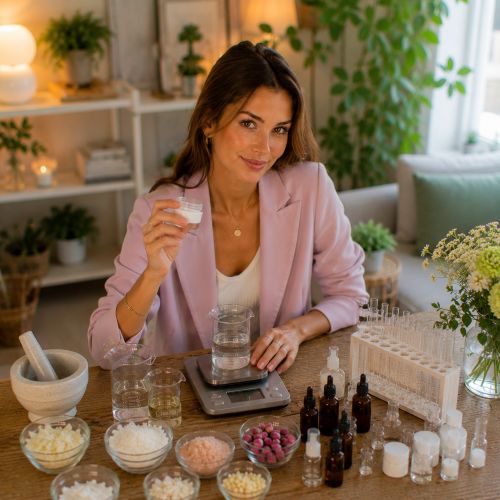 The global skincare landscape is undergoing a profound paradigm shift. Consumers are moving away from superficial beauty fixes and demanding scientifically backed, cellular-level transformations. Modern anti-aging formulations no longer rely on heavy, occlusive creams that simply trap moisture on the surface. Instead, the focus has shifted to advanced, bio-intelligent active ingredients that directly communicate with skin cells, stimulate collagen production, accelerate cellular turnover, and repair environmental damage at a structural level.
Among the most celebrated and researched ingredients in contemporary anti-aging chemistry are bakuchiol, copper peptides, resveratrol, and niacinamide. Bakuchiol, a plant-derived alternative to retinol, delivers all the collagen-boosting and skin-smoothing benefits of traditional retinoids without triggering redness, flaking, or photosensitivity. Copper peptides act as natural tissue-remodeling agents, signaling the skin to repair itself, tighten the dermal matrix, and smooth deep wrinkles. Resveratrol, a potent antioxidant polyphenol, neutralizes destructive free radicals and protects cellular DNA from UV-induced aging, while niacinamide strengthens the skin barrier, refines texture, and fades hyperpigmentation.
Why Custom Anti-Aging Formulations Outperform Mass Market Products
Commercial anti-aging creams frequently fall short of expectations, primarily due to the economics of industrial manufacturing. To maximize profit margins, mass-market brands often include premium active ingredients like peptides or botanical antioxidants at microscopic, symbolic percentages simply to claim them on the label. Furthermore, industrial cosmetics must remain shelf-stable for several years in unpredictable temperatures, which requires the addition of aggressive synthetic stabilizers, heavy silicones, mineral oils, and strong chemical preservatives. These additives can congest the pores, disrupt the delicate skin microbiome, and impede natural cellular respiration.
Handcrafting your own anti-aging formulations allows you to bypass these industrial limitations entirely. By sourcing pure, cosmetic-grade active ingredients, you can formulate your creams and serums at the maximum recommended therapeutic dosages for real, clinical results. Instead of using cheap synthetic fillers, artisan formulations are built on a foundation of organic flower hydrosols, botanical extracts, and cold-pressed plant oils that carry their own rich profiles of vitamins and essential fatty acids. This results in a highly bioavailable, fresh, and active cosmetic product that works in perfect harmony with your skin.
Technical Nuances of Handling Heat-Sensitive Actives in Home Formulations
Formulating high-performance anti-aging cosmetics requires a precise understanding of ingredient chemistry and strict temperature management. Many of the most powerful anti-aging actives, including peptides, proteins, vitamins, and certain plant extracts, are highly delicate and heat-sensitive. Exposing these ingredients to high temperatures during the mixing process will cause them to undergo thermal degradation, breaking their molecular bonds and rendering them completely inactive.
To preserve the biological potency of your ingredients, you must utilize a cold-phase blending method. While base emulsifiers and heavy natural waxes must be heated to melt and combine into a stable emulsion, all active ingredients must be withheld during the initial heating phase. Actives, heat-sensitive oils, and natural preservatives are introduced exclusively during the cooling stage, once the base emulsion has dropped below forty degrees Celsius. Additionally, the acidity of the finished formula must be carefully balanced. Most anti-aging actives perform best within a narrow physiological pH range of five to five and a half, which supports the skin’s natural acid mantle and maintains the stability of the active molecules.
Sanitation Standards and Laboratory Hygiene for Handmade Cosmetics
Because handmade anti-aging formulations rely on gentle, eco-certified preservative systems and contain rich botanical nutrients, maintaining a sterile preparation environment is absolutely critical. Without the harsh synthetic biocides used in mass-market manufacturing, your custom products are vulnerable to microbial contamination from mold, yeast, and bacteria, which can spoil the formula and cause adverse skin reactions.
Before beginning any formulation work, thoroughly sanitize your entire work surface with an antiseptic spray, wash your hands to the elbows with antibacterial soap, and put on clean nitrile gloves. Every tool used in the process—including heat-safe glass beakers, digital scale plates, stainless steel mini whisks, glass stirring rods, and final storage bottles—must be heavily misted with a seventy percent solution of isopropyl alcohol. Allow all instruments to air-dry completely on fresh paper towels. Never wipe your equipment with cloth towels, as they harbor hidden lint, dust, and micro-particles that can contaminate your batch.
Recipe First The Bakuchiol and Squalane Youth Restoring Facial Oil
A luxurious, non-greasy evening face oil designed to accelerate cellular regeneration, smooth out fine lines, and deeply nourish dry or mature skin textures.
Composition Thirty milliliters organic plant derived squalane Ten milliliters cold pressed jojoba seed oil Seven milliliters unrefined rosehip seed oil Two milliliters pure botanical bakuchiol oil One milliliter natural vitamin e tocopherol
Preparation Step first Sanitize your glass mixing beaker, glass stirring rod, and a dark amber glass bottle with a dropper cap using your isopropyl alcohol spray. Step second Measure the organic plant-derived squalane into your sanitized glass beaker to establish a lightweight, highly penetrative base. Step third Add the cold-pressed jojoba seed oil and unrefined rosehip seed oil to the beaker, stirring gently to combine the natural lipids. Step fourth Introduce the pure botanical bakuchiol oil into the oil mixture at room temperature, blending slowly with your glass stirring rod. Step fifth Add the natural vitamin e tocopherol, which protects both your skin cells and the delicate plant oils from oxidative rancidity. Step sixth Stir the entire formulation continuously for two minutes to ensure an absolutely uniform distribution of the active bakuchiol. Step seventh Carefully decant the finished facial oil into your sanitized dark amber glass bottle and seal the dropper cap tightly.
Recipe Second The Copper Peptide and Centella Restructuring Cream
A restorative, lightweight emulsion that targets deep wrinkles, boosts natural collagen synthesis, and strengthens fragile skin barriers.
Composition Thirty-three milliliters organic cornflower hydrosol Seven milliliters cold pressed macadamia nut oil Four grams plant derived olive emulsifying wax Three milliliters concentrated centella asiatica extract Two milliliters liquid copper tripeptide one solution One milliliter liquid eco certified preservative
Preparation Step first Disinfect your digital scale, two heat-safe glass beakers, a mini whisk, and a clean airless pump bottle with isopropyl alcohol. Step second In your first glass beaker, combine the organic cornflower hydrosol and concentrated centella asiatica extract to create the water phase. Step third In your second glass beaker, combine the cold-pressed macadamia nut oil and the plant-derived olive emulsifying wax to create the oil phase. Step fourth Place both beakers into a gentle water bath, heating them just enough to melt the emulsifying wax completely into the macadamia oil. Step fifth Remove both beakers from the heat and slowly pour the water phase into the oil phase while whisking rapidly with your mini whisk until a smooth, white emulsion forms. Step sixth Allow the emulsion to cool naturally to room temperature, stirring occasionally with a glass rod to keep the texture smooth and consistent. Step seventh Once the cream is completely cool, gently stir in the liquid copper tripeptide one solution and the liquid eco-certified preservative, then transfer the pale blue cream into your airless pump bottle.
Recipe Third The Resveratrol and Niacinamide Antioxidant Defense Fluid
An ultra-lightweight, oil-free daily fluid designed to neutralize environmental free radicals, brighten uneven skin tone, and refine pore structure.
Composition Thirty-eight milliliters organic linden flower hydrosol Five milliliters fresh organic aloe vera inner leaf juice Two grams pure niacinamide vitamin b3 powder Two milliliters active liquid resveratrol extract One gram natural konjac mannan gelling powder One milliliter mild water soluble preservative
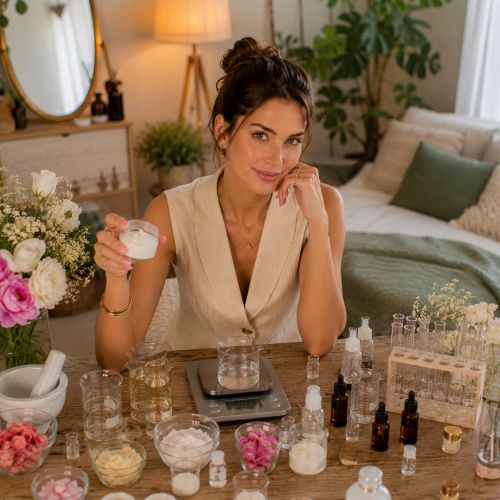
Preparation Step first Sanitize your mixing beakers, a stainless steel mini whisk, and an airless glass pump dispenser with your alcohol spray. Step second Pour the organic linden flower hydrosol and fresh organic aloe vera inner leaf juice into your main glass beaker. Step third Add the pure niacinamide vitamin b3 powder to the liquid and stir with your glass rod until the white powder is completely dissolved. Step fourth Slowly sprinkle the natural konjac mannan gelling powder over the surface of the liquid while whisking rapidly to prevent any clumping. Step fifth Allow the mixture to sit undisturbed for twenty minutes as the botanical sugars hydrate fully into a smooth, elegant hydro-gel base. Step sixth Add the active liquid resveratrol extract and the mild water-soluble preservative to the room-temperature gel, stirring gently to incorporate. Step seventh Give the completed antioxidant fluid a final, thorough mix with your whisk, then carefully pour the serum into your airless pump bottle.
Professional Application Guidelines for Active Anti-Aging Skincare
To achieve the best possible results from your handcrafted anti-aging formulations, you must apply them systematically and correctly. Active ingredients require consistent, daily application to build up their concentrations within the skin layers, with the first significant structural improvements usually appearing after four weeks of continuous use. Always begin your routine by thoroughly cleansing your face with a gentle, non-stripping cleanser to remove environmental pollutants, makeup, and excess sebum that could block the absorption of your actives.
The lightweight resveratrol and niacinamide fluid should be applied in the morning to protect the skin from daytime environmental aggressors. Dispense two pumps of the fluid onto your fingertips and pat it gently into your face and neck, avoiding any harsh rubbing. Follow with the copper peptide and centella cream to seal in hydration. The bakuchiol facial oil is best reserved for your evening routine, as nighttime is when the skin undergoes its natural cellular repair cycle. Warm three drops of the oil between your palms and gently press them into your skin as the final step of your nighttime regimen.
Storage Protocols and Preservation Tips for Fresh Artisan Skincare
Because handmade anti-aging products are formulated with gentle, nature-identical preservatives and omit heavy industrial stabilizers, they require proper environmental care to stay fresh and potent. Storing your active creams and oils on an open shelf in a warm, humid bathroom is highly discouraged. The frequent temperature shifts and moisture from hot showers will accelerate the degradation of delicate peptide chains, oxidize plant oils, and compromise the preservative system.
The ideal storage location for your custom formulations is on a middle shelf inside your refrigerator or in a dedicated beauty fridge kept at a cool, constant temperature. The cool climate slows down molecular movement, which prevents the active ingredients from breaking down and significantly extends the shelf life of your products. Keeping your formulas cold also provides an immediate soothing, anti-inflammatory, and de-puffing effect upon application. If you are using a cosmetic jar for your creams, always use a clean, sanitized plastic spatula rather than your fingers to scoop out the product. Under these sterile, refrigerated conditions, your custom anti-aging formulations will remain stable, potent, and safe to use for up to four months.


Cosmetic ingredients and professional formulation blog
This section features expert materials on modern cosmetic actives. We cover peptides, polynucleotides PDRN, different forms of hyaluronic acid, retinoids, ceramides and other key components.
Special focus is given to active stability, ingredient compatibility and correct incorporation into formulas. You will find practical guides on working with anti-age actives, moisturizing complexes and barrier repair ingredients.
We examine how to properly combine myorelaxants with peptides, common mistakes when using unstable vitamin C forms and ways to improve the performance of moisturizing actives.
Separate materials are dedicated to base oils, extracts, emulsifiers and supporting ingredients. This helps create stable and effective formulas for both professional and home cosmetics.
The blog regularly publishes reviews of trending actives, comparisons of similar ingredients and step-by-step formulation recommendations. The content is aimed at formulators, technologists and anyone seriously involved in creating cosmetic products.
Why this blog is useful
Here you will find practical data on eye area care actives, lifting systems and ingredients that improve skin firmness and tone. We rely on real formulation experience and address the actual challenges that arise during product development.
You can also explore materials on skin protection and repair, depigmentation and anti-inflammatory actives. This approach supports a more systematic selection of ingredients.
FAQ
What topics are covered most often
The blog focuses on peptides, PDRN, hyaluronic acid of different molecular weights, retinoids, ceramides and their compatibility rules.
Are there practical recommendations on how to incorporate actives
Yes, most articles include practical notes on pH stability, incorporation temperature and common formulation mistakes.
Is the content only for professionals
The materials are useful both for formulators and technologists and for those who create cosmetics for personal use and want to understand how modern ingredients work.
Where can I go directly to the ingredients
All key actives are collected in the Actives section, while base components are available in base oils and related categories.