-
 DIY: Video master classes
-
 Aromatherapy
-
 Felting master classes
-
 Eating at home
-
 DIY cosmetics for children
-
 Cooking recipes
-
 Detergents, cleaning products with your own hands
-
 Soap making as a business
-
 Natural cosmetics. Raw materials for cosmetics and soap.
-
 Natural oils in cosmetics
-
 News
-
 Recipes for balms and conditioners
-
 Bath Bomb Recipes
-
 Cream recipes. Cream making.
-
 Lotion recipes. Gel recipes.
-
 Mask recipes
-
 Soap recipes. Base soap. Soap from scratch.
-
 Recipes for all occasions
-
 Natural shampoo recipes
-
 Healthy Nutrition Recipes
-
 Scrub recipes. Massage tiles. Ubtan
-
 DIY candles
-
 Reference materials, questions, tips
-
 Startup - soap production
-
 Hair care. Tips, recipes
-
 Facial skin care. Cleansers.
-
 Body care. Tips, recipes
-
 Photo Reviews
-
 Chocolate Handmade


Vitamin C and Peptide Serums: How to Combine Antioxidant and Anti-Aging Care: Formula Recipe
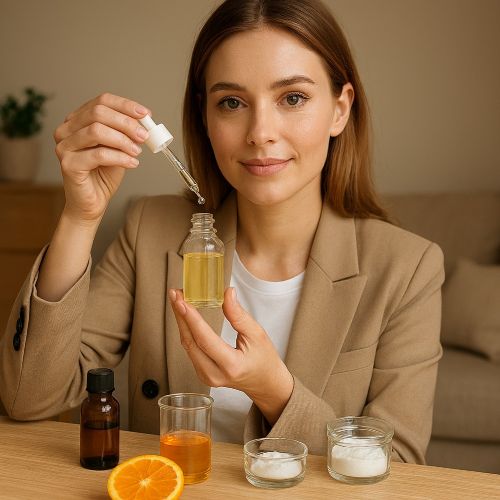 Combining two of the most powerful anti-aging ingredients—Vitamin C the ultimate antioxidant and Peptides the cellular messengers—can unlock unparalleled skin rejuvenation. However combining these actives requires careful formulation. Vitamin C particularly its highly active L-Ascorbic Acid form is notoriously unstable and certain peptides can degrade under acidic conditions.
This in-depth guide explains the scientific compatibility between these two superstars details the nuances of creating three stable and highly effective DIY serums and outlines the superior benefits of homemade formulas over costly commercial products. Optimized for maximum indexing and mobile readability this article is your guide to crafting the ultimate dual-action skincare.
The Synergy of Vitamin C and Peptides
Vitamin C and peptides target different aspects of skin aging but their functions complement each other perfectly providing comprehensive anti-aging defense.
The Dual-Action Benefit
-
Vitamin C (Antioxidant Protection): As a potent antioxidant Vitamin C neutralizes free radicals caused by UV exposure and pollution protecting the skin's collagen and DNA. It also brightens the skin by inhibiting melanin production and is essential for collagen synthesis.
-
Peptides (Structural Repair): Peptides are signaling molecules that instruct the skin to repair itself. They promote the production of collagen and elastin improve firmness and reduce the appearance of fine lines and wrinkles.
Compatibility Nuances The Key to Stability
The secret to a successful dual-active serum lies in choosing the correct forms:
-
1 Choosing Stable Vitamin C: Highly acidic L-Ascorbic Acid LAA is often too harsh and destabilizing for most peptides. We recommend using stable Vitamin C derivatives such as Magnesium Ascorbyl Phosphate MAP or Sodium Ascorbyl Phosphate SAP which are water-soluble stable at higher pH levels and highly effective.
-
2 Choosing Compatible Peptides: Signal peptides like Matrixyl or moisturizing peptides are generally stable and effective at the neutral to slightly acidic pH range (55-70) where MAP and SAP are most effective.
Recipe 1 The Brightening Dual-Action Serum (MAP Base)
This formula uses the stable derivative Magnesium Ascorbyl Phosphate MAP for effective brightening and collagen boosting paired with Matrixyl.
Ingredients Needed
-
1 Magnesium Ascorbyl Phosphate MAP powder 3 grams (6% concentration)
-
2 Matrixyl 3000 solution Palmitoyl Tripeptide-1 and Tetrapeptide-7 5 ml
-
3 Hydrating Base Distilled Water or Rose Hydrosol 40 ml
-
4 Humectant Vegetable Glycerin or Propanediol 5 ml
-
5 Preservative such as Liquid Germall Plus 05 grams
Preparation Nuances
-
pH Balance: MAP is effective at a slightly higher pH than LAA typically between 60 and 70 which is ideal for peptide stability.
-
Dissolving Powder: MAP powder must be completely dissolved in the water phase before adding other ingredients.
Step-by-Step Instructions
-
Step one In a sterilized beaker combine the Distilled Water (40 ml) and the Humectant (5 ml).
-
Step two Slowly add the MAP powder (3 grams) to the water-humectant mixture stirring continuously until it is completely dissolved and the solution is clear.
-
Step three Check the pH if necessary it should be close to 65.
-
Step four Add the Matrixyl 3000 solution (5 ml) and stir gently to avoid incorporating air bubbles.
-
Step five Add the crucial Preservative (05 grams) and stir for at least two minutes until fully dispersed.
-
Step six Transfer the serum into an opaque airless pump bottle to protect the actives from light and oxygen.
Recipe 2 The Anti-Acne and Firming Serum (SAP Base)
Using Sodium Ascorbyl Phosphate SAP this formula targets both blemishes and signs of aging making it perfect for adult acne.
Ingredients Needed
-
1 Sodium Ascorbyl Phosphate SAP powder 5 grams (10% concentration)
-
2 Argireline Acetyl Hexapeptide-8 solution (for expression lines) 5 ml
-
3 Base Liquid Distilled Water 40 ml
-
4 Soothing Agent Aloe Vera Juice not Gel 5 ml
-
5 Preservative 05 grams
Preparation Nuances
-
SAP Solubility: SAP dissolves easily in water. It is known for its stability and effectiveness against acne bacteria.
-
Argireline Stability: Argireline is water-soluble and stable in the target pH range of SAP (around 60-70).
Step-by-Step Instructions
-
Step one Measure the Distilled Water (40 ml) and Aloe Vera Juice (5 ml) into a sanitized beaker.
-
Step two Add the SAP powder (5 grams) and stir slowly until it is fully dissolved.
-
Step three Add the Argireline solution (5 ml) which will help relax expression lines. Mix gently.
-
Step four Incorporate the Preservative (05 grams) stirring until the mixture is completely uniform.
-
Step five Decant the finished anti-acne firming serum into a sterilized dark glass container.
Recipe 3 The Powder-Free Anti-Aging Blend
A simple recipe using liquid pre-dissolved Vitamin C and moisturizing peptides perfect for beginners.
Ingredients Needed
-
1 Pre-Dissolved MAP Solution 10% concentration 20 ml
-
2 Moisturizing Peptide Dipeptide-2 or Palmitoyl Oligopeptide 5 ml
-
3 Hyaluronic Acid 1% solution 20 ml
-
4 Distilled Water 5 ml
-
5 Preservative 05 grams
Step-by-Step Instructions
-
Step one Combine the Hyaluronic Acid solution (20 ml) and Distilled Water (5 ml) in the mixing vessel.
-
Step two Add the Pre-Dissolved MAP Solution (20 ml) and mix gently until fully integrated.
-
Step three Introduce the Moisturizing Peptide solution (5 ml). This peptide helps with puffiness and deep hydration.
-
Step four Add the Preservative (05 grams) ensuring it is thoroughly mixed.
-
Step five Store the serum in a cool dark environment or the refrigerator.
Detailed Recommendations for Use and Storage
Usage Guide
-
Application: Apply the serum once daily in the morning after cleansing and toning. The antioxidant protection of Vitamin C is highly beneficial during the day.
-
Layering: Apply a few drops to the face neck and chest. Allow the serum to fully absorb (60 seconds) before applying moisturizer and critically a broad-spectrum SPF.
-
Pairing: This serum already provides antioxidant and peptide benefits. You may follow up with a pure oil or a simple moisturizer without conflicting active ingredients.
Storage and Shelf Life
-
Container: Stability is paramount. Always store the finished serum in airless opaque pump bottles or dark amber glass bottles to shield the actives from light and air exposure.
-
Temperature: Store the serum in a cool dark place or preferably the refrigerator (4-8°C). This significantly slows down the degradation of both the Vitamin C derivatives and the peptides maximizing potency.
-
Shelf Life: Even with stable derivatives and preservatives a homemade serum should be used within 2-3 months of preparation. Discard immediately if you notice cloudiness discoloration or a change in smell.
-
pH Monitoring: Although MAP and SAP are stable periodically monitor the serum's pH with strips. If the pH drops significantly the serum may be degrading.
Advantages Over Industrial Analogs
Making your own Vitamin C and Peptide serum provides compelling advantages over commercial brands:
-
Guaranteed Compatibility and Stability: Many commercial "C & Peptide" products use unstable LAA which degrades quickly. By using stable derivatives (MAP or SAP) at a controlled pH you guarantee the efficacy and safety of both actives.
-
Targeted Concentration: Commercial formulas often underdose expensive peptides or use low concentrations of Vitamin C. You can ensure your serum contains the optimal therapeutic concentrations (e.g. 6% MAP or 10% SAP) required for visible results.
-
Purity of Ingredients: You eliminate the need for cheap fillers synthetic fragrances parabens and unnecessary emulsifiers commonly found in mass-market products ensuring a cleaner formula specifically suited for sensitive skin.
-
Cost Efficiency: While the raw ingredients require an initial investment the cost per milliliter of a high-potency DIY serum is dramatically lower than a luxury serum offering comparable concentrations.
By crafting this dual-action formula you achieve customized professional-grade skincare that targets oxidation structural damage and aging simultaneously.


Cosmetic ingredients and professional formulation blog
This section features expert materials on modern cosmetic actives. We cover peptides, polynucleotides PDRN, different forms of hyaluronic acid, retinoids, ceramides and other key components.
Special focus is given to active stability, ingredient compatibility and correct incorporation into formulas. You will find practical guides on working with anti-age actives, moisturizing complexes and barrier repair ingredients.
We examine how to properly combine myorelaxants with peptides, common mistakes when using unstable vitamin C forms and ways to improve the performance of moisturizing actives.
Separate materials are dedicated to base oils, extracts, emulsifiers and supporting ingredients. This helps create stable and effective formulas for both professional and home cosmetics.
The blog regularly publishes reviews of trending actives, comparisons of similar ingredients and step-by-step formulation recommendations. The content is aimed at formulators, technologists and anyone seriously involved in creating cosmetic products.
Why this blog is useful
Here you will find practical data on eye area care actives, lifting systems and ingredients that improve skin firmness and tone. We rely on real formulation experience and address the actual challenges that arise during product development.
You can also explore materials on skin protection and repair, depigmentation and anti-inflammatory actives. This approach supports a more systematic selection of ingredients.
FAQ
What topics are covered most often
The blog focuses on peptides, PDRN, hyaluronic acid of different molecular weights, retinoids, ceramides and their compatibility rules.
Are there practical recommendations on how to incorporate actives
Yes, most articles include practical notes on pH stability, incorporation temperature and common formulation mistakes.
Is the content only for professionals
The materials are useful both for formulators and technologists and for those who create cosmetics for personal use and want to understand how modern ingredients work.
Where can I go directly to the ingredients
All key actives are collected in the Actives section, while base components are available in base oils and related categories.



