-
 DIY: Video master classes
-
 Aromatherapy
-
 Felting master classes
-
 Eating at home
-
 DIY cosmetics for children
-
 Cooking recipes
-
 Detergents, cleaning products with your own hands
-
 Soap making as a business
-
 Natural cosmetics. Raw materials for cosmetics and soap.
-
 Natural oils in cosmetics
-
 News
-
 Recipes for balms and conditioners
-
 Bath Bomb Recipes
-
 Cream recipes. Cream making.
-
 Lotion recipes. Gel recipes.
-
 Mask recipes
-
 Soap recipes. Base soap. Soap from scratch.
-
 Recipes for all occasions
-
 Natural shampoo recipes
-
 Healthy Nutrition Recipes
-
 Scrub recipes. Massage tiles. Ubtan
-
 DIY candles
-
 Reference materials, questions, tips
-
 Startup - soap production
-
 Hair care. Tips, recipes
-
 Facial skin care. Cleansers.
-
 Body care. Tips, recipes
-
 Photo Reviews
-
 Chocolate Handmade


Home SPA treatments: scrubs, masks, and oils with peptides and extracts for comprehensive care
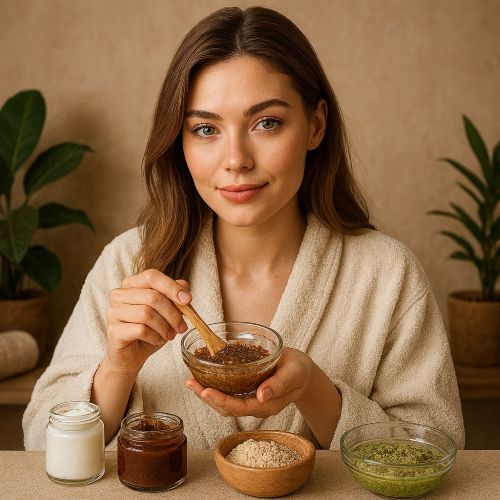 The desire for flawless, youthful skin often leads us down the path of expensive, store-bought products. However, the true secret to comprehensive skincare lies in customized home formulations. By crafting your own scrubs, masks, and oils, you gain complete control over ingredient concentration and quality, allowing you to create treatments far superior to their industrial counterparts.
This guide explores the art of combining powerful peptides and potent botanical extracts in your home spa routine, focusing on three essential care steps: exfoliation, intensive masking, and deep nourishment.
The Science Behind the Ingredients: Why DIY Wins
Industrial skincare products must prioritize shelf stability and low production cost, often resulting in minimal effective concentrations of expensive actives like peptides. When you formulate at home, you choose maximum efficacy.
Peptides: The Cell Communicators
Peptides are short chains of amino acids that serve as "signal molecules," instructing skin cells to perform specific functions. In spa treatments, they offer targeted benefits:
-
Signaling Peptides (e.g., Matrixyl): Used in masks and oils to promote collagen synthesis and repair the skin's extracellular matrix, reducing the appearance of wrinkles.
-
Carrier Peptides (e.g., Copper Peptides): Excellent for use in masks and post-scrub oils, as they deliver trace elements like copper that are crucial for wound healing and antioxidant defense.
Preparation Nuance: Peptides are extremely sensitive to heat and acidic environments. They must always be incorporated into the final, cooled product (under 35 degrees Celsius) to maintain their structural integrity and effectiveness.
Botanical Extracts: Potent Antioxidant Boost
Plant extracts provide vitamins, antioxidants, and anti-inflammatory properties that support peptide function.
-
Oil-Soluble Extracts (e.g., Rosemary, Calendula): Ideal for scrubs and nourishing oils, providing immediate protection against environmental stressors.
-
Water-Soluble Extracts (e.g., Green Tea, Centella Asiatica): Perfect additions to the water phase of masks for soothing, reducing redness, and enhancing hydration.
Natural Oils: Barrier Restoration and Delivery System
Oils form the backbone of excellent home spa care, replenishing the skin’s lipid barrier. Jojoba, Argan, and Rosehip oils are particularly valuable as they mimic the skin's natural sebum and are rich in vitamins A and E, making them perfect carriers for fat-soluble extracts.
Three Essential Home SPA Recipes
These recipes cover the three pillars of home spa care: gentle renewal (scrub), deep treatment (mask), and intense moisture (oil). Use precise electronic scales and sterile equipment. Percentages are for a 100-gram batch.
Recipe 1: Gentle Resurfacing Sugar Scrub with Antioxidant Extracts
This scrub gently polishes the skin while embedding it with protective oil-soluble extracts. It should be used before the mask.
Ingredients (per 100 grams):
-
Fine Cane Sugar: 50.0% / 50.0 grams
-
Emulsifying Wax (Polawax or similar): 10.0% / 10.0 grams
-
Jojoba Oil: 15.0% / 15.0 grams
-
Coconut Oil (Solid): 10.0% / 10.0 grams
-
Rosemary Extract (Oil-Soluble): 3.0% / 3.0 grams
-
Vitamin E (Tocopherol): 1.0% / 1.0 gram
-
Preservative (optional, for longevity): 1.0% / 1.0 gram
-
Essential Oil (e.g., Grapefruit) for scent: 1.0% / 1.0 gram
-
Remaining 9.0% can be additional Jojoba Oil for desired consistency.
Preparation and Nuances:
Step 1: Melt the Solid Phase. Combine the Emulsifying Wax, Coconut Oil, and Jojoba Oil in a heatproof container. Gently heat in a water bath until completely melted and uniform.
Step 2: Add Active Oils. Remove from heat and, while still warm (under 50 degrees Celsius), stir in the Rosemary Extract, Vitamin E, and Preservative. Mix thoroughly.
Step 3: Incorporate the Sugar. Once the oil mixture cools slightly (around 40 degrees Celsius), slowly add the Fine Cane Sugar. Mix gently with a spatula until the sugar is uniformly coated. Overmixing at this stage can dissolve the sugar.
Step 4: Add Essential Oil. Incorporate the chosen essential oil, ensuring the mixture is under 35 degrees Celsius. Transfer to a sterile, air-tight jar.
Advantage over Industrial: This scrub contains a high percentage of non-diluted, nourishing oils that emulsify upon contact with water (due to the emulsifying wax), rinsing cleanly without leaving a heavy, greasy residue.
Recipe 2: Intensive Hydrating Mask with Peptides and Soothing Extracts
This wash-off mask delivers deep hydration, soothes the skin, and introduces collagen-stimulating peptides.
Ingredients (per 100 grams):
-
Distilled Water: 68.0% / 68.0 grams
-
Glyceryl Stearate SE (or another non-ionic emulsifier): 5.0% / 5.0 grams
-
Shea Butter: 3.0% / 3.0 grams
-
Argan Oil: 4.0% / 4.0 grams
-
Glycerin (vegetable): 5.0% / 5.0 grams
-
Centella Asiatica Extract (Water-Soluble): 3.0% / 3.0 grams
-
Hyaluronic Acid (1% solution): 5.0% / 5.0 grams
-
Signaling Peptide (e.g., Matrixyl 3000): 3.0% / 3.0 grams
-
Preservative (e.g., Geogard): 1.0% / 1.0 gram
-
Vitamin E: 1.0% / 1.0 gram
-
Remaining 1.0% can be additional Distilled Water.
Preparation and Nuances:
Step 1: Combine Phases. Separately weigh the Water Phase (water, glycerin) and the Oil Phase (emulsifier, Shea Butter, Argan Oil).
Step 2: Heat and Emulsify. Heat both phases in a water bath to 70-75 degrees Celsius. Pour the Water Phase into the Oil Phase and blend vigorously with a mini-mixer for 3 minutes until a thick, uniform white cream forms.
Step 3: Cool Down. Transfer the mixture to a cool water bath and continue stirring until the temperature drops to 35 degrees Celsius. This is the critical stage for actives.
Step 4: Incorporate Extracts and Peptides. At 35 degrees Celsius, add the Centella Asiatica Extract, Hyaluronic Acid solution, Vitamin E, and finally, the Signaling Peptide. Mix well to ensure homogeneous dispersion.
Step 5: Preserve. Add the Preservative and mix one last time. Transfer to a sterile jar.
Advantage over Industrial: You are using a therapeutic 3% concentration of Matrixyl, an amount commercially reserved for only the most expensive "luxury" products. The mask also avoids cheap fillers, focusing purely on hydration and cell communication.
Recipe 3: Intensive Post-SPA Nourishing Oil with Copper Peptides
This oil is designed for overnight use after the scrub and mask treatment, sealing in moisture and boosting repair.
Ingredients (per 100 grams):
-
Rosehip Oil (cold-pressed): 45.0% / 45.0 grams
-
Squalane (Olive-derived): 20.0% / 20.0 grams
-
Jojoba Oil: 30.0% / 30.0 grams
-
Copper Peptide Solution (Premixed): 3.0% / 3.0 grams
-
Essential Oil (e.g., Frankincense) for skin repair: 1.0% / 1.0 gram
-
Vitamin E: 1.0% / 1.0 gram
Preparation and Nuances:
Step 1: Combine Base Oils. Measure and combine the Rosehip Oil, Squalane, Jojoba Oil, and Vitamin E in a sterile glass bottle.
Step 2: Gently Warm (Optional). If using a thick oil like coconut (not in this recipe), warm the mixture gently to about 30 degrees Celsius to ensure fluidity, but do not exceed 35 degrees Celsius.
Step 3: Add Peptides. Add the precise amount of the Copper Peptide Solution and the Essential Oil.
Step 4: Mix and Store. Close the bottle and shake gently for 30 seconds to ensure even distribution.
Advantage over Industrial: This formula provides a pure, concentrated boost of Copper Peptides in a clean, non-comedogenic base (Squalane and Jojoba). Industrial oils often contain mineral oil or synthetic silicones, which lack true nutritional value.
Recommendations for Use and Storage
Usage Guide for the Home SPA Routine
-
Exfoliate (Scrub): Use the Gentle Resurfacing Scrub on damp skin once or twice a week. Massage in circular motions for 1-2 minutes, then rinse with warm water. This prepares the skin for maximum active absorption.
-
Treat (Mask): Apply a thick layer of the Intensive Hydrating Mask immediately after rinsing the scrub. Leave on for 15-20 minutes. The freshly exfoliated skin will readily absorb the peptides and extracts. Rinse thoroughly.
-
Nourish (Oil): While the skin is still slightly damp after patting it dry, warm 3-5 drops of the Nourishing Oil in your palms and press it into the face, neck, and décolletage. This is best done in the evening to allow the Copper Peptides to work overnight.
Critical Storage and Safety Instructions
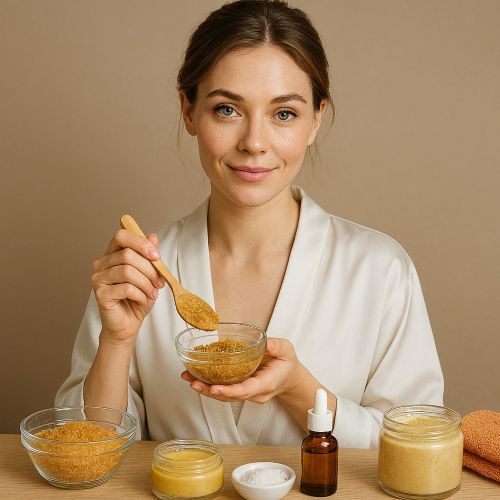
Homemade cosmetics, free of harsh synthetic stabilizers, require strict hygiene and temperature control.
-
Sterility is Non-Negotiable: Use only sterilized jars, spoons, and mixing tools. Any bacterial contamination will quickly spoil the product.
-
Temperature Control: Store the Mask and Nourishing Oil (due to the presence of peptides) in the refrigerator at 4-8 degrees Celsius to maximize shelf life and maintain peptide potency. The scrub is more stable due to the high oil content but should still be stored in a cool, dark place.
-
Shelf Life: With proper preservation and refrigeration, the typical shelf life is 2-3 months. Discard the product immediately if you notice changes in color, scent, or texture.
-
Sun Protection: Always use a broad-spectrum SPF product the morning after using intensive treatments, particularly those rich in Vitamin A (like Rosehip Oil), as skin sensitivity may increase.
Conclusion: Mastering Your Skincare Destiny
Taking charge of your skincare through home formulation transforms a simple routine into a sophisticated spa ritual. By understanding the sensitive nature of peptides and the power of botanical extracts, you can create truly unique, highly concentrated, and perfectly tailored products. This DIY approach guarantees superior performance compared to mass-produced cosmetics, ensuring your skin receives the ultimate in comprehensive, active care.


Cosmetic ingredients and professional formulation blog
This section features expert materials on modern cosmetic actives. We cover peptides, polynucleotides PDRN, different forms of hyaluronic acid, retinoids, ceramides and other key components.
Special focus is given to active stability, ingredient compatibility and correct incorporation into formulas. You will find practical guides on working with anti-age actives, moisturizing complexes and barrier repair ingredients.
We examine how to properly combine myorelaxants with peptides, common mistakes when using unstable vitamin C forms and ways to improve the performance of moisturizing actives.
Separate materials are dedicated to base oils, extracts, emulsifiers and supporting ingredients. This helps create stable and effective formulas for both professional and home cosmetics.
The blog regularly publishes reviews of trending actives, comparisons of similar ingredients and step-by-step formulation recommendations. The content is aimed at formulators, technologists and anyone seriously involved in creating cosmetic products.
Why this blog is useful
Here you will find practical data on eye area care actives, lifting systems and ingredients that improve skin firmness and tone. We rely on real formulation experience and address the actual challenges that arise during product development.
You can also explore materials on skin protection and repair, depigmentation and anti-inflammatory actives. This approach supports a more systematic selection of ingredients.
FAQ
What topics are covered most often
The blog focuses on peptides, PDRN, hyaluronic acid of different molecular weights, retinoids, ceramides and their compatibility rules.
Are there practical recommendations on how to incorporate actives
Yes, most articles include practical notes on pH stability, incorporation temperature and common formulation mistakes.
Is the content only for professionals
The materials are useful both for formulators and technologists and for those who create cosmetics for personal use and want to understand how modern ingredients work.
Where can I go directly to the ingredients
All key actives are collected in the Actives section, while base components are available in base oils and related categories.



