-
 DIY: Video master classes
-
 Aromatherapy
-
 Felting master classes
-
 Eating at home
-
 DIY cosmetics for children
-
 Cooking recipes
-
 Detergents, cleaning products with your own hands
-
 Soap making as a business
-
 Natural cosmetics. Raw materials for cosmetics and soap.
-
 Natural oils in cosmetics
-
 News
-
 Recipes for balms and conditioners
-
 Bath Bomb Recipes
-
 Cream recipes. Cream making.
-
 Lotion recipes. Gel recipes.
-
 Mask recipes
-
 Soap recipes. Base soap. Soap from scratch.
-
 Recipes for all occasions
-
 Natural shampoo recipes
-
 Healthy Nutrition Recipes
-
 Scrub recipes. Massage tiles. Ubtan
-
 DIY candles
-
 Reference materials, questions, tips
-
 Startup - soap production
-
 Hair care. Tips, recipes
-
 Facial skin care. Cleansers.
-
 Body care. Tips, recipes
-
 Photo Reviews
-
 Chocolate Handmade


Creation of creams and serums for sensitive skin
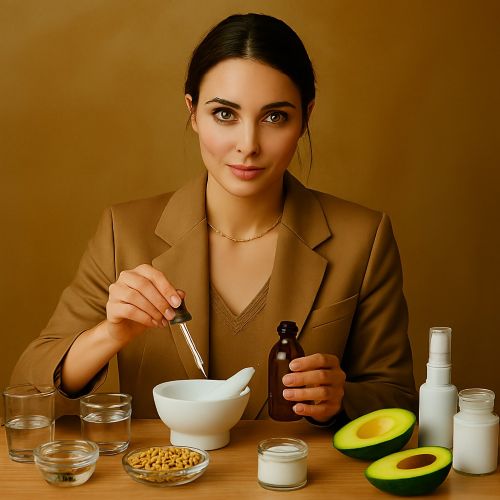 Sensitive skin is a common concern characterized by redness, itching, dryness, and a tendency to react to many commercial products. It requires a gentle, minimalist approach to skincare, focusing on calming and strengthening the skin's natural barrier. Many store-bought products for sensitive skin still contain fragrances, harsh preservatives, or other irritants that can exacerbate the problem. By creating your own creams and serums for sensitive skin, you gain complete control over the ingredients, ensuring they are pure, effective, and free from potential triggers. This article provides a comprehensive guide to understanding sensitive skin, offers three detailed recipes for a complete skincare routine, and highlights the significant advantages of homemade cosmetics over industrial alternatives.
Understanding the Needs of Sensitive Skin
Sensitive skin's primary issue is a compromised skin barrier. When this protective layer is weakened, it becomes more vulnerable to external stressors, leading to inflammation and irritation. The key to effective care is to:
-
Use soothing ingredients: Focus on ingredients with proven anti-inflammatory properties, such as chamomile, calendula, and aloe vera.
-
Avoid harsh chemicals: Steer clear of synthetic fragrances, dyes, sulfates, and parabens, which are common irritants.
-
Maintain the skin's pH: The skin's natural pH is slightly acidic (around 5.5). Using products that are too alkaline can disrupt its barrier function.
-
Keep it simple: A minimalist routine with a few highly effective products is often the best approach.
Three Recipes for a Gentle Skincare Routine
These three recipes are designed to cleanse, soothe, and moisturize sensitive skin without causing irritation.
Recipe 1: Soothing Chamomile Gel Cleanser
This gentle cleanser uses a mild surfactant to clean the skin without stripping its natural oils.
-
Prepare the water phase. In a sterilized beaker, weigh 75g of distilled water and 10g of chamomile hydrosol. The hydrosol provides a calming and anti-inflammatory base.
-
Add the surfactant. Add 10g of a very gentle, plant-derived surfactant like Decyl Glucoside. Stir very gently with a glass rod to avoid creating excessive foam.
-
Add a humectant and a soothing active. Add 4g of vegetable glycerin for light hydration and 0.5g of allantoin. Allantoin is known for its ability to soothe and protect the skin.
-
Add the preservative. Add 1g of a broad-spectrum preservative like Geogard 221. This is essential for preventing microbial growth in any water-based product.
-
Check the pH and bottle. Check the pH of the cleanser. It should be between 5.0 and 6.0. Pour the finished cleanser into a clean foaming pump bottle.
Recommendations for Use: Use a small pump in the morning and evening. Gently massage onto a wet face and rinse with lukewarm water.
Storage: Store in a cool, dark place. The shelf life is up to 3 months.
Recipe 2: Calming Lavender Toner
A toner helps to rebalance the skin's pH after cleansing and prepares it for the next steps. This formula is simple and highly effective.
-
Prepare the base. In a sterilized spray bottle, combine 95g of lavender hydrosol and 4g of panthenol (Vitamin B5). Lavender hydrosol is well-known for its calming properties, while panthenol is a powerful humectant and skin-soother.
-
Add the preservative. Add 1g of a broad-spectrum preservative like Euxyl PE 9010.
-
Shake well. Close the bottle tightly and shake well before each use.
Recommendations for Use: After cleansing, spritz the toner directly onto your face or apply with a cotton pad. Follow up with a moisturizer while the skin is still slightly damp.
Storage: Store in a cool, dark place. The shelf life is up to 6 months.
Recipe 3: Lightweight Soothing Face Cream
This cream provides essential moisture and barrier support without feeling heavy or clogging pores.
-
Prepare the water phase. In a sterilized beaker, weigh 65g of distilled water and 5g of vegetable glycerin. Heat to 70°C.
-
Prepare the oil phase. In a separate beaker, combine 10g of calendula-infused oil (known for its anti-inflammatory properties), 10g of jojoba oil (a non-comedogenic oil similar to skin's natural sebum), and 5g of a gentle emulsifying wax like Olivem 1000. Heat to 70°C.
-
Emulsify. Slowly pour the hot water phase into the hot oil phase, mixing with a hand blender in short pulses until a creamy emulsion forms. Continue mixing as the lotion cools.
-
Add a soothing active. When the cream cools below 40°C, add 4g of a colloidal oatmeal solution. Colloidal oatmeal is a powerful ingredient for soothing irritated skin.
-
Add the preservative. Add 1g of a broad-spectrum preservative. Stir well and transfer to a clean jar.
Recommendations for Use: Apply a small amount to your face and neck after toning.
Storage: Store in a cool, dark place. The shelf life is up to 3 months.
Advantages of Homemade Cosmetics Over Industrial Analogs
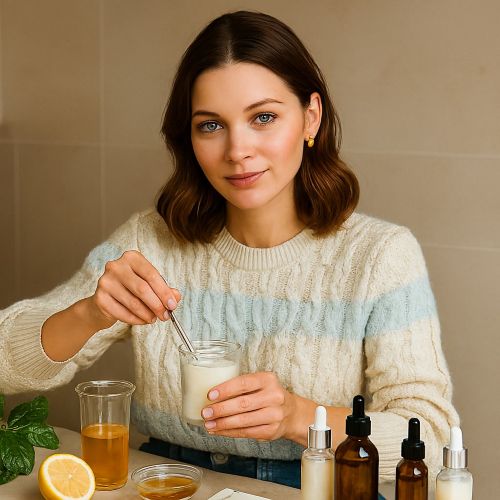
Making your own skincare for sensitive skin offers significant advantages over buying commercial products.
-
Purity and Transparency: You know exactly what goes into your product. You can avoid synthetic fragrances, dyes, and other common allergens that are often found in store-bought products, even those labeled "for sensitive skin."
-
Cost-Effectiveness: The cost of raw materials for a homemade product is a fraction of the price of a high-end, store-bought sensitive skin product.
-
Ingredient Control: You can choose the highest quality ingredients and use them at effective concentrations. For example, you can use pure hydrosols instead of diluted ones, which are often used in commercial products to cut costs.
-
Personalization: You can easily adapt these recipes to your skin's unique needs. If a specific ingredient causes a reaction, you can simply remove or replace it. This level of customization is impossible with a mass-market product.
By creating your own creams and serums, you empower yourself to provide your sensitive skin with the gentle, effective care it truly needs.


Cosmetic ingredients and professional formulation blog
This section features expert materials on modern cosmetic actives. We cover peptides, polynucleotides PDRN, different forms of hyaluronic acid, retinoids, ceramides and other key components.
Special focus is given to active stability, ingredient compatibility and correct incorporation into formulas. You will find practical guides on working with anti-age actives, moisturizing complexes and barrier repair ingredients.
We examine how to properly combine myorelaxants with peptides, common mistakes when using unstable vitamin C forms and ways to improve the performance of moisturizing actives.
Separate materials are dedicated to base oils, extracts, emulsifiers and supporting ingredients. This helps create stable and effective formulas for both professional and home cosmetics.
The blog regularly publishes reviews of trending actives, comparisons of similar ingredients and step-by-step formulation recommendations. The content is aimed at formulators, technologists and anyone seriously involved in creating cosmetic products.
Why this blog is useful
Here you will find practical data on eye area care actives, lifting systems and ingredients that improve skin firmness and tone. We rely on real formulation experience and address the actual challenges that arise during product development.
You can also explore materials on skin protection and repair, depigmentation and anti-inflammatory actives. This approach supports a more systematic selection of ingredients.
FAQ
What topics are covered most often
The blog focuses on peptides, PDRN, hyaluronic acid of different molecular weights, retinoids, ceramides and their compatibility rules.
Are there practical recommendations on how to incorporate actives
Yes, most articles include practical notes on pH stability, incorporation temperature and common formulation mistakes.
Is the content only for professionals
The materials are useful both for formulators and technologists and for those who create cosmetics for personal use and want to understand how modern ingredients work.
Where can I go directly to the ingredients
All key actives are collected in the Actives section, while base components are available in base oils and related categories.



