-
 DIY: Video master classes
-
 Aromatherapy
-
 Felting master classes
-
 Eating at home
-
 DIY cosmetics for children
-
 Cooking recipes
-
 Detergents, cleaning products with your own hands
-
 Soap making as a business
-
 Natural cosmetics. Raw materials for cosmetics and soap.
-
 Natural oils in cosmetics
-
 News
-
 Recipes for balms and conditioners
-
 Bath Bomb Recipes
-
 Cream recipes. Cream making.
-
 Lotion recipes. Gel recipes.
-
 Mask recipes
-
 Soap recipes. Base soap. Soap from scratch.
-
 Recipes for all occasions
-
 Natural shampoo recipes
-
 Healthy Nutrition Recipes
-
 Scrub recipes. Massage tiles. Ubtan
-
 DIY candles
-
 Reference materials, questions, tips
-
 Startup - soap production
-
 Hair care. Tips, recipes
-
 Facial skin care. Cleansers.
-
 Body care. Tips, recipes
-
 Photo Reviews
-
 Chocolate Handmade


Hair growth serum recipe with peptides, caffeine, and plant extracts
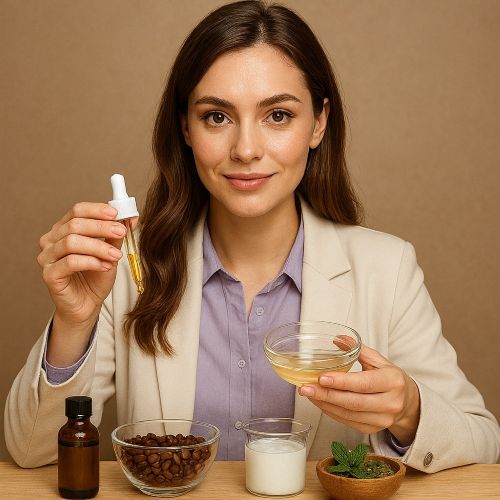 The promise of thick, strong, and fast-growing hair often comes in expensive bottles, yet many commercial hair growth serums contain minimal amounts of key actives, relying heavily on silicones and cheap fillers. The secret to an effective hair growth formula lies in the high, therapeutic concentration of ingredients like peptides, caffeine, and potent plant extracts.
Creating your own serum allows you to bypass marketing gimmicks and formulate a product with:
-
Optimal Active Concentration: You control the dosage, ensuring your serum has clinically effective levels of expensive peptides and extracts.
-
Purity and Freshness: You eliminate unnecessary preservatives, fragrances, and potential irritants, and ensure the freshness of sensitive compounds like antioxidants and extracts.
-
Targeted Action: You can customize the formula to address specific concerns, whether it's thinning edges, generalized shedding, or slow growth.
This comprehensive guide provides three unique recipes and explains the science behind combining these powerhouse ingredients for maximum hair follicle activation.
The Science of Synergistic Growth: Key Active Components
A successful hair growth serum works by addressing three critical issues: follicle miniaturization, poor circulation, and inflammation. Peptides, caffeine, and extracts work together to tackle all three.
Peptides: Signaling for Strength and Density
Peptides are short chains of amino acids that act as messengers in the scalp. For hair growth, two types are critical:
-
Copper Peptides (GHK-Cu): These are perhaps the most famous. They improve scalp health, extend the anagen (growth) phase of the hair cycle, and are known to potentially increase follicle size. They also possess strong anti-inflammatory properties.
-
Biomimetic Peptides (e.g., Capixyl or Redensyl): These sophisticated complexes stimulate the dermal papilla cells, essentially "waking up" dormant follicles and initiating a new growth cycle.
Preparation Nuance: Peptides are extremely sensitive to heat and should only be added to the serum base when the temperature is below 40 degrees Celsius. They are typically water-soluble.
Caffeine: The Circulatory Powerhouse
Caffeine is a well-established hair growth stimulant. It works by:
-
Blocking DHT: It helps counteract the effects of Dihydrotestosterone (DHT), the hormone responsible for male and female pattern baldness (androgenic alopecia).
-
Boosting Microcirculation: Caffeine increases blood flow to the scalp, ensuring that follicles receive maximum nutrients and oxygen.
-
Prolonging Anagen Phase: It supports the hair shaft's energy supply, encouraging it to stay in the growth phase longer.
Preparation Nuance: Caffeine powder (or liquid extracts) is water-soluble but requires a good solvent (like water or propandiol) and gentle heat (up to 60 degrees Celsius) to dissolve fully.
Plant Extracts: Nourishment and Anti-Inflammation
Natural extracts provide vitamins, minerals, and powerful antioxidants essential for a healthy scalp environment.
-
Rosemary Extract: Proven to be as effective as some synthetic growth compounds (like Minoxidil), it stimulates circulation and reduces inflammation.
-
Nettle (Urtica dioica) and Burdock (Arctium lappa) Extracts: These extracts are rich in vitamins and minerals, strengthening the hair shaft and roots while helping to control oiliness.
-
Ginseng Extract: Revitalizes the scalp and promotes cell proliferation.
Detailed DIY Serum Recipes (For 100g Total)
To prepare these recipes, you will need accurate digital scales, sterile equipment, and a small beaker. Serums are typically biphasic (water-based) or aqueous gels, requiring no emulsification.
Recipe 1: Intensive Copper Peptide and Caffeine Serum
This potent water-based formula targets follicle health and circulation, ideal for treating shedding.
Components:
-
Distilled Water or Rosemary Hydrosol: 80.0 grams
-
Propylene Glycol or Propanediol (solvent/humectant): 5.0 grams
-
Caffeine Powder (pure anhydrous): 2.0 grams
-
Copper Peptide (GHK-Cu solution 1%): 5.0 grams
-
Nettle Extract (liquid): 3.0 grams
-
Panthenol (Vitamin B5): 4.0 grams
-
Preservative (e.g., Geogard Ultra or Liquid Germall Plus): 1.0 gram
Preparation Nuances:
Step 1: Dissolve the Base. Combine Distilled Water/Hydrosol, Propylene Glycol, and Caffeine Powder in a sterilized beaker. Gently heat the mixture on a very low setting (around 50 degrees Celsius) while stirring until the Caffeine is completely dissolved.
Step 2: Cool Down. Remove the beaker from the heat and allow the mixture to cool to below 40 degrees Celsius. This is crucial to protect the peptides.
Step 3: Introduce the Actives. Add the Nettle Extract and Panthenol. Stir well until uniform.
Step 4: Add the Peptides and Preservative. Add the sensitive Copper Peptide solution and the Preservative (Geogard/Germall Plus). Stir very gently for one minute. Avoid creating too many bubbles.
Step 5: Storage. Transfer the final serum into a sterilized dark glass dropper bottle.
Recipe 2: Redensyl and Niacinamide Growth Stimulator
This formula uses a powerful biomimetic peptide complex, combined with Niacinamide (Vitamin B3) to strengthen the barrier and reduce inflammation.
Components:
-
Distilled Water: 80.0 grams
-
Glycerin (humectant): 3.0 grams
-
Redensyl (complex 3% recommended): 5.0 grams
-
Niacinamide (Vitamin B3): 4.0 grams
-
Rosemary Extract (liquid): 3.0 grams
-
Arginine (amino acid, helps circulation): 4.0 grams
-
Preservative: 1.0 gram
Preparation Nuances:
Step 1: Dissolve the Base. Combine Distilled Water, Glycerin, Niacinamide, and Arginine. Gently heat the mixture (around 50 degrees Celsius) to ensure the Niacinamide powder is fully dissolved.
Step 2: Cool Down. Remove from heat and cool the mixture to below 40 degrees Celsius.
Step 3: Introduce the Extracts. Add the Rosemary Extract. Stir well.
Step 4: Add the Peptides and Preservative. Add the sensitive Redensyl complex and the Preservative. Stir very gently.
Advantage over Commercial: Redensyl is often used at low concentrations in commercial products; this formula uses the recommended therapeutic dose (up to 5% of a 3% stock solution) for visible results.
Recipe 3: Overnight Oil-Based Serum for Dry Scalp
Ideal for individuals with a dry, flaky scalp who need intense nourishment alongside growth stimulation. This formula uses oil-soluble actives.
Components:
-
Jojoba Oil (carrier): 50.0 grams
-
Castor Oil (hair strengthening): 30.0 grams
-
Fractionated Coconut Oil (MCT, light carrier): 10.0 grams
-
Caffeine Oil Extract (oil-soluble): 5.0 grams
-
Coenzyme Q10 (Antioxidant, oil-soluble): 3.0 grams
-
Rosemary Essential Oil: 1.0 gram
-
Vitamin E (Tocopherol, antioxidant): 1.0 gram
Preparation Nuances:
Step 1: Combine Carrier Oils. Mix Jojoba Oil, Castor Oil, and Fractionated Coconut Oil in a sterilized beaker.
Step 2: Add Oil-Soluble Actives. Add the Caffeine Oil Extract and the Coenzyme Q10. Stir until fully dissolved and uniform. CoQ10 may require gentle warming (below 40 degrees Celsius) to mix fully, as it is a thick liquid.
Step 3: Add Essential Oils and Antioxidants. Add the Vitamin E (antioxidant to prevent oil rancidity) and Rosemary Essential Oil. Stir well.
Step 4: Storage. Pour into an opaque glass dropper bottle to protect the oils from light.
Beneficial Property: Castor oil is known for its high Ricinoleic acid content, which is believed to improve blood circulation to the scalp, enhancing the effect of the Caffeine.
Application and Storage Protocols
To maximize the efficacy and shelf life of your custom-made serum, strict protocols are necessary.
Detailed Usage Recommendations
-
Patch Test: Always apply a small amount of the serum (especially the caffeine-based ones) behind your ear or on your inner arm 24 hours before full use to check for sensitivity.
-
Application Frequency: Apply the serum once daily, preferably in the evening. Consistent, daily use is key to stimulating hair growth cycles.
-
Massage: Apply 5-10 drops directly to the scalp (parting the hair in several places). Massage gently with your fingertips for 2-3 minutes to maximize blood circulation and absorption of the actives. Do not rinse out.
-
Targeted Use: Aqueous serums (Recipes 1 and 2) can be used daily without weighing down hair. The oil-based serum (Recipe 3) is best used 2-3 times per week as a pre-shampoo treatment, applied overnight before washing.
Essential Storage Guidelines
Homemade serums lack the robust preservation systems of industrial products, making proper storage crucial.
-
Preservatives are Mandatory: Never skip the cosmetic-grade preservative (like Geogard or Liquid Germall Plus) in water-based formulas. Without it, the serum will grow mold and bacteria within days.
-
Container Choice: Always use dark, opaque glass dropper bottles. Light exposure rapidly degrades sensitive components like peptides and certain plant extracts.
-
Temperature Control: For maximum stability of peptides and Vitamin C (if used), store the serum in the refrigerator (4-8 degrees Celsius).
-
Shelf Life: With proper preservation and refrigeration, the serum's shelf life is typically 2 to 3 months. Discard immediately if you notice any change in color, smell, or consistency.
Advantages Over Industrial Analogs
Choosing a homemade serum offers clear functional and economic superiority:
-
Therapeutic Doses Guaranteed: Commercial serums often "sprinkle" expensive peptides (like Copper Peptide or Redensyl) to keep costs low. Your DIY serum uses the full, clinically recommended concentration (often 3-5% of the active ingredient), which delivers genuine results.
-
No Unnecessary Ingredients: You eliminate cheap fillers, heavy silicones, harsh alcohols, and synthetic fragrances that can irritate the scalp or block absorption.
-
Optimized pH: By controlling the formula, you ensure the pH is ideal (typically slightly acidic, 5.0-5.5) for the best absorption of actives and for scalp health, which is rarely optimized in mass-produced products.
This hands-on approach puts the power of potent, personalized hair care directly into your hands, ensuring your efforts lead to real, measurable hair growth and density.


Cosmetic ingredients and professional formulation blog
This section features expert materials on modern cosmetic actives. We cover peptides, polynucleotides PDRN, different forms of hyaluronic acid, retinoids, ceramides and other key components.
Special focus is given to active stability, ingredient compatibility and correct incorporation into formulas. You will find practical guides on working with anti-age actives, moisturizing complexes and barrier repair ingredients.
We examine how to properly combine myorelaxants with peptides, common mistakes when using unstable vitamin C forms and ways to improve the performance of moisturizing actives.
Separate materials are dedicated to base oils, extracts, emulsifiers and supporting ingredients. This helps create stable and effective formulas for both professional and home cosmetics.
The blog regularly publishes reviews of trending actives, comparisons of similar ingredients and step-by-step formulation recommendations. The content is aimed at formulators, technologists and anyone seriously involved in creating cosmetic products.
Why this blog is useful
Here you will find practical data on eye area care actives, lifting systems and ingredients that improve skin firmness and tone. We rely on real formulation experience and address the actual challenges that arise during product development.
You can also explore materials on skin protection and repair, depigmentation and anti-inflammatory actives. This approach supports a more systematic selection of ingredients.
FAQ
What topics are covered most often
The blog focuses on peptides, PDRN, hyaluronic acid of different molecular weights, retinoids, ceramides and their compatibility rules.
Are there practical recommendations on how to incorporate actives
Yes, most articles include practical notes on pH stability, incorporation temperature and common formulation mistakes.
Is the content only for professionals
The materials are useful both for formulators and technologists and for those who create cosmetics for personal use and want to understand how modern ingredients work.
Where can I go directly to the ingredients
All key actives are collected in the Actives section, while base components are available in base oils and related categories.



