-
 DIY: Video master classes
-
 Aromatherapy
-
 Felting master classes
-
 Eating at home
-
 DIY cosmetics for children
-
 Cooking recipes
-
 Detergents, cleaning products with your own hands
-
 Soap making as a business
-
 Natural cosmetics. Raw materials for cosmetics and soap.
-
 Natural oils in cosmetics
-
 News
-
 Recipes for balms and conditioners
-
 Bath Bomb Recipes
-
 Cream recipes. Cream making.
-
 Lotion recipes. Gel recipes.
-
 Mask recipes
-
 Soap recipes. Base soap. Soap from scratch.
-
 Recipes for all occasions
-
 Natural shampoo recipes
-
 Healthy Nutrition Recipes
-
 Scrub recipes. Massage tiles. Ubtan
-
 DIY candles
-
 Reference materials, questions, tips
-
 Startup - soap production
-
 Hair care. Tips, recipes
-
 Facial skin care. Cleansers.
-
 Body care. Tips, recipes
-
 Photo Reviews
-
 Chocolate Handmade


Anti-aging cream recipe with Matrixyl 3000 and ceramides
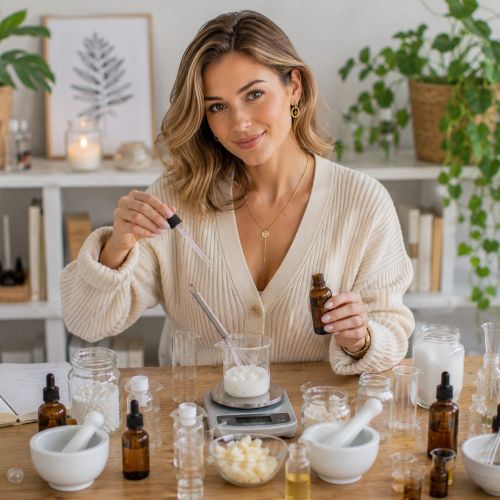 The capacity of skin to regenerate naturally slows down over time leading to the appearance of static wrinkles a loss of elasticity and chronic dryness. Modern anti aging is based on two fundamental principles stimulating the production of new collagen and immediately restoring the protective lipid layer. The synergistic combination of the signaling peptide complex Matrixyl 3000 with natural ceramides allows for the creation of a highly effective emulsion that restores cellular architecture and returns a youthful appearance to the face.
This comprehensive guide contains exhaustive information on the biological action of these ingredients the nuances of working with emulsifiers and three detailed recipes for preparing professional grade cream at home.
The Biological Role of Matrixyl 3000 and Ceramides in Skin Architecture
Matrixyl 3000 consists of two signaling peptides Palmitoyl Tripeptide-1 and Palmitoyl Tetrapeptide-7. These components work as molecular switches. When they penetrate into the deeper layers of the epidermis cells receive a signal mimicking the breakdown of natural collagen. In response to this fibroblast cells begin to work actively increasing the synthesis of type one collagen elastin and fibronectin. As a result the internal framework of the skin is restored the depth of wrinkles is reduced and the overall turgor of the face is improved.
Ceramides are the main building material of our protective barrier filling the intercellular space of the stratum corneum like cement between bricks. Without a sufficient amount of ceramides the skin begins to rapidly lose moisture becomes sensitive and experiences flaking and micro-fissures through which bacteria and allergens easily penetrate. The combination of Matrixyl 3000 with ceramides ensures a comprehensive approach where peptides rejuvenate the skin from the inside while lipids protect it from the outside preventing transepidermal water loss.
Why Handmade Anti Aging Cream Excels Over Industrial Analogs
The majority of store bought anti aging creams contain mineral oils silicones and cheap synthetic emollients. These substances create an airtight film on the surface of the face that gives an immediate effect of smoothness but actually slows down the natural processes of regeneration and disrupts cellular respiration. Creating a cream yourself allows you to replace artificial substitutes with high quality vegetable oils natural squalane and triglycerides which are identical in structure to human sebum and are physiologically embraced by the epidermis.
Another significant disadvantage of industrial cosmetics is the low dosage of active substances. Peptide complexes and pure ceramides have a very high market value so mass market brands often add them in quantities of a few tenths of a percent just for marketing confirmation on the label. In a home laboratory you have the opportunity to introduce the maximum working concentration of actives. You also completely avoid aggressive fragrances and toxic formaldehyde releasing preservatives reducing the risk of allergic reactions to zero.
Secrets of Creating a Stable Emulsion and Temperature Rules
The preparation of a high quality anti aging cream requires strict adherence to the technological process of creating a direct or lamellar emulsion. The process consists of combining water and oil phases using a special emulsifier. In order for the two phases to stably combine and not separate over a long period of time they must be heated in a water bath to approximately seventy degrees. It is very important that the temperature of both phases before mixing is absolutely identical otherwise the emulsion will immediately break down into water and oil.
The peptide complex Matrixyl 3000 is extremely sensitive to high temperatures. If introduced into a hot mass the protein bonds break down and the product loses its rejuvenating properties. Therefore peptides along with preservatives and heat sensitive lipids are introduced exclusively at the final stage of preparation into the active phase when the cream has completely cooled to room temperature. The optimal acidity level of the finished cream should be between five point five and six point zero units which is comfortable for the normal functioning of skin cells.
Recipe One Rich Night Reconstruction Cream for Mature Skin
A powerful nourishing agent to restore firmness smooth lines and provide deep cellular nutrition during sleep.
Composition Fifty milliliters rose hydrosol Five milliliters Matrixyl 3000 solution Two milliliters ceramide complex Six milliliters argan oil Four milliliters plant derived squalane Four grams olivem one thousand as an emulsifier Two milliliters konjac mannan for hydration Eco certified preservative
Preparation Step one Conduct a thorough disinfection of working surfaces glass beakers spatulas and mixers using seventy percent isopropyl alcohol. Step two In the first heat resistant beaker measure the rose hydrosol and konjac mannan to form the water phase. Step three In the second heat resistant beaker place the argan oil squalane and olivem one thousand emulsifier to form the oil phase. Step four Place both containers in a water bath and wait for the complete melting of the wax in the oil phase. Step five Remove the beakers from the bath slowly pour the water phase into the oil phase and begin to intensively blend the mixture with a cosmetic mixer until a smooth white cream forms. Step six Continue to slowly stir the emulsion with a glass rod until it naturally cools down completely to room temperature. Step seven Introduce the Matrixyl 3000 ceramide complex and eco certified preservative into the cooled base mix the product thoroughly and transfer it into a clean jar.
Recipe Two Light Protective Daytime Fluid Emulsion for All Skin Types
A weightless product that is quickly absorbed creating an ideal protective barrier and serving as an excellent base for makeup.
Composition Sixty milliliters distilled water Three milliliters peptide complex Matrixyl 3000 One point five milliliters ceramides Four milliliters jojoba oil Three milliliters caprylic capric triglycerides Three grams lightweight emulsifier xyliance Two milliliters aloe vera gel Safe broad spectrum preservative
Preparation Step one Treat all utensils and tools with an antiseptic and allow them to dry completely. Step two Combine the distilled water and aloe vera gel in one beaker and heat the mixture gently. Step three In another container mix the jojoba oil triglycerides and xyliance emulsifier heating them until melted into a clear liquid. Step four Combine both phases at an identical warm temperature and blend with a mixer for two minutes until an emulsion forms. Step five Switch to manual stirring with a spatula until the mixture cools completely to get an airy fluid texture. Step six Carefully add the active Matrixyl 3000 peptides ceramides and the amount of preservative recommended by the manufacturer. Step seven Check the pH level of the finished product to ensure it is around five point five and pour the fluid into a convenient glass bottle with a pump.
Recipe Three Intensive Soothing Cream for Very Dry and Dehydrated Skin
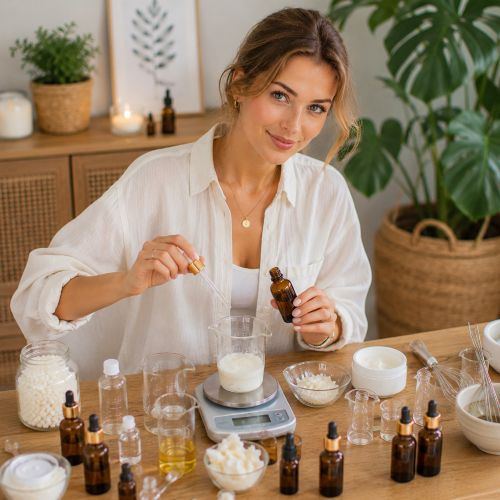
A lipid rich product that instantly eliminates flaking soothes irritation and fills out dryness lines.
Composition Forty five milliliters chamomile hydrosol Four milliliters Matrixyl 3000 solution Three milliliters full ceramide complex Seven milliliters shea and macadamia oil blend Three milliliters wheat germ oil Five grams emulsifying wax for dense textures Two milliliters d panthenol Preservative system
Preparation Step one Check the cleanliness of the instruments and prepare the beakers for the water bath. Step two Heat the chamomile hydrosol together with the d panthenol in the first chemical beaker. Step three Melt the shea butter liquid macadamia oil and wheat germ oil together with the emulsifying wax until completely transparent. Step four Pour the warm hydrosol phase into the oil phase and actively mix with a cosmetic mixer until a thick uniform mass is obtained. Step five Leave the cream to cool down periodically stirring it with a glass rod to stabilize the structure. Step six After complete cooling to room temperature blend in the Matrixyl peptides and the maximum dosage of restoring ceramides. Step seven Fix the formula by adding the preservative system check the final acidity level and transfer the thick cream into a cosmetic container.
Detailed Recommendations for Application Techniques and Routine Pairing
To achieve a sustainable rejuvenating effect a cream with Matrixyl 3000 peptides and ceramides must be used regularly every day for at least two months. Peptides need time to accumulate in cells and stimulate fibroblasts. Apply the product twice a day in the morning and evening onto thoroughly cleansed and toned skin of the face neck and decollete area avoiding the immediate eye contours unless specifically tested for that zone.
When applying the cream use gentle upward massage movements from the center of the face to the periphery and from the bottom up along the neck. This will help improve lymphatic drainage and accelerate the penetration of active lipid complexes. If you use water based serums in your routine apply them first wait a few minutes until completely absorbed and only then seal the care with this cream which will reliably lock all actives inside the epidermis.
Technical Storage Guidelines and Potency Preservation
Handmade cosmetics based on peptides and natural lipids are very sensitive to the effects of light oxygen and moisture due to the absence of harsh industrial structure stabilizers. The ideal choice for packaging is vacuum dispensers or bottles with a pump which minimize contact of the product with air and fingers preventing the development of bacteria. If you use a regular jar scoop the cream out exclusively with a special clean plastic spatula.
Store the finished product in a cool dry place away from heating radiators and direct sunlight. The side shelf of a refrigerator is an excellent place to maintain a stable temperature. The shelf life of a homemade cream with a mild eco friendly preservative is exactly three months from the date of preparation. If you notice that the cream has sharply changed color become too liquid separated into water and oil or acquired a sour smell this indicates spoilage of the actives. The use of such a product should be stopped immediately to protect the skin.


Cosmetic ingredients and professional formulation blog
This section features expert materials on modern cosmetic actives. We cover peptides, polynucleotides PDRN, different forms of hyaluronic acid, retinoids, ceramides and other key components.
Special focus is given to active stability, ingredient compatibility and correct incorporation into formulas. You will find practical guides on working with anti-age actives, moisturizing complexes and barrier repair ingredients.
We examine how to properly combine myorelaxants with peptides, common mistakes when using unstable vitamin C forms and ways to improve the performance of moisturizing actives.
Separate materials are dedicated to base oils, extracts, emulsifiers and supporting ingredients. This helps create stable and effective formulas for both professional and home cosmetics.
The blog regularly publishes reviews of trending actives, comparisons of similar ingredients and step-by-step formulation recommendations. The content is aimed at formulators, technologists and anyone seriously involved in creating cosmetic products.
Why this blog is useful
Here you will find practical data on eye area care actives, lifting systems and ingredients that improve skin firmness and tone. We rely on real formulation experience and address the actual challenges that arise during product development.
You can also explore materials on skin protection and repair, depigmentation and anti-inflammatory actives. This approach supports a more systematic selection of ingredients.
FAQ
What topics are covered most often
The blog focuses on peptides, PDRN, hyaluronic acid of different molecular weights, retinoids, ceramides and their compatibility rules.
Are there practical recommendations on how to incorporate actives
Yes, most articles include practical notes on pH stability, incorporation temperature and common formulation mistakes.
Is the content only for professionals
The materials are useful both for formulators and technologists and for those who create cosmetics for personal use and want to understand how modern ingredients work.
Where can I go directly to the ingredients
All key actives are collected in the Actives section, while base components are available in base oils and related categories.



