-
 DIY: Video master classes
-
 Aromatherapy
-
 Felting master classes
-
 Eating at home
-
 DIY cosmetics for children
-
 Cooking recipes
-
 Detergents, cleaning products with your own hands
-
 Soap making as a business
-
 Natural cosmetics. Raw materials for cosmetics and soap.
-
 Natural oils in cosmetics
-
 News
-
 Recipes for balms and conditioners
-
 Bath Bomb Recipes
-
 Cream recipes. Cream making.
-
 Lotion recipes. Gel recipes.
-
 Mask recipes
-
 Soap recipes. Base soap. Soap from scratch.
-
 Recipes for all occasions
-
 Natural shampoo recipes
-
 Healthy Nutrition Recipes
-
 Scrub recipes. Massage tiles. Ubtan
-
 DIY candles
-
 Reference materials, questions, tips
-
 Startup - soap production
-
 Hair care. Tips, recipes
-
 Facial skin care. Cleansers.
-
 Body care. Tips, recipes
-
 Photo Reviews
-
 Chocolate Handmade


Peptides in Skin Care: A Complete Guide with Example Formulas
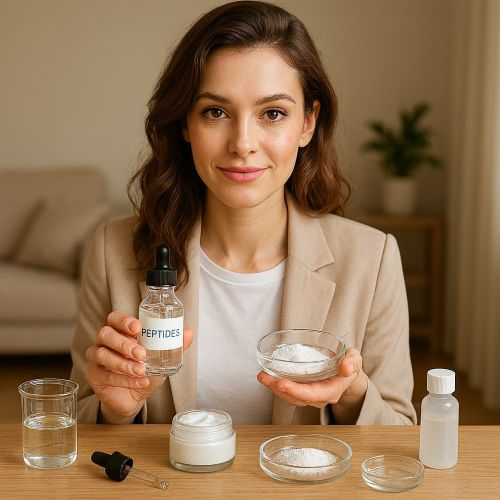 Peptides have revolutionized the anti aging segment of the beauty industry by acting as cellular messengers that tell the skin to repair itself. Unlike many traditional cosmetic ingredients that sit on the surface peptides are short chains of amino acids that can penetrate the top layers of the epidermis to trigger specific biological processes. Understanding peptides in skin care a complete guide with formula examples is essential for any modern formulator looking to achieve professional results at home.
The primary function of peptides is to stimulate the production of essential proteins like collagen elastin and keratin. These proteins are the building blocks of firm smooth and youthful skin. In this guide we will delve into the different categories of peptides the technical requirements for their stability and how to craft high performance serums that rival expensive luxury brands.
The Biological Power and Classification of Peptides
To formulate effectively you must understand that not all peptides perform the same task. They are generally categorized into four main groups based on their mechanism of action.
Signal peptides are the most common and act by sending messages to cells to produce more collagen and elastin. They are ideal for firming the skin and reducing the depth of fine lines. Carrier peptides deliver trace elements like copper or magnesium to the skin which helps in wound healing and enzymatic processes.
Neurotransmitter inhibitor peptides often referred to as botox in a bottle work by relaxing the facial muscles that cause expression lines. Finally enzyme inhibitor peptides slow down the natural breakdown of collagen that occurs due to aging and environmental stress. By combining these categories you can create a multi dimensional approach to skin rejuvenation.
Technical Nuances and Formulation Stability Rules
Peptides are delicate molecules that require precise conditions to remain active. The most critical factor is the temperature of the formula. Peptides are thermo sensitive and should never be added to a hot emulsion. They must be introduced during the cooling phase once the temperature has dropped below forty degrees Celsius.
The second factor is the acidity or pH level of the product. Most cosmetic peptides are stable within a pH range of five to seven. If a formula is too acidic such as those containing high concentrations of AHAs or Vitamin C the peptide bonds can break rendering the ingredient useless. Furthermore avoid mixing peptides with strong oxidizers or copper based ingredients unless specifically formulated to do so as this can lead to the degradation of the amino acid chains.
Advantages of Artisanal Peptide Formulas Over Industrial Analogs
The main advantage of creating your own peptide cosmetics is the transparency of the dosage. Industrial products often use peptides in minuscule amounts just for marketing purposes a practice known as claim ingredient labeling. In your own formulations you can use the maximum recommended percentage usually between three and ten percent of a peptide solution to ensure real physiological changes in the skin.
Additionally mass produced peptide creams often contain heavy silicones and synthetic fillers that can block the penetration of these smart molecules. By formulating at home you can use high quality penetration enhancers like propanediol or hyaluronic acid which help the peptides reach their target cells more efficiently. This results in a cleaner more potent product that is customized to your specific skin concerns.
Recipe One High Potency Collagen Boosting Serum
This water based serum focuses on signal peptides to improve skin density and elasticity.
Ingredients Eighty milliliters of distilled water five milliliters of Matrixyl 3000 peptide solution five milliliters of low molecular weight hyaluronic acid eight milliliters of propanediol and two milliliters of a broad spectrum preservative.
Step One Measure the distilled water into a sanitized glass beaker. Step Two Add the hyaluronic acid and stir slowly until a smooth clear gel forms without any lumps. Step Three Incorporate the propanediol which acts as a solvent and helps the active ingredients penetrate deeper into the skin. Step Four Check the pH level of the mixture to ensure it is between five and six. Step Five Add the Matrixyl 3000 peptide solution at room temperature and stir gently to ensure it is evenly distributed. Step Six Add the preservative and transfer the serum into a dark glass dropper bottle for daily use.
Recipe Two Expression Line Relaxing Eye Gel
A targeted treatment using neurotransmitter inhibitors to soften the appearance of crows feet and forehead lines.
Ingredients Forty milliliters of aloe vera gel five milliliters of Argireline peptide solution three milliliters of cucumber extract and two milliliters of vegetable glycerin.
Step One Start with a high quality organic aloe vera gel as your base. Step Two Add the vegetable glycerin and cucumber extract to the gel and whisk until the texture is uniform. Step Three Introduce the Argireline peptide solution into the mixture. Step Four Stir the gel for several minutes to ensure the peptides are not trapped in a single pocket of the thick gel. Step Five Verify that the pH is close to six which is optimal for the delicate eye area and peptide stability. Step Six Transfer the gel into an airless pump bottle to prevent oxidation and keep the ingredients fresh.
Recipe Three Barrier Repair and Firming Night Cream
This recipe combines peptides with nourishing lipids to restore the skin barrier while you sleep.
Ingredients Sixty grams of a pre made neutral emulsion base five milliliters of Syn-Coll peptide solution three milliliters of argan oil and two milliliters of liquid silk protein.
Step One Place the neutral emulsion base in a glass bowl and stir it to loosen the texture. Step Two Add the argan oil drop by drop while stirring to enrich the cream with fatty acids. Step Three Incorporate the liquid silk protein which provides a protective film and enhances the skin feel. Step Four Once the mixture is smooth add the Syn-Coll peptide solution during the final stage. Step Five Use a mini mixer or whisk to ensure the oils and peptides are perfectly emulsified within the base. Step Six Pack the cream into a sterilized jar and allow it to set for six hours before the first application.
Detailed Recommendations for Use and Storage
To see real results from peptide based cosmetics consistency is key. Peptides work cumulatively and you should expect to see significant changes in skin texture and firmness after eight to twelve weeks of daily use. Apply peptide serums to clean damp skin to allow for better absorption before applying heavier oils or moisturizers.
Storage of peptide products is critical for maintaining their bioactivity. Because these molecules are prone to degradation from heat and light you must store your finished products in a cool dark place. A cosmetic refrigerator is an excellent option but a cool bedroom drawer away from sunlight and humidity will also suffice. Always ensure that containers are airtight to prevent the introduction of bacteria and oxygen.
If you are not using a preservative the product must be stored in the refrigerator and used within seven days. With a professional preservative most of these formulas will remain stable for three to six months. If you notice any change in color odor or if the emulsion begins to separate discard the product immediately and prepare a fresh batch.
Future of Home Formulation with Peptides
Mastering the use of peptides allows you to transcend basic DIY beauty and move into the realm of high tech skin care. By respecting the chemical requirements of these amino acid chains you can create a personalized regimen that effectively addresses the biological causes of skin aging.
Peptides are the bridge between nature and science and their proper application in your home laboratory will yield a complexion that is not only healthier but structurally younger. By following the precise steps outlined in this guide you are ensuring that every drop of your handmade product delivers the maximum possible benefit to your skin.


Cosmetic ingredients and professional formulation blog
This section features expert materials on modern cosmetic actives. We cover peptides, polynucleotides PDRN, different forms of hyaluronic acid, retinoids, ceramides and other key components.
Special focus is given to active stability, ingredient compatibility and correct incorporation into formulas. You will find practical guides on working with anti-age actives, moisturizing complexes and barrier repair ingredients.
We examine how to properly combine myorelaxants with peptides, common mistakes when using unstable vitamin C forms and ways to improve the performance of moisturizing actives.
Separate materials are dedicated to base oils, extracts, emulsifiers and supporting ingredients. This helps create stable and effective formulas for both professional and home cosmetics.
The blog regularly publishes reviews of trending actives, comparisons of similar ingredients and step-by-step formulation recommendations. The content is aimed at formulators, technologists and anyone seriously involved in creating cosmetic products.
Why this blog is useful
Here you will find practical data on eye area care actives, lifting systems and ingredients that improve skin firmness and tone. We rely on real formulation experience and address the actual challenges that arise during product development.
You can also explore materials on skin protection and repair, depigmentation and anti-inflammatory actives. This approach supports a more systematic selection of ingredients.
FAQ
What topics are covered most often
The blog focuses on peptides, PDRN, hyaluronic acid of different molecular weights, retinoids, ceramides and their compatibility rules.
Are there practical recommendations on how to incorporate actives
Yes, most articles include practical notes on pH stability, incorporation temperature and common formulation mistakes.
Is the content only for professionals
The materials are useful both for formulators and technologists and for those who create cosmetics for personal use and want to understand how modern ingredients work.
Where can I go directly to the ingredients
All key actives are collected in the Actives section, while base components are available in base oils and related categories.



