-
 DIY: Video master classes
-
 Aromatherapy
-
 Felting master classes
-
 Eating at home
-
 DIY cosmetics for children
-
 Cooking recipes
-
 Detergents, cleaning products with your own hands
-
 Soap making as a business
-
 Natural cosmetics. Raw materials for cosmetics and soap.
-
 Natural oils in cosmetics
-
 News
-
 Recipes for balms and conditioners
-
 Bath Bomb Recipes
-
 Cream recipes. Cream making.
-
 Lotion recipes. Gel recipes.
-
 Mask recipes
-
 Soap recipes. Base soap. Soap from scratch.
-
 Recipes for all occasions
-
 Natural shampoo recipes
-
 Healthy Nutrition Recipes
-
 Scrub recipes. Massage tiles. Ubtan
-
 DIY candles
-
 Reference materials, questions, tips
-
 Startup - soap production
-
 Hair care. Tips, recipes
-
 Facial skin care. Cleansers.
-
 Body care. Tips, recipes
-
 Photo Reviews
-
 Chocolate Handmade


Autumn line: oils for skin restoration after the sun and sea water
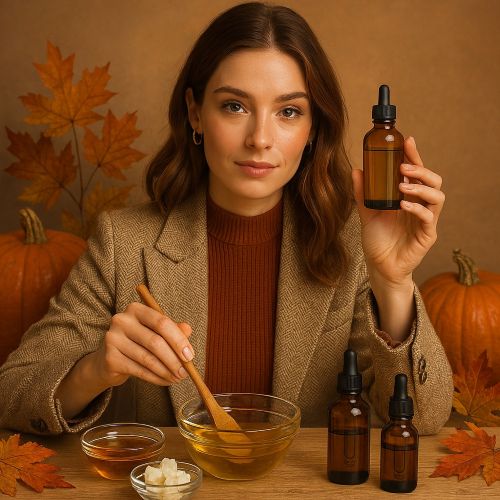 After a long summer of sun exposure, sea water, and high temperatures, the skin often shows signs of stress. It can be dehydrated, rough, and show increased signs of aging and hyperpigmentation. While industrial cosmetics offer a wide range of restorative products, they often contain synthetic ingredients, mineral oils, and fillers that can clog pores and don't provide the deep nourishment that the skin truly needs. Creating an autumn skincare line with natural oils is a simple yet incredibly effective way to repair and replenish your skin. This article provides a comprehensive guide to selecting the right oils for post-summer skin, with three detailed recipes for a face serum, a body oil blend, and a nourishing mask. We'll explore the benefits of each ingredient and explain why a natural oil-based routine is superior.
The Power of Oils for Post-Summer Skin
Natural oils are rich in fatty acids, vitamins, and antioxidants that work synergistically to restore skin health. They don't just sit on the surface; they penetrate the skin to deliver deep nourishment.
-
Jojoba Oil: This oil is technically a liquid wax, and its structure is very similar to the skin's natural sebum. It’s an excellent choice for all skin types, as it helps balance oil production, making it effective for both dry and oily skin. It's rich in Vitamin E, which is a powerful antioxidant.
-
Rosehip Seed Oil: This oil is a superstar for skin regeneration. It's packed with Vitamin A (retinoic acid) and essential fatty acids, which help to repair sun damage, reduce hyperpigmentation, and improve skin texture.
-
Argan Oil: Known as "liquid gold," argan oil is rich in antioxidants, Vitamin E, and linoleic acid. It's a fantastic moisturizer that helps restore the skin's barrier function and provides a healthy glow.
-
Calendula-Infused Oil: Calendula is known for its incredible soothing and anti-inflammatory properties. An oil infused with calendula flowers is perfect for calming irritated or sun-stressed skin.
Three Recipes for an Autumn Oil-Based Routine
These three recipes are designed to work together to restore and rejuvenate your skin from head to toe.
Recipe 1: Regenerating Face Serum for Post-Sun Skin
This serum is a potent blend of oils designed to combat sun damage and restore radiance.
-
Prepare the base. In a sterilized glass dropper bottle, add 20g of Jojoba Oil. This will be your stable, non-comedogenic base.
-
Add the main active. Add 10g of Rosehip Seed Oil. This oil is a powerhouse for sun damage repair.
-
Add nourishing and protective oils. Add 5g of Argan Oil for its antioxidant properties and 5g of Vitamin E (Tocopherol) to extend the shelf life of the serum and provide extra antioxidant protection.
-
Customize with essential oils (optional). For added benefits, you can add 2-3 drops of essential oil, such as frankincense oil for its rejuvenating properties or lavender oil for its soothing effect.
-
Shake well and store. Close the bottle tightly and shake to combine the oils.
Recommendations for Use: Apply 2-3 drops to a clean face in the evening, after cleansing and toning. Gently massage into the skin.
Storage: Store in a cool, dark place to preserve the oil's potency. The shelf life is approximately 6 months.
Recipe 2: Soothing After-Sun Body Oil Blend
This blend is perfect for moisturizing and calming the skin on your body after prolonged sun exposure.
-
Prepare the base. In a sterilized glass bottle, add 50g of Sweet Almond Oil. It's a light, easily absorbed oil that works as a great base.
-
Add the restorative oil. Add 30g of Calendula-Infused Oil. Its anti-inflammatory properties will help soothe any redness or irritation.
-
Add deeply hydrating oils. Add 15g of Apricot Kernel Oil for its light texture and ability to moisturize, and 5g of Jojoba Oil for balance.
-
Customize with essential oils (optional). For a soothing scent, add 5-10 drops of essential oil like lavender or roman chamomile.
-
Shake well before each use. Close the bottle tightly and shake to mix.
Recommendations for Use: Apply to slightly damp skin after a shower to lock in moisture.
Storage: Store in a cool, dark place. The shelf life is up to 1 year.
Recipe 3: Replenishing Overnight Face Mask Oil
This concentrated oil blend is designed to be used as an overnight mask to provide intensive nourishment.
-
Prepare the base. In a sterilized small glass jar, add 10g of Jojoba Oil.
-
Add rich, repairing oils. Add 5g of Avocado Oil for its high content of fatty acids and 5g of Rosehip Seed Oil for regeneration.
-
Add anti-inflammatory oil. Add 5g of Evening Primrose Oil, which is rich in gamma-linolenic acid (GLA), an excellent anti-inflammatory agent.
-
Add a barrier-restoring butter. Gently melt 5g of Shea Butter and add it to the oil blend, stirring until it dissolves.
-
Mix and cool. Stir all ingredients together and let the mixture cool. It will have a semi-solid, balm-like consistency.
Recommendations for Use: Apply a thin layer to a clean face before bed, allowing the oils to work overnight.
Storage: Store in a cool, dark place. The shelf life is approximately 6 months.
Advantages Over Industrial Analogues
Choosing a natural, oil-based routine offers significant benefits that commercial products often lack.
-
 Pure and Potent: Homemade oils contain no fillers, mineral oils, or synthetic silicones, which are common in industrial products to create a silky feel. You are using 100% active ingredients that are truly beneficial for your skin.
-
Deeply Nourishing: Natural oils are bio-compatible with the skin, allowing them to penetrate and deliver nutrients deep into the epidermis. Unlike mineral oils, which create a surface barrier, natural oils actively restore the skin's lipid barrier.
-
No Harsh Preservatives: Water-free formulations do not require broad-spectrum preservatives, reducing the risk of skin irritation from these chemicals.
-
Sustainability: You can source your ingredients from ethical suppliers and use reusable glass bottles, minimizing your environmental footprint.
By embracing a natural, oil-based skincare routine this autumn, you can effectively repair the damage from a summer of fun, leaving your skin healthy, glowing, and ready for the cooler months.


Cosmetic ingredients and professional formulation blog
This section features expert materials on modern cosmetic actives. We cover peptides, polynucleotides PDRN, different forms of hyaluronic acid, retinoids, ceramides and other key components.
Special focus is given to active stability, ingredient compatibility and correct incorporation into formulas. You will find practical guides on working with anti-age actives, moisturizing complexes and barrier repair ingredients.
We examine how to properly combine myorelaxants with peptides, common mistakes when using unstable vitamin C forms and ways to improve the performance of moisturizing actives.
Separate materials are dedicated to base oils, extracts, emulsifiers and supporting ingredients. This helps create stable and effective formulas for both professional and home cosmetics.
The blog regularly publishes reviews of trending actives, comparisons of similar ingredients and step-by-step formulation recommendations. The content is aimed at formulators, technologists and anyone seriously involved in creating cosmetic products.
Why this blog is useful
Here you will find practical data on eye area care actives, lifting systems and ingredients that improve skin firmness and tone. We rely on real formulation experience and address the actual challenges that arise during product development.
You can also explore materials on skin protection and repair, depigmentation and anti-inflammatory actives. This approach supports a more systematic selection of ingredients.
FAQ
What topics are covered most often
The blog focuses on peptides, PDRN, hyaluronic acid of different molecular weights, retinoids, ceramides and their compatibility rules.
Are there practical recommendations on how to incorporate actives
Yes, most articles include practical notes on pH stability, incorporation temperature and common formulation mistakes.
Is the content only for professionals
The materials are useful both for formulators and technologists and for those who create cosmetics for personal use and want to understand how modern ingredients work.
Where can I go directly to the ingredients
All key actives are collected in the Actives section, while base components are available in base oils and related categories.



