-
 DIY: Video master classes
-
 Aromatherapy
-
 Felting master classes
-
 Eating at home
-
 DIY cosmetics for children
-
 Cooking recipes
-
 Detergents, cleaning products with your own hands
-
 Soap making as a business
-
 Natural cosmetics. Raw materials for cosmetics and soap.
-
 Natural oils in cosmetics
-
 News
-
 Recipes for balms and conditioners
-
 Bath Bomb Recipes
-
 Cream recipes. Cream making.
-
 Lotion recipes. Gel recipes.
-
 Mask recipes
-
 Soap recipes. Base soap. Soap from scratch.
-
 Recipes for all occasions
-
 Natural shampoo recipes
-
 Healthy Nutrition Recipes
-
 Scrub recipes. Massage tiles. Ubtan
-
 DIY candles
-
 Reference materials, questions, tips
-
 Startup - soap production
-
 Hair care. Tips, recipes
-
 Facial skin care. Cleansers.
-
 Body care. Tips, recipes
-
 Photo Reviews
-
 Chocolate Handmade


New Year: how to assemble a hand-made gift set of oils, candles and fragrances
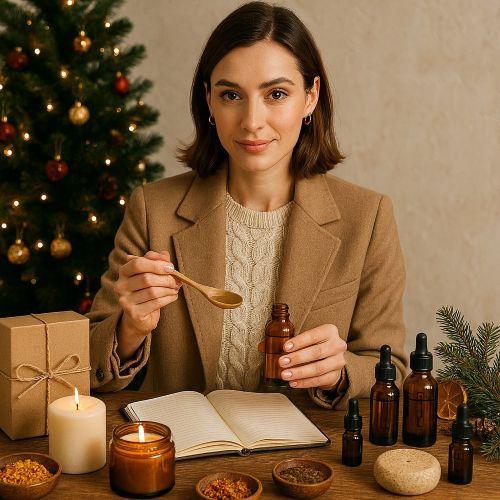 The New Year is a time of special magic and warmth. There is no better way to show care for loved ones than with a gift made with your own hands. This article will tell you how to assemble an exclusive cosmetic set from natural oils, candles, and fragrances, highlighting the useful properties and advantages of such products over mass-produced ones.
Why Hand-Made Cosmetics are the Ideal Gift
Unlike industrial counterparts, hand-made cosmetics from natural components do not contain aggressive preservatives, synthetic dyes, or artificial fragrances. You control the composition, choosing only the best ingredients that are suitable for a specific skin or hair type. A hand-made gift is a piece of your soul, your time, and your care.
Natural cosmetics based on oils saturate the skin with vitamins, fatty acids, and microelements. They have no negative impact on the environment and are usually biodegradable. A scented candle made from natural wax and essential oils not only fills the room with a pleasant aroma but also cleanses the air and creates a unique atmosphere of comfort and relaxation.
Natural Aromatic Blend for Body and Hair
This oil blend is a versatile product that can be used for body massage, as a nourishing hair mask, or simply as a moisturizing oil after a shower. The recipe is simple, and the result is a product with a delicate, natural aroma and incredible nourishing properties.
Ingredients
-
Base oil: almond oil or jojoba oil (50 ml)
-
Essential oil: sweet orange (10 drops)
-
Essential oil: frankincense (5 drops)
-
Essential oil: ylang-ylang (3 drops)
-
Vitamin E oil (1 teaspoon)
Preparation and Useful Properties
Mixing the oils Pour the base oil into a clean glass bottle. Add the essential oils one by one, carefully counting the drops. Finish by adding a teaspoon of vitamin E oil. Vitamin E acts as a natural antioxidant and helps prolong the shelf life of the product.
Shaking the mixture Close the bottle tightly and shake it gently for a minute to evenly distribute all the components. Leave the mixture to infuse in a dark place for at least 24 hours to allow the aromas to blend and mature.
The benefits of this blend are enormous. Almond oil is rich in vitamins A and E, perfectly moisturizes, and nourishes the skin. Jojoba oil is close in composition to human sebum, so it is well absorbed without leaving a greasy film. The essential oils add aroma and therapeutic effects. Sweet orange oil lifts the mood, frankincense soothes, and ylang-ylang promotes relaxation.
Storage and Use Store the finished oil blend in a cool, dark place away from direct sunlight. The product retains its properties for up to 6 months. To use, apply a few drops to damp skin after a shower or on the ends of hair as a nourishing mask.
Scented Wax Candle with a Natural Aroma
A scented candle is not just a light source but a way to create a special mood. Making it yourself is easy, and you can choose the aroma that best suits the person you're giving it to. The advantage of a hand-made candle is the absence of paraffin, which releases harmful substances when burning.
Ingredients
-
Natural wax: soy wax or beeswax (100 grams)
-
Essential oils: lavender (15 drops)
-
Essential oils: bergamot (10 drops)
-
Cotton wick with holder
-
Heat-resistant glass container
Preparation and Useful Properties
Melting the wax Melt the wax in a double boiler until it is completely liquid. Be careful not to overheat it.
Securing the wick Secure the wick in the center of the container using a special wick holder or two pencils to hold it upright.
Adding essential oils Remove the melted wax from the heat and let it cool slightly. Add the essential oils and stir thoroughly. This is a crucial step for the aroma to be evenly distributed.
Pouring the wax Carefully pour the wax into the prepared container. Let it cool completely at room temperature. This can take several hours.
Finishing the candle After the wax has hardened, trim the wick to a length of about 5-7 mm. Your candle is ready. It creates a calming atmosphere and helps to relax after a long day. Lavender oil is known for its soothing properties, and bergamot helps relieve tension.
Storage and Use Store the candle in a cool, dark place. Before burning, ensure the wick is properly trimmed to avoid excessive smoke.
Aromatization for Linen and Home Space
A linen spray with natural essential oils is a pleasant and simple way to fill your home with a fresh aroma. It is a natural alternative to store-bought air fresheners that often contain synthetic components.

Ingredients
-
Purified water or floral hydrosol (100 ml)
-
Alcohol or witch hazel extract (10 ml)
-
Essential oils: lemon (10 drops)
-
Essential oils: rosemary (5 drops)
-
Glass spray bottle
Preparation and Useful Properties
Preparing the base Pour the alcohol or witch hazel extract into a clean glass spray bottle. This component acts as a natural dispersant, helping the essential oils dissolve better in water.
Adding essential oils Add the essential oils to the alcohol base. Shake the mixture well.
Adding water Top up the bottle with purified water or hydrosol. Shake again to mix all the ingredients.
Rosemary essential oil has a fresh scent and is known for its invigorating properties. Lemon oil refreshes and cleanses the air. The resulting spray is a natural way to aromatize textiles, curtains, or an entire room.
Storage and Use Store the linen spray in a cool, dark place. Shake the bottle before each use to redistribute the essential oils. Use it to freshen up linen, clothes, or as a general room spray.


Cosmetic ingredients and professional formulation blog
This section features expert materials on modern cosmetic actives. We cover peptides, polynucleotides PDRN, different forms of hyaluronic acid, retinoids, ceramides and other key components.
Special focus is given to active stability, ingredient compatibility and correct incorporation into formulas. You will find practical guides on working with anti-age actives, moisturizing complexes and barrier repair ingredients.
We examine how to properly combine myorelaxants with peptides, common mistakes when using unstable vitamin C forms and ways to improve the performance of moisturizing actives.
Separate materials are dedicated to base oils, extracts, emulsifiers and supporting ingredients. This helps create stable and effective formulas for both professional and home cosmetics.
The blog regularly publishes reviews of trending actives, comparisons of similar ingredients and step-by-step formulation recommendations. The content is aimed at formulators, technologists and anyone seriously involved in creating cosmetic products.
Why this blog is useful
Here you will find practical data on eye area care actives, lifting systems and ingredients that improve skin firmness and tone. We rely on real formulation experience and address the actual challenges that arise during product development.
You can also explore materials on skin protection and repair, depigmentation and anti-inflammatory actives. This approach supports a more systematic selection of ingredients.
FAQ
What topics are covered most often
The blog focuses on peptides, PDRN, hyaluronic acid of different molecular weights, retinoids, ceramides and their compatibility rules.
Are there practical recommendations on how to incorporate actives
Yes, most articles include practical notes on pH stability, incorporation temperature and common formulation mistakes.
Is the content only for professionals
The materials are useful both for formulators and technologists and for those who create cosmetics for personal use and want to understand how modern ingredients work.
Where can I go directly to the ingredients
All key actives are collected in the Actives section, while base components are available in base oils and related categories.



