-
 DIY: Video master classes
-
 Aromatherapy
-
 Felting master classes
-
 Eating at home
-
 DIY cosmetics for children
-
 Cooking recipes
-
 Detergents, cleaning products with your own hands
-
 Soap making as a business
-
 Natural cosmetics. Raw materials for cosmetics and soap.
-
 Natural oils in cosmetics
-
 News
-
 Recipes for balms and conditioners
-
 Bath Bomb Recipes
-
 Cream recipes. Cream making.
-
 Lotion recipes. Gel recipes.
-
 Mask recipes
-
 Soap recipes. Base soap. Soap from scratch.
-
 Recipes for all occasions
-
 Natural shampoo recipes
-
 Healthy Nutrition Recipes
-
 Scrub recipes. Massage tiles. Ubtan
-
 DIY candles
-
 Reference materials, questions, tips
-
 Startup - soap production
-
 Hair care. Tips, recipes
-
 Facial skin care. Cleansers.
-
 Body care. Tips, recipes
-
 Photo Reviews
-
 Chocolate Handmade


Why are nanolipid complexes needed in cosmetics and how to properly incorporate them into the formulation?
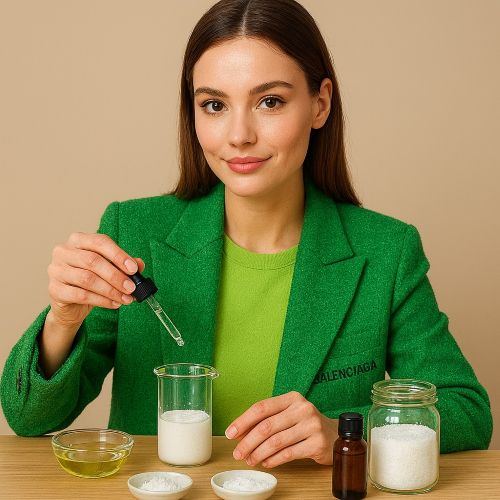 In advanced cosmetology, the challenge isn't finding powerful active ingredients—it's ensuring those ingredients reach their intended targets within the skin before they degrade. Many crucial actives, such as Vitamin C, Retinol, and certain peptides, are inherently unstable or have difficulty penetrating the skin's lipid barrier. This is where Nanolipid Complexes (also known as liposomes, nanosomes, or lipid nanoparticles) come into play. These microscopic lipid structures act as sophisticated encapsulation and delivery systems, protecting the active and enhancing its absorption deep into the skin layers. Incorporating nanolipid complexes into your homemade serums and creams instantly elevates your formulations to a professional level. This article delves into why nanolipid complexes are essential, how they function, and provides three detailed recipes, emphasizing the technical nuances of their correct inclusion.
Why Nanolipid Complexes are Crucial for Efficacy
Nanolipid complexes are essentially tiny bubbles made of lipid bilayers, similar to the structure of your cell membranes. They serve two primary, critical functions in skincare: protection and targeted delivery.
1. Protection of Unstable Actives
Many potent cosmetic ingredients degrade quickly when exposed to light, air, or unfavorable pH conditions, rendering them ineffective.
-
Oxidation Shield: Nanolipid encapsulation provides a protective shell, dramatically stabilizing highly volatile ingredients like L-Ascorbic Acid (Vitamin C), preventing oxidation and prolonging shelf life.
-
pH and Temperature Tolerance: The lipid barrier shields the active from harsh pH environments within the final formula and protects it during the preparation process.
2. Enhanced Bioavailability and Penetration
The skin's primary function is to act as a barrier. Nanolipids bypass this resistance effectively.
-
Membrane Mimicry: Because the nanolipid structure mimics the composition of the skin's natural cell membranes, the skin readily accepts and integrates these complexes, allowing them to fuse with skin cells and release the active payload precisely where it's needed (e.g., the dermis for collagen stimulation).
-
Controlled Release: Encapsulation can facilitate a sustained, controlled release of the active ingredient over time, prolonging its effect and minimizing the risk of irritation, which is common with actives like Retinol.
Using nanolipid complexes allows formulators to use lower concentrations of potentially irritating actives while achieving superior results, a significant advantage for sensitive skin.
Nuances of Preparation: How to Include Nanolipid Complexes
Nanolipid complexes are delicate structures, and their integrity must be preserved during formulation. They are highly sensitive to heat and certain solvents.
Rule 1: Always Add to the Cool-Down Phase. Nanolipid complexes must be added to the formulation after the emulsion has cooled to 40∘C or below. High heat will destroy the lipid structure and release the active prematurely, rendering the encapsulation useless.
Rule 2: Gentle Mixing is Key. Use slow, gentle stirring. High-shear mixing (like a powerful stick blender) can mechanically destroy the nanosomes. A gentle spatula or hand whisk is usually sufficient after the main emulsion is formed.
Rule 3: pH Considerations. Ensure the final product pH is within the stability range specified by the supplier, as extreme pH (too high or too low) can destabilize the lipid structures.
Nanolipid complexes are typically water-based solutions and should be treated as a part of the final water-soluble cool-down phase.
Three Advanced Recipes with Nanolipid Complexes
These recipes demonstrate how to properly integrate nanolipid complexes for targeted anti-aging and moisturizing benefits.
Recipe 1: Deep Repair Retinol Nanolipid Serum
This serum uses a Retinol nanolipid complex to maximize absorption with minimal irritation.
-
Prepare the Water Phase. In a sterilized beaker, weigh 70g of distilled water and 5g of vegetable glycerin. Heat to 70∘C.
-
Prepare the Oil Phase. In a separate beaker, combine 10g of Squalane oil, 5g of Rosehip Oil (rich in natural retinoids), and 5g of a light emulsifier like Lecigel. Heat to 70∘C.
-
Emulsify. Slowly pour the hot water phase into the hot oil phase, mixing with a gentle hand whisk until a light, stable emulsion forms. Continue mixing as it cools.
-
Add the Nanolipid Complex. When the serum cools to 40∘C, gently add 4g of Nanolipid Retinol Complex solution. Mix slowly.
-
Add the Preservative. Add 1g of a broad-spectrum preservative. Stir well and package immediately into an opaque, airless pump bottle to protect the Retinol.
Recommendations for Use: Apply a small amount to clean skin at night only. Always use SPF the next morning.
Storage: Store in a cool, dark place. Shelf life is typically 3-6 months.
Recipe 2: Targeted Vitamin C Brightening Cream
This cream uses a nanolipid Vitamin C complex for superior brightening and antioxidant action.
-
Prepare the Water Phase. In a sterilized beaker, weigh 60g of distilled water and 10g of Chamomile Hydrosol (soothing). Heat to 70∘C.
-
Prepare the Oil Phase. In a separate beaker, combine 10g of Apricot Kernel Oil, 5g of Cetearyl Alcohol (for stability/texture), and 4g of an emulsifying wax like Montanov 68. Heat to 70∘C.
-
Emulsify. Combine the phases with a hand blender, mixing until the cream structure is well formed.
-
Add the Complex and Actives. Once cooled below 40∘C, gently add 5g of Nanolipid Vitamin C Complex solution and 5g of Niacinamide solution (Vitamin B3). Stir slowly with a spatula.
-
Add the Preservative. Add 1g of a broad-spectrum preservative. Check the pH (ideally 5.0-6.0) and package into a light-proof jar.
Recommendations for Use: Apply morning and night. Use alongside an SPF product during the day for maximum antioxidant benefit.
Storage: Store away from light and heat. Shelf life is up to 3 months.
Recipe 3: Deep Moisturizing Peptide Balm
This rich balm uses nanolipid encapsulation to drive peptides deeper for improved firmness.
-
Prepare the Water Phase. In a sterilized beaker, weigh 50g of distilled water and 5g of vegetable glycerin. Heat to 75∘C.
-
Prepare the Oil Phase. In a separate beaker, combine 15g of Shea Butter, 15g of Cocoa Butter, 10g of Macadamia Oil, and 4g of a robust emulsifier like Polawax. Heat to 75∘C.
-
Emulsify. Combine the phases with a blender, mixing vigorously until a thick balm is achieved.
-
Add the Complex. When the balm cools to 35∘C (it should be thick but still manageable), gently stir in 5g of Nanolipid Peptide Complex (e.g., encapsulated Copper Peptides or Matrixyl).
-
Add the Preservative. Add 1g of a broad-spectrum preservative. Pour into a wide-mouth jar before it fully solidifies.
Recommendations for Use: Use as a deep, replenishing night treatment for mature or very dry skin.
Storage: Keep in a cool, stable environment. Shelf life is up to 3 months.
Advantages Over Commercial Nanolipid Products
While many commercial brands utilize nanolipid technology, formulating your own offers clear superiority in several key areas.
-
Concentration Control: Encapsulated actives are costly. Commercial products often boast the presence of nanolipids but use minimal concentrations. DIY ensures you use the optimal dosage recommended by the raw material supplier, maximizing therapeutic effect.
-
Avoiding Filler Interference: Industrial products often contain unnecessary thickeners, silicones, and synthetic fragrance molecules that can interfere with the fragile nanolipid structures or compete for skin absorption. Your homemade formulas are cleaner and purer, ensuring the nanolipids maintain their integrity and delivery function.
-
Freshness and Potency: Even encapsulated actives have a limited shelf life. When you formulate at home, you use the complex shortly after purchase and consume the product within months, guaranteeing the active is at peak potency.
-
Customized Supporting Actives: You can pair the nanolipid complex with supporting oils and antioxidants that are perfectly suited to your skin type and concerns, rather than being restricted by a generic mass-market formula.
By mastering the correct preparation techniques and leveraging nanolipid complexes, you gain access to a cutting-edge, highly effective form of skincare previously reserved only for luxury and professional brands.


Cosmetic ingredients and professional formulation blog
This section features expert materials on modern cosmetic actives. We cover peptides, polynucleotides PDRN, different forms of hyaluronic acid, retinoids, ceramides and other key components.
Special focus is given to active stability, ingredient compatibility and correct incorporation into formulas. You will find practical guides on working with anti-age actives, moisturizing complexes and barrier repair ingredients.
We examine how to properly combine myorelaxants with peptides, common mistakes when using unstable vitamin C forms and ways to improve the performance of moisturizing actives.
Separate materials are dedicated to base oils, extracts, emulsifiers and supporting ingredients. This helps create stable and effective formulas for both professional and home cosmetics.
The blog regularly publishes reviews of trending actives, comparisons of similar ingredients and step-by-step formulation recommendations. The content is aimed at formulators, technologists and anyone seriously involved in creating cosmetic products.
Why this blog is useful
Here you will find practical data on eye area care actives, lifting systems and ingredients that improve skin firmness and tone. We rely on real formulation experience and address the actual challenges that arise during product development.
You can also explore materials on skin protection and repair, depigmentation and anti-inflammatory actives. This approach supports a more systematic selection of ingredients.
FAQ
What topics are covered most often
The blog focuses on peptides, PDRN, hyaluronic acid of different molecular weights, retinoids, ceramides and their compatibility rules.
Are there practical recommendations on how to incorporate actives
Yes, most articles include practical notes on pH stability, incorporation temperature and common formulation mistakes.
Is the content only for professionals
The materials are useful both for formulators and technologists and for those who create cosmetics for personal use and want to understand how modern ingredients work.
Where can I go directly to the ingredients
All key actives are collected in the Actives section, while base components are available in base oils and related categories.



