-
 DIY: Video master classes
-
 Aromatherapy
-
 Felting master classes
-
 Eating at home
-
 DIY cosmetics for children
-
 Cooking recipes
-
 Detergents, cleaning products with your own hands
-
 Soap making as a business
-
 Natural cosmetics. Raw materials for cosmetics and soap.
-
 Natural oils in cosmetics
-
 News
-
 Recipes for balms and conditioners
-
 Bath Bomb Recipes
-
 Cream recipes. Cream making.
-
 Lotion recipes. Gel recipes.
-
 Mask recipes
-
 Soap recipes. Base soap. Soap from scratch.
-
 Recipes for all occasions
-
 Natural shampoo recipes
-
 Healthy Nutrition Recipes
-
 Scrub recipes. Massage tiles. Ubtan
-
 DIY candles
-
 Reference materials, questions, tips
-
 Startup - soap production
-
 Hair care. Tips, recipes
-
 Facial skin care. Cleansers.
-
 Body care. Tips, recipes
-
 Photo Reviews
-
 Chocolate Handmade


Oils in cosmetics: Which are best for the face, body, hair, and professional formulas?
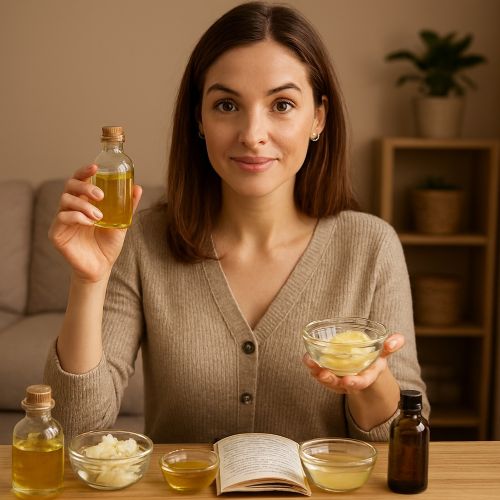 Oils are the bedrock of natural cosmetics and a vital component in professional formulation. They do more than just moisturize; they supply the skin with essential fatty acids vitamins and antioxidants. However the world of cosmetic oils is incredibly diverse ranging from light non-comedogenic liquids to rich occlusive solids. Choosing the wrong oil can exacerbate acne cause greasiness or fail to provide adequate relief for dry skin.
The key to success lies in understanding an oil's fatty acid profile and its comedogenic rating. This comprehensive guide classifies oils by their composition details their specific application for the face body and hair and reveals the nuances of their incorporation into stable cosmetic formulas. We provide three detailed recipes and expert advice on selecting and storing oils to maximize their benefits and outperform the quality of industrial analogs.
Oil Classification The Fatty Acid Profile
Oils are categorized by the ratio of three main types of fatty acids they contain which determines their absorbency skin properties and comedogenicity.
1 High Linoleic Acid Oils (Omega-6)
-
Properties: Light dry oils. They absorb quickly and leave no greasy residue.
-
Purpose: Ideal for oily acne-prone and congested skin. They help normalize sebum which is often deficient in linoleic acid.
-
Examples: Grapeseed Oil Hemp Seed Oil Rosehip Oil Black Cumin Seed Oil.
-
Comedogenicity: Low (0-1).
2 High Oleic Acid Oils (Omega-9)
-
Properties: More saturated and heavy. They absorb more slowly providing strong occlusive and restorative action.
-
Purpose: Suitable for dry mature and normal skin that needs deep nourishment and barrier protection. Not recommended for severely oily or acne-prone skin.
-
Examples: Avocado Oil Olive Oil Apricot Kernel Oil Almond Oil.
-
Comedogenicity: Medium (2-3).
3 High Saturated Acid Oils (Butters)
-
Properties: Solid butters that provide a powerful protective occlusive film. They absorb very slowly.
-
Purpose: Ideal for body protection barrier creams and hair conditioning.
-
Examples: Shea Butter Coconut Oil Cocoa Butter.
-
Comedogenicity: High (3-4) – use cautiously on the face.
Applying Oils for Specific Areas and Needs
Oils for the Face
Select facial oils based primarily on their comedogenicity and fatty acid profile. Oily skin requires "dry" oils (Hemp Grapeseed) while mature skin benefits from high Oleic acid and antioxidant-rich oils (Argan Macadamia).
Oils for the Body
For the body you can use more saturated oils and butters (Shea Cocoa) since body skin is less prone to comedogenic reactions. They excel at restoring severely dry areas and reinforcing the barrier function.
Oils for the Hair
Ideal hair oils are those that can penetrate the hair shaft for nourishment (Coconut Oil) or those that create a protective film for shine and smoothness (Argan Jojoba).
Recipe 1 Light Serum for Blemish-Prone Skin (Linoleic Base)
This anhydrous serum utilizes non-comedogenic oils to nourish oily skin without clogging pores.
Ingredients Needed
-
1 Base Oil (Linoleic) Hemp Seed Oil 40 ml
-
2 Active Oil Black Cumin Seed Oil (high linoleic and anti-inflammatory) 10 ml
-
3 Oil-Soluble Active Vitamin E (Antioxidant) 05 ml
-
4 Antioxidant Extract Rosemary CO2 Extract 05 ml
Step-by-Step Instructions
-
Step one In a clean dark dispenser bottle measure the Hemp Seed Oil (40 ml) and Black Cumin Seed Oil (10 ml).
-
Step two Add Vitamin E (05 ml) which acts both as an active and as an antioxidant to stabilize the oils themselves.
-
Step three Add the Rosemary CO2 Extract (05 ml) and gently shake the bottle to mix.
-
Step four Since the formula is anhydrous a preservative is not required. Ensure all oils used are fresh.
Recipe 2 Restorative Body Balm (Saturated Base)
This recipe uses saturated oils and butters to create a potent barrier and restorative product.
Ingredients Needed
-
1 Butter Unrefined Shea Butter 50 grams
-
2 Active Oil Macadamia Oil (Omega-9) 30 ml
-
3 Wax Beeswax or Vegetable Wax 15 grams
-
4 Oil-Soluble Active Oil-soluble D-Panthenol 5 grams
Step-to-Step Instructions
-
Step one In a heat-safe container combine Shea Butter (50 grams) Macadamia Oil (30 ml) and Wax (15 grams).
-
Step two Heat the mixture gently in a double boiler until all components including the wax are fully melted. The temperature should not exceed 70 degrees Celsius.
-
Step three Remove from heat and continue stirring periodically until the mixture begins to thicken and cool below 40 degrees Celsius.
-
Step four Add the oil-soluble D-Panthenol (5 grams). This prevents its thermal degradation.
-
Step five Quickly transfer the balm to a clean jar before it fully sets.
Recipe 3 Conditioning Hair Emulsion Mask (Incorporating Oils into Formulas)
Demonstrates how to effectively incorporate oils into a water-based hair emulsion.
Ingredients Needed
-
1 Water Phase (75%): Distilled Water 72 ml Humectant Glycerin 3 ml
-
2 Oil Phase (20%): Coconut Oil 10 ml Argan Oil 5 ml Emulsifier Olivem 1000 5 grams
-
3 Cool Down Phase (5%): Silk Proteins 4 ml Preservative 1 ml
Step-to-Step Instructions
-
Step one Weigh and heat the Water Phase (75 ml) and the Oil Phase (20 ml) separately to 70 degrees Celsius.
-
Step two Pour the Water Phase into the Oil Phase stirring intensely with a stick blender to form a stable emulsion.
-
Step three Cool the mixture while stirring until the temperature is below 40 degrees Celsius.
-
Step four Add the Silk Proteins and Preservative (Cool Down Phase). Mix thoroughly.
-
Step five Transfer the emulsion mask into a container.
Detailed Recommendations for Use and Storage
Nuances of Incorporating Oils in Professional Formulas
-
Occlusion and Dosage: In creams and lotions avoid using large amounts of high-comedogenic oils (like Coconut) for the face. Use them in low doses or choose non-comedogenic alternatives (Squalane Jojoba) for balance.
-
Carrier Function: Use oils not just for nourishment but also as carriers for oil-soluble actives (e.g. Vitamin E or CO2 extracts) ensuring better bioavailability.
-
Antioxidant Protection: Add Vitamin E (Tocopherol) at a dosage of 05%-1% to any oil blend to prevent the oil itself from going rancid which extends its shelf life.
Storage and Shelf Life
-
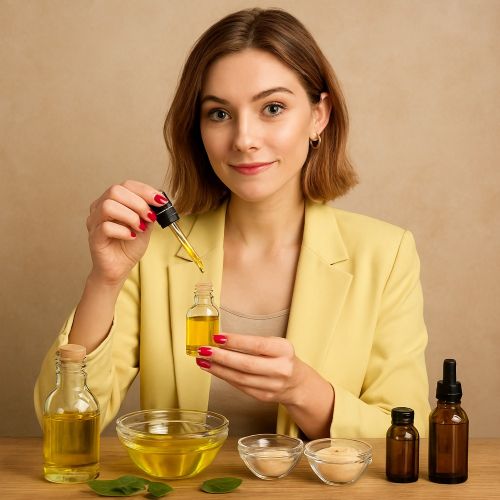
Temperature and Light: Oils especially those rich in Omega-6 (Hemp Rosehip) are highly sensitive to light and heat. Store them in dark glass bottles in a cool dark place or even in the refrigerator.
-
Shelf Life: High-linoleic acid oils (Rosehip) have the shortest shelf life usually 6-9 months. Saturated oils (Coconut) can last 1-2 years. Always rely on smell if an oil develops a stale odor it has gone rancid.
Advantages Over Industrial Analogs
Selecting and using pure oils in DIY formulation provides significant advantages over commercial products:
-
Control of Quality and Grade: You choose fresh cold-pressed and unrefined oils which contain the maximum amount of active nutrients vitamins and antioxidants. Industry often relies on refined or cheap filler oils.
-
Avoidance of Fillers: You completely eliminate mineral oil and silicones which are cheap fillers in many commercial lotions. Your oil blends are 100% active product.
-
Targeted Profile: You create a formula with the ideal fatty acid profile (e.g. a blend of 70% linoleic 30% oleic) specifically for your skin needs which is impossible to find in a mass-market product.
-
Freshness: You use oils when they are at their freshest. Commercial products may contain oils that have been sitting in warehouses for months.
Studying the properties of oils allows you to move from generic creams to targeted care creating high-quality and safe products.


Cosmetic ingredients and professional formulation blog
This section features expert materials on modern cosmetic actives. We cover peptides, polynucleotides PDRN, different forms of hyaluronic acid, retinoids, ceramides and other key components.
Special focus is given to active stability, ingredient compatibility and correct incorporation into formulas. You will find practical guides on working with anti-age actives, moisturizing complexes and barrier repair ingredients.
We examine how to properly combine myorelaxants with peptides, common mistakes when using unstable vitamin C forms and ways to improve the performance of moisturizing actives.
Separate materials are dedicated to base oils, extracts, emulsifiers and supporting ingredients. This helps create stable and effective formulas for both professional and home cosmetics.
The blog regularly publishes reviews of trending actives, comparisons of similar ingredients and step-by-step formulation recommendations. The content is aimed at formulators, technologists and anyone seriously involved in creating cosmetic products.
Why this blog is useful
Here you will find practical data on eye area care actives, lifting systems and ingredients that improve skin firmness and tone. We rely on real formulation experience and address the actual challenges that arise during product development.
You can also explore materials on skin protection and repair, depigmentation and anti-inflammatory actives. This approach supports a more systematic selection of ingredients.
FAQ
What topics are covered most often
The blog focuses on peptides, PDRN, hyaluronic acid of different molecular weights, retinoids, ceramides and their compatibility rules.
Are there practical recommendations on how to incorporate actives
Yes, most articles include practical notes on pH stability, incorporation temperature and common formulation mistakes.
Is the content only for professionals
The materials are useful both for formulators and technologists and for those who create cosmetics for personal use and want to understand how modern ingredients work.
Where can I go directly to the ingredients
All key actives are collected in the Actives section, while base components are available in base oils and related categories.



