-
 DIY: Video master classes
-
 Aromatherapy
-
 Felting master classes
-
 Eating at home
-
 DIY cosmetics for children
-
 Cooking recipes
-
 Detergents, cleaning products with your own hands
-
 Soap making as a business
-
 Natural cosmetics. Raw materials for cosmetics and soap.
-
 Natural oils in cosmetics
-
 News
News
-
 Recipes for balms and conditioners
-
 Bath Bomb Recipes
-
 Cream recipes. Cream making.
-
 Lotion recipes. Gel recipes.
-
 Mask recipes
-
 Soap recipes. Base soap. Soap from scratch.
-
 Recipes for all occasions
-
 Natural shampoo recipes
-
 Healthy Nutrition Recipes
-
 Scrub recipes. Massage tiles. Ubtan
-
 DIY candles
-
 Reference materials, questions, tips
-
 Startup - soap production
-
 Hair care. Tips, recipes
-
 Facial skin care. Cleansers.
-
 Body care. Tips, recipes
-
 Photo Reviews
-
 Chocolate Handmade


Preserving Homemade and Small-Batch Cosmetics: A Step-by-Step Protocol
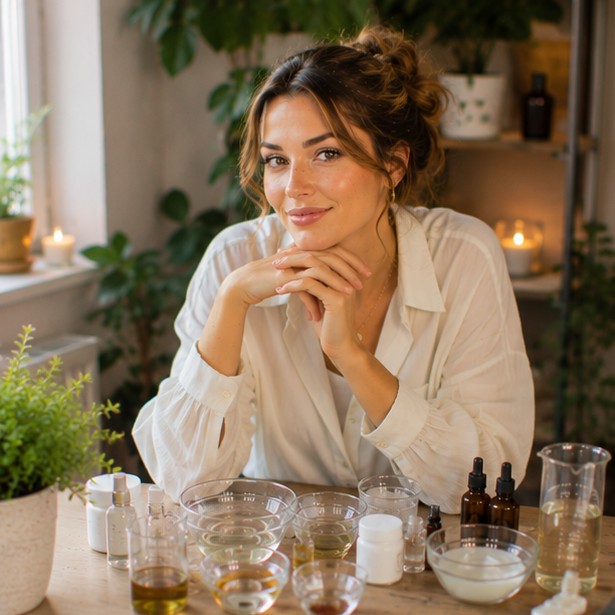 Every cosmetic formulation containing an aqueous phase represents an ideal environment for microbial proliferation. Water, organic botanical extracts, proteins, and lipid emulsions provide essential nutrients for Gram-positive and Gram-negative bacteria, molds, yeasts, and fungi. Without robust preservation, unpreserved water-based formulations can harbor millions of microbial colonies within a few days, often without visible signs of spoilage such as mold spots or foul odors.
Microbial contamination compromises product safety and causes skin barrier disruption, contact dermatitis, folliculitis, and serious skin infections. Implementing a professional preservation protocol is essential for preserving structural integrity, maintaining active potency, and ensuring safety for every small-batch cosmetic formulation.
Understanding Broad-Spectrum Preservative Systems and pH Boundaries
Effective preservation requires selecting a broad-spectrum preservative system capable of inhibiting bacteria, yeasts, and molds simultaneously. Single-agent preservatives rarely cover the entire microbial spectrum, making blended preservative systems or synergistic booster combinations necessary.
Preservative efficacy depends heavily on the final pH of the formulation. Organic acid preservatives, such as benzoic acid, sorbic acid, and dehydroacetic acid, require an acidic environment below pH five point five to remain in their active, non-ionized state. If the formulation pH rises above six point zero, these organic acids lose their antimicrobial capability, leaving the product vulnerable to bacterial growth.
Synthetic broad-spectrum blends like benzyl alcohol with dehydroacetic acid, or phenoxyethanol paired with ethylhexylglycerin, offer broader pH tolerance up to six point five or seven point zero. Formulators must match the chosen preservative system to the specific pH range, ionic charge, and emulsifier type of their formula to prevent active inactivation or physical separation.
Key Degradation Risks Temperature Phase Order and Water Activity
Preservatives themselves are susceptible to chemical degradation if handled incorrectly during formulation. Heat-sensitive organic acid blends breakdown when exposed to elevated temperatures, rendering them inactive before the product is even bottled. Most eco-certified broad-spectrum preservatives must be incorporated during the cool-down phase after the emulsion or gel has cooled below forty degrees Celsius.
Water activity represents another critical parameter. Formulations with high free-water content accelerate bacterial multiplication. Incorporating humectants like glycerin, propanediol, and hyaluronic acid binds free water, lowering water activity and enhancing the overall efficacy of the preservative system.
Advantages of Fresh Small-Batch Preservation Over Industrial Analogs
Industrial cosmetic manufacturers design products to survive multi-year supply chains, warehouse storage, and varying climatic conditions. To achieve a three-year shelf life, commercial products often utilize high concentrations of aggressive preservatives, such as parabens, formaldehyde releasers, or high levels of phenoxyethanol, which can cause skin irritation and disruption of the skin microbiome.
Small-batch production allows for the use of gentle, eco-certified preservative systems at minimal effective dosages. By combining mild preservatives with multi-functional boosters like propanediol and sodium phytate chelators, small-batch formulators create safe, high-performance skincare that remains fresh and bioactive for three to six months without exposing the skin to harsh chemical loads.
Sanitation Protocols and Equipment Sterilization
Microbiological safety begins long before adding the preservative system. Strict laboratory sanitation limits the initial microbial load, ensuring the preservative system is not overwhelmed by initial contamination.
Sanitize the workspace thoroughly using a broad-spectrum surface disinfectant. Wash hands with antibacterial soap and wear sterile nitrile gloves. All heat-resistant glass beakers, glass stirring rods, digital scales, glass pipettes, and storage containers must be washed, rinsed with distilled water to remove tap water impurities, and sprayed with seventy percent isopropyl alcohol. Allow all equipment to air-dry completely on clean paper towels prior to measuring raw materials.
Recipe First Hydrating Rose Niacinamide Serum with Eco Preservative
A lightweight, multi-depth hydrating serum protected by a gentle benzyl alcohol and dehydroacetic acid preservative system.
Composition thirty-five milliliters rose hydrosol two grams niacinamide powder one milliliter low molecular weight hyaluronic acid solution one milliliter propanediol zero point five grams xanthan gum clear zero point two grams sodium phytate one milliliter Geogard 221 eco preservative
Preparation Step first Sanitize glass beakers, stirring rods, digital scale, and a glass dropper bottle with isopropyl alcohol. Step second Dissolve zero point two grams of sodium phytate into thirty-five milliliters of rose hydrosol inside a clean glass beaker. Step third Add two grams of niacinamide powder and one milliliter of propanediol, stirring until completely dissolved. Step fourth Add one milliliter of low molecular weight hyaluronic acid solution and stir uniformly. Step fifth Slowly sprinkle zero point five grams of xanthan gum clear over the liquid, allow fifteen minutes for complete hydration, and stir into a smooth gel. Step sixth Verify that the temperature is below thirty-five degrees Celsius, then stir in one milliliter of Geogard 221 eco preservative for two minutes. Step seventh Test the pH and adjust to five point zero using dilute lactic acid, then transfer the serum into your sanitized glass dropper bottle.
Recipe Second Soothing Calendula Facial Cream with Euxyl Preservation
A rich barrier-repair emulsion protected against yeast, mold, and bacterial growth with Euxyl K712.
Composition thirty-two milliliters distilled water four milliliters calendula infused jojoba oil two grams Olivem 1000 emulsifier one milliliter D-panthenol zero point two grams sodium phytate one milliliter Euxyl K712 eco preservative
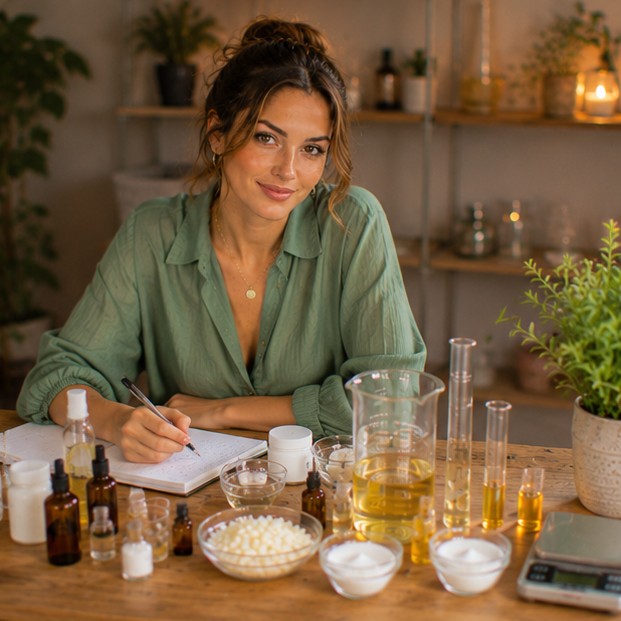
Preparation Step first Disinfect heat-safe glass beakers, mini whisk, digital scale, and an airless pump container with isopropyl alcohol. Step second Combine thirty-two milliliters of distilled water and zero point two grams of sodium phytate in the first heat-safe beaker. Step third Combine four milliliters of calendula infused jojoba oil and two grams of Olivem 1000 emulsifier in the second heat-safe beaker. Step fourth Heat both beakers in a water bath to seventy degrees Celsius until the emulsifier melts completely. Step fifth Slowly pour the water phase into the oil phase while whisking rapidly until a smooth emulsion forms, then allow it to cool below thirty-five degrees Celsius. Step sixth Incorporate one milliliter of D-panthenol and one milliliter of Euxyl K712 eco preservative into the cooled fluid, stirring gently for two minutes. Step seventh Measure the pH to confirm a reading of five point two, then transfer the cream into your airless pump bottle.
Recipe Third Botanical Peptide Recovery Gel with Phenoxyethanol System
A soothing, highly bioactive recovery gel preserved with a broad-spectrum phenoxyethanol and ethylhexylglycerin system.
Composition thirty-eight milliliters distilled water three milliliters botanical peptide complex one milliliter low molecular weight hyaluronic acid solution zero point five grams xanthan gum clear zero point two grams sodium phytate one milliliter Sharomix EG10 preservative
Preparation Step first Thoroughly sanitize glass beakers, glass stirring rods, digital scale, and a pump bottle using isopropyl alcohol. Step second Measure thirty-eight milliliters of room-temperature distilled water into a glass beaker and dissolve zero point two grams of sodium phytate into it. Step third Stir in one milliliter of low molecular weight hyaluronic acid solution until evenly distributed. Step fourth Sprinkle zero point five grams of xanthan gum clear over the liquid, allow fifteen minutes for full hydration, and stir into a smooth gel base. Step fifth Ensure the gel temperature is strictly below thirty degrees Celsius, then gently incorporate three milliliters of botanical peptide complex. Step sixth Add one milliliter of Sharomix EG10 preservative, stir for two minutes, and adjust the pH to five point five using dilute lactic acid. Step seventh Transfer the completed gel into your sanitized pump container.
Application Guidelines and Usage Recommendations
Proper usage habits prevent re-contaminating preserved formulations during daily application routines.
Dispense products using airless pumps, glass droppers, or clean spatulas rather than dipping fingers directly into containers. Dipping unwashed fingers introduces dermal bacteria, fungal spores, and moisture into the product, which can eventually overwhelm even robust preservative systems. Apply creams and serums to freshly cleansed skin every morning and evening as part of your regular skincare routine.
Storage Conditions and Product Preservation
Storage conditions directly impact preservative longevity and active ingredient stability over time.
Store all hand-formulated products in airless pump bottles or dark amber glass containers to limit exposure to light, oxygen, and atmospheric microbes. Keep products in a cool, dry location at stable ambient temperatures between ten and fifteen degrees Celsius, or on the top shelf of a cosmetic refrigerator. Keep container caps tightly sealed immediately after each use. Small-batch formulations preserved with broad-spectrum eco-certified systems remain micro-biologically stable, bioactive, and safe for three to six months when maintained within these storage parameters.


Cosmetic ingredients and professional formulation blog
This section features expert materials on modern cosmetic actives. We cover peptides, polynucleotides PDRN, different forms of hyaluronic acid, retinoids, ceramides and other key components.
Special focus is given to active stability, ingredient compatibility and correct incorporation into formulas. You will find practical guides on working with anti-age actives, moisturizing complexes and barrier repair ingredients.
We examine how to properly combine myorelaxants with peptides, common mistakes when using unstable vitamin C forms and ways to improve the performance of moisturizing actives.
Separate materials are dedicated to base oils, extracts, emulsifiers and supporting ingredients. This helps create stable and effective formulas for both professional and home cosmetics.
The blog regularly publishes reviews of trending actives, comparisons of similar ingredients and step-by-step formulation recommendations. The content is aimed at formulators, technologists and anyone seriously involved in creating cosmetic products.
Why this blog is useful
Here you will find practical data on eye area care actives, lifting systems and ingredients that improve skin firmness and tone. We rely on real formulation experience and address the actual challenges that arise during product development.
You can also explore materials on skin protection and repair, depigmentation and anti-inflammatory actives. This approach supports a more systematic selection of ingredients.
FAQ
What topics are covered most often
The blog focuses on peptides, PDRN, hyaluronic acid of different molecular weights, retinoids, ceramides and their compatibility rules.
Are there practical recommendations on how to incorporate actives
Yes, most articles include practical notes on pH stability, incorporation temperature and common formulation mistakes.
Is the content only for professionals
The materials are useful both for formulators and technologists and for those who create cosmetics for personal use and want to understand how modern ingredients work.
Where can I go directly to the ingredients
All key actives are collected in the Actives section, while base components are available in base oils and related categories.