-
 DIY: Video master classes
-
 Aromatherapy
-
 Felting master classes
-
 Eating at home
-
 DIY cosmetics for children
-
 Cooking recipes
-
 Detergents, cleaning products with your own hands
-
 Soap making as a business
-
 Natural cosmetics. Raw materials for cosmetics and soap.
-
 Natural oils in cosmetics
-
 News
-
 Recipes for balms and conditioners
-
 Bath Bomb Recipes
-
 Cream recipes. Cream making.
-
 Lotion recipes. Gel recipes.
-
 Mask recipes
-
 Soap recipes. Base soap. Soap from scratch.
-
 Recipes for all occasions
-
 Natural shampoo recipes
-
 Healthy Nutrition Recipes
-
 Scrub recipes. Massage tiles. Ubtan
-
 DIY candles
-
 Reference materials, questions, tips
-
 Startup - soap production
-
 Hair care. Tips, recipes
-
 Facial skin care. Cleansers.
-
 Body care. Tips, recipes
-
 Photo Reviews
-
 Chocolate Handmade


Acids in cosmetics AHA BHA PHA How to combine and introduce correctly
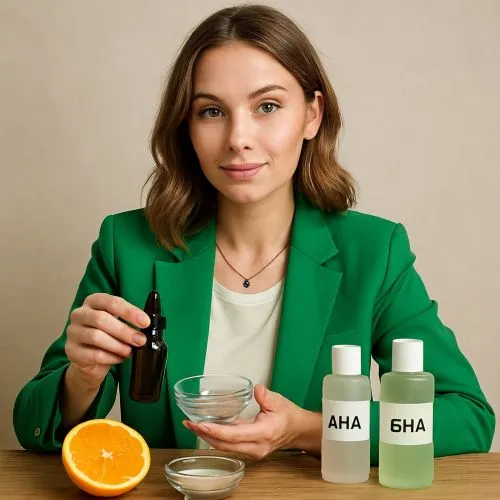 Exfoliating acids are among the most transformative ingredients in modern skincare. They are indispensable for improving skin texture addressing acne signs of aging and pigmentation. The three primary groups—Alpha Hydroxy Acids (AHA) Beta Hydroxy Acids (BHA) and Poly Hydroxy Acids (PHA)—each offer unique mechanisms of action. However their potency requires careful and precise formulation. Improper use can lead to irritation and barrier damage.
This comprehensive guide offers a deep dive into the science of AHA BHA and PHA detailing their different properties and target skin issues. We cover the crucial topic of combination and layering and provide precise instructions on pH control the single most important factor determining the safety and efficacy of acid products. Included are three detailed recipes and expert recommendations to help you harness the full power of acids creating stable and effective peels and serums that surpass commercial standards.
The Science of Exfoliation AHA BHA PHA Differentiation
Acids work by dissolving the bonds (desmosomes) that hold dead skin cells (corneocytes) together promoting shedding and revealing fresher skin underneath. Their effectiveness and depth of penetration depend primarily on their molecular structure and size.
1 Alpha Hydroxy Acids (AHA)
-
Examples: Glycolic Acid Lactic Acid Mandelic Acid.
-
Properties: Water-soluble. Glycolic Acid has the smallest molecule making it the most potent and penetrating. Lactic Acid is slightly larger and also acts as a humectant (moisturizer). Mandelic Acid is the largest and is gentler ideal for sensitive skin and treating pigmentation.
-
Primary Action: Exfoliate the skin surface stimulate collagen production and improve hydration.
2 Beta Hydroxy Acids (BHA)
-
Example: Salicylic Acid.
-
Properties: Oil-soluble. This unique property allows BHA to penetrate deep into the pores dissolving sebum and dead cell buildup.
-
Primary Action: Clears clogged pores reduces blackheads and has potent anti-inflammatory effects making it the gold standard for acne and oily skin.
3 Poly Hydroxy Acids (PHA)
-
Examples: Gluconolactone Lactobionic Acid.
-
Properties: Large molecular structure. PHA performs similar functions to AHA but their larger size prevents deep penetration reducing the potential for irritation. They also possess strong humectant and antioxidant properties.
-
Primary Action: Gentle exfoliation highly moisturizing and provides barrier reinforcement suitable for very sensitive or post-treatment skin.
Formulation Nuances Controlling pH is Critical
The efficacy and safety of an acid formula are governed by two factors: Total Concentration and Active pH. The free acid value (the amount of acid available to exfoliate) is dictated by the pH.
The pH-Concentration Relationship
-
High pH (above 45): At a higher pH the acid is mostly neutralized (in salt form) and acts more as a humectant or moisturizer with minimal exfoliation.
-
Low pH (below 35): At a low pH the acid is mostly un-ionized and highly active providing maximum exfoliation but posing a higher risk of irritation or chemical burn.
-
Optimal Range: For safe home use serums should target a pH between 35 and 40. Peels may drop to 30 but require extreme caution.
Combining Acids Safely
Acids can be combined for a multi-layered effect but require careful consideration:
-
Oily Skin (Acne/Congestion): Combine BHA (Salicylic) for pore cleansing with a small amount of AHA (Glycolic/Lactic) for surface smoothing.
-
Aging/Dry Skin: Combine Lactic Acid (AHA for hydration) with PHA (for gentle surface renewal and barrier support). Do not use high concentrations of strong AHA with strong BHA together.
Recipe 1 The Multi-Action Anti-Acne Serum (BHA and Lactic Acid)
A serum balancing pore clearing (BHA) with light surface smoothing and hydration (Lactic Acid).
Ingredients Needed
-
1 BHA Salicylic Acid powder 2 grams (Water Phase)
-
2 AHA Lactic Acid 88% solution 5 ml (Cooling Phase)
-
3 Buffer/Solvent Propanediol or Ethanol 5 ml (To dissolve Salicylic Acid)
-
4 Base Distilled Water 875 ml
-
5 Preservative 05 grams (Cooling Phase)
Step-by-Step Instructions
-
Step one Warm the Propanediol (5 ml) slightly in a beaker. Add the Salicylic Acid powder (2 grams) and stir until fully dissolved. Note: Salicylic Acid does not dissolve well in water alone.
-
Step two Add the Distilled Water (875 ml) to the Salicylic Acid solution.
-
Step three Add the Lactic Acid solution (5 ml).
-
Step four Add the Preservative (05 grams). Stir gently.
-
Step five Crucial Step: Measure pH. The target pH is 37 to 40. Use small drops of a base (like Triethanolamine) to raise the pH if it is below 35 or more Lactic Acid if it is above 40.
-
Step six Transfer the serum to a sterile dark bottle.
Recipe 2 Gentle PHA and Mandelic Acid Brightening Fluid
A mild blend using large-molecule acids for brightening and gentle exfoliation suitable for sensitive skin.
Ingredients Needed
-
1 PHA Gluconolactone powder 5 grams (Water Phase)
-
2 AHA Mandelic Acid powder 1 gram (Water Phase)
-
3 Base Distilled Water 895 ml
-
4 Humectant Aloe Vera Juice 4 ml
-
5 Preservative 05 grams (Cooling Phase)
Step-to-Step Instructions
-
Step one Combine Distilled Water (895 ml) and Aloe Vera Juice (4 ml). Warm slightly to help dissolution.
-
Step two Slowly add the Gluconolactone powder (5 grams) and Mandelic Acid powder (1 gram) to the water phase stirring until completely clear.
-
Step three Add the Preservative (05 grams). Stir well.
-
Step four Crucial Step: Measure pH. Gluconolactone is naturally acidic. The pH should land between 38 and 42. Adjust if necessary using Lactic Acid or a base.
-
Step five Store the fluid in an airless pump bottle to protect the actives.
Recipe 3 High-Potency Resurfacing Gel (Glycolic Acid Peel)
A high-concentration formula (use with caution and patch testing) for advanced exfoliation.
Ingredients Needed
-
1 AHA Glycolic Acid 70% solution 15 ml
-
2 Viscosity Builder Xanthan Gum powder 05 grams (Water Phase)
-
3 Base Distilled Water 84 ml
-
4 Preservative 05 grams (Cooling Phase)
Step-to-Step Instructions
-
Step one In a clean beaker combine Distilled Water (84 ml) and sprinkle the Xanthan Gum powder (05 grams) over the surface. Allow it to hydrate for 15 minutes until a gel forms. Whisk gently to smooth.
-
Step two Slowly and carefully add the Glycolic Acid solution (15 ml) to the gel. Mix thoroughly.
-
Step three Add the Preservative (05 grams).
-
Step four Critical Step: Measure pH. For a peel concentration (10% Glycolic Acid finished product) the pH must be between 30 and 35. Do not adjust pH upward unless absolutely necessary to keep it above 30, as the goal is maximum activity.
-
Step five Bottle the product in a sterile airless pump container.
Detailed Recommendations for Use and Storage
Usage Guide for Acid Products
-
Sun Protection is Mandatory: Acids increase skin sensitivity to the sun. Daily use of broad-spectrum sunscreen (SPF 30+) is non-negotiable when using any AHA or BHA product.
-
Introduction: Introduce new acid products slowly. Start with 2-3 times per week and increase frequency only if no irritation occurs.
-
Moisture Barrier: Always follow acid application with a gentle non-occlusive moisturizer to support the skin barrier. Do not use retinoids or Vitamin C at the same time as high-concentration acids.
-
Patch Test: Always apply a small amount of the product to a discreet area (behind the ear or inner arm) and wait 24 hours before applying to the entire face especially with high-potency peels (Recipe 3).
Storage and Shelf Life
-
Container: Acids are generally stable but should be stored in dark opaque containers as light can degrade some actives and accelerate instability.
-
Temperature: Store acid serums and peels in a cool dark place. Extreme heat can change the pH and stability of the formula leading to degradation or loss of efficacy.
-
Shelf Life: Properly formulated and preserved acid serums usually last 2-3 months. Discard immediately if the color changes drastically or the formula becomes cloudy or develops an off-odor.
Advantages Over Industrial Analogs
Formulating your own acid treatments provides unique control and potency that commercial products often lack:

-
Precise pH Control: You control the single most crucial factor the active pH. Commercial products often raise the pH (buffering) to reduce liability making them gentler but significantly less effective. You can target the optimal pH (35-40) for maximum exfoliation.
-
Tailored Concentration: You choose the exact concentration needed for your skin type (e.g. 2% Salicylic Acid for acne or 5% Lactic Acid for dry skin) rather than being limited by standard formulations.
-
Synergistic Blends: You can create custom synergistic blends (like BHA and Lactic Acid) to target both pores and surface texture simultaneously in one product.
-
Purity and Cost-Effectiveness: You ensure the formula contains only the necessary acids and support ingredients avoiding unnecessary fillers fragrances and dyes common in mass-produced items thus getting a high-potency product for a fraction of the cost.
By understanding the relationship between concentration molecular size and pH you gain the power to create professional-grade exfoliating treatments perfectly tailored to your skin's needs.


Cosmetic ingredients and professional formulation blog
This section features expert materials on modern cosmetic actives. We cover peptides, polynucleotides PDRN, different forms of hyaluronic acid, retinoids, ceramides and other key components.
Special focus is given to active stability, ingredient compatibility and correct incorporation into formulas. You will find practical guides on working with anti-age actives, moisturizing complexes and barrier repair ingredients.
We examine how to properly combine myorelaxants with peptides, common mistakes when using unstable vitamin C forms and ways to improve the performance of moisturizing actives.
Separate materials are dedicated to base oils, extracts, emulsifiers and supporting ingredients. This helps create stable and effective formulas for both professional and home cosmetics.
The blog regularly publishes reviews of trending actives, comparisons of similar ingredients and step-by-step formulation recommendations. The content is aimed at formulators, technologists and anyone seriously involved in creating cosmetic products.
Why this blog is useful
Here you will find practical data on eye area care actives, lifting systems and ingredients that improve skin firmness and tone. We rely on real formulation experience and address the actual challenges that arise during product development.
You can also explore materials on skin protection and repair, depigmentation and anti-inflammatory actives. This approach supports a more systematic selection of ingredients.
FAQ
What topics are covered most often
The blog focuses on peptides, PDRN, hyaluronic acid of different molecular weights, retinoids, ceramides and their compatibility rules.
Are there practical recommendations on how to incorporate actives
Yes, most articles include practical notes on pH stability, incorporation temperature and common formulation mistakes.
Is the content only for professionals
The materials are useful both for formulators and technologists and for those who create cosmetics for personal use and want to understand how modern ingredients work.
Where can I go directly to the ingredients
All key actives are collected in the Actives section, while base components are available in base oils and related categories.


