-
 DIY: Video master classes
-
 Aromatherapy
-
 Felting master classes
-
 Eating at home
-
 DIY cosmetics for children
-
 Cooking recipes
-
 Detergents, cleaning products with your own hands
-
 Soap making as a business
-
 Natural cosmetics. Raw materials for cosmetics and soap.
-
 Natural oils in cosmetics
-
 News
-
 Recipes for balms and conditioners
-
 Bath Bomb Recipes
-
 Cream recipes. Cream making.
-
 Lotion recipes. Gel recipes.
-
 Mask recipes
-
 Soap recipes. Base soap. Soap from scratch.
-
 Recipes for all occasions
-
 Natural shampoo recipes
-
 Healthy Nutrition Recipes
-
 Scrub recipes. Massage tiles. Ubtan
-
 DIY candles
-
 Reference materials, questions, tips
-
 Startup - soap production
-
 Hair care. Tips, recipes
-
 Facial skin care. Cleansers.
-
 Body care. Tips, recipes
-
 Photo Reviews
-
 Chocolate Handmade


How to create a light moisturizing cream with modern emulsifiers
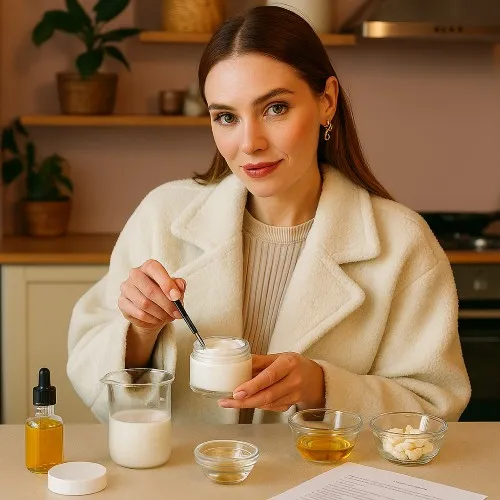
 Creating your own moisturizing cream is a rewarding process that gives you complete control over the ingredients, texture, and effectiveness of your skincare. While traditional creams can feel heavy and greasy, modern cosmetic science has given us a new generation of emulsifiers that allow for the creation of incredibly light, fast-absorbing creams. These emulsifiers are key to a professional-grade product that feels luxurious and works beautifully on the skin. This article will be your comprehensive guide to how to create a light moisturizing cream with modern emulsifiers. We'll delve into the science of emulsions, explore three detailed recipes using popular emulsifiers, and highlight the significant advantages of homemade products over their commercial counterparts.
The Role of Emulsifiers in Cream Formulation
At its core, a cream is an emulsion—a stable mixture of oil and water. Oil and water don't naturally mix, and that's where emulsifiers come in. An emulsifier is a molecule with both an oil-loving end (lipophilic) and a water-loving end (hydrophilic). It acts as a bridge, holding the oil and water phases together in a stable, uniform cream.
Modern emulsifiers, like Olivem 1000 and BTMS-50, are different from older ones. They are often derived from natural sources and are designed to create elegant textures and provide a silky, non-greasy feel. They also offer additional benefits, such as conditioning properties and skin-friendly pH levels, making them a cornerstone of modern DIY cosmetic formulation.
Three Recipes for a Light Moisturizing Cream
These three recipes are designed for different skin types and use a variety of popular emulsifiers.
Recipe 1: The All-Purpose Lightweight Cream (using Olivem 1000)
Olivem 1000 is a natural emulsifier derived from olive oil. It creates a beautiful, lamellar gel-cream that feels light and provides deep hydration.
-
Prepare the water phase. In a sterilized beaker, combine 70g of distilled water and 5g of vegetable glycerin. Heat this phase to 70°C.
-
Prepare the oil phase. In a separate beaker, combine 15g of a light oil like grapeseed or jojoba oil and 5g of Olivem 1000. Heat this phase to 70°C, stirring gently until the Olivem 1000 is fully melted.
-
Emulsify. Pour the hot water phase into the hot oil phase while mixing with a hand blender. Blend in short pulses until a creamy, uniform emulsion forms. Continue mixing as the lotion cools to a creamy consistency.
-
Add actives and preservative. When the cream drops to below 40°C, add 4g of a humectant like panthenol and 1g of a broad-spectrum preservative like Geogard 221. Stir thoroughly.
-
Package and store. Transfer the finished cream to a clean, airtight jar or pump bottle.
Recommendations for Use: Apply a small amount to your face morning and night. The cream absorbs quickly, making it ideal for use under makeup.
Storage: Store in a cool, dark place. The shelf life is up to 3 months.
Recipe 2: The Nourishing and Silky Cream (using BTMS-50)
BTMS-50 is a conditioning emulsifier that leaves a silky, powdery finish on the skin. It’s perfect for a nourishing but non-greasy cream.
-
Prepare the water phase. In a sterilized beaker, combine 65g of distilled water and 5g of aloe vera juice. Heat this phase to 70°C.
-
Prepare the oil phase. In a separate beaker, combine 15g of shea butter for nourishment and 10g of BTMS-50. Heat this phase to 70°C, stirring until both ingredients are fully melted.
-
Emulsify. Pour the hot water phase into the hot oil phase, mixing with a hand blender until a stable emulsion forms. Continue mixing as the cream cools.
-
Add actives and preservative. When the cream drops to below 40°C, add 4g of niacinamide powder and 1g of a broad-spectrum preservative. Stir well.
-
Package and store. Transfer the finished cream to a clean, airtight container.
Recommendations for Use: This cream is perfect for dry skin that needs extra moisture but hates a greasy feel. Use it on your face or body.
Storage: Store in a cool, dark place. The shelf life is up to 3 months.
Recipe 3: The Ultra-Light Gel-Cream (using Montanov 68)
Montanov 68 is a great choice for creating an extremely light, fluid texture that feels almost like a gel but has the benefits of a cream.
-
Prepare the water phase. In a sterilized beaker, combine 75g of distilled water. Heat to 70°C.
-
Prepare the oil phase. In a separate beaker, combine 10g of a light oil like sweet almond oil and 5g of Montanov 68. Heat to 70°C, stirring until the emulsifier is fully melted.
-
Emulsify. Pour the hot water phase into the hot oil phase, mixing with a hand blender. The mixture will turn into a fluid gel-cream. Continue to mix gently as it cools.
-
Add a key humectant and preservative. When the temperature drops below 40°C, add 5g of panthenol and 1g of a broad-spectrum preservative. Stir thoroughly.
-
Package and store. Pour the gel-cream into a pump bottle.
Recommendations for Use: This formula is perfect for oily or combination skin that needs hydration without any heaviness.
Storage: Store in a cool, dark place. The shelf life is up to 3 months.
Advantages Over Industrial Alternatives
Creating your own cream with modern emulsifiers offers a superior product compared to many commercial ones.
-
Ingredient Transparency and Control: You know exactly what’s in your cream. Commercial products often use synthetic fillers, fragrances, and cheap, occlusive oils to cut costs. By making your own, you can ensure every ingredient serves a purpose.
-
Superior Texture and Feel: Many industrial creams can feel heavy and leave a greasy film. Modern emulsifiers allow you to create creams that are light, fast-absorbing, and leave a silky, smooth finish.
-
Customization and Potency: You can tailor your cream to your exact skin needs. Want more nourishment? Add more of your favorite oil. Need more hydration? Increase the glycerin. You also get to use active ingredients at their effective concentrations, which is often not the case with mass-market products.
-
Cost-Effectiveness: High-quality creams with premium ingredients are often very expensive. Making your own allows you to get a product of equal or greater quality for a fraction of the cost.
By learning to use modern emulsifiers, you can elevate your DIY cosmetic skills and create a product that is perfectly suited to your skin, providing benefits that go far beyond what a store-bought cream can offer.


Cosmetic ingredients and professional formulation blog
This section features expert materials on modern cosmetic actives. We cover peptides, polynucleotides PDRN, different forms of hyaluronic acid, retinoids, ceramides and other key components.
Special focus is given to active stability, ingredient compatibility and correct incorporation into formulas. You will find practical guides on working with anti-age actives, moisturizing complexes and barrier repair ingredients.
We examine how to properly combine myorelaxants with peptides, common mistakes when using unstable vitamin C forms and ways to improve the performance of moisturizing actives.
Separate materials are dedicated to base oils, extracts, emulsifiers and supporting ingredients. This helps create stable and effective formulas for both professional and home cosmetics.
The blog regularly publishes reviews of trending actives, comparisons of similar ingredients and step-by-step formulation recommendations. The content is aimed at formulators, technologists and anyone seriously involved in creating cosmetic products.
Why this blog is useful
Here you will find practical data on eye area care actives, lifting systems and ingredients that improve skin firmness and tone. We rely on real formulation experience and address the actual challenges that arise during product development.
You can also explore materials on skin protection and repair, depigmentation and anti-inflammatory actives. This approach supports a more systematic selection of ingredients.
FAQ
What topics are covered most often
The blog focuses on peptides, PDRN, hyaluronic acid of different molecular weights, retinoids, ceramides and their compatibility rules.
Are there practical recommendations on how to incorporate actives
Yes, most articles include practical notes on pH stability, incorporation temperature and common formulation mistakes.
Is the content only for professionals
The materials are useful both for formulators and technologists and for those who create cosmetics for personal use and want to understand how modern ingredients work.
Where can I go directly to the ingredients
All key actives are collected in the Actives section, while base components are available in base oils and related categories.