-
 DIY: Video master classes
-
 Aromatherapy
-
 Felting master classes
-
 Eating at home
-
 DIY cosmetics for children
-
 Cooking recipes
-
 Detergents, cleaning products with your own hands
-
 Soap making as a business
-
 Natural cosmetics. Raw materials for cosmetics and soap.
-
 Natural oils in cosmetics
-
 News
-
 Recipes for balms and conditioners
-
 Bath Bomb Recipes
-
 Cream recipes. Cream making.
-
 Lotion recipes. Gel recipes.
-
 Mask recipes
-
 Soap recipes. Base soap. Soap from scratch.
-
 Recipes for all occasions
-
 Natural shampoo recipes
-
 Healthy Nutrition Recipes
-
 Scrub recipes. Massage tiles. Ubtan
-
 DIY candles
-
 Reference materials, questions, tips
-
 Startup - soap production
-
 Hair care. Tips, recipes
-
 Facial skin care. Cleansers.
-
 Body care. Tips, recipes
-
 Photo Reviews
-
 Chocolate Handmade


How to make a stable emulsion with a high content of oils and plant extracts
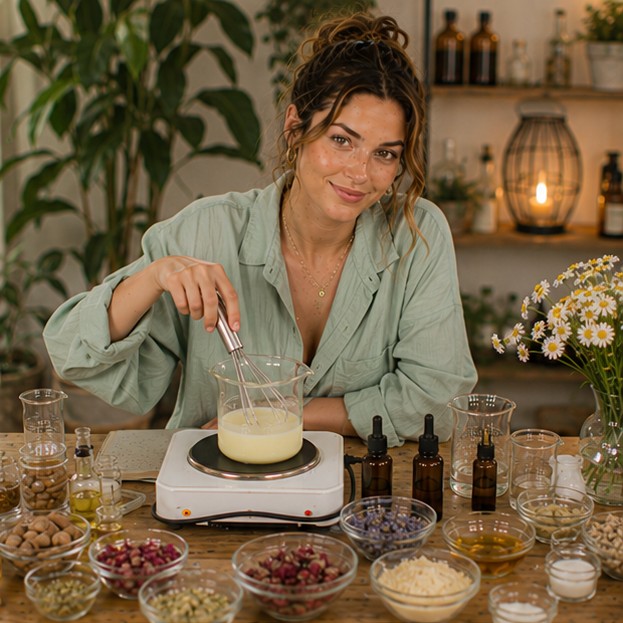 Formulating a stable cosmetic emulsion with a high lipid phase—exceeding thirty percent of the total formula weight—presents a complex technical challenge. When increasing the volume of plant oils and introducing highly concentrated dry or liquid botanical extracts, the interfacial tension at the boundary between the oil and water phases increases significantly. Without proper structuring, such a system is susceptible to rapid coalescence, creaming, and complete phase separation.
The introduction of botanical extracts places an additional load on the emulsification system. Extracts contain natural salts, tannins, organic acids, and polysaccharides that act as electrolytes. These electrolytes disrupt the hydration shells surrounding emulsifier molecules, thin the gel network in the aqueous phase, and induce flocculation. Creating a rich, homogeneous cream requires employing dual emulsifier complexes, hydrocolloid gelling agents, and strict sequencing during phase combination.
Technical Strategies for Preventing Phase Separation and Syneresis
Achieving a smooth, stable cream with high concentrations of oils and plant extracts without risking texture loss involves key formulation protocols.
Core Principles for High-Lipid Formulations First Principle Utilize a combination of primary and secondary emulsifiers. Pair non-ionic emulsifiers derived from olive or polyglyceryl bases with co-emulsifiers such as cetearyl alcohol, glyceryl stearate, or natural waxes. This builds a dense liquid-crystal lattice at the oil-water interface. Second Principle Structure the aqueous phase using water-soluble hydrocolloids. Incorporating xanthan gum or high-purity gelling polymers at a concentration of zero point two percent increases the viscosity of the continuous phase, effectively locking oil droplets in place. Third Principle Prepare a separate slurry for dry or liquid botanical extracts. Never add dry powders directly into hot oil or water phases. Pre-dissolve them in a small volume of warm water or glycerin at temperatures below thirty degrees Celsius. Fourth Principle Incorporate reliable chelating agents. Adding sodium phytate neutralizes trace metal ions present in natural extracts, preventing oxidation, discoloration, and structural breakdown.
Temperature Management, Active Incorporation, and pH Calibration
Preserving the biological potency of delicate cold-pressed oils and botanical extracts requires strict thermal boundary controls.
Thermal Thresholds and Phase Combination Heat both the water and oil phases to identical temperatures before combining to ensure complete initial emulsification using a high-shear mixer. However, heat-sensitive cold-pressed oils and water-soluble extracts must be introduced exclusively during the cooling phase. Ensure the emulsion temperature drops below thirty degrees Celsius before adding these components to prevent the degradation of vitamins, flavonoids, and essential fatty acids.
Calibrating pH Levels Botanical extracts often shift the formulation toward higher acidity. Maintain the final product within a pH range of five point zero to five point five. This range preserves the integrity of the liquid-crystal emulsion network, supports the natural skin barrier, and optimizes the efficacy of mild preservatives.
Key Advantages of Custom High-Lipid Emulsions Over Commercial Alternatives
Commercial mass-market manufacturers often replace expensive natural plant oils with synthetic emollients, mineral oils, and silicones to minimize production costs. To stabilize high-oil systems for a three-year shelf life, commercial formulas frequently rely on harsh synthetic emulsifiers and heavy thickeners.
The actual concentration of botanical extracts in commercial creams rarely exceeds a fraction of one percent, as high doses of raw plant extracts make automated filling difficult and lead to batch-to-batch color variations.
Handcrafted, high-lipid formulations offer distinct performance advantages: They utilize pure, unrefined plant oils and concentrated botanical extracts free from synthetic fillers. They deliver high concentrations of bioavailable lipids that actively rebuild the cutaneous barrier, restore elasticity, and prevent trans-epidermal water loss. They eliminate reliance on mineral oil, petrolatum, silicones, and artificial fragrance compounds. They result in fresh, biologically active treatments optimized for intensive skincare routines.
Equipment Sanitization Protocols
Working with high oil concentrations and raw plant extracts requires immaculate hygiene to avoid microbial contamination.
Sanitize all work surfaces with a disinfectant solution. Wash hands thoroughly with antibacterial soap and put on sterile gloves. All tools—including heat-resistant glass beakers, glass stirring rods, high-shear mini-mixers, digital scales, pipettes, and storage jars—must be washed, rinsed with distilled water, and thoroughly sprayed with seventy percent isopropyl alcohol. Allow all equipment to air-dry completely on clean paper towels before starting.
Recipe One Soothing Barrier-Repair Cream with Centella and Avocado Oil
A deeply nourishing emulsion designed to rebuild the skin's protective barrier, reduce redness, and soothe sensitive or damaged skin.
Ingredients thirty-three milliliters distilled water ten milliliters cold-pressed avocado oil eight milliliters macadamia nut oil three grams Olivem 1000 emulsifier two grams cetearyl alcohol zero point two grams xanthan gum zero point three grams dry centella asiatica extract zero point two grams sodium phytate one milliliter D-panthenol one milliliter Geogard 221 preservative
Preparation Step One Sanitize glass beakers, stirring rods, mixer attachments, scales, and glass jars with isopropyl alcohol. Step Two In the first beaker, combine thirty milliliters of distilled water, zero point two grams of sodium phytate, and zero point two grams of xanthan gum, mixing until a smooth liquid gel forms. Step Three In the second beaker, combine ten milliliters of avocado oil, eight milliliters of macadamia oil, three grams of Olivem 1000, and two grams of cetearyl alcohol. Step Four Heat both beakers in a water bath until the emulsifier and alcohol are completely melted, then remove from heat. Step Five Slowly pour the water phase into the oil phase while blending with a mini-mixer for three minutes until a uniform white cream forms. Step Six In a separate small container, dissolve zero point three grams of dry centella asiatica extract in three milliliters of warm water, then stir in one milliliter of D-panthenol. Step Seven Allow the main cream mixture to cool below thirty degrees Celsius, then stir in the prepared centella solution and one milliliter of Geogard 221 preservative. Step Eight Stir thoroughly for two minutes, verify that the pH measures five point five, and transfer the cream into a sanitized jar.
Recipe Two Age-Defying Lipid Cream with Rosehip and Green Tea Extract
A rich, antioxidant-packed emulsion engineered to improve elasticity, combat environmental stress, and smooth fine lines.
Ingredients thirty milliliters organic rose hydrosol twelve milliliters argan oil eight milliliters cold-pressed rosehip seed oil four grams Planta M emulsifier two grams natural beeswax zero point three grams dry green tea extract zero point five milliliters vitamin E tocopherol one milliliter Euxyl K712 preservative
Preparation Step One Sanitize all heat-resistant glassware, tools, mixers, and containers with isopropyl alcohol. Step Two In the first beaker, measure twenty-seven milliliters of rose hydrosol. Step Three In the second beaker, combine twelve milliliters of argan oil, four grams of Planta M emulsifier, and two grams of natural beeswax. Step Four Place both beakers in a water bath and heat until the beeswax and emulsifier are fully melted. Step Five Combine the heated phases and process with a mini-mixer for four minutes until a rich emulsion base develops. Step Six Dissolve zero point three grams of dry green tea extract in three milliliters of warm rose hydrosol. Step Seven Cool the emulsion below thirty degrees Celsius, then mix in eight milliliters of heat-sensitive rosehip seed oil, the green tea extract solution, zero point five milliliters of vitamin E, and one milliliter of Euxyl K712 preservative. Step Eight Mix well until completely smooth, verify that the pH measures five point zero, and pack into a dark glass container.
Recipe Three Regenerating Restorative Cream with Calendula and Hemp Seed Oil
An intensive botanical cream designed to accelerate skin recovery, calm inflammation, and protect skin against severe weather.
Ingredients thirty-two milliliters distilled water ten milliliters unrefined hemp seed oil eight milliliters calendula macerated oil four grams Olivem 1000 emulsifier one gram stearic acid zero point three grams dry calendula flower extract one milliliter vegetable glycerin one milliliter Sharomix EG10 preservative
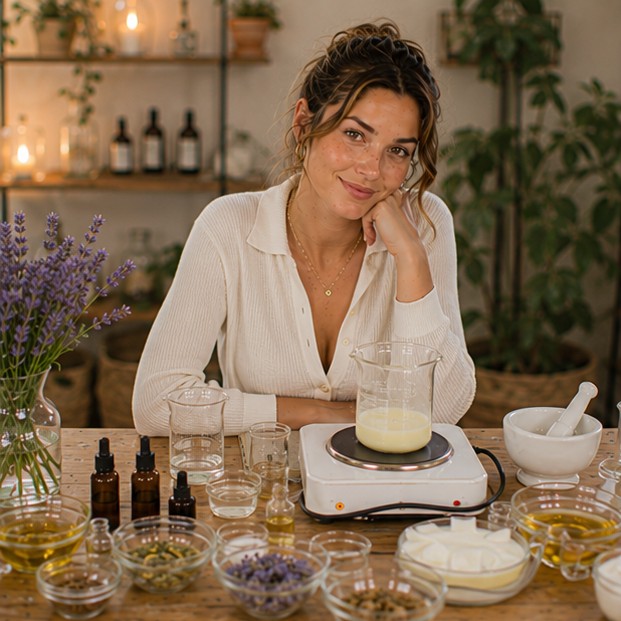
Preparation Step One Disinfect all glass beakers, tools, mixers, and jars thoroughly with isopropyl alcohol. Step Two In the first beaker, mix thirty milliliters of distilled water with one milliliter of vegetable glycerin. Step Three In the second beaker, blend eight milliliters of calendula macerated oil, four grams of Olivem 1000, and one gram of stearic acid. Step Four Heat both containers in a water bath until all solid waxes and emulsifiers have melted completely. Step Five Pour the water phase into the oil phase, blending continuously with a mini-mixer to build a smooth cream structure. Step Six Pre-dissolve zero point three grams of dry calendula flower extract in two milliliters of warm water. Step Seven Once the emulsion cools below thirty degrees Celsius, add ten milliliters of temperature-sensitive hemp seed oil, the calendula extract solution, and one milliliter of Sharomix EG10 preservative. Step Eight Mix for three minutes to ensure uniformity, adjust the pH to five point five, and transfer to a sanitized jar.
Daily Application Guidelines
Proper application techniques ensure that lipid-rich botanical emulsions absorb effectively without leaving an uncomfortable greasy residue.
Apply high-lipid botanical creams in the evening roughly forty minutes before sleep, or in the morning as a protective barrier shield. Start with thoroughly cleansed and toned skin. Take a small, pea-sized amount of cream, warm it between fingertips for a few seconds to soften the plant waxes, and press it gently onto the face, neck, and décolletage along facial massage lines. For extra hydration, apply a lightweight hyaluronic acid serum prior to applying the cream. Always perform a patch test on the inner forearm twenty-four hours before using a new botanical formula.
Storage Conditions and Shelf-Life Specifications
Emulsions packed with active plant lipids and botanical extracts require careful storage to prevent lipid oxidation and preserve emulsion stability.
Store finished creams in tightly sealed dark glass jars or airless pump containers to minimize exposure to light and oxygen. Keep formulations in a cool, dark location or a dedicated cosmetics refrigerator at temperatures between eight and fourteen degrees Celsius. Always use a clean, sanitized cosmetic spatula rather than fingers to retrieve cream from open jars to prevent bacterial contamination. When formulated under strict sanitary conditions with appropriate broad-spectrum preservatives, these high-lipid botanical creams maintain structural integrity, phase stability, and biological activity for three to four months.


Cosmetic ingredients and professional formulation blog
This section features expert materials on modern cosmetic actives. We cover peptides, polynucleotides PDRN, different forms of hyaluronic acid, retinoids, ceramides and other key components.
Special focus is given to active stability, ingredient compatibility and correct incorporation into formulas. You will find practical guides on working with anti-age actives, moisturizing complexes and barrier repair ingredients.
We examine how to properly combine myorelaxants with peptides, common mistakes when using unstable vitamin C forms and ways to improve the performance of moisturizing actives.
Separate materials are dedicated to base oils, extracts, emulsifiers and supporting ingredients. This helps create stable and effective formulas for both professional and home cosmetics.
The blog regularly publishes reviews of trending actives, comparisons of similar ingredients and step-by-step formulation recommendations. The content is aimed at formulators, technologists and anyone seriously involved in creating cosmetic products.
Why this blog is useful
Here you will find practical data on eye area care actives, lifting systems and ingredients that improve skin firmness and tone. We rely on real formulation experience and address the actual challenges that arise during product development.
You can also explore materials on skin protection and repair, depigmentation and anti-inflammatory actives. This approach supports a more systematic selection of ingredients.
FAQ
What topics are covered most often
The blog focuses on peptides, PDRN, hyaluronic acid of different molecular weights, retinoids, ceramides and their compatibility rules.
Are there practical recommendations on how to incorporate actives
Yes, most articles include practical notes on pH stability, incorporation temperature and common formulation mistakes.
Is the content only for professionals
The materials are useful both for formulators and technologists and for those who create cosmetics for personal use and want to understand how modern ingredients work.
Where can I go directly to the ingredients
All key actives are collected in the Actives section, while base components are available in base oils and related categories.



