-
 DIY: Video master classes
-
 Aromatherapy
-
 Felting master classes
-
 Eating at home
-
 DIY cosmetics for children
-
 Cooking recipes
-
 Detergents, cleaning products with your own hands
-
 Soap making as a business
-
 Natural cosmetics. Raw materials for cosmetics and soap.
-
 Natural oils in cosmetics
-
 News
-
 Recipes for balms and conditioners
-
 Bath Bomb Recipes
-
 Cream recipes. Cream making.
-
 Lotion recipes. Gel recipes.
-
 Mask recipes
-
 Soap recipes. Base soap. Soap from scratch.
-
 Recipes for all occasions
-
 Natural shampoo recipes
-
 Healthy Nutrition Recipes
-
 Scrub recipes. Massage tiles. Ubtan
-
 DIY candles
-
 Reference materials, questions, tips
-
 Startup - soap production
-
 Hair care. Tips, recipes
-
 Facial skin care. Cleansers.
-
 Body care. Tips, recipes
-
 Photo Reviews
-
 Chocolate Handmade


How to make a lightweight peptide toner that doesn't feel tight and absorbs well
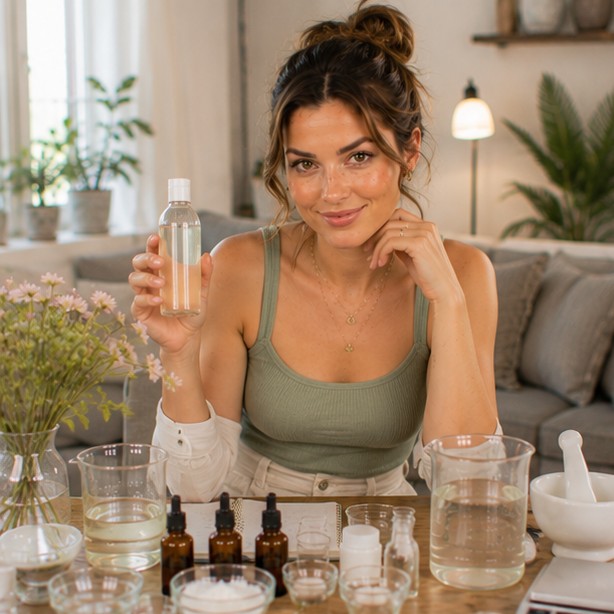 Topical peptides serve as cell-signaling messengers that direct skin cells to produce structural collagen, elastin, and extracellular matrix components. In a traditional toner, active absorption is frequently hindered by poor vehicle formulation. When a facial toner leaves a sticky residue or creates an uncomfortable tightening sensation upon drying, it usually stems from an imbalance in molecular weight distribution or an overreliance on film-forming polymers. Tightness occurs when large hyaluronate molecules dry on the skin surface in a low-humidity environment, drawing moisture out of the upper epidermal layer rather than delivering deep hydration. By engineering a lightweight liquid vehicle with balanced osmotic properties, peptides can penetrate the stratum corneum rapidly without leaving a tacky film or pulling moisture from the cutaneous barrier.
Key Principles for Formulating a Non-Sticky Fast-Absorbing Base
Achieving weightless absorption requires precise balancing of humectants, penetration enhancers, and pH regulators.
Formulation parameters for optimal absorption Principle first Limit heavy polyols like high-concentration glycerin or propylene glycol to under three percent. Excessive glycerin creates a persistent sticky layer on skin surface. Replace heavy polyols with lightweight D-panthenol or propanediol. Principle second Utilize low molecular weight hyaluronic acid instead of high molecular weight variants. Low molecular weight molecules sink quickly into dermal layers, providing deep hydration without forming a tight surface film. Principle third Maintain a strict formulation pH between five point five and six point five. This range respects natural skin mantle acidity while preventing peptide chain hydrolysis. Principle fourth Incorporate bioactive peptides exclusively during the cool-down phase at temperatures strictly below thirty degrees Celsius to prevent thermal denaturation of signal molecules.
Advantages of Custom Homemade Peptide Toners Over Mass-Market Products
Mass-produced commercial toners often compromise bioavailability for shelf stability and visual texture. Industrial formulations routinely rely on synthetic silicones, acrylates, and heavy solubilizers to create a smooth initial application feel. However, these film-forming agents create a physical barrier on the skin that blocks small-molecule peptides from penetrating deeply into the epidermis. Furthermore, mass-market products frequently contain minimal decorative concentrations of active peptides—often under zero point one percent—to keep manufacturing costs low, while utilizing harsh preservatives that can irritate sensitive skin.
Crafting a custom peptide toner gives you total control over ingredient purity and active dosage. You can incorporate genuine therapeutic concentrations of peptides, such as three to five percent active solution, into an ultra-pure aqueous vehicle. By eliminating unnecessary silicones, heavy gels, and synthetic fragrances, custom toners achieve superior skin penetration, instant cell uptake, zero tackiness, and zero skin tightness.
Workspace Hygiene and Equipment Sterilization Protocol
Water-heavy peptide formulations are susceptible to microbial growth, making immaculate laboratory hygiene essential during preparation.
Disinfect your working area with a broad-spectrum surface sanitizer. Wash hands thoroughly with warm water and antibacterial soap, then put on clean nitrile gloves. Clean all glass beakers, glass stirring rods, micro-pipettes, and packaging bottles. Rinse all equipment with distilled water to remove mineral residue, then spray thoroughly with seventy percent isopropyl alcohol. Allow all instruments to air-dry completely on fresh paper towels prior to measuring ingredients.
Recipe First Soothing Hydrating Peptide Toner with Matrixyl 3000
A lightweight, fast-absorbing daily toner designed to boost collagen synthesis, calm skin redness, and supply weightless moisture without tackiness.
Composition forty-two milliliters rose hydrosol two milliliters Matrixyl 3000 peptide complex one milliliter D-panthenol one milliliter low molecular weight hyaluronic acid solution three drops propanediol one milliliter Geogard 221 eco preservative
Preparation Step first Sanitize glass beakers, glass stirring rod, digital scale, and spray dispenser bottle using seventy percent isopropyl alcohol. Step second Measure forty-two milliliters of rose hydrosol into a clean glass beaker. Step third Add one milliliter of D-panthenol and three drops of propanediol to the hydrosol and stir with a glass rod until fully blended. Step fourth Blend in one milliliter of low molecular weight hyaluronic acid solution until the liquid is clear and completely homogeneous. Step fifth Confirm the solution temperature is strictly below thirty degrees Celsius, then add two milliliters of Matrixyl 3000 peptide complex. Step sixth Stir in one milliliter of Geogard 221 eco preservative, mix continuously for two minutes, and test the pH to ensure a reading between five point five and six point zero. Step seventh Decant the finished toner into your sanitized fine-mist spray dispenser.
Recipe Second Barrier Repair Copper Tripeptide GHK-Cu Water Toner
An ultra-fluid restorative toner engineered with copper peptide to accelerate tissue repair, soothe micro-inflammation, and rebuild skin density without skin tightness.
Composition forty-three milliliters distilled water zero point one grams GHK-Cu powder one milliliter D-panthenol one milliliter low molecular weight hyaluronic acid solution one milliliter Euxyl K712 eco preservative
Preparation Step first Disinfect glass beakers, glass stirring rod, digital scale, and dark glass bottle using seventy percent isopropyl alcohol. Step second Measure forty-three milliliters of distilled water at room temperature into a glass beaker. Step third Add zero point one grams of GHK-Cu powder to the water and stir gently until it dissolves into a clear, uniform light blue liquid. Step fourth Stir in one milliliter of D-panthenol and one milliliter of low molecular weight hyaluronic acid solution until uniform. Step fifth Add one milliliter of Euxyl K712 eco preservative and mix thoroughly for two minutes. Step sixth Verify that the formulation pH measures exactly six point zero using a digital pH meter or indicator strip. Step seventh Transfer the blue peptide toner into your sanitized dark glass bottle.
Recipe Third Anti-Aging Multi-Peptide Firming Toner
An advanced rejuvenation toner combining muscle-relaxing peptides with collagen-boosting signals for smooth, firm skin with instant absorption.
Composition forty-one milliliters cornflower hydrosol two milliliters Argireline peptide solution two milliliters Matrixyl 3000 peptide complex one milliliter D-panthenol one milliliter Sharomix EG10 eco preservative
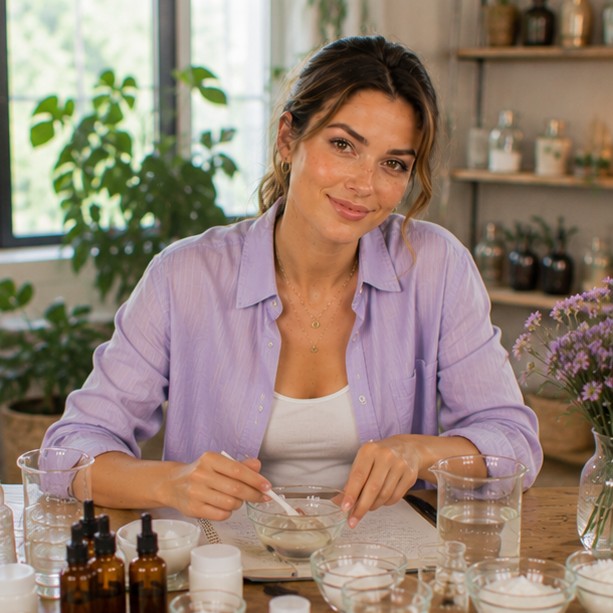
Preparation Step first Sanitize heat-safe glass beakers, glass rod, digital scale, and spray bottle using seventy percent isopropyl alcohol. Step second Measure forty-one milliliters of cornflower hydrosol into a glass beaker. Step third Blend in one milliliter of D-panthenol and stir with a glass rod until completely integrated into the liquid. Step fourth Ensure the mixture temperature is below thirty degrees Celsius, then stir in two milliliters of Argireline peptide solution and two milliliters of Matrixyl 3000 peptide complex. Step fifth Incorporate one milliliter of Sharomix EG10 eco preservative, mixing gently for two full minutes. Step sixth Measure the pH level and adjust to five point five using a drop of weak lactic acid solution if necessary. Step seventh Pour the firming toner into your sanitized fine-mist spray dispenser.
Application Protocol and Daily Regimen Integration
Correct application technique maximizes active peptide delivery while preventing any sensation of skin tightness.
Apply your peptide toner twice daily, morning and evening, immediately after cleansing while the skin is still slightly damp. Spray two to three pumps directly onto the face and neck, or mist into clean palms and gently press the liquid into the skin. Pat lightly until completely absorbed, which should occur within ten to fifteen seconds without leaving any tacky residue. Follow immediately with your favorite lightweight moisturizer or face oil to lock in the hydration. If your routine includes direct exfoliants like AHA, BHA, or pure ascorbic acid, use those acidic treatments at a separate time of day, or wait twenty to thirty minutes before applying your peptide toner to ensure your skin pH has normalized.
Storage Rules and Shelf-Life Guidelines
Preserving peptide stability requires proper environmental control to maintain active bioactivity.
Store custom peptide toners in dark glass bottles or opaque spray dispensers to shield active molecules from light degradation. Keep formulations in a cool, dark room at stable ambient temperatures between eight and fourteen degrees Celsius, or on the upper shelf of a cosmetic refrigerator. Never leave your toner exposed to direct sunlight or warm, humid bathroom conditions. When formulated under strict sanitary conditions and preserved with broad-spectrum eco-certified systems, custom peptide toners remain stable and fully active for six to eight weeks.


Cosmetic ingredients and professional formulation blog
This section features expert materials on modern cosmetic actives. We cover peptides, polynucleotides PDRN, different forms of hyaluronic acid, retinoids, ceramides and other key components.
Special focus is given to active stability, ingredient compatibility and correct incorporation into formulas. You will find practical guides on working with anti-age actives, moisturizing complexes and barrier repair ingredients.
We examine how to properly combine myorelaxants with peptides, common mistakes when using unstable vitamin C forms and ways to improve the performance of moisturizing actives.
Separate materials are dedicated to base oils, extracts, emulsifiers and supporting ingredients. This helps create stable and effective formulas for both professional and home cosmetics.
The blog regularly publishes reviews of trending actives, comparisons of similar ingredients and step-by-step formulation recommendations. The content is aimed at formulators, technologists and anyone seriously involved in creating cosmetic products.
Why this blog is useful
Here you will find practical data on eye area care actives, lifting systems and ingredients that improve skin firmness and tone. We rely on real formulation experience and address the actual challenges that arise during product development.
You can also explore materials on skin protection and repair, depigmentation and anti-inflammatory actives. This approach supports a more systematic selection of ingredients.
FAQ
What topics are covered most often
The blog focuses on peptides, PDRN, hyaluronic acid of different molecular weights, retinoids, ceramides and their compatibility rules.
Are there practical recommendations on how to incorporate actives
Yes, most articles include practical notes on pH stability, incorporation temperature and common formulation mistakes.
Is the content only for professionals
The materials are useful both for formulators and technologists and for those who create cosmetics for personal use and want to understand how modern ingredients work.
Where can I go directly to the ingredients
All key actives are collected in the Actives section, while base components are available in base oils and related categories.



