-
 DIY: Video master classes
-
 Aromatherapy
-
 Felting master classes
-
 Eating at home
-
 DIY cosmetics for children
-
 Cooking recipes
-
 Detergents, cleaning products with your own hands
-
 Soap making as a business
-
 Natural cosmetics. Raw materials for cosmetics and soap.
-
 Natural oils in cosmetics
-
 News
-
 Recipes for balms and conditioners
-
 Bath Bomb Recipes
-
 Cream recipes. Cream making.
-
 Lotion recipes. Gel recipes.
-
 Mask recipes
-
 Soap recipes. Base soap. Soap from scratch.
-
 Recipes for all occasions
-
 Natural shampoo recipes
-
 Healthy Nutrition Recipes
-
 Scrub recipes. Massage tiles. Ubtan
-
 DIY candles
-
 Reference materials, questions, tips
-
 Startup - soap production
-
 Hair care. Tips, recipes
-
 Facial skin care. Cleansers.
-
 Body care. Tips, recipes
-
 Photo Reviews
-
 Chocolate Handmade


How to make a cream with coenzyme Q10 hyaluronic acid and oils with your own hands
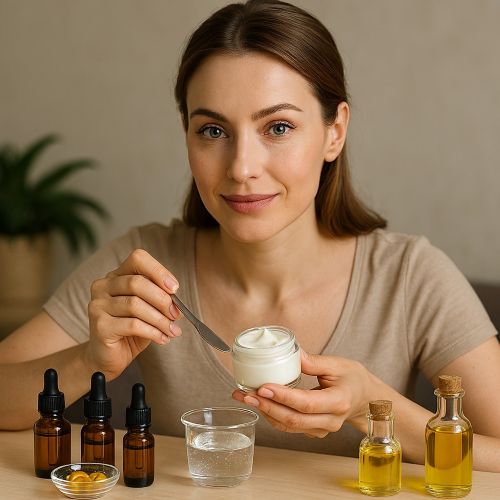 The quest for youthful, radiant skin has led many to the world of DIY cosmetics. By crafting your own skincare products, you gain full control over the ingredients, ensuring purity and potency. This article will guide you through the process of making a powerful anti-aging cream using three star ingredients: coenzyme Q10, hyaluronic acid, and nourishing plant-based oils. We will detail the unique properties of each component, explain the preparation nuances, and provide three detailed recipes with recommendations for use and storage. The benefits of homemade cosmetics over their industrial counterparts are clear: you get a fresh, effective product tailored to your skin's needs, free from unnecessary fillers and preservatives.
The Power Trio: Coenzyme Q10, Hyaluronic Acid, and Nourishing Oils
Understanding the role of each key ingredient is the first step to creating an effective anti-aging cream.
Coenzyme Q10 (CoQ10)
Coenzyme Q10 is a fat-soluble, vitamin-like substance that acts as a potent antioxidant. Our bodies naturally produce CoQ10, but its levels decrease with age. In skincare, it is a formidable ally against signs of aging.
-
Fights Free Radicals: As a powerful antioxidant, CoQ10 neutralizes free radicals, which are unstable molecules that damage skin cells and accelerate the aging process.
-
Boosts Cellular Energy: CoQ10 is vital for energy production within cells. By boosting this energy, it helps the skin repair itself and regenerate more effectively.
-
Reduces Fine Lines and Wrinkles: Regular application of CoQ10 can help to reduce the depth of wrinkles and improve overall skin firmness and elasticity.
Hyaluronic Acid
Hyaluronic acid is a natural humectant, meaning it draws moisture from the environment and holds it in the skin. It is renowned for its incredible ability to retain water.
-
Intense Hydration: Hyaluronic acid can hold up to 1000 times its weight in water, providing deep and long-lasting hydration to the skin.
-
Plumps the Skin: By infusing skin with moisture, it helps to plump up the complexion, reducing the appearance of fine lines and giving the skin a smooth, dewy look.
-
Improves Skin Barrier Function: Hydration is key to a healthy skin barrier. Hyaluronic acid strengthens this barrier, protecting the skin from external aggressors.
Nourishing Plant-Based Oils
The right oils serve as the base of your cream, providing essential fatty acids, vitamins, and a luxurious texture.
-
Jojoba Oil: This oil closely mimics the skin's natural sebum, making it an excellent moisturizer for all skin types, including oily and acne-prone skin. It is stable and has a long shelf life.
-
Rosehip Oil: Rich in trans-retinoic acid (a natural form of Vitamin A) and essential fatty acids, rosehip oil is a powerhouse for skin regeneration. It helps to fade scars, improve skin tone, and reduce fine lines.
-
Shea Butter: A solid at room temperature, shea butter is a superb emollient that deeply moisturizes and softens the skin. It gives the cream a rich, creamy consistency and helps to form a protective barrier.
The Nuances of Preparation: Mastering the Emulsion
Making a cream is a process of creating a stable emulsion, which is a mixture of oil and water that doesn't separate.
-
Accurate Measurement: Precision is key. Use a digital scale to weigh all your ingredients. This ensures the correct ratio of oil to water and the right concentration of actives.
-
Two-Phase Process: A cream is made by combining a water phase (water, hyaluronic acid, glycerin) and an oil phase (oils, emulsifier, CoQ10). Both phases must be heated to the same temperature (typically around 70-75°C) to ensure a stable emulsion.
-
The Emulsifier: An emulsifier is the ingredient that binds the oil and water phases together. Popular choices for natural creams include Olivem 1000 or Montanov 68.
-
Adding Actives in the Cool-Down Phase: Temperature-sensitive ingredients like CoQ10 and hyaluronic acid should be added after the cream has cooled to below 40°C. This prevents them from losing their potency.
-
Preservation is Crucial: Because this cream contains a water phase, a broad-spectrum preservative is absolutely essential to prevent the growth of bacteria, yeast, and mold. Without it, the cream will spoil within a few days.
Three Detailed Recipes for Your DIY CoQ10 Cream
These recipes offer a starting point for creating your own anti-aging cream, tailored for different skin types and needs. All percentages are by weight.
Recipe 1: Basic Anti-Aging Cream for Normal Skin
This recipe is a classic, balanced formula that provides hydration and antioxidant protection.
-
Prepare the water phase. In a sterilized glass container, combine 65g of distilled water and 3g of vegetable glycerin.
-
Prepare the oil phase. In a separate sterilized glass container, mix 8g of jojoba oil, 5g of shea butter, and 4g of Olivem 1000 emulsifier.
-
Heat and emulsify. Place both containers in a water bath and heat to 75°C. Once the emulsifier is fully melted, pour the water phase into the oil phase. Use a hand mixer to blend until a uniform emulsion forms.
-
Cool and add actives. Remove from the heat and continue to stir occasionally until the cream cools to 40°C. Add 1g of Coenzyme Q10 and 1g of hyaluronic acid solution (1% concentration).
-
Finalize the cream. Add 1g of a broad-spectrum preservative (e.g., Geogard 221). Stir thoroughly and transfer the cream into a clean, sterilized jar.
Recommendations for Use: Apply a small amount to your face and neck after cleansing and toning, both morning and night.
Storage: Store in a cool, dark place. The shelf life is 3-6 months.
Recipe 2: Regenerating Cream for Mature Skin
This rich cream uses rosehip oil to boost regeneration and improve skin tone.
-
Prepare the water phase. In a sterilized glass container, combine 62g of rose hydrosol and 5g of vegetable glycerin.
-
Prepare the oil phase. In a separate sterilized glass container, mix 10g of rosehip oil, 5g of shea butter, and 4g of Montanov 68 emulsifier.
-
Heat and emulsify. Heat both phases to 75°C. Pour the water phase into the oil phase and use a hand mixer to blend until you get a smooth, creamy texture.
-
Cool and add actives. Let the cream cool to 40°C. Add 1g of Coenzyme Q10, 1g of hyaluronic acid solution, and 1g of Vitamin E.
-
Finalize the cream. Add 1g of a broad-spectrum preservative. Blend one last time and transfer to a sterilized container.
Recommendations for Use: Use as a night cream to allow the regenerating properties of rosehip oil to work overnight.
Storage: Store in a cool, dark place. The shelf life is 3-6 months.
Recipe 3: Lightweight Cream for Oily Skin
This recipe is a lighter version, focusing on hydration without feeling greasy.
-
Prepare the water phase. In a sterilized glass container, combine 65g of green tea infusion and 3g of glycerin.
-
Prepare the oil phase. In a separate sterilized glass container, mix 5g of hemp seed oil, 3g of grapeseed oil, and 4g of Olivem 1000 emulsifier.
-
Heat and emulsify. Heat both phases to 75°C. Pour the water phase into the oil phase and blend until a uniform, light emulsion forms.
-
Cool and add actives. Let the cream cool to 40°C. Add 1g of Coenzyme Q10 and 1g of hyaluronic acid solution.
-
Finalize the cream. Add 1g of a broad-spectrum preservative. Stir well and place in an airtight, sterilized jar.
Recommendations for Use: A perfect lightweight moisturizer for morning use, leaving a matte finish.
Storage: Store in a cool, dark place. The shelf life is 3-6 months.
Advantages of Your Homemade Cream over Industrial Analogues
Choosing to make your own cream provides a level of quality and customization that is simply not available with commercial products.
-
Freshness and Potency: Your cream is made fresh, ensuring the active ingredients are at their peak efficacy. Industrial creams can sit on shelves for months, potentially degrading the potency of delicate actives.
-
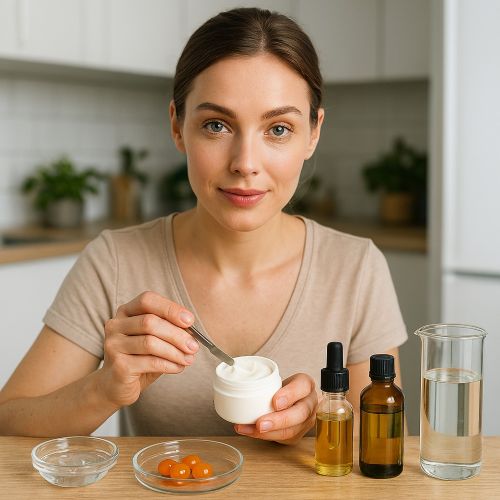 Ingredient Control: You have complete control over every ingredient. No unnecessary fillers, synthetic fragrances, or harsh preservatives that can irritate sensitive skin.
-
Customization: You can adjust the oil blends, add different actives, or change the scent to perfectly match your skin type and preferences.
-
Cost-Effectiveness: Making your own cream is significantly more affordable in the long run than purchasing high-end commercial products with similar concentrations of actives.
-
Educational Value: The process of making your own cream empowers you with a deeper understanding of skincare science and what truly benefits your skin.
By embracing this simple yet rewarding process, you can create a truly effective anti-aging cream that is pure, powerful, and uniquely yours.


Cosmetic ingredients and professional formulation blog
This section features expert materials on modern cosmetic actives. We cover peptides, polynucleotides PDRN, different forms of hyaluronic acid, retinoids, ceramides and other key components.
Special focus is given to active stability, ingredient compatibility and correct incorporation into formulas. You will find practical guides on working with anti-age actives, moisturizing complexes and barrier repair ingredients.
We examine how to properly combine myorelaxants with peptides, common mistakes when using unstable vitamin C forms and ways to improve the performance of moisturizing actives.
Separate materials are dedicated to base oils, extracts, emulsifiers and supporting ingredients. This helps create stable and effective formulas for both professional and home cosmetics.
The blog regularly publishes reviews of trending actives, comparisons of similar ingredients and step-by-step formulation recommendations. The content is aimed at formulators, technologists and anyone seriously involved in creating cosmetic products.
Why this blog is useful
Here you will find practical data on eye area care actives, lifting systems and ingredients that improve skin firmness and tone. We rely on real formulation experience and address the actual challenges that arise during product development.
You can also explore materials on skin protection and repair, depigmentation and anti-inflammatory actives. This approach supports a more systematic selection of ingredients.
FAQ
What topics are covered most often
The blog focuses on peptides, PDRN, hyaluronic acid of different molecular weights, retinoids, ceramides and their compatibility rules.
Are there practical recommendations on how to incorporate actives
Yes, most articles include practical notes on pH stability, incorporation temperature and common formulation mistakes.
Is the content only for professionals
The materials are useful both for formulators and technologists and for those who create cosmetics for personal use and want to understand how modern ingredients work.
Where can I go directly to the ingredients
All key actives are collected in the Actives section, while base components are available in base oils and related categories.



