-
 DIY: Video master classes
-
 Aromatherapy
-
 Felting master classes
-
 Eating at home
-
 DIY cosmetics for children
-
 Cooking recipes
-
 Detergents, cleaning products with your own hands
-
 Soap making as a business
-
 Natural cosmetics. Raw materials for cosmetics and soap.
-
 Natural oils in cosmetics
-
 News
-
 Recipes for balms and conditioners
-
 Bath Bomb Recipes
-
 Cream recipes. Cream making.
-
 Lotion recipes. Gel recipes.
-
 Mask recipes
-
 Soap recipes. Base soap. Soap from scratch.
-
 Recipes for all occasions
-
 Natural shampoo recipes
-
 Healthy Nutrition Recipes
-
 Scrub recipes. Massage tiles. Ubtan
-
 DIY candles
-
 Reference materials, questions, tips
-
 Startup - soap production
-
 Hair care. Tips, recipes
-
 Facial skin care. Cleansers.
-
 Body care. Tips, recipes
-
 Photo Reviews
-
 Chocolate Handmade


How to smooth out wrinkles - preparing a fluid filler for the face with peptides and squalane
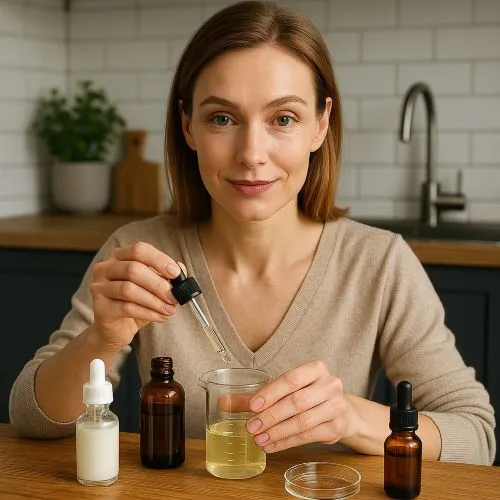 The desire for smoother, more youthful-looking skin is universal, and fine lines and wrinkles are often the primary concern. While cosmetic injectables offer immediate and dramatic results, many seek non-invasive, natural alternatives that work synergistically with their skin's own biology. Enter the world of DIY skincare, where you can harness the power of targeted active ingredients like peptides and squalane to create your own "fluid filler" – a topical product designed to visibly plump, hydrate, and restore the skin's youthful appearance over time. This article will guide you through the intricacies of formulating your own anti-aging fluid, detailing the potent properties of its key components, providing precise recipes, and highlighting the significant advantages of homemade solutions compared to mass-produced alternatives.
Understanding Your Anti-Aging Arsenal: Peptides and Squalane
To effectively smooth out wrinkles with a topical fluid, we turn to ingredients celebrated for their skin-transforming abilities.
Peptides: The Skin's Communicators
Peptides are short chains of amino acids, the fundamental building blocks of proteins. In skincare, they act as tiny messengers, signaling skin cells to perform specific functions. These functions can include stimulating collagen production, reducing muscle contractions (mimicking a "botox-like" effect), or enhancing skin repair. Unlike larger protein molecules (like collagen itself), peptides are small enough to penetrate the skin's outer layers, where they can deliver their signals.
-
Signaling Peptides (e.g., Matrixyl, Palmitoyl Tripeptides/Tetrapeptides): These peptides "tell" the skin to produce more collagen, elastin, and hyaluronic acid, essential components for skin firmness, elasticity, and plumpness. By boosting these structural proteins, they help to reduce the appearance of fine lines and wrinkles over time.
-
Neurotransmitter-Inhibiting Peptides (e.g., Argireline, SYN-AKE): Often called "botox-like" peptides, these work by gently interrupting the nerve signals that tell facial muscles to contract. This leads to a softening of expression lines (like crow's feet and forehead lines) without paralyzing the muscles, resulting in a more relaxed and smoother appearance.
-
Carrier Peptides (e.g., Copper Peptides): These transport trace elements, like copper, into the skin. Copper is vital for wound healing, collagen synthesis, and antioxidant activity, contributing to overall skin health and repair.
Squalane: The Skin's Luxurious Emollient
Squalane is a stable, saturated hydrocarbon derived from squalene, a natural component of human sebum. It's an exceptional emollient, meaning it mimics the skin's natural oils, making it incredibly biocompatible and easily absorbed.
-
Intense Hydration without Greasiness: Squalane provides lightweight yet deep moisture, leaving skin feeling soft and supple without a heavy or greasy residue. It helps to prevent transepidermal water loss, keeping the skin hydrated throughout the day.
-
Skin Barrier Support: By reinforcing the skin's natural lipid barrier, squalane protects against environmental aggressors and helps to maintain skin health, reducing sensitivity and dryness.
-
Non-Comedogenic: It's non-pore-clogging, making it suitable even for oily and acne-prone skin types.
-
Enhances Absorption: Its excellent compatibility with the skin allows it to help other beneficial ingredients penetrate more effectively.
-
Antioxidant Properties: While not a primary antioxidant, squalane offers some protection against oxidative stress.
Why DIY Fluid Fillers Offer a Unique Advantage Over Industrial Products
Choosing to formulate your own topical fluid filler provides significant benefits over relying solely on mass-produced cosmetics:
-
Unrivaled Ingredient Control: You dictate every single component. This means you can entirely avoid questionable fillers, harsh alcohols, synthetic fragrances, artificial dyes, and parabens, which are often found in commercial products and can irritate sensitive skin or offer little benefit.
-
Peak Freshness and Potency: Homemade products are made in small batches. This ensures that delicate active ingredients like peptides, hyaluronic acid, and botanical extracts are used at their freshest and most potent state, maximizing their efficacy before they degrade from prolonged shelf storage.
-
Customization for Your Unique Skin: You can precisely tailor the concentration of peptides, the type of squalane (e.g., olive-derived or sugarcane-derived), and the inclusion of other actives (like specific humectants or calming extracts) to perfectly match your skin's specific needs, sensitivities, and concerns.
-
Cost-Effectiveness in the Long Run: While there's an initial investment in raw materials and equipment, the per-unit cost of a high-quality, effective homemade fluid filler is often significantly lower than that of premium, clean beauty, or dermatologist-recommended commercial brands with similar active concentrations.
-
Transparency and Knowledge: Understanding the science behind your skincare empowers you to make informed decisions about what you apply to your skin, fostering a deeper connection to your self-care routine.
The Art of Formulation: Essential Nuances for Your Fluid Filler
Crafting a stable and effective anti-aging fluid requires precision, meticulous hygiene, and an understanding of basic cosmetic chemistry.
-
Precision and Sterilization are Paramount: Any water-based cosmetic product, including a fluid filler, is highly susceptible to microbial contamination (bacteria, mold, yeast). Therefore, every piece of equipment – beakers, stirring rods, funnels, and your final storage bottle – must be thoroughly cleaned and sterilized. This can be achieved by boiling for 10-15 minutes or wiping down with 70% isopropyl alcohol and allowing to air dry completely. Use a digital scale that measures to at least 0.01g for accurate ingredient weighing, especially for potent actives and preservatives.
-
Ingredient Quality: Source your raw materials (peptides, squalane, hyaluronic acid powder, preservatives) from reputable cosmetic ingredient suppliers to ensure purity, potency, and safety.
-
Water Phase & Oil Phase Integration (for Emulsions): Some fluid fillers are light emulsions (oil-in-water). If your recipe contains both water-soluble and oil-soluble ingredients, you'll need a suitable emulsifier to bind them into a stable product. For lighter fluids, a co-emulsifier like Lecithin or a small amount of a low-HLB emulsifier might be sufficient. Most "fluid fillers" are typically water-based serums where oils like squalane are simply dispersed (often with a solubilizer if needed for clarity, but many prefer a slightly cloudy or milky look for simplicity).
-
Preservation is Non-Negotiable: This cannot be stressed enough. Any product containing water MUST have a broad-spectrum cosmetic preservative. Without it, your homemade fluid will spoil within days, becoming a breeding ground for harmful microorganisms that can cause skin irritation, infections, or allergic reactions. Add the preservative in the cool-down phase (below 40°C), following the manufacturer's recommended usage rate. Examples include Geogard 221 (Cosgard), Euxyl PE 9010, or Liquid Germall Plus.
-
pH Balancing: The effectiveness and stability of many active ingredients, especially peptides and hyaluronic acid, are pH-dependent. The ideal pH for most skin applications and ingredient stability is typically between 5.0 and 6.0. Use pH strips or a pH meter to test the final product's pH. Adjust with tiny amounts of Lactic Acid solution (to lower pH) or Baking Soda solution (to raise pH) if necessary.
-
Temperature Control: Some ingredients, particularly certain peptides and hyaluronic acid, are heat-sensitive. Always add these to your formula in the "cool-down" phase, when the mixture has dropped below 40°C (104°F) after any necessary heating.
Three Detailed Recipes for Your Peptide & Squalane Fluid Filler
These recipes are designed for approximately 50 ml (or 50 grams) of finished product. Remember to adjust active ingredient percentages based on your skin's tolerance and desired potency.
Important Note on Preservatives: For all recipes, you MUST include a broad-spectrum cosmetic preservative. Without it, your fluid will spoil very quickly and become unsafe to use. Always follow the manufacturer's recommended dosage for your chosen preservative.
Recipe 1: Restorative & Hydrating Fluid for Fine Lines (with Hyaluronic Acid)
This fluid focuses on deep hydration and collagen stimulation to visibly plump the skin and reduce the appearance of fine lines.
-
Target: General anti-aging, hydration, plumping.
-
Ingredients (for 50g):
-
Distilled Water: 42g
-
Niacinamide (Vitamin B3) Powder: 2g (for 4% concentration) - Strengthens barrier, overall skin health
-
Hyaluronic Acid (HA) Powder: 0.2g (for 0.4% concentration) - Powerful humectant, visible plumping
-
Palmitoyl Tripeptide-1 & Palmitoyl Tetrapeptide-7 (Matrixyl 3000 equivalent, liquid form): 2g (Follow supplier's recommended usage rate, typically 2-5%) - Collagen stimulation
-
Squalane (Vegetable Derived): 2g (4%) - Lightweight emollient, barrier support
-
Glycerin (Vegetable): 0.5g (1%) - Additional humectant
-
Preservative (e.g., Geogard 221): 0.5g (1% of total formula, adjust per manufacturer)
-
Lactic Acid Solution (10%): q.s. (as needed for pH adjustment)
-
-
Preparation Nuances & Instructions:
-
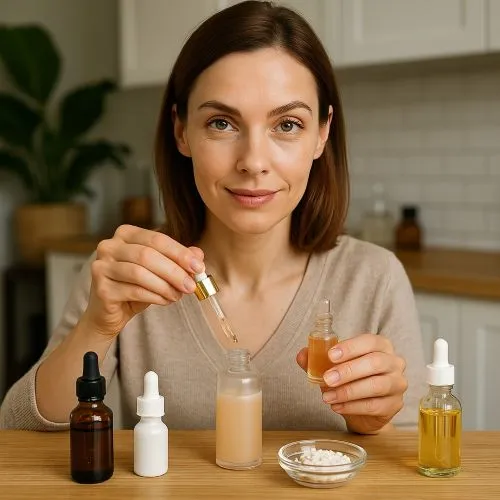
Sterilize: Ensure all equipment and your final 50ml dropper bottle are thoroughly sterilized.
-
Hydrate HA & Niacinamide: In a clean beaker, weigh out Distilled Water. Slowly sprinkle the HA powder onto the water's surface to avoid clumping, then add Niacinamide powder. Stir gently until both are fully dissolved and the mixture forms a clear, slightly thickened liquid (this may take 15-30 minutes for HA to fully hydrate; cover to prevent evaporation).
-
Combine Actives: Add the liquid Palmitoyl Tripeptide-1 & Tetrapeptide-7 solution, Squalane, and Glycerin to the HA/Niacinamide mixture. Stir thoroughly but gently to combine. Squalane will form tiny droplets, which is normal for a fluid that isn't a strong emulsion.
-
Preserve: Add the chosen preservative (e.g., Geogard 221). Stir for at least 1-2 minutes to ensure even dispersion.
-
Check and Adjust pH: Use pH strips or a pH meter. Aim for a pH between 5.0 and 6.0. Adjust with Lactic Acid Solution drop by drop if needed.
-
Transfer: Carefully transfer the fluid into your sterilized dropper bottle.
-
Recipe 2: "Botox-Like" Smoothing Fluid for Expression Lines (with Argireline)
This fluid focuses on softening the appearance of dynamic wrinkles caused by facial expressions.
-
Target: Forehead lines, frown lines, crow's feet.
-
Ingredients (for 50g):
-
Distilled Water: 40g
-
Niacinamide (Vitamin B3) Powder: 2.5g (for 5% concentration) - Overall skin health, barrier support
-
Argireline Solution (10% Argireline peptide in water, as typically sold): 5g (for 1% Argireline peptide concentration in final product, follow supplier's instructions for maximum % use) - Reduces muscle contractions for smoother lines
-
Squalane (Vegetable Derived): 2.5g (5%) - Nourishing emollient
-
Aloe Vera Liquid Extract: 0.5g (1%) - Soothing, hydrating
-
Preservative (e.g., Euxyl PE 9010): 0.5g (1% of total formula, adjust per manufacturer)
-
Citric Acid Solution (10%): q.s. (as needed for pH adjustment)
-
-
Preparation Nuances & Instructions:
-
Sterilize: All equipment and your final 50ml dropper bottle must be sterilized.
-
Dissolve Niacinamide: In a clean beaker, weigh out Distilled Water. Add Niacinamide powder and stir gently until completely dissolved.
-
Combine Actives: Add the Argireline Solution, Squalane, and Aloe Vera Liquid Extract. Stir thoroughly but gently to combine.
-
Preserve: Add the chosen preservative (e.g., Euxyl PE 9010). Stir for at least 1-2 minutes to ensure even dispersion.
-
Check and Adjust pH: Use pH strips or a pH meter. Aim for a pH between 5.0 and 6.0. Adjust with Citric Acid Solution drop by drop if needed.
-
Transfer: Carefully transfer the fluid into your sterilized dropper bottle.
-
Recipe 3: Nourishing & Barrier-Repairing Fluid for Mature/Dry Skin
This fluid provides rich nourishment, supports the skin barrier, and aims to soften deeper wrinkles while preventing moisture loss.
-
Target: Mature, dry, or severely dehydrated skin, deeper wrinkles.
-
Ingredients (for 50g):
-
Rose Hydrosol: 38g (Soothing, hydrating base)
-
Niacinamide (Vitamin B3) Powder: 2.5g (for 5% concentration) - Barrier repair, overall health
-
Squalane (Vegetable Derived): 4g (8%) - High concentration for rich nourishment
-
Ceramide Complex (liquid form, 3% concentration): 2g (Follow supplier's recommended usage rate, typically 2-5%) - Crucial for barrier repair and skin health
-
Panthenol (Vitamin B5): 2g (4%) - Deeply hydrating, soothing, supports barrier
-
Preservative (e.g., Liquid Germall Plus): 0.25g (0.5% of total formula, adjust per manufacturer)
-
Lactic Acid Solution (10%): q.s. (as needed for pH adjustment)
-
-
Preparation Nuances & Instructions:
-
Sterilize: All equipment and your final 50ml dropper bottle must be sterilized.
-
Dissolve Niacinamide: In a clean beaker, weigh out Rose Hydrosol. Add Niacinamide powder and stir gently until completely dissolved.
-
Combine Actives: Add Squalane, Ceramide Complex, and Panthenol. Stir thoroughly but gently to combine.
-
Preserve: Add the chosen preservative (e.g., Liquid Germall Plus). Stir for at least 1-2 minutes to ensure even dispersion.
-
Check and Adjust pH: Use pH strips or a pH meter. Aim for a pH between 5.0 and 6.0. Adjust with Lactic Acid Solution drop by drop if needed.
-
Transfer: Carefully transfer the fluid into your sterilized dropper bottle.
-
Application & Storage: Maximizing Your Fluid Filler's Efficacy
To get the most out of your homemade fluid filler, proper application and storage are key:
-
Application:
-
After cleansing and toning, apply 3-5 drops of the fluid to your face, neck, and décolletage.
-
Gently pat it into the skin until absorbed.
-
Follow with your favorite moisturizer or facial oil to lock in the benefits.
-
Use consistently, morning and night, for best results. Remember, topical products for wrinkles work cumulatively over time. Patience and consistency are crucial.
-
-
Layering: This fluid can be layered easily. Apply it after lighter water-based serums (if any) and before heavier creams or oils.
-
Storage:
-
Store your fluid filler in an airtight, dark glass dropper bottle. This protects light-sensitive ingredients and prevents oxidation.
-
Keep the bottle in a cool, dark place away from direct sunlight, heat, and humidity.
-
Avoid storing in the bathroom if it gets very steamy, as temperature fluctuations can affect stability.
-
-
Shelf Life: With proper preservation and sterile preparation, your homemade fluid filler should be stable for 3-6 months. Always label your bottle with the creation date. Discard immediately if you notice any changes in color, scent, consistency, or signs of separation or cloudiness.
Conclusion: Empowering Your Skincare Journey with DIY Solutions
Creating your own "fluid filler" with peptides and squalane offers a unique and empowering approach to addressing wrinkles and signs of aging. It’s a commitment to skin health that prioritizes transparency, freshness, and customization over mass-market convenience. While these topical formulations cannot replicate the immediate, physical volumizing or muscle-relaxing effects of professional injectable fillers, they provide a powerful, non-invasive method to visibly smooth, plump, hydrate, and rejuvenate your skin by working with its natural processes. By embracing the nuances of preparation and diligent preservation, you can confidently unlock the potential of your DIY creations, nurturing a healthier, more radiant complexion from the inside out.


Cosmetic ingredients and professional formulation blog
This section features expert materials on modern cosmetic actives. We cover peptides, polynucleotides PDRN, different forms of hyaluronic acid, retinoids, ceramides and other key components.
Special focus is given to active stability, ingredient compatibility and correct incorporation into formulas. You will find practical guides on working with anti-age actives, moisturizing complexes and barrier repair ingredients.
We examine how to properly combine myorelaxants with peptides, common mistakes when using unstable vitamin C forms and ways to improve the performance of moisturizing actives.
Separate materials are dedicated to base oils, extracts, emulsifiers and supporting ingredients. This helps create stable and effective formulas for both professional and home cosmetics.
The blog regularly publishes reviews of trending actives, comparisons of similar ingredients and step-by-step formulation recommendations. The content is aimed at formulators, technologists and anyone seriously involved in creating cosmetic products.
Why this blog is useful
Here you will find practical data on eye area care actives, lifting systems and ingredients that improve skin firmness and tone. We rely on real formulation experience and address the actual challenges that arise during product development.
You can also explore materials on skin protection and repair, depigmentation and anti-inflammatory actives. This approach supports a more systematic selection of ingredients.
FAQ
What topics are covered most often
The blog focuses on peptides, PDRN, hyaluronic acid of different molecular weights, retinoids, ceramides and their compatibility rules.
Are there practical recommendations on how to incorporate actives
Yes, most articles include practical notes on pH stability, incorporation temperature and common formulation mistakes.
Is the content only for professionals
The materials are useful both for formulators and technologists and for those who create cosmetics for personal use and want to understand how modern ingredients work.
Where can I go directly to the ingredients
All key actives are collected in the Actives section, while base components are available in base oils and related categories.