-
 DIY: Video master classes
-
 Aromatherapy
-
 Felting master classes
-
 Eating at home
-
 DIY cosmetics for children
-
 Cooking recipes
-
 Detergents, cleaning products with your own hands
-
 Soap making as a business
-
 Natural cosmetics. Raw materials for cosmetics and soap.
-
 Natural oils in cosmetics
-
 News
-
 Recipes for balms and conditioners
-
 Bath Bomb Recipes
-
 Cream recipes. Cream making.
-
 Lotion recipes. Gel recipes.
-
 Mask recipes
-
 Soap recipes. Base soap. Soap from scratch.
-
 Recipes for all occasions
-
 Natural shampoo recipes
-
 Healthy Nutrition Recipes
-
 Scrub recipes. Massage tiles. Ubtan
-
 DIY candles
-
 Reference materials, questions, tips
-
 Startup - soap production
-
 Hair care. Tips, recipes
-
 Facial skin care. Cleansers.
-
 Body care. Tips, recipes
-
 Photo Reviews
-
 Chocolate Handmade


How to choose a preservative for formulas containing oils, extracts, and water-based actives
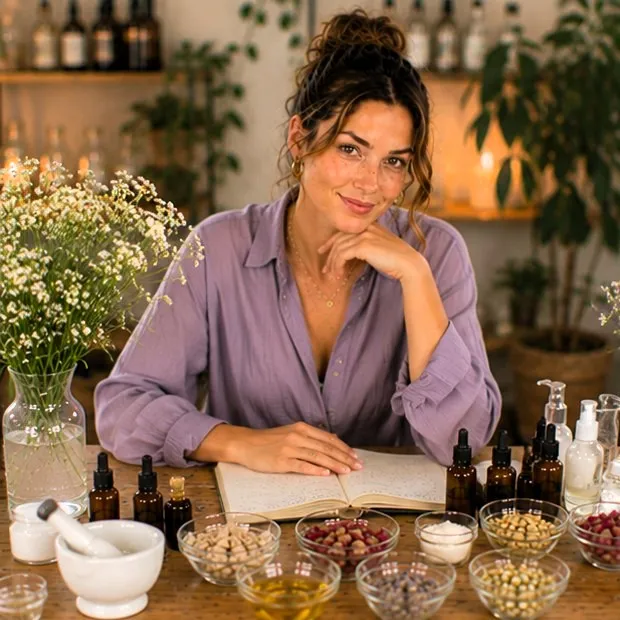 Formulating custom cosmetics that combine water phases, plant carrier oils, and active botanical extracts creates an ideal nutrient medium for microorganisms. Bacteria, yeast, and mold fungi thrive in any aqueous environment containing nitrogen sources, sugars, and organic minerals from natural extracts. While anhydrous oil mixtures are immune to bacterial growth, the moment water, hydrosols, or water-soluble botanical actives are introduced, robust preservative systems become mandatory to prevent microbiological spoilage.
Selecting an effective preservative system requires understanding broad-spectrum antimicrobial activity. An ideal preservative must deactivate gram-positive bacteria, gram-negative bacteria, yeast, and mold spores simultaneously. Plant extracts introduce organic electrolytes and natural sugars, which can deactivate certain weak preservative acids, while unrefined plant lipids provide potential hydrophobic shields for microflora. A successful formulation balances chemical stability, solubility, and biocompatibility without causing dermal irritation.
Technical Criteria for Selecting Preservatives by Formula Type
Choosing the correct preservative depends on evaluating chemical solubility, ionic compatibility, and required pH windows.
Formulation Rules for Preservative Selection Protocol first Match preservative solubility to the continuous phase. Water-soluble preservatives like Geogard 221 or Euxyl K712 protect the aqueous phase directly, whereas liquid oil-dispersible blends like Sharomix EG10 distribute evenly through dense lipid networks. Protocol second Align system pH with preservative activation limits. Organic acids such as sorbic acid, benzoic acid, and dehydroacetic acid require an acidic environment below pH five point five to remain in their un-dissociated, active antimicrobial state. Phenoxyethanol-based blends offer wider stability across pH ranges from three to eight. Protocol third Verify ionic compatibility with functional ingredients. Cationic preservatives can react with anionic thickeners, causing precipitation, while non-ionic emulsifiers like polysorbates can deactivate parabens and certain organic acids. Protocol fourth Calculate processing temperature thresholds. Organic acids and green preservative systems are heat-sensitive and must be introduced strictly during the cool-down phase below thirty degrees Celsius to prevent chemical degradation.
Thermal Boundary Control and Preservative Integration Protocols
Preserving the active antimicrobial molecules of sensitive preservative systems requires precise thermal boundary management during blending.
Thermal Processing Boundaries Adding heat-sensitive preservatives to high-temperature phases degrades their functional molecular structure, leaving the final cream or serum vulnerable to rapid microbial contamination. Maintain preparation temperatures strictly below thirty degrees Celsius when measuring and blending cold-process preservatives into emulsions or aqueous active phases.
Phase Integration Sequencing In emulsion systems, dissolve or disperse the broad-spectrum preservative into the cool-down phase after primary emulsification and initial cooling are complete. Pre-dissolve water-soluble organic acid salts in a small volume of room-temperature distilled water or glycerin before integrating them into high-viscosity hydrogels or active serum bases to ensure uniform distribution throughout the batch.
Advantages of Custom-Preserved Formulations Over Commercial Products
Commercial mass-market cosmetic manufacturers prioritize multi-year retail shelf lives under unpredictable transport and storage conditions. Consequently, industrial products frequently rely on heavy concentrations of formaldehyde releasers, aggressive halogenated compounds, or high-level parabens. These aggressive systems ensure multi-year stability but frequently cause contact dermatitis, skin barrier disruption, and cumulative dermal sensitivity.
Furthermore, industrial mass production often uses broad-spectrum synthetic preservatives to mask low laboratory hygiene standards or degraded raw materials.
Formulating small-batch cosmetics with tailored eco-preservative systems provides distinct dermal advantages: You select gentle, COSMOS-approved eco-preservatives optimized for short, fresh usage cycles rather than harsh multi-year industrial chemical systems. You calibrate the exact minimal effective dosage required to protect your specific active phase without overloading the cutaneous microbiome. You avoid harsh synthetic formaldehyde donors, halogenated compounds, artificial dyes, and irritating synthetic fragrances. You create fresh, bio-compatible products that maintain peak therapeutic potency while safeguarding sensitive skin barriers.
Workspace Sanitation and Tool Sterilization Protocol
Formulating multi-phase cosmetics containing active botanical extracts demands high laboratory hygiene standards to prevent introducing high baseline microbial loads.
Sanitize your entire workspace using a broad-spectrum disinfectant. Wash your hands thoroughly with antibacterial soap, then put on sterile disposable nitrile gloves. Wash all laboratory equipment, including glass beakers, glass stirring rods, digital scales, micro-pipettes, and final dark glass packaging. Rinse every item with distilled water to eliminate tap water minerals, then spray generously with seventy percent isopropyl alcohol. Allow all instruments to air-dry completely on clean paper towels before measuring raw ingredients.
Recipe First Hydrating Botanical Serum with Green Tea and Hyaluronic Acid
A lightweight active serum engineered to deliver deep hydration while maintaining robust broad-spectrum antimicrobial protection in a high-water environment.
Composition forty milliliters organic rose hydrosol five milliliters aloe vera juice three milliliters vegetable glycerin one gram low-molecular hyaluronic acid zero point five grams dry green tea extract zero point six milliliters Geogard 221 preservative
Preparation Step first Disinfect glass beakers, glass stirring rod, digital scale, micro-pipette, and a dark glass dropper bottle with seventy percent isopropyl alcohol. Step second Measure forty milliliters of organic rose hydrosol and five milliliters of aloe vera juice into a glass beaker. Step third Add three milliliters of vegetable glycerin and zero point five grams of dry green tea extract, stirring with a glass rod until completely dissolved. Step fourth Sprinkle one gram of low-molecular hyaluronic acid over the liquid phase and let it hydrate for twenty minutes until a uniform gel forms. Step fifth Add zero point six milliliters of Geogard 221 eco-preservative into the hydrated gel base. Step sixth Stir the serum continuously for two minutes at room temperature strictly below thirty degrees Celsius to distribute the preservative evenly. Step seventh Verify that the serum pH measures between five point zero and five point two, then transfer into your sanitized dark glass dropper bottle.
Recipe Second Soothing Barrier Repair Emulsion with Oats and Chamomile
A nutrient-rich cream combining plant lipids with water-soluble botanical extracts, protected by a heat-tolerant organic acid preservative complex.
Composition twenty-five milliliters distilled water ten milliliters jojoba oil eight milliliters sweet almond oil four grams Olivem 1000 emulsifying wax two milliliters chamomile extract zero point five grams oat kernel extract zero point five milliliters Euxyl K712 preservative
Preparation Step first Sanitize heat-safe glass beakers, glass stirring rod, digital scale, thermometer, and cosmetic glass jars using seventy percent isopropyl alcohol. Step second Combine ten milliliters of jojoba oil, eight milliliters of sweet almond oil, and four grams of Olivem 1000 emulsifying wax in the first beaker. Step third Measure twenty-five milliliters of distilled water in a second beaker. Step fourth Heat both beakers in a water bath until the emulsifying wax is completely melted, then remove from heat. Step fifth Slowly pour the water phase into the oil phase while stirring continuously for five minutes until a smooth, glossy emulsion forms. Step sixth Allow the emulsion to cool down until the temperature drops strictly below thirty degrees Celsius. Step seventh Incorporate two milliliters of chamomile extract, zero point five grams of oat kernel extract, and zero point five milliliters of Euxyl K712 preservative, stir for three minutes, verify pH at five point two, and decant into your sanitized jar.
Recipe Third Restorative Lipid-Active Elixir with Sea Buckthorn and Calendula
An advanced active facial fluid containing rich botanical oils and aqueous extract phases stabilized with a broad-spectrum lipid-compatible preservative system.
Composition twenty milliliters argan oil fifteen milliliters rosehip seed oil eight milliliters calendula hydrosol five milliliters sea buckthorn fruit oil one milliliter vitamin E tocopherol zero point six milliliters Sharomix EG10 preservative

Preparation Step first Disinfect glass beakers, glass stirring rod, digital scale, micro-pipette, and an airless pump container using seventy percent isopropyl alcohol. Step second Measure twenty milliliters of argan oil and fifteen milliliters of rosehip seed oil into a main glass beaker as the primary lipid base. Step third Add five milliliters of sea buckthorn fruit oil and eight milliliters of calendula hydrosol, stirring thoroughly with a glass rod. Step fourth Add one milliliter of vitamin E tocopherol to protect the delicate lipid phase against oxidation. Step fifth Measure zero point six milliliters of Sharomix EG10 preservative and incorporate it into the fluid mixture. Step sixth Stir the mixture vigorously for three minutes at room temperature strictly below thirty degrees Celsius to ensure complete dispersion of the active preservative. Step seventh Decant the rich active elixir into your sanitized airless pump bottle and seal tightly.
Daily Application Protocols and Skincare Routine Integration
Proper application methods ensure active cosmetic absorption while maintaining formula purity throughout daily use.
Dispense product using clean, dry hands or sanitized cosmetic spatulas to avoid introducing tap water or skin bacteria into open containers. Apply active serums and creams to freshly cleansed, moist skin, pressing gently into the face, neck, and décolleté along natural facial massage lines. Pressing rather than dragging optimizes active ingredient penetration and supports skin barrier integration. When using jar-packaged formulations, ensure the lid is sealed tightly immediately after each use. Always perform a patch test on the inner forearm twenty-four hours prior to initial facial application to screen for individual ingredient sensitivities.
Storage Conditions and Product Longevity Standards
Formulated cosmetics containing active botanical extracts, unrefined lipids, and water phases require specific environmental controls to maintain microbiological stability.
Store finished cosmetics in dark amber or opaque glass containers, or airless pump bottles, to shield sensitive actives and organic acids from ultraviolet degradation. Keep all custom products in a cool, dark place at stable temperatures between eight and fourteen degrees Celsius, such as a cosmetic refrigerator or dark cabinet away from direct heat and sunlight. Ensure container caps are tightly closed to prevent evaporation and air exposure. Formulated under clean conditions with calibrated broad-spectrum eco-preservatives, custom hydro-lipid formulas maintain peak freshness, structural integrity, and microbial safety for four to six months.


Cosmetic ingredients and professional formulation blog
This section features expert materials on modern cosmetic actives. We cover peptides, polynucleotides PDRN, different forms of hyaluronic acid, retinoids, ceramides and other key components.
Special focus is given to active stability, ingredient compatibility and correct incorporation into formulas. You will find practical guides on working with anti-age actives, moisturizing complexes and barrier repair ingredients.
We examine how to properly combine myorelaxants with peptides, common mistakes when using unstable vitamin C forms and ways to improve the performance of moisturizing actives.
Separate materials are dedicated to base oils, extracts, emulsifiers and supporting ingredients. This helps create stable and effective formulas for both professional and home cosmetics.
The blog regularly publishes reviews of trending actives, comparisons of similar ingredients and step-by-step formulation recommendations. The content is aimed at formulators, technologists and anyone seriously involved in creating cosmetic products.
Why this blog is useful
Here you will find practical data on eye area care actives, lifting systems and ingredients that improve skin firmness and tone. We rely on real formulation experience and address the actual challenges that arise during product development.
You can also explore materials on skin protection and repair, depigmentation and anti-inflammatory actives. This approach supports a more systematic selection of ingredients.
FAQ
What topics are covered most often
The blog focuses on peptides, PDRN, hyaluronic acid of different molecular weights, retinoids, ceramides and their compatibility rules.
Are there practical recommendations on how to incorporate actives
Yes, most articles include practical notes on pH stability, incorporation temperature and common formulation mistakes.
Is the content only for professionals
The materials are useful both for formulators and technologists and for those who create cosmetics for personal use and want to understand how modern ingredients work.
Where can I go directly to the ingredients
All key actives are collected in the Actives section, while base components are available in base oils and related categories.