-
 DIY: Video master classes
-
 Aromatherapy
-
 Felting master classes
-
 Eating at home
-
 DIY cosmetics for children
-
 Cooking recipes
-
 Detergents, cleaning products with your own hands
-
 Soap making as a business
-
 Natural cosmetics. Raw materials for cosmetics and soap.
-
 Natural oils in cosmetics
-
 News
-
 Recipes for balms and conditioners
-
 Bath Bomb Recipes
-
 Cream recipes. Cream making.
-
 Lotion recipes. Gel recipes.
-
 Mask recipes
-
 Soap recipes. Base soap. Soap from scratch.
-
 Recipes for all occasions
-
 Natural shampoo recipes
-
 Healthy Nutrition Recipes
-
 Scrub recipes. Massage tiles. Ubtan
-
 DIY candles
-
 Reference materials, questions, tips
-
 Startup - soap production
-
 Hair care. Tips, recipes
-
 Facial skin care. Cleansers.
-
 Body care. Tips, recipes
-
 Photo Reviews
-
 Chocolate Handmade


Granules and powders in cosmetics, new generation scrubs and peels, scrub recipe with oils and Matrixyl 3000
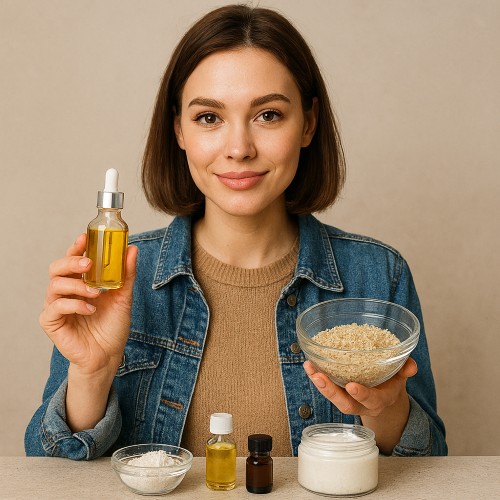 The landscape of exfoliation has evolved beyond harsh granular scrubs and intense chemical peels. Modern skincare utilizes gentle granules and fine cosmetic powders combined with high-tech anti-aging actives to deliver effective renewal without micro-tears or irritation. The goal is to achieve smooth radiant skin while simultaneously delivering potent ingredients like Matrixyl 3000 a peptide powerhouse for lifting and anti-wrinkle action.
This comprehensive guide explores the benefits of non-abrasive exfoliation details the synergistic action of peptides and physical exfoliants and provides three specialized DIY scrub recipes. Learn how to craft a new generation treatment that surpasses the quality and concentration of conventional commercial peels.
The Evolution of Exfoliation: Gentle vs. Harsh
Traditional exfoliants often use crushed nuts or sharp salt crystals which can cause micro-abrasions leading to inflammation and barrier damage. New generation peels and scrubs prioritize safety and added skincare benefits.
Why Gentle Exfoliation is Superior
-
Protection of the Barrier: Gentle particles (like Jojoba beads or rice powder) remove dead cells without compromising the stratum corneum reducing sensitivity and dehydration.
-
Controlled Depth: Fine powders allow for highly controlled exfoliation suitable even for sensitive or reactive skin types.
-
Delivery of Actives: Combining exfoliation with nourishing oils and anti-aging peptides allows the fresh skin cells to immediately benefit from structural and hydrating compounds.
The Role of Matrixyl 3000 in Exfoliation
Matrixyl 3000 (a blend of Palmitoyl Tripeptide-1 and Palmitoyl Tetrapeptide-7) is a signal peptide that instructs fibroblasts to repair and rebuild the dermal matrix. When incorporated into a scrub it provides crucial benefits:
-
Instant Absorption: Since exfoliation temporarily removes the dead skin layer Matrixyl 3000 is delivered more efficiently to the skin surface ready for absorption.
-
Structural Support: It stimulates collagen elastin and glycosaminoglycan production to firm the skin immediately after the renewal process reducing the appearance of fine lines.
Recipe 1 The Ultimate Lifting Scrub with Matrixyl 3000 (Oil Base)
This anhydrous (water-free) formula provides maximum nourishment and focuses on anti-aging benefits during exfoliation.
Ingredients Needed
-
1 Matrixyl 3000 solution 5 ml (Optimal concentration for anti-aging)
-
2 Gentle Granules Jojoba Wax Beads or finely ground Rice Powder 15 grams
-
3 Nourishing Oil Argan Oil or Evening Primrose Oil 30 ml
-
4 Emulsifier such as Polysorbate 80 or Sucrose Stearate 3 ml (to allow easy rinsing)
-
5 Antioxidant Vitamin E Tocopherol 1 ml
Preparation Nuances
-
Heat Control: Since this formula contains an oil-based peptide and no water phase heat is not strictly necessary but if the emulsifier or oil needs gentle warming to blend keep the temperature below 40 degrees Celsius.
-
Particle Suspension: The granules will naturally settle. The finished product must be stirred before each use.
Step-by-Step Instructions
-
Step one In a sterilized beaker combine the Nourishing Oil (30 ml) and the Emulsifier (3 ml). Stir until the mixture is uniform.
-
Step two Add the Vitamin E (1 ml) to act as an antioxidant for the oils and stir gently.
-
Step three Introduce the Matrixyl 3000 solution (5 ml) and stir until fully dispersed within the oil base.
-
Step four Slowly fold in the Gentle Granules (15 grams) ensuring they are fully coated by the oil mixture.
-
Step five Transfer the finished scrub into a wide-mouthed opaque jar. Label with "Stir before use."
Recipe 2 The Enzyme and Peptide Renewal Polish (Powder-to-Paste)
This unique dry powder formula activates upon contact with water combining gentle physical exfoliation with enzymatic action and peptide delivery.
Ingredients Needed
-
1 Matrixyl 3000 powder 05 grams (or substitute with liquid 2 ml added to oil phase)
-
2 Enzyme Powder Papain or Bromelain powder 3 grams
-
3 Gentle Exfoliant Colloidal Oatmeal or fine Clay (Kaolin) 20 grams
-
4 Hydrating Powder Allantoin or Panthenol powder 2 grams
-
5 Light Oil Squalane 5 ml
Preparation Nuances
-
Anhydrous Stability: This formula is shelf-stable because it contains no water. Water is added by the user at the moment of application.
-
Peptide Incorporation: If using liquid Matrixyl 3000 solution it must be blended thoroughly with the Squalane oil before adding to the powders.
Step-by-Step Instructions
-
Step one Ensure all powders are finely sifted and dry. Combine the Enzyme Powder (3 grams) Colloidal Oatmeal/Clay (20 grams) and Hydrating Powder (2 grams) in a large bowl.
-
Step two In a separate small beaker combine the Light Oil Squalane (5 ml) and the Matrixyl 3000 powder (05 grams) or liquid equivalent. Stir until uniform.
-
Step three Slowly drizzle the oil-peptide mixture over the powders while constantly stirring to ensure the oil coats all particles evenly.
-
Step four Transfer the uniform dry powder into an airtight jar.
-
Step five To use the customer will mix a small amount of the powder with water or hydrosol in their palm to create an active paste.
Recipe 3 The Detoxifying and Firming Gel Scrub
This formula uses a water-based gel structure for a refreshing feel and focuses on detoxification alongside firming.
Ingredients Needed
-
1 Matrixyl 3000 solution 5 ml
-
2 Exfoliant Bamboo Stem Powder or Very Fine Salt 15 grams
-
3 Gelling Agent Carbomer or Xanthan Gum 05 grams
-
4 Hydrosol Green Tea or Peppermint 45 ml
-
5 Humectant Vegetable Glycerin 5 ml
-
6 Preservative 05 grams
Step-by-Step Instructions
-
Step one Slowly sprinkle the Gelling Agent (05 grams) onto the surface of the Hydrosol (45 ml). Allow to hydrate for 15 minutes then stir until a clear gel is formed.
-
Step two Add the Humectant Glycerin (5 ml) to the gel base and stir.
-
Step three Add the Matrixyl 3000 solution (5 ml) and mix gently to avoid breaking the gel structure.
-
Step four Incorporate the Preservative (05 grams).
-
Step five Finally stir in the Exfoliant powder (15 grams) ensuring the particles are evenly suspended throughout the gel.
-
Step six Store in a clean opaque jar.
Detailed Recommendations for Use and Storage
Usage Guide
-
Application: Apply the scrub to damp skin avoiding the eye area. Use gentle circular motions for 30-60 seconds. Do not press hard.
-
Rinsing (Recipe 1): The emulsifier in the oil-based scrub allows it to rinse off cleanly without leaving a greasy residue simply use warm water.
-
Rinsing (Recipe 3): Rinse the gel scrub thoroughly to ensure no gelling agent remains on the skin.
-
Frequency: Use these potent scrubs 1-2 times per week maximum. Over-exfoliation will damage the skin barrier.
-
Follow Up: Always follow exfoliation with a hydrating and soothing product to replenish the barrier.
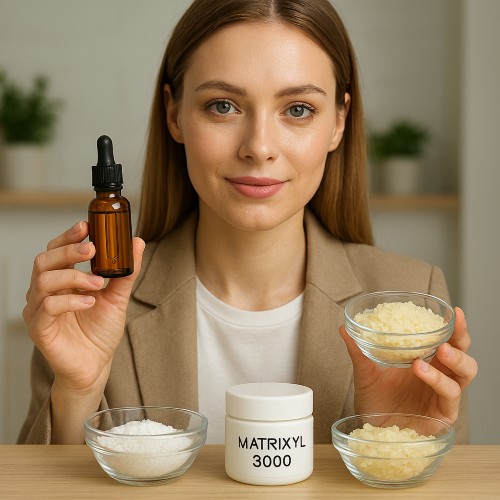
Storage and Shelf Life
-
Container: Store all scrubs in airtight opaque containers to prevent oxidation of the oils and degradation of the peptide.
-
Temperature: Store in a cool dark environment. Recipe 1 (Oil Base) is highly stable and does not require refrigeration. Recipe 3 (Gel Base) requires a stable temperature and should ideally be kept below 25 degrees Celsius.
-
Shelf Life: Oil-based scrubs (Recipe 1) typically last 6-12 months if the oil is fresh and Vitamin E is included. Water-based formulas (Recipe 3) last 2-3 months with proper preservation. The powder formula (Recipe 2) is stable for 12 months or more if kept completely dry.
-
Avoid Water Contamination: For oil and powder formulas ensure no water enters the container during storage or use as this will introduce bacteria and dramatically reduce the shelf life.
Advantages Over Industrial Analogs
Formulating your own peptide-infused scrub offers several critical benefits over commercial exfoliants:
-
Control Over Particle Aggression: You select the particle type and size (e.g. smooth Jojoba beads over sharp nut shells) ensuring the exfoliation is gentle yet effective minimizing irritation common in mass-market products.
-
Therapeutic Peptide Concentration: Commercial scrubs rarely include Matrixyl 3000 due to its high cost and the wash-off nature of the product. When included the concentration is often minimal. Your DIY formula guarantees the optimal therapeutic level of the peptide for tangible anti-aging results.
-
Purity of Oils: You use only fresh high-quality nourishing oils (like Argan or Rosehip) rather than cheap mineral oils or synthetic fillers found in many industrial scrubs.
-
No Harsh Preservatives: You utilize only the necessary amount of a broad-spectrum preservative for water-based formulas and avoid unnecessary harsh chemicals guaranteeing a cleaner gentler product.
By crafting this new generation scrub you achieve professional-level skin renewal combined with powerful anti-aging treatment at a fraction of the commercial cost.


Cosmetic ingredients and professional formulation blog
This section features expert materials on modern cosmetic actives. We cover peptides, polynucleotides PDRN, different forms of hyaluronic acid, retinoids, ceramides and other key components.
Special focus is given to active stability, ingredient compatibility and correct incorporation into formulas. You will find practical guides on working with anti-age actives, moisturizing complexes and barrier repair ingredients.
We examine how to properly combine myorelaxants with peptides, common mistakes when using unstable vitamin C forms and ways to improve the performance of moisturizing actives.
Separate materials are dedicated to base oils, extracts, emulsifiers and supporting ingredients. This helps create stable and effective formulas for both professional and home cosmetics.
The blog regularly publishes reviews of trending actives, comparisons of similar ingredients and step-by-step formulation recommendations. The content is aimed at formulators, technologists and anyone seriously involved in creating cosmetic products.
Why this blog is useful
Here you will find practical data on eye area care actives, lifting systems and ingredients that improve skin firmness and tone. We rely on real formulation experience and address the actual challenges that arise during product development.
You can also explore materials on skin protection and repair, depigmentation and anti-inflammatory actives. This approach supports a more systematic selection of ingredients.
FAQ
What topics are covered most often
The blog focuses on peptides, PDRN, hyaluronic acid of different molecular weights, retinoids, ceramides and their compatibility rules.
Are there practical recommendations on how to incorporate actives
Yes, most articles include practical notes on pH stability, incorporation temperature and common formulation mistakes.
Is the content only for professionals
The materials are useful both for formulators and technologists and for those who create cosmetics for personal use and want to understand how modern ingredients work.
Where can I go directly to the ingredients
All key actives are collected in the Actives section, while base components are available in base oils and related categories.



