-
 DIY: Video master classes
-
 Aromatherapy
-
 Felting master classes
-
 Eating at home
-
 DIY cosmetics for children
-
 Cooking recipes
-
 Detergents, cleaning products with your own hands
-
 Soap making as a business
-
 Natural cosmetics. Raw materials for cosmetics and soap.
-
 Natural oils in cosmetics
-
 News
-
 Recipes for balms and conditioners
-
 Bath Bomb Recipes
-
 Cream recipes. Cream making.
-
 Lotion recipes. Gel recipes.
-
 Mask recipes
-
 Soap recipes. Base soap. Soap from scratch.
-
 Recipes for all occasions
-
 Natural shampoo recipes
-
 Healthy Nutrition Recipes
-
 Scrub recipes. Massage tiles. Ubtan
-
 DIY candles
-
 Reference materials, questions, tips
-
 Startup - soap production
-
 Hair care. Tips, recipes
-
 Facial skin care. Cleansers.
-
 Body care. Tips, recipes
-
 Photo Reviews
-
 Chocolate Handmade


Clays and powders: How to make an anti-oily shine and acne mask with white clay and peptides
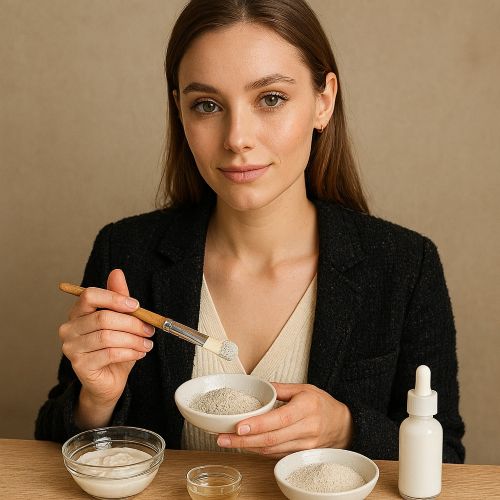 For those battling persistent oily shine, enlarged pores, and recurring acne breakouts, finding a gentle yet powerful treatment can be a lifelong quest. While the market is flooded with industrial solutions, crafting your own DIY mask using natural clays and targeted peptides offers superior control, purity, and efficacy. This article details how to formulate a highly effective anti-acne and oil-control mask featuring White Clay (Kaolin) and potent cosmetic peptides, providing deep cleansing without stripping the skin of essential moisture.
The Power of White Clay and Peptides: Advantages Over Commercial Products
The synergy between absorbent clays and biologically active peptides creates a treatment that excels beyond most pre-made masks.
Why Choose DIY Clay-Peptide Masks?
-
Purity and Concentration: Commercial masks often contain fillers, synthetic fragrances, and preservatives. A DIY mask allows you to use 100% pure Kaolin Clay (White Clay) and incorporate peptides at therapeutic concentrations, ensuring maximum effectiveness.
-
Targeted Action: You can customize the formula with specific actives—like acne-fighting Salicylic Acid or calming Niacinamide—to address your exact skin concerns, a level of personalization rarely found in off-the-shelf options.
-
Superior Oil Control: Kaolin is a gentle yet effective adsorbent. It draws out impurities, excess sebum, and toxins from the pores without over-drying the skin, unlike harsh commercial alternatives that can trigger rebound oil production.
-
Enhanced Bioavailability: Peptides, which are water-soluble signaling molecules, are better preserved and more potent when mixed fresh before application. Clay temporarily opens the pores, creating an optimal environment for the peptides to penetrate and initiate cellular repair.
The Role of White Clay (Kaolin)
Kaolin, the gentlest of all cosmetic clays, is ideal for oily and sensitive skin. It works by gently exfoliating dead skin cells, purifying the pores, and stimulating circulation, which is crucial for reducing acne inflammation. Its mildly alkaline pH helps rebalance the skin's surface.
The Role of Cosmetic Peptides
Peptides are short chains of amino acids that act as messengers. In an anti-acne formulation, key peptides can be used:
-
Copper Peptides: Known for their strong anti-inflammatory and wound-healing properties, they accelerate the fading of acne scars and hyperpigmentation (PIH).
-
Signaling Peptides (e.g., Matrixyl): While primarily anti-aging, they support the skin’s matrix, which improves overall resilience and texture, helping to tighten the appearance of enlarged pores.
Recipe 1: Basic Pore-Purifying Mask for Oily Skin
This simple formula focuses on detoxification and mild hydration, making it an excellent weekly treatment for oily skin and congested pores.
Ingredients:
-
3 tablespoons White Clay (Kaolin) Powder
-
3 tablespoons Green Tea Infusion (cooled)
-
0.5 teaspoon Vegetable Glycerin (Humectant)
-
3 drops Tea Tree Essential Oil (Antimicrobial)
-
0.5 ml Copper Peptide Solution (1% concentration)
Instructions for Preparation:
First Step: In a clean, non-metallic bowl, combine the White Clay powder and the Green Tea Infusion. Always use wooden, plastic, or ceramic utensils to avoid deactivating the clay. Second Step: Stir the mixture until a smooth, thick paste is formed. Adjust the liquid amount as needed; the paste should be thick enough to stay on the face but spreadable. Third Step: Add the Vegetable Glycerin, which prevents the mask from hardening completely on the skin, and the Tea Tree Essential Oil, mixing well. Fourth Step: Finally, introduce the Copper Peptide Solution. Stir gently for one minute to ensure the peptide is evenly distributed throughout the mask. Fifth Step: Immediately apply the mask to clean, damp skin.
Recipe 2: Intensive Anti-Acne and Scar Fading Mask
This formula is targeted specifically at active acne and the residual acne scarring, utilizing the synergistic effect of the clay with scar-fading actives.
Ingredients:
-
2 tablespoons White Clay (Kaolin) Powder
-
1 tablespoon Fine Colloidal Oatmeal (Soothing agent)
-
3 tablespoons Chamomile Hydrosol (or distilled water)
-
0.5 ml Salicylic Acid Solution (2% concentration, water-soluble)
-
1 ml Oligopeptide-68 Solution (for brightening/scar reduction)
Instructions for Preparation:
First Step: Combine the White Clay and Colloidal Oatmeal in a non-metallic bowl. The oatmeal adds a soothing element and prevents excessive dryness. Second Step: Slowly incorporate the Chamomile Hydrosol, mixing with a wooden spoon until you achieve a uniform, creamy texture. Third Step: Add the Salicylic Acid Solution, which will enhance exfoliation and deeply clean the pores. Mix until fully integrated. Fourth Step: Introduce the Oligopeptide-68 solution. This peptide targets post-inflammatory hyperpigmentation (PIH), accelerating the fading of acne scars and dark spots. Fifth Step: Apply a thick layer to the affected areas of the face or back.
Recipe 3: Calming and Pore-Minimizing Weekly Treatment
This mask is designed for regular use to maintain a clear complexion, minimize enlarged pores, and strengthen the skin's barrier.
Ingredients:
-
3 tablespoons White Clay (Kaolin) Powder
-
3.5 tablespoons Aloe Vera Gel (instead of just water, for hydration)
-
1 ml Niacinamide (Vitamin B3) Solution (5% concentration)
-
0.5 ml Palmitoyl Tripeptide-5 (Collagen-boosting/pore reduction)
Instructions for Preparation:
First Step: Place the White Clay powder into your mixing bowl. Second Step: Gradually add the Aloe Vera Gel, mixing continuously until the paste is smooth and lump-free. The aloe vera base will enhance hydration and soothe the skin. Third Step: Carefully measure and add the Niacinamide Solution. Niacinamide is excellent for reducing oily shine and improving pore appearance. Fourth Step: Introduce the Palmitoyl Tripeptide-5 solution. This peptide helps improve skin firmness and elasticity, which supports the walls of the pores, leading to a temporary pore-minimizing effect. Fifth Step: Use a soft brush or clean fingertips to apply the mask evenly over the T-zone and areas with oily shine.
Detailed Recommendations for Use and Storage
Proper application and storage are crucial for maximizing the benefits of your DIY clay and peptide mask.
Application Nuances
Preparation: Always cleanse your face thoroughly before applying the mask. You can steam your face gently for 5 minutes (a facial steamer or a hot towel) to open the pores, optimizing the clay’s cleansing action and the peptide penetration.
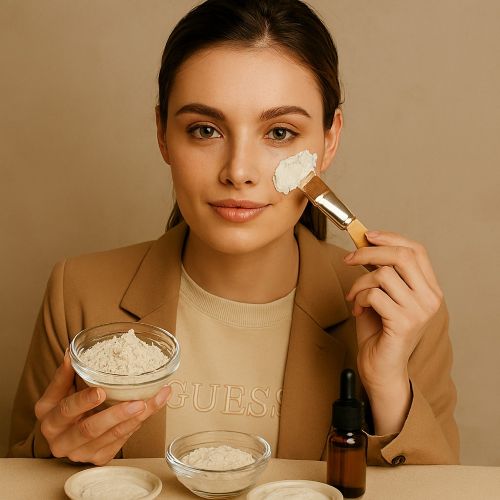
Application: Apply the mask to damp skin using a flat brush or clean hands. Avoid the sensitive eye and lip areas.
Timing: Never let a clay mask dry completely. As the clay hardens, it starts to draw moisture from the skin, leading to dehydration and irritation. For oily skin and acne, remove the mask as soon as it feels firm, usually 8–12 minutes. Keep the mask slightly damp by misting it with a hydrosol or water if necessary.
Removal: Gently rinse the mask off with lukewarm water, using circular motions to provide gentle exfoliation. Follow immediately with a lightweight, non-comedogenic moisturizer to lock in hydration.
Storage and Shelf Life
Immediate Use Only: Clay powder and peptides should NEVER be mixed and stored for later use. Once the White Clay is mixed with any water-based solution (hydrosol, aloe vera, or peptide solutions), it creates a breeding ground for microbes. The peptides are also more effective when applied fresh.
Storage of Components:
-
White Clay: Store the dry powder in a cool, dry, dark place in an airtight container to prevent moisture absorption.
-
Peptides: Store liquid peptide solutions according to the manufacturer's instructions, usually in the refrigerator, to maintain their stability and efficacy.
-
Hydrosols/Infusions: Store any liquid components used for mixing (like green tea or chamomile hydrosol) in the refrigerator and discard them after one week.
Frequency: For severe oily shine and acne, use the mask 2–3 times per week. For maintenance or slightly sensitive skin, use once per week. Regular use will help normalize sebum production and reduce the appearance of enlarged pores.


Cosmetic ingredients and professional formulation blog
This section features expert materials on modern cosmetic actives. We cover peptides, polynucleotides PDRN, different forms of hyaluronic acid, retinoids, ceramides and other key components.
Special focus is given to active stability, ingredient compatibility and correct incorporation into formulas. You will find practical guides on working with anti-age actives, moisturizing complexes and barrier repair ingredients.
We examine how to properly combine myorelaxants with peptides, common mistakes when using unstable vitamin C forms and ways to improve the performance of moisturizing actives.
Separate materials are dedicated to base oils, extracts, emulsifiers and supporting ingredients. This helps create stable and effective formulas for both professional and home cosmetics.
The blog regularly publishes reviews of trending actives, comparisons of similar ingredients and step-by-step formulation recommendations. The content is aimed at formulators, technologists and anyone seriously involved in creating cosmetic products.
Why this blog is useful
Here you will find practical data on eye area care actives, lifting systems and ingredients that improve skin firmness and tone. We rely on real formulation experience and address the actual challenges that arise during product development.
You can also explore materials on skin protection and repair, depigmentation and anti-inflammatory actives. This approach supports a more systematic selection of ingredients.
FAQ
What topics are covered most often
The blog focuses on peptides, PDRN, hyaluronic acid of different molecular weights, retinoids, ceramides and their compatibility rules.
Are there practical recommendations on how to incorporate actives
Yes, most articles include practical notes on pH stability, incorporation temperature and common formulation mistakes.
Is the content only for professionals
The materials are useful both for formulators and technologists and for those who create cosmetics for personal use and want to understand how modern ingredients work.
Where can I go directly to the ingredients
All key actives are collected in the Actives section, while base components are available in base oils and related categories.



