-
 DIY: Video master classes
-
 Aromatherapy
-
 Felting master classes
-
 Eating at home
-
 DIY cosmetics for children
-
 Cooking recipes
-
 Detergents, cleaning products with your own hands
-
 Soap making as a business
-
 Natural cosmetics. Raw materials for cosmetics and soap.
-
 Natural oils in cosmetics
-
 News
-
 Recipes for balms and conditioners
-
 Bath Bomb Recipes
-
 Cream recipes. Cream making.
-
 Lotion recipes. Gel recipes.
-
 Mask recipes
-
 Soap recipes. Base soap. Soap from scratch.
-
 Recipes for all occasions
-
 Natural shampoo recipes
-
 Healthy Nutrition Recipes
-
 Scrub recipes. Massage tiles. Ubtan
-
 DIY candles
-
 Reference materials, questions, tips
-
 Startup - soap production
-
 Hair care. Tips, recipes
-
 Facial skin care. Cleansers.
-
 Body care. Tips, recipes
-
 Photo Reviews
-
 Chocolate Handmade


GHK-Cu copper peptide: how it works, why it's unstable, and how to administer it correctly
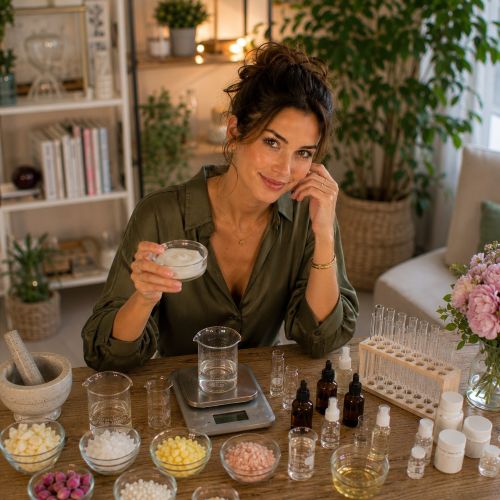 The naturally occurring tripeptide glycyl-L-histidyl-L-lysine bound to copper, widely known as GHK-Cu, represents one of the most thoroughly researched biological signaling compounds in regenerative dermatology. Originally isolated from human blood plasma, this small amino acid complex plays a foundational role in cellular repair, inflammation modulation, and extracellular matrix remodeling. As human skin ages, natural plasma levels of GHK-Cu drop significantly, leading to a diminished capacity for tissue self-repair, decreased collagen synthesis, and a structural thinning of the dermal layer.
When applied topically in an un-degraded state, GHK-Cu acts as a signal peptide that binds directly to skin cell surface receptors. It instructs fibroblasts to step up the production of type one and type three collagen, structural elastin, and glycosaminoglycans such as hyaluronic acid. Beyond basic structural support, GHK-Cu stimulates the expression of metalloproteinases and their inhibitors, effectively clearing out damaged, cross-linked collagen fibers and replacing them with a dense, smooth dermal framework. This targeted tissue-remodeling capability smoothes out deep expression lines, improves skin elasticity, and accelerates the healing of compromised epidermal barriers.
Why Copper Tripeptide Is Chemically Unstable and Sensitive
Despite its extraordinary therapeutic potential, GHK-Cu is notoriously difficult to formulate with because of its extreme chemical and structural fragility. The central copper ion is held within the peptide chain by delicate coordination bonds. Under unfavorable chemical or physical conditions, this copper ion easily detaches from the amino acid carrier, or the peptide backbone itself snaps, rendering the molecule completely inactive and unable to bind to skin cell receptors.
The primary triggers for GHK-Cu degradation include high temperatures, acidic environments, oxidation, and direct contact with incompatible active ingredients. Introducing GHK-Cu into a formula with a pH lower than five point five causes the copper ion to unbind rapidly. Similarly, pairing copper peptides with strong reducing agents like ascorbic acid, direct retinoids, or chelating agents like disodium EDTA will instantly destroy the peptide complex. Furthermore, exposing the raw powder or liquid solution to temperatures above forty degrees Celsius causes irreversible thermal denaturation of the amino acid sequence.
Technical Rules for Correct Cold-Phase Addition and pH Control
Successfully incorporating GHK-Cu into a cosmetic formula requires strict adherence to cold-phase compounding techniques and precise pH management. Because heat destroys the tripeptide structure, GHK-Cu must never be added during the oil melting or hot water phases of emulsion making. It must always be introduced during the final cooling stage, after the base emulsion or hydro-gel has dropped completely to room temperature.
Before adding GHK-Cu to your base formulation, you must verify and adjust the acidity level of the system. The optimal stability window for GHK-Cu ranges between five point five and six point five pH. If the base formulation is too acidic, adjust it upward by adding a minute amount of a dilute sodium hydroxide solution or a mild buffer before introducing the peptide. When adding the GHK-Cu raw powder or liquid concentrate, stir the mixture slowly and gently using a glass rod or silicone spatula. Avoid high-shear mechanical homogenizers or high-speed whisks at this stage, as extreme mechanical force can physically shear fragile peptide chains.
Advantages of Custom GHK-Cu Formulations Over Mass-Market Products
Commercial skincare brands face significant challenges when working with copper peptides due to the long shelf life requirements of mass production. To prevent GHK-Cu from degrading over months of warehouse storage, industrial manufacturers often reduce the active concentration to symbolic levels or introduce heavy chemical stabilizers and synthetic film-formers. Additionally, mass-market products frequently utilize cheap synthetic thickeners and heavy silicones that sit on top of the skin, creating a barrier that inhibits the large peptide molecules from penetrating into the deeper epidermal layers.
Handcrafting your own custom GHK-Cu formulations allows you to bypass these industrial limitations entirely. You can formulate with the maximum recommended clinical dosage of pure copper peptide, usually between zero point one percent and zero point two percent of pure active substance, for maximum biological effect. By replacing synthetic fillers with organic hydrosols, aloe leaf juice, and bio-compatible humectants, you create a light, deeply penetrative delivery system. Freshly made, small-batch formulations ensure that you receive the peptide at its peak potency, before any gradual chemical degradation can take place.
Hygiene and Equipment Sanitization Standards for Compounding
Because custom copper peptide serums use mild, eco-certified preservatives and avoid harsh industrial biocides, maintaining a pristine compounding environment is essential. GHK-Cu formulations provide a rich, nutrient-dense environment that can support microbial growth if contaminated during preparation.
Before beginning the compounding process, thoroughly clean your workspace with an antiseptic surface cleaner, wash your hands up to the elbows with antibacterial soap, and put on sterile nitrile gloves. All equipment—including glass beakers, digital precision scales, glass stirring rods, mini whisks, and final glass dropper bottles—must be heavily sprayed with a seventy percent solution of isopropyl alcohol. Allow all tools to air-dry completely on clean paper towels. Never use fabric kitchen towels to dry your instruments, as they carry airborne dust, microscopic fibers, and mold spores that will compromise your formulation.
Recipe First The Hydrating Blue Glass Skin Serum with GHK-Cu and Niacinamide
An ultra-lightweight, hydrating facial serum designed to restore dermal density, refine skin texture, and deliver an intense, dewy radiance.
Composition Thirty-five milliliters organic chamomile hydrosol Eight milliliters pure aloe vera inner leaf juice One milliliter liquid GHK-Cu copper peptide solution One gram pure niacinamide vitamin b3 powder One gram low molecular weight hyaluronic acid powder Let us measure half a gram of natural sclerotium gum powder One milliliter liquid eco-certified preservative
Preparation Step first Sanitize your glass beakers, glass stirring rod, and an amber glass bottle fitted with a dropper cap using a thorough misting of isopropyl alcohol. Step second Pour the organic chamomile hydrosol and pure aloe vera inner leaf juice into your main glass beaker. Step third Add the pure niacinamide vitamin b3 powder to the liquid base and stir with your glass rod until the crystals dissolve completely and the fluid is clear. Step fourth Sprinkle the low molecular weight hyaluronic acid powder and natural sclerotium gum powder over the surface of the liquid. Step fifth Whisk gently with a mini stirrer to break up any dry pockets, then cover the beaker and let it rest for twenty minutes to allow the gums to hydrate into a smooth hydro-gel. Step sixth Verify that the hydro-gel is at room temperature, then gently drizzle the liquid GHK-Cu copper peptide solution into the gel, watching the fluid turn a natural sky-blue color. Step seventh Add the liquid eco-certified preservative, stir slowly with your glass rod for two minutes to combine, and carefully decant the finished serum into your amber bottle.
Recipe Second The Restructuring Barrier Cream with Copper Peptide and Squalane
A silky, deeply comforting emulsion that strengthens fragile skin barriers, smooths fine expression lines, and boosts structural collagen.
Composition Thirty milliliters organic rose flower hydrosol Eight milliliters olive-derived plant squalane Four grams plant-derived emulsifying wax Three milliliters concentrated centella asiatica extract One milliliter liquid GHK-Cu copper peptide solution Let us include half a gram of pure panthenol provitamin b5 powder One milliliter mild broad-spectrum preservative
Preparation Step first Disinfect your digital scale, two heat-safe glass beakers, a mini whisk, and an airless pump dispenser bottle with isopropyl alcohol. Step second Combine the organic rose flower hydrosol, concentrated centella asiatica extract, and pure panthenol powder in your first glass beaker to form the water phase. Step third Place the olive-derived plant squalane and plant-derived emulsifying wax into your second glass beaker to create the oil phase. Step fourth Place both beakers into a gentle water bath, heating just until the emulsifying wax melts completely into the squalane oil. Step fifth Pour the water phase into the oil phase while whisking rapidly with your mini whisk until a smooth, uniform white emulsion forms. Step sixth Allow the cream to cool naturally down to room temperature, stirring occasionally with a glass rod to maintain a smooth texture. Step seventh Add the liquid GHK-Cu copper peptide solution and mild broad-spectrum preservative to the cooled cream, stir thoroughly until the light blue color is uniform, and transfer into your airless pump dispenser.
Recipe Third The Soothing Eye Contour Fluid with GHK-Cu and Peptides
A specialized, fast-absorbing fluid targeted at delicate eye contour tissue to diminish puffiness, smooth crow's feet, and firm sagging skin.
Composition Thirty-eight milliliters organic cornflower hydrosol Five milliliters organic vegetable glycerin Two milliliters soothing tetrapeptide complex One milliliter liquid GHK-Cu copper peptide solution One gram pure allantoine powder Let us measure half a gram of natural konjac mannan gelling powder One milliliter liquid water-soluble preservative
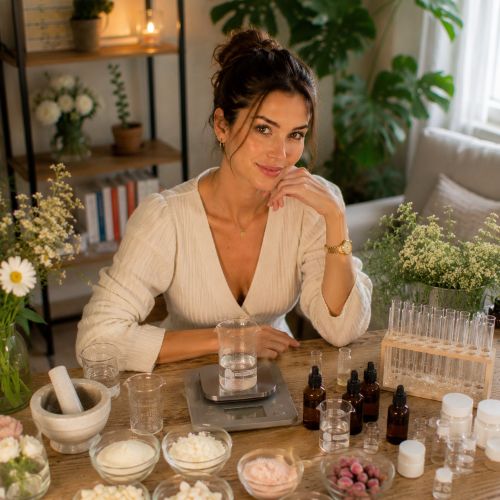
Preparation Step first Thoroughly sanitize your laboratory glassware, mixing tools, and an airless glass pump dispenser with isopropyl alcohol spray. Step second Pour the organic cornflower hydrosol and organic vegetable glycerin into your primary mixing beaker. Step third Add the pure allantoine powder to the liquid mixture and stir with your glass rod until the powder is fully dissolved. Step fourth Dust the natural konjac mannan gelling powder slowly across the surface of the fluid while whisking continuously to prevent clumping. Step fifth Let the mixture stand undisturbed for fifteen minutes until the botanical sugars swell fully into a silky, lightweight fluid gel. Step sixth Blend the soothing tetrapeptide complex and the liquid GHK-Cu copper peptide solution into the room-temperature gel base using slow, circular motions. Step seventh Introduce the liquid water-soluble preservative, give the fluid a final gentle stir for two minutes, and pour into your airless pump dispenser.
Application Protocols for Maximum Cellular Absorption
To get the most out of your custom GHK-Cu copper peptide formulations, integrate them correctly into your daily skincare routine. Copper peptides work through steady cumulative action, so consistent application twice daily—in the morning and evening—is recommended for visible tissue remodeling. Always start with a thoroughly cleansed face. Use a gentle, sulfate-free cleanser to remove surface oils and dirt that could block large peptide molecules from penetrating the skin.
Apply three to four drops of your GHK-Cu serum or fluid onto clean, slightly damp skin after toning. Rather than aggressively rubbing or dragging the product across your face, use the palms of your hands and fingertips to gently press and pat the liquid into your skin. The patting motion encourages localized blood circulation and helps the peptides absorb efficiently. Wait two minutes for the formula to absorb completely before sealing it in with a light moisturizer. Crucially, do not layer GHK-Cu products at the same time as direct L-ascorbic acid, strong alpha hydroxy acids, or direct retinoids. If you use these active ingredients, space them out by applying acids or retinoids at night and your copper peptide serum in the morning.
Preservation and Storage Guidelines for Fresh Copper Peptide Formulations
Because handmade GHK-Cu formulations use gentle, eco-certified preservatives and lack heavy industrial stabilizers, they require proper environmental care to maintain their potency. Leaving your copper peptide serums on an open bathroom counter where they are exposed to high humidity, steam from showers, and fluctuating temperatures will cause rapid oxidation and degrade the delicate amino acid bonds.
The ideal storage home for fresh GHK-Cu formulations is on a middle shelf inside a refrigerator or in a dedicated beauty fridge kept at a constant cool temperature, ideally between four and eight degrees Celsius. The cool environment slows down molecular degradation, preserves the stability of the copper coordination bonds, and provides an immediate soothing, anti-inflammatory effect upon application. Always keep the dropper cap or pump seal tightly closed to minimize oxygen contact. Never touch the glass dropper tip directly to your fingers or facial skin to avoid transferring bacteria back into the bottle. Stored under continuous refrigeration and handled with proper hygiene, your custom GHK-Cu formulations will remain stable, safe, and fully effective for up to three months.


Cosmetic ingredients and professional formulation blog
This section features expert materials on modern cosmetic actives. We cover peptides, polynucleotides PDRN, different forms of hyaluronic acid, retinoids, ceramides and other key components.
Special focus is given to active stability, ingredient compatibility and correct incorporation into formulas. You will find practical guides on working with anti-age actives, moisturizing complexes and barrier repair ingredients.
We examine how to properly combine myorelaxants with peptides, common mistakes when using unstable vitamin C forms and ways to improve the performance of moisturizing actives.
Separate materials are dedicated to base oils, extracts, emulsifiers and supporting ingredients. This helps create stable and effective formulas for both professional and home cosmetics.
The blog regularly publishes reviews of trending actives, comparisons of similar ingredients and step-by-step formulation recommendations. The content is aimed at formulators, technologists and anyone seriously involved in creating cosmetic products.
Why this blog is useful
Here you will find practical data on eye area care actives, lifting systems and ingredients that improve skin firmness and tone. We rely on real formulation experience and address the actual challenges that arise during product development.
You can also explore materials on skin protection and repair, depigmentation and anti-inflammatory actives. This approach supports a more systematic selection of ingredients.
FAQ
What topics are covered most often
The blog focuses on peptides, PDRN, hyaluronic acid of different molecular weights, retinoids, ceramides and their compatibility rules.
Are there practical recommendations on how to incorporate actives
Yes, most articles include practical notes on pH stability, incorporation temperature and common formulation mistakes.
Is the content only for professionals
The materials are useful both for formulators and technologists and for those who create cosmetics for personal use and want to understand how modern ingredients work.
Where can I go directly to the ingredients
All key actives are collected in the Actives section, while base components are available in base oils and related categories.



