-
 DIY: Video master classes
-
 Aromatherapy
-
 Felting master classes
-
 Eating at home
-
 DIY cosmetics for children
-
 Cooking recipes
-
 Detergents, cleaning products with your own hands
-
 Soap making as a business
-
 Natural cosmetics. Raw materials for cosmetics and soap.
-
 Natural oils in cosmetics
-
 News
News
-
 Recipes for balms and conditioners
-
 Bath Bomb Recipes
-
 Cream recipes. Cream making.
-
 Lotion recipes. Gel recipes.
-
 Mask recipes
-
 Soap recipes. Base soap. Soap from scratch.
-
 Recipes for all occasions
-
 Natural shampoo recipes
-
 Healthy Nutrition Recipes
-
 Scrub recipes. Massage tiles. Ubtan
-
 DIY candles
-
 Reference materials, questions, tips
-
 Startup - soap production
-
 Hair care. Tips, recipes
-
 Facial skin care. Cleansers.
-
 Body care. Tips, recipes
-
 Photo Reviews
-
 Chocolate Handmade


Emulsifiers for creams: Polawax vs. Olivem 1000 vs. Montanov
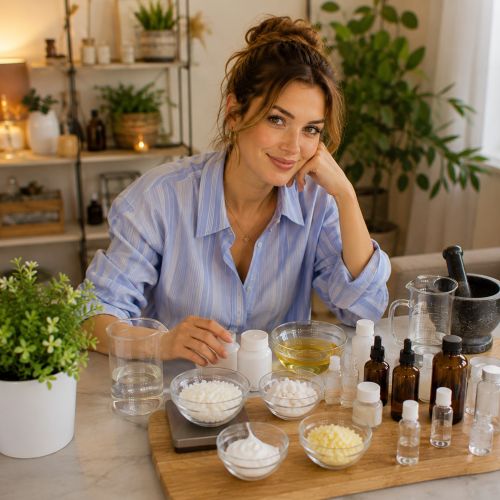 Creating a stable and aesthetically pleasing cream requires combining two immiscible phases: water and oil. Emulsifiers are surface-active agents containing amphiphilic molecules, meaning they possess a hydrophilic head that attaches to water and a lipophilic tail that binds to oils.
Modern cosmetic chemistry divides emulsifiers into traditional non-ionic wax bases and advanced biomimetic lamellar systems. Traditional non-ionic emulsifiers create standard macro-emulsions where oil droplets are suspended within a water matrix. Lamellar emulsifiers generate a liquid-crystal network that mirrors the natural bilayer lipid structure of the human skin barrier.
Selecting the appropriate emulsifying system determines product stability, skin penetration depth, active delivery capability, and long-term epidermal barrier compatibility.
Technical Comparative Analysis Polawax Olivem 1000 and Montanov
Understanding the structural differences between Polawax, Olivem 1000, and the Montanov series allows formulators to select the optimal base for specific skin types.
Polawax is a classic non-ionic emulsifying wax composed of cetearyl alcohol and polysorbate. It is an exceptionally forgiving, stable emulsifier that creates thick, glossy direct emulsions. While highly reliable, Polawax acts purely as a structural binder without providing intrinsic skin barrier repair properties.
Olivem 1000 is a natural lamellar emulsifier derived from olive oil fatty acids. It forms liquid crystal structures that integrate directly into the intercellular lipids of the stratum corneum, reducing transepidermal water loss and providing deep sustained hydration. Working with Olivem 1000 requires precise temperature control and high-shear stirring during the initial emulsification phase.
The Montanov series, including Montanov 68 and Montanov L, utilizes plant-derived alkyl polyglucosides. These biomimetic emulsifiers produce light, elegant lamellar emulsions that enhance the bioavailability of active ingredients. Montanov allows for flexible formulation textures, ranging from fluid lotions to rich creams, leaving a silky non-greasy feel on the skin.
Working Concentrations Temperature Parameters and pH Ranges
Each emulsifier requires strict adherence to specific formulation parameters to ensure long-term physical stability.
Polawax operates efficiently at concentrations between two percent and ten percent of the total formula weight. The recommended melting point is seventy degrees Celsius. Polawax maintains physical stability across a broad pH range from three point zero to nine point zero.
Olivem 1000 requires a dosage range of three percent to eight percent. To form a proper lamellar network, both the oil and water phases must be heated to seventy-five degrees Celsius. The optimal pH range for finished formulations sits between four point five and seven point zero.
Montanov emulsifiers are used at concentrations between one percent and six percent. Both phases should be heated to seventy-five degrees Celsius before mixing. Montanov systems remain stable within a wide pH spectrum from three point zero to eleven point zero, making them compatible with acidic or alkaline active ingredients.
Superiority of Custom Biomimetic Formulas Over Industrial Analogs
Mass-market commercial creams frequently rely on inexpensive synthetic emulsifiers, mineral oil, and heavy silicones to maintain multi-year shelf life and uniform appearance. These industrial ingredients often form an occlusive film over the skin, providing temporary surface smoothness without supporting structural lipid repair.
Custom compounding with biomimetic emulsifiers like Olivem 1000 and Montanov produces skin-identical emulsions. These liquid-crystal structures blend seamlessly into the lipid barrier, gradually releasing water and actives over time while actively repairing compromised skin at a cellular level.
Sanitation Standards and Equipment Sterilization Protocols
Compounding water-in-oil or oil-in-water emulsions requires rigorous laboratory hygiene to prevent bacterial and fungal growth.
Sanitize the entire preparation surface with a broad-spectrum surface disinfectant before starting. Wash hands thoroughly with antibacterial soap and put on sterile nitrile gloves. All glass beakers, stirring rods, mini whisks, digital scales, and storage jars must be washed, rinsed with distilled water, and sprayed with a seventy percent isopropyl alcohol solution. Allow all equipment to air-dry completely on clean paper towels before measuring ingredients.
Recipe First Protective Barrier Cream with Polawax Emulsifying Wax
A rich, highly stable protective cream designed to guard against environmental stress and harsh weather conditions.
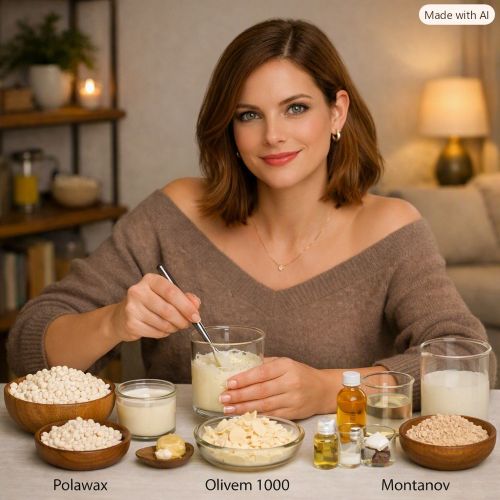
Composition thirty-five milliliters organic chamomile hydrosol three grams Polawax emulsifying wax four milliliters sweet almond oil two milliliters avocado oil one milliliter provitamin B5 panthenol one milliliter broad-spectrum eco preservative
Preparation Step first Sanitize all glass beakers, stirring rods, digital scales, and a cream jar with isopropyl alcohol. Step second Measure thirty-five milliliters of organic chamomile hydrosol into the first heat-safe glass beaker. Step third Combine four milliliters of sweet almond oil, two milliliters of avocado oil, and three grams of Polawax in the second heat-safe glass beaker. Step fourth Heat both beakers in a water bath to seventy degrees Celsius until the emulsifying wax melts completely. Step fifth Slowly pour the heated water phase into the oil phase while whisking rapidly with a mini whisk until a uniform white emulsion forms. Step sixth Continue stirring gently as the cream cools below thirty-five degrees Celsius, then incorporate one milliliter of panthenol and one milliliter of broad-spectrum eco preservative. Step seventh Verify that the pH measures five point five, then transfer the cream into your sanitized jar.
Recipe Second Deeply Hydrating Lamellar Cream with Olivem 1000
A biomimetic moisturizing cream engineered to restore structural lipids and deliver long-lasting hydration to dry or sensitive skin.
Composition thirty-four milliliters organic rose hydrosol two and a half grams Olivem 1000 emulsifier three milliliters jojoba oil two milliliters milk thistle oil one gram niacinamide powder half a gram low-molecular-weight hyaluronic acid powder one milliliter broad-spectrum eco preservative
Preparation Step first Disinfect all glass beakers, stirring tool, scales, and a pump bottle using isopropyl alcohol. Step second Measure thirty-four milliliters of organic rose hydrosol into the first glass beaker and stir in one gram of niacinamide powder until fully dissolved. Step third Combine three milliliters of jojoba oil, two milliliters of milk thistle oil, and two and a half grams of Olivem 1000 in the second glass beaker. Step fourth Heat both beakers in a water bath to seventy-five degrees Celsius. Step fifth Pour the water phase into the oil phase and blend vigorously with a high-shear mixer or whisk for two minutes to form the liquid-crystal network. Step sixth Sprinkle half a gram of low-molecular-weight hyaluronic acid powder across the mixture while cooling, stir thoroughly, and add one milliliter of broad-spectrum eco preservative once the temperature drops below thirty-five degrees Celsius. Step seventh Confirm the final pH sits at five point five and transfer the cream into your pump container.
Recipe Third Silky Fluid for Combination Skin with Montanov L
An ultra-lightweight, fast-absorbing fluid designed to balance sebum production and hydrate without clogging pores.
Composition thirty-five milliliters organic green tea hydrosol two grams Montanov L emulsifier two milliliters hazelnut oil two milliliters plant squalane one gram zinc PCA powder one milliliter provitamin B5 panthenol one milliliter broad-spectrum eco preservative
Preparation Step first Thoroughly sanitize glass beakers, whisk, precision scales, and an airless pump bottle with isopropyl alcohol. Step second Measure thirty-five milliliters of organic green tea hydrosol into the first glass beaker and dissolve one gram of zinc PCA powder into the liquid. Step third Combine two milliliters of hazelnut oil, two milliliters of plant squalane, and two grams of Montanov L in the second glass beaker. Step fourth Heat both phases in a water bath to seventy-five degrees Celsius until the emulsifier melts completely. Step fifth Add the water phase to the oil phase while mixing continuously until a smooth, light fluid is produced. Step sixth Allow the fluid to cool below thirty-five degrees Celsius, then stir in one milliliter of panthenol and one milliliter of broad-spectrum eco preservative. Step seventh Check that the pH measures five point zero and decant the fluid into your sanitized airless pump bottle.
Application Guidelines and Usage Recommendations
Creams formulated with biomimetic lamellar emulsifiers are suitable for twice-daily application in both morning and evening routines.
Apply a pea-sized amount of cream or fluid to clean, toned skin across the face, neck, and décolleté. Spread gently along natural facial massage lines. Because lamellar emulsions mimic skin lipids, they absorb efficiently without leaving a white residue or heavy feeling. Regular daily use of Olivem 1000 or Montanov formulations strengthens the epidermal barrier within three to four weeks.
Storage Conditions and Product Preservation
Maintaining correct storage conditions preserves the physical stability of the emulsion and prevents microbial growth.
Store finished cosmetic products in tightly closed, opaque airless pump bottles or dark glass jars at stable temperatures between eight and fifteen degrees Celsius. A skincare refrigerator or a cool cabinet away from heat sources and direct light provides an ideal environment. Avoid storing custom cosmetics in humid bathrooms. When prepared under strict sanitary conditions, these custom formulations maintain full stability and freshness for two to three months.


Cosmetic ingredients and professional formulation blog
This section features expert materials on modern cosmetic actives. We cover peptides, polynucleotides PDRN, different forms of hyaluronic acid, retinoids, ceramides and other key components.
Special focus is given to active stability, ingredient compatibility and correct incorporation into formulas. You will find practical guides on working with anti-age actives, moisturizing complexes and barrier repair ingredients.
We examine how to properly combine myorelaxants with peptides, common mistakes when using unstable vitamin C forms and ways to improve the performance of moisturizing actives.
Separate materials are dedicated to base oils, extracts, emulsifiers and supporting ingredients. This helps create stable and effective formulas for both professional and home cosmetics.
The blog regularly publishes reviews of trending actives, comparisons of similar ingredients and step-by-step formulation recommendations. The content is aimed at formulators, technologists and anyone seriously involved in creating cosmetic products.
Why this blog is useful
Here you will find practical data on eye area care actives, lifting systems and ingredients that improve skin firmness and tone. We rely on real formulation experience and address the actual challenges that arise during product development.
You can also explore materials on skin protection and repair, depigmentation and anti-inflammatory actives. This approach supports a more systematic selection of ingredients.
FAQ
What topics are covered most often
The blog focuses on peptides, PDRN, hyaluronic acid of different molecular weights, retinoids, ceramides and their compatibility rules.
Are there practical recommendations on how to incorporate actives
Yes, most articles include practical notes on pH stability, incorporation temperature and common formulation mistakes.
Is the content only for professionals
The materials are useful both for formulators and technologists and for those who create cosmetics for personal use and want to understand how modern ingredients work.
Where can I go directly to the ingredients
All key actives are collected in the Actives section, while base components are available in base oils and related categories.