-
 DIY: Video master classes
-
 Aromatherapy
-
 Felting master classes
-
 Eating at home
-
 DIY cosmetics for children
-
 Cooking recipes
-
 Detergents, cleaning products with your own hands
-
 Soap making as a business
-
 Natural cosmetics. Raw materials for cosmetics and soap.
-
 Natural oils in cosmetics
-
 News
-
 Recipes for balms and conditioners
-
 Bath Bomb Recipes
-
 Cream recipes. Cream making.
-
 Lotion recipes. Gel recipes.
-
 Mask recipes
-
 Soap recipes. Base soap. Soap from scratch.
-
 Recipes for all occasions
-
 Natural shampoo recipes
-
 Healthy Nutrition Recipes
-
 Scrub recipes. Massage tiles. Ubtan
-
 DIY candles
-
 Reference materials, questions, tips
-
 Startup - soap production
-
 Hair care. Tips, recipes
-
 Facial skin care. Cleansers.
-
 Body care. Tips, recipes
-
 Photo Reviews
-
 Chocolate Handmade


Crodasone Cystine Heat Damage Treatment and Peptide Conditioner Recipe
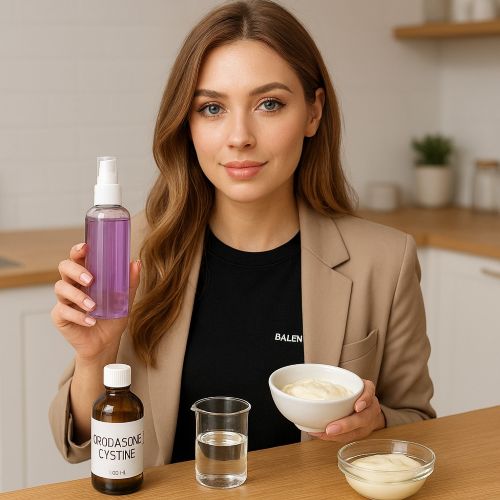 Modern hair styling—from blow drying to flat ironing—exposes hair to temperatures that can severely compromise its structural integrity. This heat breaks down the hair's most vital protein, keratin, specifically targeting the cystine bonds that provide strength and elasticity. While many commercial products promise thermal protection, few contain active ingredients designed to proactively repair and reinforce these bonds. Crodasone Cystine is a revolutionary functional peptide designed precisely for this task. It deeply penetrates the hair shaft to provide superior thermal protection and lasting conditioning benefits. This article offers an in-depth look at how Crodasone Cystine works, provides three detailed DIY conditioner recipes, and highlights the distinct advantages of formulating your own peptide-rich hair care over buying industrial products.
Understanding Heat Damage and the Role of Crodasone Cystine
When hair is exposed to temperatures above 180∘C, the cystine content—a key amino acid in the hair's cortex—is drastically reduced. This loss leads to weaker, brittle hair that is prone to breakage and dullness.
Crodasone Cystine (often derived from wheat proteins or similar sources) is a highly specialized, low-molecular-weight peptide designed for high substantivity and deep penetration.
Key benefits and mechanisms of action include:
-
Deep Cortex Penetration: Due to its small size and composition, Crodasone Cystine penetrates the hair's cortex, not just coating the surface.
-
Cystine Bond Replacement: The peptide selectively targets the sites of heat-induced damage and structural weakness, helping to replace lost cystine and reinforcing the internal keratin structure.
-
Superior Thermal Protection: Studies show that hair treated with Crodasone Cystine retains significantly more cystine after heat styling compared to untreated hair, proving its ability to actively shield the hair from temperature damage.
-
Enhanced Strength and Elasticity: By reinforcing the internal bonds, the peptide improves the hair's tensile strength, reduces breakage, and restores natural elasticity and bounce.
Crodasone Cystine is a powerful addition to any thermal protection product, offering repair and prevention in one step.
Three Detailed Recipes for Peptide Conditioners
Crodasone Cystine is typically supplied as a liquid solution and is easily incorporated into conditioners, masks, and leave-in sprays. As a protein, it should be added in the cool-down phase (below 40∘C) to maintain its bioactivity.
Recipe 1: Intensive Thermal Protection Rinse-Off Conditioner
This classic cream conditioner provides excellent detangling and uses Crodasone Cystine for deep protection.
-
Prepare the water phase. In a sterilized beaker, weigh 75g of distilled water. Heat to 75∘C.
-
Prepare the oil and emulsifying phase. In a separate beaker, combine 5g of Cetyl Alcohol (for conditioning and consistency), 5g of BTMS-50 (a cationic emulsifier for detangling), and 5g of Argan Oil. Heat to 75∘C.
-
Emulsify. Slowly pour the hot water phase into the hot oil phase, mixing vigorously with a hand blender in short pulses until a creamy, thick emulsion forms.
-
Add Crodasone Cystine. When the conditioner cools to below 40∘C, add 5g of Crodasone Cystine solution. Stir gently until fully mixed.
-
Add fragrance and preservative. Add 0.5g of a fragrance oil or essential oil (optional) and 1g of a broad-spectrum preservative like Euxyl PE 9010. Stir well and transfer to a clean container.
Recommendations for Use: Apply to the mid-lengths and ends of wet, shampooed hair. Leave on for 2-5 minutes, then rinse thoroughly.
Storage: Store in a cool, dark place. The shelf life is up to 3 months.
Recipe 2: Lightweight Leave-In Conditioning Spray
This spray is excellent for daily use and targeted thermal protection before blow-drying.
-
Prepare the water base. In a sterilized beaker, weigh 85g of distilled water.
-
Add conditioning agents. Add 5g of vegetable glycerin and 3g of Polyquaternium-7 solution (for film formation and static reduction). Stir until fully dissolved.
-
Add Crodasone Cystine. Add 5g of Crodasone Cystine solution. Stir gently.
-
Add the preservative. Add 1g of a broad-spectrum preservative.
-
Check the pH and package. Check the pH and adjust to the hair's natural range (4.0-5.0) using Lactic Acid. Pour into a sterile spray bottle.
Recommendations for Use: Spray evenly onto towel-dried hair before styling with heat (blow dryer, straightener). Do not rinse out.
Storage: Store in a cool, dark place. The shelf life is up to 6 months.
Recipe 3: Deep Repair Protein Hair Mask
This intensive mask is designed for damaged, chemically treated hair that needs maximum protein reinforcement.
-
Prepare the water phase. In a sterilized beaker, weigh 70g of distilled water. Heat to 75∘C.
-
Prepare the oil and emulsifying phase. In a separate beaker, combine 8g of Coconut Oil (known for penetrating the hair shaft), 5g of Cetrimonium Chloride (a strong cationic conditioner), and 5g of Cetearyl Alcohol (thickener). Heat to 75∘C.
-
Emulsify. Combine the phases, blending until thick and uniform.
-
Add the peptides and actives. When the mask cools to below 40∘C, add 8g of Crodasone Cystine solution (maximum usage rate) and 3g of D-Panthenol (Vitamin B5) for moisture retention.
-
Add the preservative. Add 1g of a broad-spectrum preservative. Stir well.
Recommendations for Use: Apply generously to damp hair once a week. Leave on for 15-20 minutes under a shower cap before rinsing thoroughly.
Storage: Store in a cool, dark place. The shelf life is up to 3 months.
Advantages Over Industrial Thermal Protectants
Formulating your own conditioner with Crodasone Cystine provides significant benefits over relying on commercially available products.
-
Targeted and Effective Concentration: Crodasone Cystine is an expensive, high-tech ingredient. Many commercial thermal sprays and conditioners contain it in minimal or trace amounts. By contrast, your DIY conditioner contains the optimal 3% to 8% concentration of the peptide, ensuring superior protection and genuine structural repair.
-
Avoidance of Silicone Buildup: Most industrial thermal protectants rely heavily on silicones to create a surface barrier. While effective, silicones can cause buildup over time, leading to dull, heavy hair. Your homemade formula prioritizes deep protein action and conditioning oils, minimizing reliance on heavy silicones.
-
Purity and Ingredient Integrity: Commercial products require complex stabilization due to long shelf life, often resulting in high levels of synthetic fragrances, dyes, and harsh preservatives. Your small-batch formula is purer and fresher, maximizing the peptide's activity without unnecessary chemical burden.
-
Customized Conditioning: You can tailor the conditioning agents (Cationic Surfactants) and the oil base (e.g., lightweight oils for fine hair, heavy butters for coarse hair) to perfectly match your specific hair type and needs, which is a level of customization a single store-bought product can't offer.
By creating your own peptide conditioner, you invest in a highly effective, pure, and scientifically advanced solution for defending your hair against the inevitability of heat styling damage.


Cosmetic ingredients and professional formulation blog
This section features expert materials on modern cosmetic actives. We cover peptides, polynucleotides PDRN, different forms of hyaluronic acid, retinoids, ceramides and other key components.
Special focus is given to active stability, ingredient compatibility and correct incorporation into formulas. You will find practical guides on working with anti-age actives, moisturizing complexes and barrier repair ingredients.
We examine how to properly combine myorelaxants with peptides, common mistakes when using unstable vitamin C forms and ways to improve the performance of moisturizing actives.
Separate materials are dedicated to base oils, extracts, emulsifiers and supporting ingredients. This helps create stable and effective formulas for both professional and home cosmetics.
The blog regularly publishes reviews of trending actives, comparisons of similar ingredients and step-by-step formulation recommendations. The content is aimed at formulators, technologists and anyone seriously involved in creating cosmetic products.
Why this blog is useful
Here you will find practical data on eye area care actives, lifting systems and ingredients that improve skin firmness and tone. We rely on real formulation experience and address the actual challenges that arise during product development.
You can also explore materials on skin protection and repair, depigmentation and anti-inflammatory actives. This approach supports a more systematic selection of ingredients.
FAQ
What topics are covered most often
The blog focuses on peptides, PDRN, hyaluronic acid of different molecular weights, retinoids, ceramides and their compatibility rules.
Are there practical recommendations on how to incorporate actives
Yes, most articles include practical notes on pH stability, incorporation temperature and common formulation mistakes.
Is the content only for professionals
The materials are useful both for formulators and technologists and for those who create cosmetics for personal use and want to understand how modern ingredients work.
Where can I go directly to the ingredients
All key actives are collected in the Actives section, while base components are available in base oils and related categories.



