-
 DIY: Video master classes
-
 Aromatherapy
-
 Felting master classes
-
 Eating at home
-
 DIY cosmetics for children
-
 Cooking recipes
-
 Detergents, cleaning products with your own hands
-
 Soap making as a business
-
 Natural cosmetics. Raw materials for cosmetics and soap.
-
 Natural oils in cosmetics
-
 News
-
 Recipes for balms and conditioners
-
 Bath Bomb Recipes
-
 Cream recipes. Cream making.
-
 Lotion recipes. Gel recipes.
-
 Mask recipes
-
 Soap recipes. Base soap. Soap from scratch.
-
 Recipes for all occasions
-
 Natural shampoo recipes
-
 Healthy Nutrition Recipes
-
 Scrub recipes. Massage tiles. Ubtan
-
 DIY candles
-
 Reference materials, questions, tips
-
 Startup - soap production
-
 Hair care. Tips, recipes
-
 Facial skin care. Cleansers.
-
 Body care. Tips, recipes
-
 Photo Reviews
-
 Chocolate Handmade


Biopeptide Anserine Carnosine for skincare formulation: from powder to finished serum
 Biopeptide with the INCI names Anserine and Carnosine is a water-soluble peptide raw material designed for formulators who want to build a peptide-focused aqueous phase without relying on a heavy delivery base. The name Biopeptide should not be treated as a universal INCI term: the identity of a cosmetic ingredient comes from its actual composition and specification. For bench work, Mylo Opt lists Biopeptide 10 g; a 100 g format is suitable for repeated development batches, while Biopeptide 1 kg supports larger-scale formulation work.
This material is particularly relevant to serum, gel and lightweight emulsion development because the powder can be incorporated through the water phase. Successful formulation, however, depends on more than adding a peptide to a base. Solubility, final pH, preservation, rheology and the processing limits of every ingredient need to work as one system.
What Anserine and Carnosine tell a formulator
Carnosine is a histidine-containing dipeptide built from beta-alanine and histidine. Anserine is a closely related methylated dipeptide. From a practical formulation perspective, the key point is that the Biopeptide material is positioned as a water-soluble powder rather than an oil-soluble active, emulsifier or structural polymer.
That distinction determines the development route. The peptide blend should be handled as part of the aqueous active system. It does not replace the emulsifier in a cream, the gelling polymer in a serum or the preservative system. A robust base still has to be designed first. Formulators comparing other peptide technologies can browse the cosmetic peptides category and separate signal peptides, copper peptides and other complexes according to their own specifications.
Where Biopeptide fits in modern cosmetic products
A clear water serum is a useful first prototype because it makes dissolution and delayed precipitation easy to observe. A gel serum adds another variable: the active solution must remain compatible with the rheology modifier. An O/W emulsion is more complex because the peptide system is introduced alongside an emulsifier, emollients, stabilizers and other cool-down ingredients.
· water-based facial serums
· light gel serums
· O/W creams and fluid emulsions
· eye-area cosmetic formulas
· leave-on masks and concentrates
· lightweight body-care emulsions
The product format should follow the intended sensory profile and the rest of the ingredient system. A peptide powder does not require a cream by default. If the concept is a minimal, fast-spreading serum, an aqueous gel may be the more efficient vehicle.
Design the formula by function rather than ingredient count
Peptide formulas are often overloaded because several fashionable actives are added to the same prototype. A more controlled approach assigns a role to each part of the system. Humectants manage water binding and skin feel. A rheology modifier creates flow and suspension. Emollients are used when a lipid phase is needed. Preservation protects the water-rich product. Biopeptide then sits within the targeted active phase.
Glycerin, betaine and panthenol are examples of materials that can support the aqueous sensory profile, while hyaluronic materials can be evaluated when they suit the intended texture. None of these combinations is mandatory. Each addition changes solids content, viscosity and preservation requirements.
When multiple peptide technologies are considered, compare their full INCI composition, carrier, recommended pH and processing conditions. Materials sold under the broad peptide label may behave very differently. For production-scale sourcing, the wholesale peptides section provides a broader group for comparison.
How to dissolve Biopeptide powder
Reserve part of the purified water from the batch and use it to prepare a separate peptide solution. Add the powder gradually under moderate mixing and allow it to dissolve before combining it with the main batch. The reserved water is not extra water; it remains part of the total formula and must be included in the mass balance.
Do not use high temperature as an automatic shortcut. Begin with room-temperature or mildly tempered purified water unless the current technical documentation specifies a different procedure. In an emulsion, a pre-dissolved peptide solution can generally be incorporated during an appropriate cool-down stage, provided that the complete formulation and supplier guidance support that process.
100 g Biopeptide gel-serum development formula
This prototype is intended for formulation work rather than as a universal manufacturing specification. Confirm the use level and processing requirements against the current documentation for the actual lot before scale-up.
· Purified water 89 ml
· Glycerin 3 g
· Betaine 3 g
· Panthenol 2 g
· Biopeptide Anserine Carnosine 1 g
· Xanthan gum 0.3 g
· Compatible preservation system 1 g
· Suitable pH adjuster as required
Premix the xanthan gum with glycerin until the powder is evenly wetted. Add this dispersion gradually to the main portion of purified water and allow the polymer to hydrate completely. Dissolve betaine and panthenol in another portion of the water. Prepare the Biopeptide solution separately using a small amount of reserved water. Combine the aqueous solutions with the hydrated gel base under moderate mixing, then add the preservation system according to its own processing instructions.
Measure pH after the batch is homogeneous. Adjust only as required for the overlapping working range of the ingredients. Recheck viscosity after the gel has equilibrated because the structure immediately after mixing may not represent the final rheology. Water quantity should be adjusted to account for the actual pH-adjuster amount and the composition of the chosen preservative.
Using Biopeptide in an O/W cream
In an emulsion, the first objective is a stable base. Build and emulsify the oil and water phases according to the selected emulsifier system. Once the emulsion has formed and cooled to the appropriate processing range, incorporate the pre-dissolved Biopeptide together with other compatible cool-down materials. Finish with preservation and final pH control as required by the specific system.
Adding dry peptide powder directly to a viscous finished cream is less controlled. A powder can appear visually dispersed while still containing locally concentrated particles. Pre-dissolution gives the formulator a separate checkpoint for solubility before the active reaches the full batch.
Biopeptide compatibility: what to check before combining actives
The word peptide does not guarantee compatibility with another peptide. A copper-containing complex, a signal peptide solution and an Anserine/Carnosine powder may have different carriers and processing requirements. Compare the technical windows of the actual materials before placing them in one formula.
The same rule applies to acids, salts, botanical extracts and concentrated humectants. These ingredients can alter ionic strength and polymer behavior even when they appear compatible on a marketing level. If a gel suddenly loses viscosity after the active phase is added, the issue may be the rheology system rather than the peptide itself.
Common formulation mistakes with peptide powders
· Using the trade name as if it were the INCI. For this Biopeptide material, formulation decisions should be based on Anserine and Carnosine.
· Adding dry powder directly to a thick finished base. A separate aqueous solution offers better process control.
· Forgetting the pre-dissolution water in the batch calculation. Every gram or milliliter contributes to the final formula.
· Assuming all peptide materials can share one processing method. Supplier specifications can differ substantially.
· Checking pH too early. Final pH should be measured after the active phase and other relevant ingredients are incorporated.
· Scaling a fresh prototype immediately. A visually successful batch still needs stability and packaging evaluation.
Choosing between 10 g 100 g and 1 kg
The 10 g Biopeptide format is practical for screening different textures and running several small prototypes. The 100 g format makes sense once the ingredient is used repeatedly or across a small product range. The 1 kg format is more appropriate when the formula has moved beyond exploratory development and projected consumption can be calculated from the actual use level and batch schedule.
Raw-material planning should also include retained samples, failed trials and pilot batches. Calculating only the amount used in the final commercial formula can underestimate development consumption.
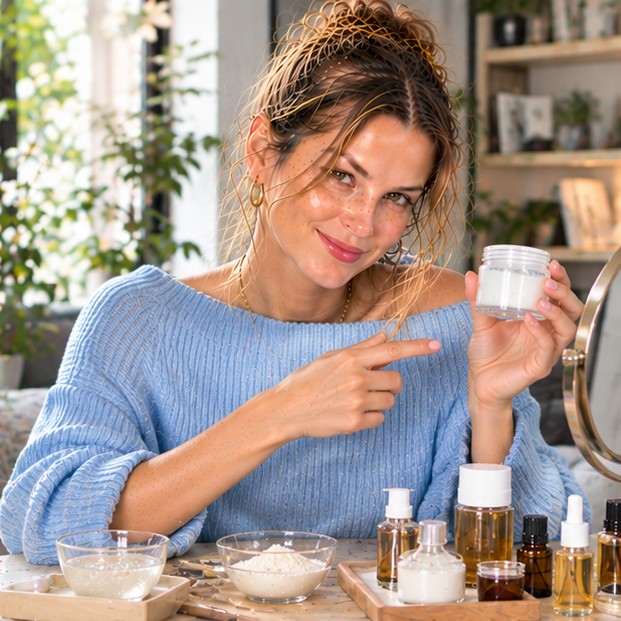
Stability checks for a Biopeptide prototype
Record appearance, odor, pH and viscosity after manufacture, then repeat the measurements after the system has equilibrated. Clear or translucent serums should be checked for delayed haze or sediment. Emulsions should be monitored for separation, viscosity drift and changes at the package interface.
Scale-up introduces new variables such as slower cooling, different shear and longer mixing times. A stable 100 g bench sample is therefore a development milestone rather than proof that a production batch will behave identically.
FAQ about Biopeptide Anserine Carnosine
Is Biopeptide the same ingredient as Carnosine?
No. The material discussed here lists both Anserine and Carnosine in its INCI, so it should be treated as a blend rather than renamed as a single Carnosine raw material.
Is Biopeptide suitable for a water serum?
Its water-soluble powder form makes aqueous systems a logical development route, provided the final pH, preservation and other formulation requirements are compatible.
Does the powder need heat to dissolve?
Do not assume that it does. Start with a controlled room-temperature dissolution test and follow the current supplier documentation for the specific lot.
Can it be combined with hyaluronic acid?
Potentially, but hyaluronic material is not required for Biopeptide to be formulated. Evaluate the combination according to desired viscosity, sensory profile and the behavior of the complete system.
Can several peptides be used in one serum?
Yes when their technical requirements overlap, but a longer ingredient list is not automatically a better formula. Compatibility and a clear product concept are more important.
Conclusion
Biopeptide Anserine Carnosine is best approached as a water-soluble peptide complex that must be integrated into a complete formulation system. A simple serum prototype provides a controlled way to evaluate dissolution, pH and rheology before moving into more complex emulsions. Formulators can begin with Biopeptide 10 g, move to 100 g for repeated development, and use 1 kg when production demand justifies the larger format. The most reliable formula is not the one with the most active names, but the one in which the active, vehicle, preservation system and process are technically aligned.


Cosmetic ingredients and professional formulation blog
This section features expert materials on modern cosmetic actives. We cover peptides, polynucleotides PDRN, different forms of hyaluronic acid, retinoids, ceramides and other key components.
Special focus is given to active stability, ingredient compatibility and correct incorporation into formulas. You will find practical guides on working with anti-age actives, moisturizing complexes and barrier repair ingredients.
We examine how to properly combine myorelaxants with peptides, common mistakes when using unstable vitamin C forms and ways to improve the performance of moisturizing actives.
Separate materials are dedicated to base oils, extracts, emulsifiers and supporting ingredients. This helps create stable and effective formulas for both professional and home cosmetics.
The blog regularly publishes reviews of trending actives, comparisons of similar ingredients and step-by-step formulation recommendations. The content is aimed at formulators, technologists and anyone seriously involved in creating cosmetic products.
Why this blog is useful
Here you will find practical data on eye area care actives, lifting systems and ingredients that improve skin firmness and tone. We rely on real formulation experience and address the actual challenges that arise during product development.
You can also explore materials on skin protection and repair, depigmentation and anti-inflammatory actives. This approach supports a more systematic selection of ingredients.
FAQ
What topics are covered most often
The blog focuses on peptides, PDRN, hyaluronic acid of different molecular weights, retinoids, ceramides and their compatibility rules.
Are there practical recommendations on how to incorporate actives
Yes, most articles include practical notes on pH stability, incorporation temperature and common formulation mistakes.
Is the content only for professionals
The materials are useful both for formulators and technologists and for those who create cosmetics for personal use and want to understand how modern ingredients work.
Where can I go directly to the ingredients
All key actives are collected in the Actives section, while base components are available in base oils and related categories.



