-
 DIY: Video master classes
-
 Aromatherapy
-
 Felting master classes
-
 Eating at home
-
 DIY cosmetics for children
-
 Cooking recipes
-
 Detergents, cleaning products with your own hands
-
 Soap making as a business
-
 Natural cosmetics. Raw materials for cosmetics and soap.
-
 Natural oils in cosmetics
-
 News
-
 Recipes for balms and conditioners
-
 Bath Bomb Recipes
-
 Cream recipes. Cream making.
-
 Lotion recipes. Gel recipes.
-
 Mask recipes
-
 Soap recipes. Base soap. Soap from scratch.
-
 Recipes for all occasions
-
 Natural shampoo recipes
-
 Healthy Nutrition Recipes
-
 Scrub recipes. Massage tiles. Ubtan
-
 DIY candles
-
 Reference materials, questions, tips
-
 Startup - soap production
-
 Hair care. Tips, recipes
-
 Facial skin care. Cleansers.
-
 Body care. Tips, recipes
-
 Photo Reviews
-
 Chocolate Handmade


Telangyn peptide: an innovative anti-rosacea and anti-redness face cream recipe
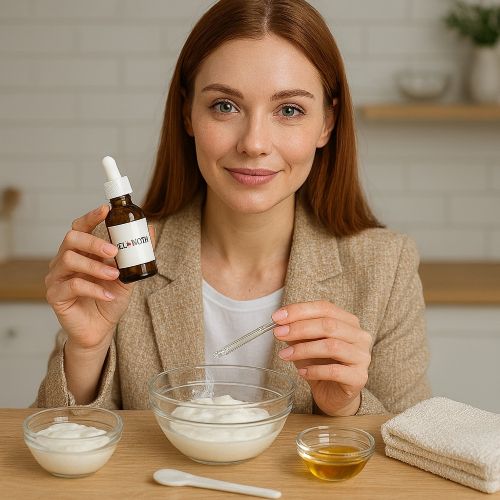
Rosacea and chronic facial redness are common, frustrating skin conditions that often require specialized, gentle care. These conditions are typically rooted in vascular fragility and chronic low-grade inflammation. While many commercial products offer temporary relief, few target the root cause of the vascular and inflammatory cycle. Telangyn is an innovative tetrapeptide specifically designed to address these complex issues. It acts directly to decrease the inflammatory response and reduce the appearance of visible capillaries (telangiectasia) and generalized redness (erythema). By formulating your own cream with Telangyn peptide, you ensure your sensitive skin receives this powerful active at its most effective concentration, surrounded by soothing, non-irritating ingredients. This article provides a detailed guide to Telangyn's mechanism of action, offers three tailored cream and serum recipes, and explains why homemade formulas are often superior for sensitive, reactive skin.
Understanding Telangyn: The Anti-Inflammatory Peptide
Telangyn (Acetyl Tetrapeptide-40) is a cutting-edge tetrapeptide developed to mitigate the negative effects of the body's inflammatory cascade, which is closely linked to the development of rosacea and persistent redness.
-
Targeting Inflammation: Telangyn works by modulating the expression of pro-inflammatory cytokines, specifically Interleukin-6 (IL-6) and Interleukin-8 (IL-8). These messengers are responsible for initiating and perpetuating the cycle of inflammation, leading to visible redness and irritation. By reducing their levels, Telangyn calms the skin from within.
-
Vascular Integrity: The peptide helps to improve the integrity of the dermal microvascular system. Chronic inflammation causes blood vessels to become dilated and weak, which results in the visible spider veins (couperose/rosacea). By reinforcing the skin's barrier and calming the inflammatory signals, Telangyn reduces the vessel dilation, leading to a visible decrease in chronic erythema and redness.
-
Protection and Soothing: Telangyn also helps to protect skin cells against environmental damage and reinforces the skin's defense mechanisms, making it less reactive to external triggers like heat, cold, and pollution.
This makes Telangyn a crucial ingredient for anyone struggling with reactive, red, or rosacea-prone skin.
Three Recipes for Telangyn-Infused Calming Skincare
Telangyn is a water-soluble peptide and is extremely effective at low usage rates (typically 1% to 5%). It must be added to the formulation during the cool-down phase (below 40∘C).
Recipe 1: The Core Anti-Redness Face Cream
This formula uses Telangyn alongside gentle, barrier-supporting oils for comprehensive daily care.
-
Prepare the Water Phase. In a sterilized beaker, weigh 65g of distilled water and 5g of chamomile hydrosol (for added soothing). Heat to 70∘C.
-
Prepare the Oil Phase. In a separate beaker, combine 10g of Hemp Seed Oil (rich in anti-inflammatory omega fatty acids), 5g of Shea Butter, and 5g of a gentle emulsifying wax like Olivem 1000. Heat to 70∘C.
-
Emulsify. Slowly pour the hot water phase into the hot oil phase, mixing with a hand blender until a stable cream forms. Continue mixing as the cream cools.
-
Add the Peptide Active. When the cream cools to below 40∘C, add 3g of Telangyn solution. Stir gently until completely blended.
-
Add Soothing Actives and Preservative. Add 5g of Niacinamide (4% strength) to strengthen the barrier, 1g of Allantoin (soothing agent), and 1g of a broad-spectrum preservative like Geogard 221. Stir well and transfer to a clean jar.
Recommendations for Use: Apply a small amount to the entire face twice daily. Use gentle tapping motions rather than rubbing to avoid stimulating redness.
Storage: Store in a cool, dark place. The shelf life is up to 3 months.
Recipe 2: Lightweight Telangyn Calming Serum
This simple, gel-based serum is perfect for oily or combination skin that still suffers from redness.
-
Prepare the Water Base. In a sterilized beaker, weigh 85g of distilled water.
-
Add Humectants and Soothing Actives. Add 4g of vegetable glycerin and 5g of Aloe Vera Juice. Stir.
-
Add the Key Peptide. Add 4g of Telangyn solution.
-
Add Thickener and Preservative. Add 1g of a gelling agent like Hydroxyethylcellulose (to create a light serum texture) and 1g of a broad-spectrum preservative. Stir well until uniform.
-
Check the pH and Package. Check the pH and adjust if necessary to the peptide's optimal stability range (usually 4.0-6.0). Pour into an airless pump bottle.
Recommendations for Use: Use as a first layer under your daily moisturizer. This lightweight formula absorbs quickly without feeling heavy.
Storage: Store in a cool, dark place. The shelf life is up to 6 months.
Recipe 3: Intensive Post-Cleansing Toner Mist
This mist is designed to immediately calm the skin after cleansing, an activity that often triggers redness.
-
Prepare the Water Base. In a sterilized beaker, combine 90g of Rose Hydrosol (gentle and soothing) and 5g of Licorice Root Extract (known for its anti-redness properties).
-
Add the Peptide. Add 4g of Telangyn solution. Stir gently.
-
Add the Preservative. Add 1g of a broad-spectrum preservative.
-
Package. Pour the mixture into a clean spray bottle.
Recommendations for Use: Mist over the face immediately after cleansing to restore the skin's equilibrium and calm any post-wash redness. Can be used throughout the day as a soothing mist.
Storage: Store in the refrigerator for an extra soothing, cooling effect. The shelf life is up to 6 months.
Advantages Over Industrial Rosacea Treatments
For sensitive and rosacea-prone skin, homemade cosmetics offer compelling benefits over most commercial formulations.
-
Avoiding Vasoactive and Irritating Agents: Many commercial anti-redness products use ingredients that provide temporary vasoconstriction (like certain essential oils or menthol), which can cause rebound redness or irritation over time. Your DIY formula focuses on the root, long-term anti-inflammatory action of Telangyn without irritating fillers.
-
Optimal Peptide Concentration: Telangyn is a specialized, costly peptide. Store-bought products often include minimal amounts. By formulating your own, you ensure the peptide is present at the maximum recommended concentration (2% to 4%), guaranteeing effective inflammation control.
-
Tailored Emollients: You select only non-comedogenic, anti-inflammatory oils (like Hemp or Evening Primrose) that will soothe and strengthen the compromised barrier, avoiding common irritants like mineral oil or heavy silicones found in commercial creams.
-
Complete Ingredient Transparency: You eliminate the guesswork. Sensitive skin requires certainty regarding ingredients; by making your own, you avoid every potential trigger, including synthetic fragrances and dyes, which are massive irritants for rosacea sufferers.
By choosing to formulate your own Telangyn cream, you gain precise control over a powerful active, ensuring your sensitive skin receives the purest, most targeted, and effective care possible.


Cosmetic ingredients and professional formulation blog
This section features expert materials on modern cosmetic actives. We cover peptides, polynucleotides PDRN, different forms of hyaluronic acid, retinoids, ceramides and other key components.
Special focus is given to active stability, ingredient compatibility and correct incorporation into formulas. You will find practical guides on working with anti-age actives, moisturizing complexes and barrier repair ingredients.
We examine how to properly combine myorelaxants with peptides, common mistakes when using unstable vitamin C forms and ways to improve the performance of moisturizing actives.
Separate materials are dedicated to base oils, extracts, emulsifiers and supporting ingredients. This helps create stable and effective formulas for both professional and home cosmetics.
The blog regularly publishes reviews of trending actives, comparisons of similar ingredients and step-by-step formulation recommendations. The content is aimed at formulators, technologists and anyone seriously involved in creating cosmetic products.
Why this blog is useful
Here you will find practical data on eye area care actives, lifting systems and ingredients that improve skin firmness and tone. We rely on real formulation experience and address the actual challenges that arise during product development.
You can also explore materials on skin protection and repair, depigmentation and anti-inflammatory actives. This approach supports a more systematic selection of ingredients.
FAQ
What topics are covered most often
The blog focuses on peptides, PDRN, hyaluronic acid of different molecular weights, retinoids, ceramides and their compatibility rules.
Are there practical recommendations on how to incorporate actives
Yes, most articles include practical notes on pH stability, incorporation temperature and common formulation mistakes.
Is the content only for professionals
The materials are useful both for formulators and technologists and for those who create cosmetics for personal use and want to understand how modern ingredients work.
Where can I go directly to the ingredients
All key actives are collected in the Actives section, while base components are available in base oils and related categories.



