-
 DIY: Video master classes
-
 Aromatherapy
-
 Felting master classes
-
 Eating at home
-
 DIY cosmetics for children
-
 Cooking recipes
-
 Detergents, cleaning products with your own hands
-
 Soap making as a business
-
 Natural cosmetics. Raw materials for cosmetics and soap.
-
 Natural oils in cosmetics
-
 News
-
 Recipes for balms and conditioners
-
 Bath Bomb Recipes
-
 Cream recipes. Cream making.
-
 Lotion recipes. Gel recipes.
-
 Mask recipes
-
 Soap recipes. Base soap. Soap from scratch.
-
 Recipes for all occasions
-
 Natural shampoo recipes
-
 Healthy Nutrition Recipes
-
 Scrub recipes. Massage tiles. Ubtan
-
 DIY candles
-
 Reference materials, questions, tips
-
 Startup - soap production
-
 Hair care. Tips, recipes
-
 Facial skin care. Cleansers.
-
 Body care. Tips, recipes
-
 Photo Reviews
-
 Chocolate Handmade


Granular scrubs: fashionable recipes for the body and face with active complexes and oils
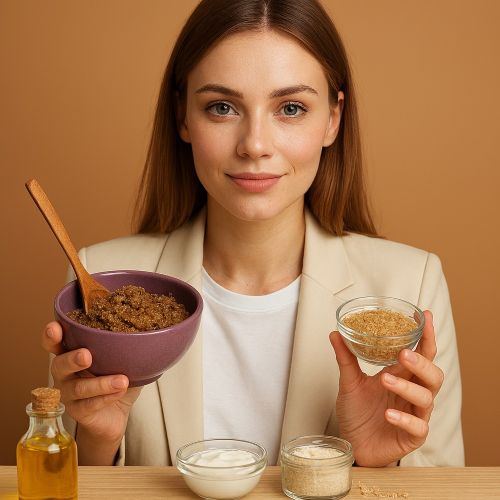 Exfoliation is essential for healthy, glowing skin, but not all scrubs are created equal. Modern skincare has moved far beyond harsh, simple mixtures, embracing granular scrubs that combine effective mechanical action with sophisticated active ingredients and nourishing oils. These formulations provide deep exfoliation, boosting circulation and revealing fresh, smooth skin, while simultaneously delivering vitamins, antioxidants, and profound hydration. By crafting your own scrubs, you gain complete control over the type of abrasive, the quality of oils, and the concentration of active complexes, ensuring your scrub is perfectly tailored for your face or body without relying on aggressive commercial ingredients. This article explores the principles of effective granular exfoliation, provides three detailed recipes, and outlines the significant advantages of custom formulation.
The Science of Granular Exfoliation
A high-quality granular scrub should achieve two things: gently and effectively remove dead skin cells, and condition the new skin beneath. The key lies in selecting the right abrasive and integrating it with beneficial ingredients.
Choosing the Right Granules
The type of abrasive determines the scrub's intensity, making selection crucial for different body parts:
-
For the Face (Gentle): Opt for fine, rounded particles like Jojoba beads, finely ground Oat flour, or Rice powder. These are less aggressive than salts or sugars and minimize micro-tears, which is vital for delicate facial skin.
-
For the Body (Intense): Fine sea salt, sugar (especially brown sugar), or finely ground Coffee grounds are excellent. Their crystalline structure provides effective sloughing for thicker skin on the limbs and torso.
-
Avoid Harsh Edges: Always ensure any ground botanical material (like fruit pits) is extra-finely milled to prevent damage, or choose materials that soften quickly when wet, such as sugar.
The Role of Active Complexes and Oils
A modern scrub is more than just an abrasive paste; it’s a two-in-one treatment.
-
Nourishing Base: The carrier base, typically rich in vegetable oils (e.g., Shea Butter, Coconut Oil, Almond Oil), prevents friction and moisturizes the skin immediately after exfoliation, leaving a soft, protective film.
-
Active Complexes: Ingredients like Vitamin E, Niacinamide, or CO₂ extracts are added to provide anti-inflammatory, antioxidant, or skin-brightening benefits during the scrubbing process.
Three Recipes for High-Performance Granular Scrubs
These recipes are designed for distinct purposes and areas of the body, leveraging the benefits of different granules and active systems.
Recipe 1: Gentle Resurfacing Facial Scrub-Cream
This creamy formula provides mild exfoliation suitable for regular use on the face, blending fine granules with a soothing active base.
-
Prepare the Oil Phase. In a sterilized beaker, weigh 15g of Sweet Almond Oil and 5g of Cetyl Alcohol (for texture). Heat to 70∘C.
-
Prepare the Water Phase. In a separate beaker, weigh 60g of distilled water and 5g of a gentle emulsifier like Olivem 1000. Heat to 70∘C.
-
Emulsify. Combine the phases, mixing with a gentle whisk or hand mixer until a stable, creamy emulsion forms. Cool to 40∘C.
-
Introduce the Granules. Once cooled, gently fold in 10g of fine Jojoba beads (or finely milled rice powder).
-
Add Actives and Preservative. Add 4g of D-Panthenol (Vitamin B5) for soothing and 1g of a broad-spectrum preservative. Stir slowly to maintain the integrity of the granules.
Recommendations for Use: Apply a small amount to damp, clean skin. Massage gently in circular motions for 30 seconds, then rinse thoroughly. Use 1-2 times per week.
Storage: Store in a clean, sealed jar away from direct water contact. Shelf life is up to 3 months.
Recipe 2: Stimulating Coffee & Salt Body Scrub (Oil-Based)
This intense, anhydrous (water-free) scrub is perfect for the body, targeting dullness and improving circulation, leaving an oily film that locks in moisture.
-
Prepare the Oil Base. In a sterilized container, weigh 40g of Fractionated Coconut Oil and 40g of Shea Butter. Melt gently at 60∘C.
-
Incorporate the Emulsifier. Once melted, add 10g of an oil-soluble emulsifier like Cromollient SCE. This allows the scrub to rinse off easily (it turns milky upon contact with water).
-
Cool and Add Granules. Remove from heat and let cool until the mixture begins to solidify slightly. Fold in 50g of medium-fine Sea Salt and 30g of freshly ground Coffee (for stimulating properties).
-
Add Actives and Scent. Add 1g of CO2-extract of Ginger (for stimulating circulation) and 1g of Vitamin E (antioxidant). Add a few drops of essential oil if desired (e.g., grapefruit).
Recommendations for Use: Apply to wet skin in the shower. Massage vigorously into the skin, particularly thighs and buttocks. Rinse. No need for post-shower lotion.
Storage: Store in a wide-mouth, air-tight jar. The lack of water means a longer shelf life (up to 6 months).
Recipe 3: Balancing and Mattifying Powder Scrub Mask
This dry powder formula transforms into an active paste upon activation, ideal for oily and acne-prone skin.
-
Combine Powders. In a sterilized, wide-mouth jar, weigh and combine 40g of White Clay (Kaolin), 30g of fine Colloidal Oatmeal (soothing), and 20g of Rice Powder (mild exfoliant).
-
Add Active Powders. Add 5g of Niacinamide Powder (Vitamin B3, for oil regulation) and 4g of Allantoin Powder (for soothing). Mix thoroughly with a spatula or shaker.
-
Introduce CO2 Extract (Pre-mix). In a very small separate vial, mix 0.5g of CO2-extract of Licorice (anti-inflammatory) with 0.5g of Jojoba Oil until the extract dissolves.
-
Combine Phases. Pour the CO2 oil mix into the powder mixture. Mix carefully until the oil is evenly distributed.
Recommendations for Use: Scoop a teaspoon of dry powder into the palm of your hand. Activate with a few drops of water or a hydrosol (e.g., Witch Hazel) to form a paste. Apply to the face, leave on for 5 minutes, then gently scrub and rinse. Use 2 times per week.
Storage: Store dry powder in a cool, dark, and moisture-free environment. Shelf life is up to 1 year.
Advantages Over Commercial Granular Scrubs
Formulating your own scrubs with granular ingredients, oils, and complexes offers key advantages over many store-bought options.
-
Control Over Abrasives: You eliminate the risk of using harsh, irregular granules like ground nut shells or environmentally damaging plastic microbeads, which are common in mass-market products. You choose the gentlest yet most effective natural exfoliant for your skin.
-
No Harsh Fillers: Many commercial scrubs use excessive surfactants (soaps) or harsh alcohols to create lather or thin the product. Homemade oil-based scrubs (like Recipe 2) are cleaner, relying on superior emulsifiers to transition smoothly from oil to milk upon rinsing.
-
Superior Oil Quality: You select high-quality, cold-pressed, nutrient-rich carrier oils like Rosehip or Argan, whereas industrial scrubs often rely on cheap mineral oil or petroleum by-products that offer no therapeutic benefit.
-
Therapeutic Dosing of Actives: You can include a therapeutic concentration of active complexes (like high-dose Niacinamide or powerful CO2 extracts) in your scrub. In commercial products, these valuable ingredients are often present in negligible amounts because they are difficult to formulate with the abrasive base.
By customizing your granular scrubs, you ensure a gentle yet powerful mechanical exfoliation combined with a concentrated delivery of skin-nourishing and repairing active ingredients.


Cosmetic ingredients and professional formulation blog
This section features expert materials on modern cosmetic actives. We cover peptides, polynucleotides PDRN, different forms of hyaluronic acid, retinoids, ceramides and other key components.
Special focus is given to active stability, ingredient compatibility and correct incorporation into formulas. You will find practical guides on working with anti-age actives, moisturizing complexes and barrier repair ingredients.
We examine how to properly combine myorelaxants with peptides, common mistakes when using unstable vitamin C forms and ways to improve the performance of moisturizing actives.
Separate materials are dedicated to base oils, extracts, emulsifiers and supporting ingredients. This helps create stable and effective formulas for both professional and home cosmetics.
The blog regularly publishes reviews of trending actives, comparisons of similar ingredients and step-by-step formulation recommendations. The content is aimed at formulators, technologists and anyone seriously involved in creating cosmetic products.
Why this blog is useful
Here you will find practical data on eye area care actives, lifting systems and ingredients that improve skin firmness and tone. We rely on real formulation experience and address the actual challenges that arise during product development.
You can also explore materials on skin protection and repair, depigmentation and anti-inflammatory actives. This approach supports a more systematic selection of ingredients.
FAQ
What topics are covered most often
The blog focuses on peptides, PDRN, hyaluronic acid of different molecular weights, retinoids, ceramides and their compatibility rules.
Are there practical recommendations on how to incorporate actives
Yes, most articles include practical notes on pH stability, incorporation temperature and common formulation mistakes.
Is the content only for professionals
The materials are useful both for formulators and technologists and for those who create cosmetics for personal use and want to understand how modern ingredients work.
Where can I go directly to the ingredients
All key actives are collected in the Actives section, while base components are available in base oils and related categories.



