-
 DIY: Video master classes
-
 Aromatherapy
-
 Felting master classes
-
 Eating at home
-
 DIY cosmetics for children
-
 Cooking recipes
-
 Detergents, cleaning products with your own hands
-
 Soap making as a business
-
 Natural cosmetics. Raw materials for cosmetics and soap.
-
 Natural oils in cosmetics
-
 News
-
 Recipes for balms and conditioners
-
 Bath Bomb Recipes
-
 Cream recipes. Cream making.
-
 Lotion recipes. Gel recipes.
-
 Mask recipes
-
 Soap recipes. Base soap. Soap from scratch.
-
 Recipes for all occasions
-
 Natural shampoo recipes
-
 Healthy Nutrition Recipes
-
 Scrub recipes. Massage tiles. Ubtan
-
 DIY candles
-
 Reference materials, questions, tips
-
 Startup - soap production
-
 Hair care. Tips, recipes
-
 Facial skin care. Cleansers.
-
 Body care. Tips, recipes
-
 Photo Reviews
-
 Chocolate Handmade


Retinol and retinal: pH stability, packaging and compatibility with other active ingredients
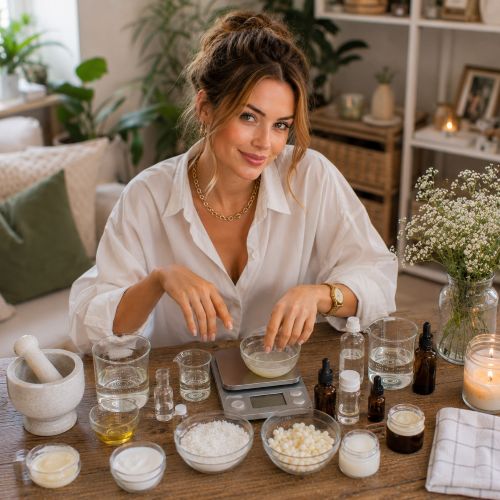 Retinoids represent a premier class of vitamin A derivatives celebrated for their unparalleled ability to accelerate epidermal cell turnover and rebuild dermal density. Within cosmetic science, pure retinol and retinaldehyde, commonly referred to as retinal, serve as powerful non-prescription benchmarks. To become biologically active, any applied retinoid must convert within skin tissue into retinoic acid, which directly binds to nuclear retinoic acid receptors to alter gene expression and initiate systemic repair.
The conversion pathway follows a sequential metabolic progression. Pure retinol oxidizes first into retinaldehyde, which subsequently oxidizes into active retinoic acid. Because retinaldehyde sits just one metabolic conversion step away from retinoic acid, it exhibits up to ten times greater potency and faster kinetics than retinol. Additionally, retinaldehyde displays direct antibacterial activity against acne-causing bacteria while causing significantly less surface irritation. Both actives stimulate structural collagen production, inhibit matrix metalloproteinases that break down tissue, and regulate melanin distribution to fade stubborn hyperpigmentation.
Technical Stability Control and Critical pH Parameters
Retinol and retinaldehyde are inherently unstable molecules that degrade rapidly when exposed to air, light, high temperatures, and extreme pH shifts. Oxidation turns active retinoids into biologically inactive compounds, rendering the cosmetic formulation ineffective while dramatically increasing its potential for skin irritation. Controlling pH and processing temperatures is paramount during compounding.
Retinoids require a strictly controlled physiological pH environment. The optimal pH range for stable retinoid formulations lies between five point five and six point five. Acidic environments with a pH below five point zero accelerate chemical degradation and exacerbate skin irritation. Furthermore, retinoids are thermo-labile active ingredients. Exposure to temperatures exceeding forty degrees Celsius breaks down the polyene chain of the retinoid molecule. Retinoids must always be introduced into the oil phase or cool-down phase at temperatures below thirty-five degrees Celsius while incorporating antioxidants such as vitamin E tocopherol to halt lipid oxidation.
Active Compatibility Matrix and Synergy Rules
Formulating effectively with retinoids requires navigating strict rules of active ingredient compatibility to avoid neutralizing potency or inducing severe cutaneous barrier distress. Combining retinoids with high concentrations of direct alpha-hydroxy acids or beta-hydroxy acids in a single leave-on product destabilizes the retinoid due to low pH and destroys the epidermal moisture barrier through excessive exfoliation.
Conversely, retinoids demonstrate remarkable synergy with barrier-repairing and soothing compounds. Pairing retinol or retinal with niacinamide decreases retinoid-induced erythema, reinforces lipid synthesis, and enhances hyperpigmentation clearance. Peptides, ceramides, cholesterol, plant squalane, and hyaluronic acid work in complete harmony with retinoids, mitigating surface dryness and supporting tissue restructuring. When incorporating vitamin C, utilize stable non-acidic derivatives like sodium ascorbyl phosphate or ascorbyl tetraisopalmitate, keeping pure L-ascorbic acid for alternate daytime applications.
Packaging Imperatives and Degradation Prevention
Proper container selection is just as critical as precise chemical compounding when preserving retinoid integrity. Industrial and home formulations alike fail rapidly if packaged in clear glass droppers or open-jar containers, where constant exposure to atmospheric oxygen and light causes rapid degradation within days.
Retinoids must be stored strictly in light-blocking, opaque, airless pump containers or dark amber glass bottles equipped with air-tight seals. Airless pump bottles prevent any contact between atmospheric oxygen and the liquid cream base during daily dispense cycles. Dark amber or opaque violet glass shields the sensitive retinoid molecules from damaging ultraviolet wavelengths. Using improper packaging undermines even the most precisely calculated formulation, turning an advanced active treatment into an oxidized, irritating fluid.
Distinct Advantages of Custom Retinoid Formulations Over Mass Market Products
Mass-market commercial creams featuring retinoids often sacrifice raw ingredient stability and concentration for extended mass-retail shelf lives. Industrial products frequently rely on minute, non-therapeutic dosages of retinol to avoid customer complaints regarding peeling or irritation. To mask cheap formulation bases, commercial brands regularly incorporate heavy synthetic silicones, petroleum mineral oils, and strong synthetic fragrances that clog pores and impede deep active absorption.
Creating custom retinoid treatments allows formulators to utilize clinically proven, active working concentrations of pure retinol or retinaldehyde ranging from zero point zero five to zero point one percent. Custom compounding replaces inert synthetic fillers with nutrient-dense botanical hydrosols, natural lamellar emulsifiers, biomimetic lipids, and pure antioxidants. This yields superior bioavailability, rapid skin absorption, zero pore congestion, and genuine dermal transformation.
Sanitation Standards and Laboratory Hygiene Protocols
Working with sensitive biological actives and vulnerable emulsion bases demands impeccable hygiene standards. Because custom formulations avoid aggressive industrial preservatives, maintaining absolute sanitary discipline during preparation prevents bacterial growth and guarantees product safety.
Sanitize all work surfaces using a broad-spectrum surface disinfectant prior to beginning. Wash hands thoroughly with antibacterial soap and put on sterile nitrile gloves. All glass beakers, measuring spoons, mini whisks, glass stirring rods, digital scales, and packaging bottles must be washed, rinsed with distilled water, and sprayed thoroughly with a seventy percent isopropyl alcohol solution. Allow every tool to air-dry completely on fresh paper towels rather than cloth materials to prevent introducing airborne particles or microbial spores.
Recipe First Night Recovery Serum with Retinal and Niacinamide
A light, deeply penetrating gel-serum formulated to accelerate cell renewal, refine skin texture, and soothe systemic inflammation.
Composition thirty-two milliliters organic lavender hydrosol zero point one grams pure retinaldehyde powder one gram niacinamide powder one gram provitamin B5 panthenol powder half a gram low-molecular-weight hyaluronic acid powder one milliliter vitamin E tocopherol oil one milliliter vegetable glycerin one milliliter broad-spectrum eco preservative
Preparation Step first Sanitize heat-safe glass beakers, glass stirring rods, precision scales, and an opaque airless pump bottle with isopropyl alcohol. Step second Measure thirty-two milliliters of organic lavender hydrosol into the main glass beaker, adding the vegetable glycerin, panthenol powder, and niacinamide powder. Step third Stir the aqueous liquid with a glass rod until all dry powders are fully dissolved into a clear solution. Step fourth Sprinkle low-molecular-weight hyaluronic acid powder over the liquid surface and allow fifteen minutes for full hydration. Step fifth In a separate small glass vessel, dissolve zero point one grams of pure retinaldehyde powder directly into one milliliter of vitamin E tocopherol oil until fully blended. Step sixth Verify that the temperature of the main gel base is below thirty-five degrees Celsius, then stir the retinal oil mixture thoroughly into the hydrating gel. Step seventh Add the broad-spectrum eco preservative, stir for two minutes, verify the pH measures between six point zero and six point five, and decant into your sanitized opaque airless pump bottle.
Recipe Second Rejuvenating Lamellar Fluid with Retinol and Peptides
A silky, highly bio-compatible night fluid created to strengthen the cutaneous barrier, smooth fine lines, and boost collagen density.
Composition thirty-one milliliters organic rose hydrosol zero point one grams pure retinol active powder one and a half milliliters matrikin peptide complex three milliliters plant-derived squalane two milliliters organic jojoba oil two and a half grams natural lamellar emulsifier one milliliter vitamin E tocopherol oil one milliliter broad-spectrum eco preservative
Preparation Step first Disinfect all glass beakers, measuring tools, mini whisk, and an airless pump container with isopropyl alcohol. Step second Prepare the water phase by measuring thirty-one milliliters of organic rose hydrosol into the first heat-safe beaker. Step third Combine plant-derived squalane, organic jojoba oil, and natural lamellar emulsifier in a second heat-safe beaker to form the oil phase. Step fourth Heat both beakers gently in a water bath until reaching seventy degrees Celsius and the emulsifier melts completely. Step fifth Slowly pour the hot water phase into the hot oil phase while blending rapidly with a mini whisk until a uniform emulsion forms. Step sixth Allow the emulsion to cool down below thirty-five degrees Celsius, then blend in the pure retinol active powder pre-dissolved in vitamin E tocopherol oil, along with the matrikin peptide complex and broad-spectrum eco preservative. Step seventh Mix thoroughly with a glass rod, confirm a final pH between five point five and six point two, and transfer the fluid into your sanitized airless pump bottle.

Recipe Third Soothing Anti-Stress Fluid with Retinal and Ceramides
A protective, rich restorative fluid formulated specifically for sensitive or compromised skin types starting retinoid therapy.
Composition thirty milliliters organic chamomile hydrosol zero point zero five grams pure retinaldehyde powder two milliliters ceramide complex solution three milliliters plant-derived squalane two grams natural lamellar emulsifier one milliliter vitamin E tocopherol oil one milliliter broad-spectrum eco preservative
Preparation Step first Thoroughly sanitize glass beakers, mini whisk, glass stirring rod, digital scale, and an airless pump container using isopropyl alcohol. Step second Measure thirty milliliters of organic chamomile hydrosol into the first glass beaker to establish the water phase. Step third Combine plant-derived squalane and natural lamellar emulsifier in a second heat-safe beaker for the oil phase. Step fourth Warm both beakers in a water bath until seventy degrees Celsius, then pour the water phase into the oil phase while whisking continuously until smooth. Step fifth Cool the emulsified base down completely to below thirty-five degrees Celsius. Step sixth Dissolve the pure retinaldehyde powder into the vitamin E tocopherol oil, then incorporate it into the cooled base alongside the ceramide complex solution and broad-spectrum eco preservative. Step seventh Mix thoroughly, verify a balanced pH between five point eight and six point five, and decant into your sanitized airless pump bottle.
Application Guidelines and Daily Skincare Integration
Retinoid formulations must be integrated into evening skincare routines exclusively, as sunlight degrades active retinoid molecules and increases transient sun sensitivity. Introduce retinoid products slowly using a retinization schedule, applying the product twice a week for the first fortnight, every other night for the third week, and building up to nightly usage as tolerated.
Apply a pea-sized amount of retinoid product to clean, completely dry skin across the face and neck, avoiding the delicate eye contours and corners of the lips. Applying retinoids to wet skin increases systemic absorption rates and can cause unexpected peeling. Follow twenty minutes later with a rich barrier cream containing ceramides or squalane to lock in moisture. Always apply a broad-spectrum sunscreen with a high protection factor every morning during retinoid therapy to protect newly revealed skin cells.
Storage Conditions and Product Preservation
Preserving the active biological potency of custom retinoid preparations depends on strict environmental controls. Retinoid molecules remain highly sensitive to thermal spikes, moisture, and optical exposure throughout their product lifespan.
Store all finished serums, fluids, and creams in airtight opaque airless pump containers or dark amber glass dispensers in a cool, dark room or on a middle shelf in a dedicated skincare refrigerator at steady temperatures between eight and fifteen degrees Celsius. Keep containers tightly closed and never store active retinoid products inside warm, humid bathrooms. When prepared following strict sterile protocols and stored under continuous cool conditions, custom retinoid formulations maintain full biological potency for two to three months.


Cosmetic ingredients and professional formulation blog
This section features expert materials on modern cosmetic actives. We cover peptides, polynucleotides PDRN, different forms of hyaluronic acid, retinoids, ceramides and other key components.
Special focus is given to active stability, ingredient compatibility and correct incorporation into formulas. You will find practical guides on working with anti-age actives, moisturizing complexes and barrier repair ingredients.
We examine how to properly combine myorelaxants with peptides, common mistakes when using unstable vitamin C forms and ways to improve the performance of moisturizing actives.
Separate materials are dedicated to base oils, extracts, emulsifiers and supporting ingredients. This helps create stable and effective formulas for both professional and home cosmetics.
The blog regularly publishes reviews of trending actives, comparisons of similar ingredients and step-by-step formulation recommendations. The content is aimed at formulators, technologists and anyone seriously involved in creating cosmetic products.
Why this blog is useful
Here you will find practical data on eye area care actives, lifting systems and ingredients that improve skin firmness and tone. We rely on real formulation experience and address the actual challenges that arise during product development.
You can also explore materials on skin protection and repair, depigmentation and anti-inflammatory actives. This approach supports a more systematic selection of ingredients.
FAQ
What topics are covered most often
The blog focuses on peptides, PDRN, hyaluronic acid of different molecular weights, retinoids, ceramides and their compatibility rules.
Are there practical recommendations on how to incorporate actives
Yes, most articles include practical notes on pH stability, incorporation temperature and common formulation mistakes.
Is the content only for professionals
The materials are useful both for formulators and technologists and for those who create cosmetics for personal use and want to understand how modern ingredients work.
Where can I go directly to the ingredients
All key actives are collected in the Actives section, while base components are available in base oils and related categories.



