-
 DIY: Video master classes
-
 Aromatherapy
-
 Felting master classes
-
 Eating at home
-
 DIY cosmetics for children
-
 Cooking recipes
-
 Detergents, cleaning products with your own hands
-
 Soap making as a business
-
 Natural cosmetics. Raw materials for cosmetics and soap.
-
 Natural oils in cosmetics
-
 News
-
 Recipes for balms and conditioners
-
 Bath Bomb Recipes
-
 Cream recipes. Cream making.
-
 Lotion recipes. Gel recipes.
-
 Mask recipes
-
 Soap recipes. Base soap. Soap from scratch.
-
 Recipes for all occasions
-
 Natural shampoo recipes
-
 Healthy Nutrition Recipes
-
 Scrub recipes. Massage tiles. Ubtan
-
 DIY candles
-
 Reference materials, questions, tips
-
 Startup - soap production
-
 Hair care. Tips, recipes
-
 Facial skin care. Cleansers.
-
 Body care. Tips, recipes
-
 Photo Reviews
-
 Chocolate Handmade


A Complete Guide to Cosmetic Active Ingredients: Theory and Practice
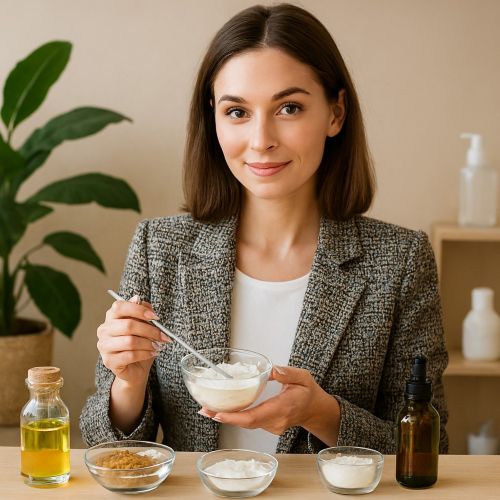 Understanding the active ingredients in skincare is the key to achieving real results whether you are formulating your own products or evaluating commercial offerings. Active ingredients are the components responsible for the cosmetic claims—from reducing wrinkles and brightening skin to soothing irritation and boosting hydration. However their effectiveness relies entirely on proper concentration delivery system and compatibility within the final formula.
This comprehensive guide serves as your textbook for cosmetic actives covering the essential theory of action and offering practical recipes to illustrate how to safely and effectively integrate these powerful components into your skincare routine. Learn to master the science of formulation and gain a clear advantage over generic industrial products.
Theoretical Foundations of Cosmetic Actives
Cosmetic actives are categorized based on their function in the skin. Knowing the type and mechanism of action is crucial for successful formulation.
Three Primary Categories of Actives
-
1 Communicators (Cell Signaling Agents): This category includes Peptides and Growth Factors. They do not directly alter the skin structure but send messages to cells (like fibroblasts) instructing them to produce more collagen elastin or anti-inflammatory compounds. They are essential for anti-aging and repair.
-
2 Antioxidants and Protectors: This includes Vitamin C Vitamin E and various plant extracts. Their primary function is to neutralize free radicals caused by UV radiation and pollution preventing cellular damage and premature aging. They are crucial for protection and brightening.
-
3 Resurfacers and Hydrators: This group features ingredients like AHAs BHAs and Hyaluronic Acid. Resurfacers accelerate cell turnover for smoother skin while hydrators draw and retain moisture improving plumpness and barrier function.
Concentration and Compatibility Nuances
Effectiveness depends on optimal concentration. Too little will have no effect too much can cause irritation or instability. Compatibility is vital: for example Vitamin C (L-Ascorbic Acid) is highly acidic and should generally not be mixed with high concentrations of Niacinamide or certain Peptides in the same formula unless using buffered or stable derivatives.
Recipe 1 The Anti-Aging Peptide and Niacinamide Serum (Water-Based)
This formula combines two powerhouse communicators to maximize firming and barrier support.
Ingredients Needed
-
1 Signal Peptide Complex e.g. Matrixyl 3000 or Argireline solution 5 ml (Cooling Phase)
-
2 Vitamin B3 Niacinamide powder 5 grams (Water Phase)
-
3 Humectant Vegetable Glycerin 5 ml (Water Phase)
-
4 Base Distilled Water or Hydrosol 90 ml (Water Phase)
-
5 Thickener Xanthan Gum 05 grams (Water Phase)
-
6 Preservative (Essential) 05 grams (Cooling Phase)
Preparation Nuances
-
Niacinamide Dissolving: Niacinamide dissolves easily in water. We heat the water slightly to ensure full dissolution and to work with the thickener.
-
Peptide Stability: Peptides must be added only to the cooled solution (below 40 degrees Celsius) to prevent heat degradation.
Step-by-Step Instructions
-
Step one In a sterilized beaker combine Distilled Water (90 ml) and Glycerin (5 ml). Warm the mixture to approximately 40 degrees Celsius.
-
Step two Slowly add the Niacinamide powder (5 grams) and stir until fully dissolved.
-
Step three Sprinkle the Thickener (05 grams) onto the surface and stir gently until the serum begins to thicken and is uniform.
-
Step four Allow the serum to cool naturally to room temperature (below 40 degrees Celsius).
-
Step five Add the Signal Peptide Complex (5 ml) and mix thoroughly.
-
Step six Add the Preservative (05 grams) stirring well for two minutes.
-
Step seven Transfer the finished serum to an opaque airless pump bottle.
Recipe 2 The Antioxidant Day Cream (Emulsion Base)
This emulsion incorporates a stable Vitamin C derivative (protector) and barrier-supporting lipids.
Ingredients Needed
-
1 Stable Vitamin C Derivative Magnesium Ascorbyl Phosphate MAP powder 3 grams (Cooling Phase)
-
2 Emulsifying Wax NF or Olivem 1000 5 grams (Oil Phase)
-
3 Carrier Oil Shea Butter or Squalane 15 ml (Oil Phase)
-
4 Water Phase Distilled Water 75 ml
-
5 Preservative 05 grams (Cooling Phase)
Preparation Nuances
-
MAP pH: MAP is most effective at a pH of 60 to 70 which is skin-friendly and compatible with most lipids and preservatives.
-
Oil/Water Heating: Both phases must be heated to the same temperature (approximately 70 degrees Celsius) before combining for proper emulsification.
Step-by-Step Instructions
-
Step one Combine Emulsifying Wax (5 grams) and Carrier Oil (15 ml) in a double boiler until melted (Oil Phase).
-
Step two Heat Distilled Water (75 ml) separately to the same temperature (Water Phase).
-
Step three Pour the Water Phase into the Oil Phase while stirring vigorously until the cream emulsion forms.
-
Step four Remove from heat and continue stirring while the cream cools to below 40 degrees Celsius.
-
Step five In a separate small dish dissolve the MAP powder (3 grams) in a spoonful of cooled distilled water. Add this concentrated solution to the cooling cream.
-
Step six Add the Preservative (05 grams). Stir well until the cream is homogenous.
-
Step seven Store the cream in an airtight opaque jar or pump.
Recipe 3 The Resurfacing Night Mask (Gel Base)
This formula uses an Alpha Hydroxy Acid AHA (resurfacer) combined with soothing agents for nighttime exfoliation.
Ingredients Needed
-
1 Resurfacer Lactic Acid 88% solution 5 ml (Final concentration around 4-5%)
-
2 Soothing Agent Allantoin powder 1 gram
-
3 Humectant Panthenol liquid 3 ml
-
4 Base Distilled Water 85 ml
-
5 Thickener Xanthan Gum 05 grams
-
6 Preservative 05 grams
Step-by-Step Instructions
-
Step one Combine Distilled Water (85 ml) and Panthenol (3 ml). Warm slightly to approximately 40 degrees Celsius.
-
Step two Dissolve the Allantoin powder (1 gram) in the warm mixture.
-
Step three Sprinkle the Thickener (05 grams) onto the surface and stir gently until the gel forms.
-
Step four Allow the gel to cool to room temperature.
-
Step five Slowly add the Lactic Acid solution (5 ml). Stir very gently. Note: Check pH. It should be between 35 and 40. Adjust with a few drops of buffer if needed.
-
Step six Add the Preservative (05 grams) ensuring it is thoroughly mixed.
-
Step seven Transfer the finished gel mask into a sealed tube or jar.
Detailed Recommendations for Use and Storage
Usage Guide for Active Ingredients
-
Peptides (Serum Recipe 1): Apply daily morning or evening. Always follow with a moisturizer to seal in the actives.
-
Vitamin C (Cream Recipe 2): Best used in the morning under sunscreen. Antioxidants protect the skin throughout the day.
-
AHAs (Mask Recipe 3): Use only 1-2 times per week at night. AHAs increase sun sensitivity so daily SPF is mandatory.
-
Layering Rule: Apply the thinnest product first (serum) followed by thicker products (cream/mask). Never layer two highly acidic products or two strong exfoliants simultaneously.
Storage and Shelf Life
-
Container Selection: Always use airless pump bottles or dark opaque containers for any product containing antioxidants (Vitamin C) or light-sensitive peptides. Exposure to light and oxygen dramatically reduces efficacy.
-
Temperature Control: Store all water-based serums and creams (Recipes 1 2 and 3) in a cool dark place. Refrigeration (4-8 degrees Celsius) is highly recommended for longevity especially for peptide and Vitamin C formulas.
-
Shelf Life: Properly preserved DIY products have a limited shelf life typically 2-3 months for water-based items. Always record the preparation date.
-
pH Monitoring: For formulations containing AHAs (Recipe 3) use pH strips to ensure the final product is within the safe range (35-40).
Advantages Over Industrial Analogs
Mastering the theory and practice of using cosmetic actives allows you to create superior products that outperform most commercial brands:
-
Optimal Potency and Concentration: Commercial products often use "fairy dust" concentrations of expensive actives like Peptides or specific Vitamin C derivatives. By formulating yourself you ensure the inclusion of clinically relevant concentrations for true efficacy.
-
Customized Formulation: You eliminate ingredients that cause sensitivity (fragrances artificial colorants) and tailor the base ingredients to your specific skin needs (e.g. using lightweight Squalane for oily skin or richer Shea Butter for dry skin).
-
Guaranteed Freshness: You avoid purchasing products that have spent months degrading on store shelves. DIY formulation ensures the actives are at their peak potency when you use them.
-
Cost Efficiency: While the raw ingredients require an initial investment the cost per ounce of a high-concentration professional-grade DIY serum or cream is significantly lower than a premium commercial equivalent.
This knowledge empowers you to move beyond marketing claims and formulate products based on scientific principles providing your skin with targeted effective and pure ingredients.


Cosmetic ingredients and professional formulation blog
This section features expert materials on modern cosmetic actives. We cover peptides, polynucleotides PDRN, different forms of hyaluronic acid, retinoids, ceramides and other key components.
Special focus is given to active stability, ingredient compatibility and correct incorporation into formulas. You will find practical guides on working with anti-age actives, moisturizing complexes and barrier repair ingredients.
We examine how to properly combine myorelaxants with peptides, common mistakes when using unstable vitamin C forms and ways to improve the performance of moisturizing actives.
Separate materials are dedicated to base oils, extracts, emulsifiers and supporting ingredients. This helps create stable and effective formulas for both professional and home cosmetics.
The blog regularly publishes reviews of trending actives, comparisons of similar ingredients and step-by-step formulation recommendations. The content is aimed at formulators, technologists and anyone seriously involved in creating cosmetic products.
Why this blog is useful
Here you will find practical data on eye area care actives, lifting systems and ingredients that improve skin firmness and tone. We rely on real formulation experience and address the actual challenges that arise during product development.
You can also explore materials on skin protection and repair, depigmentation and anti-inflammatory actives. This approach supports a more systematic selection of ingredients.
FAQ
What topics are covered most often
The blog focuses on peptides, PDRN, hyaluronic acid of different molecular weights, retinoids, ceramides and their compatibility rules.
Are there practical recommendations on how to incorporate actives
Yes, most articles include practical notes on pH stability, incorporation temperature and common formulation mistakes.
Is the content only for professionals
The materials are useful both for formulators and technologists and for those who create cosmetics for personal use and want to understand how modern ingredients work.
Where can I go directly to the ingredients
All key actives are collected in the Actives section, while base components are available in base oils and related categories.



