-
 DIY: Video master classes
-
 Aromatherapy
-
 Felting master classes
-
 Eating at home
-
 DIY cosmetics for children
-
 Cooking recipes
-
 Detergents, cleaning products with your own hands
-
 Soap making as a business
-
 Natural cosmetics. Raw materials for cosmetics and soap.
-
 Natural oils in cosmetics
-
 News
-
 Recipes for balms and conditioners
-
 Bath Bomb Recipes
-
 Cream recipes. Cream making.
-
 Lotion recipes. Gel recipes.
-
 Mask recipes
-
 Soap recipes. Base soap. Soap from scratch.
-
 Recipes for all occasions
-
 Natural shampoo recipes
-
 Healthy Nutrition Recipes
-
 Scrub recipes. Massage tiles. Ubtan
-
 DIY candles
-
 Reference materials, questions, tips
-
 Startup - soap production
-
 Hair care. Tips, recipes
-
 Facial skin care. Cleansers.
-
 Body care. Tips, recipes
-
 Photo Reviews
-
 Chocolate Handmade


Niacinamide in the formula: how not to spoil the active ingredient and maintain efficiency
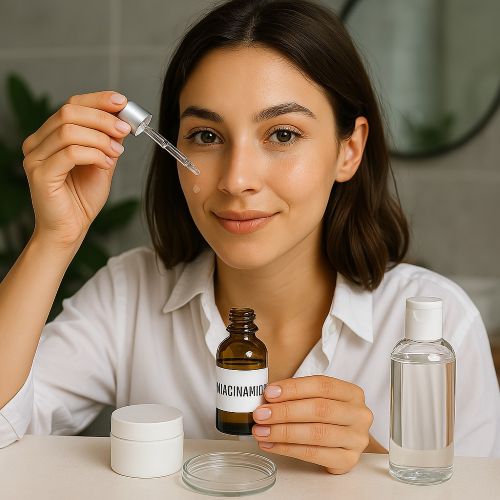 Niacinamide, a form of Vitamin B3, has emerged as a true hero in the world of skincare. Its remarkable ability to address multiple skin concerns—from regulating sebum and minimizing pores to strengthening the skin barrier and calming redness—makes it an indispensable ingredient. While professionally formulated niacinamide products are widely available, many enthusiasts choose to create their own, driven by a desire for ingredient transparency, cost-effectiveness, and ultimate customization. However, working with this powerful active requires a deep understanding of its stability to ensure its potency is not compromised. This guide will reveal the essential rules of formulating with niacinamide, provide three detailed recipes, and explain why a DIY approach, when done correctly, can surpass industrial alternatives.
The Niacinamide Powerhouse: A Skincare Multitasker
Before diving into the "how," it is crucial to understand the "why." Niacinamide's versatility stems from its ability to interact with cells at a fundamental level.
-
Sebum Regulation: It helps to normalize sebum, or oil, production, leading to a visible reduction in shine and the appearance of clogged pores. This makes it a perfect ingredient for oily and acne-prone skin.
-
Barrier Restoration: Niacinamide stimulates the synthesis of ceramides, which are essential lipids that form the skin’s natural protective barrier. A strong barrier means healthier, more resilient skin that is better at retaining moisture and fighting off environmental damage.
-
Soothing and Anti-inflammatory: Its ability to calm inflammation makes it effective at reducing redness and irritation associated with conditions like rosacea or acne.
-
Hyperpigmentation: Niacinamide can help to fade post-inflammatory hyperpigmentation and even out skin tone.
Given these benefits, preserving the integrity of this active in your formula is the key to achieving real results.
The Science of Stability: How to Not Spoil Your Niacinamide
The primary challenge in formulating with niacinamide is maintaining its stability. The most common mistakes lead to its conversion into nicotinic acid, which can cause unpleasant side effects like skin flushing, itching, and irritation.
The pH Factor: The most critical rule for niacinamide is to maintain a pH within its optimal range. Niacinamide is most stable and effective between a pH of 5.0 and 6.0. When the pH drops below 4.0 or rises above 7.0, it can convert to nicotinic acid. Therefore, accurate pH testing of your final product is absolutely essential.
The Temperature Factor: Niacinamide is a heat-stable molecule, which is a significant advantage. However, when formulating, it is best practice to add it to the cool-down phase (below 40°C) of your formula. This ensures that other heat-sensitive ingredients, such as botanical extracts or preservatives, are not damaged.
Compatibility with Other Actives: A common myth is that niacinamide should not be mixed with Vitamin C. In modern formulations, this is not an issue. When both actives are formulated at a skin-friendly pH of 5.0-6.0, they can coexist beautifully and even enhance each other's effects.
The Role of a Preservative: Any cosmetic product containing water must have a broad-spectrum preservative to prevent the growth of bacteria, mold, and yeast. Niacinamide itself does not preserve the formula. Skipping this step will render your product unsafe within days.
Hygiene is Essential: All your equipment, including beakers, stirrers, and storage bottles, must be thoroughly cleaned and sterilized. This prevents microbial contamination from the start.
The DIY Advantage: Overcoming Industrial Limitations
By mastering the art of formulating with niacinamide at home, you gain significant benefits over industrial products.
-
Purity and Ingredient Control: You have complete command over the ingredients, allowing you to avoid cheap fillers, synthetic fragrances, parabens, or harsh alcohols that can cause skin irritation.
-
Freshness and Potency: Homemade formulas are made in small, fresh batches. Unlike commercial products that may sit on shelves for months, your active ingredients are at their peak efficacy.
-
Cost-Effectiveness: The raw powder of niacinamide is inexpensive. A single small bag can create many bottles of high-quality serum, resulting in immense savings compared to luxury skincare brands.
-
Ultimate Customization: You can tailor the concentration of niacinamide (typically between 2% and 10%) and combine it with other actives that your skin needs, creating a truly bespoke product.
Three Detailed Recipes for Formulating with Niacinamide
These recipes are designed for approximately 50 grams of finished product. Always remember to use a digital scale and a cosmetic-grade preservative.
Recipe 1: Basic Mattifying Toner for Oily Skin
This simple toner focuses on regulating sebum and minimizing pores, perfect for a beginner.
Ingredients:
-
Distilled Water: 43 g
-
Niacinamide (Vitamin B3) Powder: 5 g
-
Witch Hazel (Alcohol-Free): 2 g
-
Preservative (e.g., Geogard 221): 0.5 g
-
Lactic Acid Solution (10%): q.s. (as needed for pH adjustment)
Preparation:
-
Weigh your distilled water into a sterilized beaker.
-
Add the niacinamide powder and stir until it is completely dissolved.
-
Add the witch hazel to the mixture and stir gently.
-
Add your chosen preservative and mix thoroughly for at least two minutes.
-
Use a pH strip or a pH meter to test the mixture. The goal is a pH of 5.0-6.0.
-
Add lactic acid solution drop by drop, stirring and re-testing after each drop, until the desired pH is reached.
-
Transfer your toner to a sterilized spray or squeeze bottle.
Recommendations for Use: Apply to a cleansed face in the morning and evening using a cotton pad or by spritzing directly onto the skin. Follow with a lightweight, non-comedogenic moisturizer.
Storage: Store in a cool, dark place. This toner will be stable for up to 6 months with a preservative.
Recipe 2: Restorative & Soothing Serum for Sensitive Skin
This formula is designed to strengthen the skin's barrier and calm redness, making it ideal for sensitive or compromised skin.
Ingredients:
-
Distilled Water: 41.5 g
-
Niacinamide Powder: 2.5 g
-
Panthenol (Vitamin B5): 5 g
-
Hyaluronic Acid Solution (1% stock): 10 g
-
Preservative (e.g., Euxyl PE 9010): 0.5 g
-
Lactic Acid Solution (10%): q.s. (as needed for pH adjustment)
Preparation:
-
Weigh your distilled water into a sterilized container.
-
Add the niacinamide powder, panthenol, and hyaluronic acid solution and stir gently until everything is dissolved and a light gel forms.
-
Add your chosen preservative and stir for two to three minutes.
-
Test the pH of your serum. It should be between 5.0 and 5.5 for a soothing effect.
-
Adjust the pH with lactic acid solution if necessary.
-
Transfer the finished serum to a sterilized dropper bottle.
Recommendations for Use: Apply a few drops to a clean, damp face. Gently pat into the skin, focusing on areas of redness or irritation. Use twice daily, followed by your preferred moisturizer.
Storage: Store in a cool, dark place away from direct sunlight. The shelf life is up to 6 months.
Recipe 3: Brightening & Anti-Aging Serum
This advanced recipe combines niacinamide with a powerful antioxidant to tackle hyperpigmentation and fine lines.
Ingredients:
-
Distilled Water: 40 g
-
Niacinamide Powder: 5 g
-
Magnesium Ascorbyl Phosphate (MAP) Powder: 2.5 g
-
Vegetable Glycerin: 2.5 g
-
Hyaluronic Acid Solution (1% stock): 10 g
-
Preservative (e.g., Geogard 221): 0.5 g
-
Citric Acid Solution (10%): q.s. (as needed for pH adjustment)
Preparation:
-
Weigh the distilled water into a sterilized container.
-
Add the niacinamide powder and MAP powder and stir until completely dissolved. Note that MAP is a stable form of Vitamin C and works well with niacinamide at a pH of 6.0.
-
Add the vegetable glycerin and hyaluronic acid solution and stir gently.
-
Add the preservative and mix for several minutes.
-
Test the pH of your serum. The ideal pH for this combination is around 6.0.
-
Adjust the pH with citric acid solution if needed.
-
Transfer the serum to a sterilized, opaque dropper bottle to protect the Vitamin C from light.
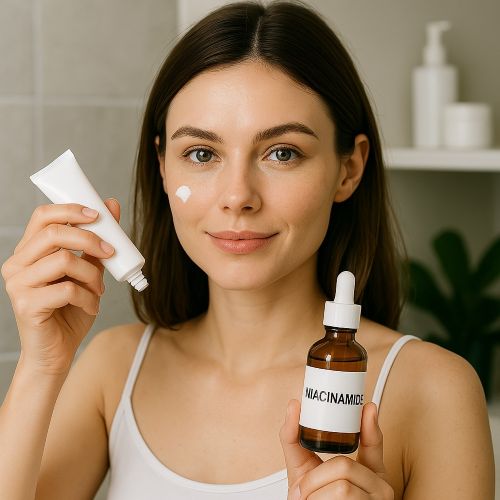
Recommendations for Use: Apply a few drops of the serum to a clean face in the morning, followed by a moisturizer and sunscreen.
Storage: Store in a cool, dark place. The shelf life is up to 6 months.
Conclusion: Your Skin, Your Rules
Creating your own niacinamide products is a rewarding journey into personalized skincare. By understanding the critical factors of pH, temperature, and preservation, you can confidently formulate products that are not only safe and effective but also perfectly tailored to your skin's unique needs. This knowledge empowers you to step beyond commercial offerings and unlock the full potential of niacinamide, creating a routine that is pure, potent, and uniquely yours.


Cosmetic ingredients and professional formulation blog
This section features expert materials on modern cosmetic actives. We cover peptides, polynucleotides PDRN, different forms of hyaluronic acid, retinoids, ceramides and other key components.
Special focus is given to active stability, ingredient compatibility and correct incorporation into formulas. You will find practical guides on working with anti-age actives, moisturizing complexes and barrier repair ingredients.
We examine how to properly combine myorelaxants with peptides, common mistakes when using unstable vitamin C forms and ways to improve the performance of moisturizing actives.
Separate materials are dedicated to base oils, extracts, emulsifiers and supporting ingredients. This helps create stable and effective formulas for both professional and home cosmetics.
The blog regularly publishes reviews of trending actives, comparisons of similar ingredients and step-by-step formulation recommendations. The content is aimed at formulators, technologists and anyone seriously involved in creating cosmetic products.
Why this blog is useful
Here you will find practical data on eye area care actives, lifting systems and ingredients that improve skin firmness and tone. We rely on real formulation experience and address the actual challenges that arise during product development.
You can also explore materials on skin protection and repair, depigmentation and anti-inflammatory actives. This approach supports a more systematic selection of ingredients.
FAQ
What topics are covered most often
The blog focuses on peptides, PDRN, hyaluronic acid of different molecular weights, retinoids, ceramides and their compatibility rules.
Are there practical recommendations on how to incorporate actives
Yes, most articles include practical notes on pH stability, incorporation temperature and common formulation mistakes.
Is the content only for professionals
The materials are useful both for formulators and technologists and for those who create cosmetics for personal use and want to understand how modern ingredients work.
Where can I go directly to the ingredients
All key actives are collected in the Actives section, while base components are available in base oils and related categories.



