-
 DIY: Video master classes
-
 Aromatherapy
-
 Felting master classes
-
 Eating at home
-
 DIY cosmetics for children
-
 Cooking recipes
-
 Detergents, cleaning products with your own hands
-
 Soap making as a business
-
 Natural cosmetics. Raw materials for cosmetics and soap.
-
 Natural oils in cosmetics
-
 News
-
 Recipes for balms and conditioners
-
 Bath Bomb Recipes
-
 Cream recipes. Cream making.
-
 Lotion recipes. Gel recipes.
-
 Mask recipes
-
 Soap recipes. Base soap. Soap from scratch.
-
 Recipes for all occasions
-
 Natural shampoo recipes
-
 Healthy Nutrition Recipes
-
 Scrub recipes. Massage tiles. Ubtan
-
 DIY candles
-
 Reference materials, questions, tips
-
 Startup - soap production
-
 Hair care. Tips, recipes
-
 Facial skin care. Cleansers.
-
 Body care. Tips, recipes
-
 Photo Reviews
-
 Chocolate Handmade


Soap bases: SLS-free vs. regular
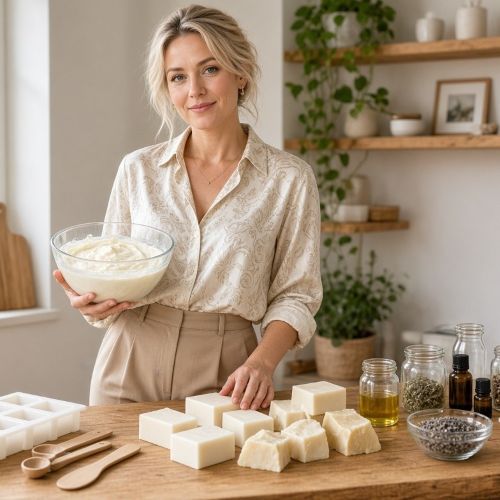 Melt and pour soap bases serve as the structural foundation for custom hand-crafted cleansing bars. Understanding the fundamental chemistry separating SLS-Free options from conventional sulfate-based bases is essential for formulating gentle, high-performance skincare.
Conventional soap bases rely on aggressive synthetic surfactants, primarily Sodium Lauryl Sulfate or Sodium Laureth Sulfate, to achieve rapid, voluminous foam and firm bar structure. While cost-effective, these harsh sulfates dissolve natural skin lipids, strip essential moisture, and disrupt the delicate epidermal barrier.
SLS-Free soap bases substitute harsh synthetic detergents with mild, plant-derived surfactants such as Sodium Coco-Sulfate, Coco-Glucoside, Decyl Glucoside, or saponified vegetable oils like coconut, palm, and olive oils. These vegetable-derived bases maintain structural firmness while preserving the natural lipid coat of the skin.
Technical Processing Rules Temperature Controls and Additive Ratios
Crafting custom soap bars from pre-made bases requires strict adherence to temperature parameters, melting techniques, and additive limits to prevent physical defects.
Melt and pour soap bases must be heated gently using a double boiler or low-power microwave setting to prevent burning. The optimal melting temperature for both SLS-Free and regular bases sits between sixty and sixty-five degrees Celsius. Exposing the base to temperatures above seventy-five degrees Celsius evaporates moisture, resulting in brittle, rubbery bars or unsightly surface sweating.
Superfatted base formulations require precise additive measurements. Adding excess liquid oils, such as shea butter or jojoba oil, weakens the crystalline structure of the soap. The total dosage of additional un-saponified oils should never exceed fifteen to twenty milliliters per kilogram of base. Essential oils and botanical extracts must be incorporated during the cool-down phase when the liquid soap drops to fifty-five degrees Celsius to prevent volatile compound evaporation.
Environmental and Dermal Health Impact of Surfactant Systems
The long-term physiological impact of cleansing products depends heavily on the surfactant profile used in the base formulation.
Sodium Lauryl Sulfate features a small molecular structure that penetrates deep into the stratum corneum, causing protein denaturation, cellular swelling, and chronic transepidermal water loss. Regular exposure leads to redness, tightness, and heightened reactivity on sensitive skin.
SLS-Free organic bases utilize larger, non-ionic or mild anionic surfactant molecules that cleanse the skin surface without penetrating or disrupting the intercellular lipid matrix. These plant-based systems preserve physiological pH balance, prevent irritation, and maintain healthy skin microbiome diversity.
Superiority of Custom Hand-Crafted Bars Over Commercial Analogs
Mass-market commercial soap bars are rarely true soaps. Most commercial options are synthetic detergent bars produced through high-pressure extrusion, where natural glycerin produced during saponification is extracted and sold separately for pharmaceutical use.
Custom compounding with high-quality SLS-Free melt and pour bases allows formulators to retain full natural glycerin content, which acts as a powerful humectant to draw moisture into the skin. By adding pure cold-pressed botanical oils, organic herbal powders, and steam-distilled essential oils, you create a mild, highly moisturizing cleanser free from synthetic preservatives, synthetic hardeners, and aggressive foaming agents.
Sanitation Standards and Equipment Sterilization Protocols
Maintaining clean laboratory protocols during soap melting and molding ensures microbial purity and professional aesthetic quality.
Sanitize the preparation area with a broad-spectrum disinfectant. Wash hands with antibacterial soap and wear sterile gloves. All heat-safe glass beakers, stainless steel pouring pitchers, silicone stirring spatulas, digital scales, and silicone molds must be washed, rinsed with distilled water, and sprayed thoroughly with a seventy percent isopropyl alcohol solution. Allow all equipment to air-dry completely on clean paper towels before measuring ingredients. Keep a spray bottle of isopropyl alcohol nearby to eliminate surface bubbles immediately after pouring the liquid soap into molds.
Recipe First Soothing Oatmeal and Honey Sensitive Skin Bar
A gentle, nourishing cleansing bar designed to soothe irritated, dry, or sensitive skin while maintaining moisture balance.
Composition one hundred grams SLS-Free transparent or white soap base two milliliters sweet almond oil one gram colloid oatmeal powder half a teaspoon pure organic honey zero point five milliliters lavender essential oil seventy percent isopropyl alcohol in a spray bottle
Preparation Step first Sanitize all glass beakers, measuring spoons, spatulas, and a silicone soap mold with isopropyl alcohol. Step second Cut one hundred grams of SLS-Free soap base into uniform one-centimeter cubes using a clean stainless steel knife. Step third Place the base cubes into a heat-safe glass beaker and heat gently in a water bath until completely melted at sixty-five degrees Celsius. Step fourth Add two milliliters of sweet almond oil, one gram of colloidal oatmeal powder, and half a teaspoon of organic honey into the melted base, stirring continuously with a spatula until fully blended. Step fifth Allow the liquid soap to cool to fifty-five degrees Celsius, then stir in zero point five milliliters of lavender essential oil. Step sixth Pour the liquid soap mixture into your sanitized silicone mold and immediately spray the liquid surface with isopropyl alcohol to remove surface bubbles. Step seventh Leave the mold undisturbed at room temperature for two hours until completely solid, then unmold the finished bar.
Recipe Second Detoxifying Activated Charcoal and Tea Tree Bar
A clarifying facial and body bar formulated to deep-clean pores, balance sebum production, and draw out impurities without drying the skin.
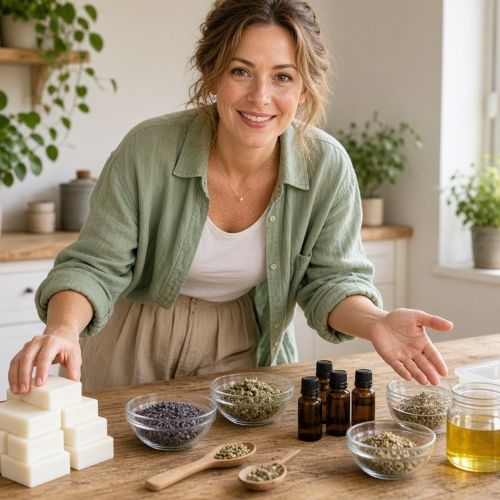
Composition one hundred grams SLS-Free clear soap base one gram activated charcoal powder two milliliters jojoba oil zero point five milliliters tea tree essential oil zero point five milliliters peppermint essential oil seventy percent isopropyl alcohol in a spray bottle
Preparation Step first Disinfect glass beakers, stirring spatula, precision scale, and silicone mold with isopropyl alcohol. Step second Slice one hundred grams of SLS-Free clear soap base into small, even cubes to ensure uniform melting. Step third Transfer base cubes to a heat-safe beaker and melt over a low-temperature water bath at sixty-five degrees Celsius. Step fourth In a small separate cup, slurry one gram of activated charcoal powder with two milliliters of jojoba oil, then pour the mixture into the melted soap base and stir until a deep, uniform black color is achieved. Step fifth Cool the liquid base to fifty-five degrees Celsius, then incorporate zero point five milliliters of tea tree essential oil and zero point five milliliters of peppermint essential oil. Step sixth Carefully decant the black soap mixture into your silicone mold and spray the top surface with isopropyl alcohol to pop air bubbles. Step seventh Allow the bar to set completely at room temperature for two hours before unmolding.
Recipe Third Restorative Shea Butter and Calendula Nurturing Bar
A rich, moisturizing bar crafted to restore damaged skin barriers, provide deep hydration, and soothe dry patches.
Composition one hundred grams SLS-Free organic shea butter soap base two grams unrefined shea butter two milliliters calendula infused sunflower oil one gram dried calendula petals zero point five milliliters sweet orange essential oil seventy percent isopropyl alcohol in a spray bottle
Preparation Step first Thoroughly sanitize all glass beakers, stirring tools, measuring utensils, and silicone molds with isopropyl alcohol. Step second Chop one hundred grams of SLS-Free shea butter soap base into small cubes for even heat distribution. Step third Place the base cubes and two grams of unrefined shea butter into a heat-safe beaker and melt over a water bath at sixty-five degrees Celsius. Step fourth Stir two milliliters of calendula infused sunflower oil and one gram of dried calendula petals into the warm melted base. Step fifth Allow the mixture to cool to fifty-five degrees Celsius, then add zero point five milliliters of sweet orange essential oil and stir thoroughly. Step sixth Pour the rich liquid soap into your silicone mold and spray the exposed surface with isopropyl alcohol to ensure a smooth finish. Step seventh Let the soap cool and harden at room temperature for two to three hours before removing it from the mold.
Application Guidelines and Usage Recommendations
Custom SLS-Free soap bars offer mild, non-stripping cleansing suitable for daily use on the face, hands, and body.
Work the soap bar between wet hands to produce a creamy, low-friction lather. Massage the gentle foam onto damp skin in circular motions, paying attention to areas requiring gentle cleansing or hydration. Rinse thoroughly with lukewarm water and pat dry with a clean towel. Follow immediately with your favorite custom serum or moisturizer to seal in hydration. These gentle plant-based bars are ideal for daily use by individuals with sensitive skin, eczema tendencies, or environmental allergies.
Storage Conditions and Product Preservation
Proper storage protects the physical integrity, aromatic profile, and humectant qualities of custom melt and pour soaps.
Melt and pour soap bases contain high concentrations of glycerin, which naturally draws ambient moisture from the air. Unwrapped soap bars stored in high-humidity environments will develop small water droplets on their surface, known as soap sweating.
Immediately after unmolding, wrap finished soap bars tightly in clear food-grade plastic wrap or store them in airtight containers. Keep wrapped bars in a cool, dry place away from direct sunlight at stable temperatures between fifteen and twenty-two degrees Celsius. When stored correctly in a dry location, these custom SLS-Free soap bars maintain full washing efficacy, structural firmness, and fragrance quality for six to twelve months.


Cosmetic ingredients and professional formulation blog
This section features expert materials on modern cosmetic actives. We cover peptides, polynucleotides PDRN, different forms of hyaluronic acid, retinoids, ceramides and other key components.
Special focus is given to active stability, ingredient compatibility and correct incorporation into formulas. You will find practical guides on working with anti-age actives, moisturizing complexes and barrier repair ingredients.
We examine how to properly combine myorelaxants with peptides, common mistakes when using unstable vitamin C forms and ways to improve the performance of moisturizing actives.
Separate materials are dedicated to base oils, extracts, emulsifiers and supporting ingredients. This helps create stable and effective formulas for both professional and home cosmetics.
The blog regularly publishes reviews of trending actives, comparisons of similar ingredients and step-by-step formulation recommendations. The content is aimed at formulators, technologists and anyone seriously involved in creating cosmetic products.
Why this blog is useful
Here you will find practical data on eye area care actives, lifting systems and ingredients that improve skin firmness and tone. We rely on real formulation experience and address the actual challenges that arise during product development.
You can also explore materials on skin protection and repair, depigmentation and anti-inflammatory actives. This approach supports a more systematic selection of ingredients.
FAQ
What topics are covered most often
The blog focuses on peptides, PDRN, hyaluronic acid of different molecular weights, retinoids, ceramides and their compatibility rules.
Are there practical recommendations on how to incorporate actives
Yes, most articles include practical notes on pH stability, incorporation temperature and common formulation mistakes.
Is the content only for professionals
The materials are useful both for formulators and technologists and for those who create cosmetics for personal use and want to understand how modern ingredients work.
Where can I go directly to the ingredients
All key actives are collected in the Actives section, while base components are available in base oils and related categories.



