-
 DIY: Video master classes
-
 Aromatherapy
-
 Felting master classes
-
 Eating at home
-
 DIY cosmetics for children
-
 Cooking recipes
-
 Detergents, cleaning products with your own hands
-
 Soap making as a business
-
 Natural cosmetics. Raw materials for cosmetics and soap.
-
 Natural oils in cosmetics
-
 News
-
 Recipes for balms and conditioners
-
 Bath Bomb Recipes
-
 Cream recipes. Cream making.
-
 Lotion recipes. Gel recipes.
-
 Mask recipes
-
 Soap recipes. Base soap. Soap from scratch.
-
 Recipes for all occasions
-
 Natural shampoo recipes
-
 Healthy Nutrition Recipes
-
 Scrub recipes. Massage tiles. Ubtan
-
 DIY candles
-
 Reference materials, questions, tips
-
 Startup - soap production
-
 Hair care. Tips, recipes
-
 Facial skin care. Cleansers.
-
 Body care. Tips, recipes
-
 Photo Reviews
-
 Chocolate Handmade


Carrier Oils for Anti-Aging Formulas: Which Enhance Peptides and Which Interfere
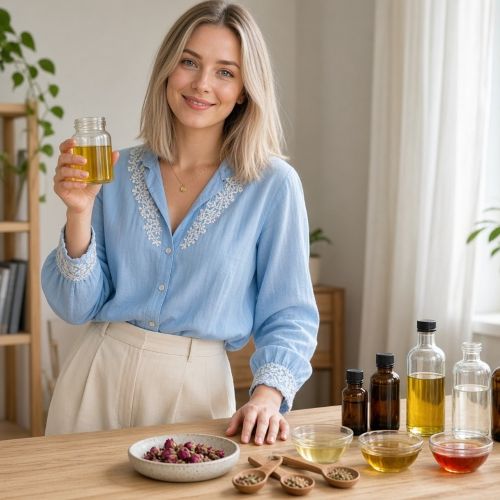 Peptides are among the most effective active ingredients in modern anti-aging skincare. As signaling molecules and amino acid chains, they stimulate collagen synthesis, enhance elastin production, and encourage cellular repair. However, the primary challenge in peptide formulation is overcoming the stratum corneum, the skin's outermost barrier designed to keep external substances out.
Most active cosmetic peptides are hydrophilic, water-soluble molecules with relatively high molecular weights. To pass through the lipid-rich intercellular matrix of the epidermis, peptides require an optimal delivery vehicle. Carrier oils in an emulsion or oil serum can act either as penetration enhancers that facilitate active delivery or as impermeable occlusive barriers that trap peptides on the skin surface.
The fatty acid profile and viscosity of the carrier oil determine how the epidermal lipid bilayer responds. Oils rich in light, polyunsaturated fatty acids increase membrane fluidity, creating transient pathways for peptide diffusion. Conversely, heavy saturated fats create a dense surface film that restricts active movement into deeper epidermal layers.
Carrier Oils That Enhance Peptide Absorption and Bioavailability
To maximize the therapeutic benefits of anti-aging peptides, carrier oils must possess high fluidity, low viscosity, and strong biological affinity with natural skin lipids.
Plant-derived squalane and caprylic or capric triglycerides serve as ideal carrier bases. Squalane seamlessly integrates into the skin's sebum layer, lowering overall lipid viscosity and forming fluid pathways for active transport.
Oils high in linoleic and alpha-linolenic acids, such as rosehip seed oil, evening primrose oil, and black currant seed oil, act as natural penetration enhancers. These polyunsaturated lipids restore cell membrane flexibility, allowing peptide complexes to disperse evenly across the epidermis.
Jojoba oil acts as a biomimetic liquid wax that closely mimics human sebum. It dissolves oil-soluble peptide derivatives and allows for sustained, controlled active release without suffocating skin tissues.
Occlusive Heavy Oils That Interfere with Peptide Delivery
Selecting unsuitable carrier oils can severely compromise the performance of high-potency peptide actives.
Heavy oils rich in saturated fatty acids, such as coconut oil, cocoa butter, and mineral oil, generate a continuous, highly occlusive surface barrier. While effective for preventing transepidermal water loss in extreme weather, this dense film traps water-soluble peptides above the stratum corneum, preventing them from reaching cellular target sites.
Viscous oils like castor oil or unrefined avocado oil used in high concentrations create structural resistance within the emulsion matrix. They slow down the release rate of active molecules, reducing overall peptide bioavailability by up to seventy percent.
Advantages of Custom Peptide Formulations Over Industrial Analogs
Commercial anti-aging products often sacrifice active bio-availability for extended shelf life, low production costs, and immediate tactile slipperiness. Industrial creams frequently combine peptide complexes with synthetic silicones, heavy mineral waxes, and cheap emulsifiers that create a temporary smooth film while trapping the active ingredients away from deeper skin layers.
Custom compounding enables formulators to eliminate barrier-blocking occlusives. Combining light, fluid-enhancing carrier oils with biomimetic lamellar emulsifiers delivers peptide chains directly to targeted epidermal layers, yielding genuine, long-term structural lifting and skin rejuvenation.
Sanitation Standards and Equipment Sterilization Protocols
Formulating peptide-rich skincare requires rigorous laboratory hygiene, as amino acid chains provide a fertile medium for microbial proliferation if contaminated.
Sanitize the entire work surface with a broad-spectrum surface disinfectant. Wash hands thoroughly with antibacterial soap and put on sterile nitrile gloves. All heat-safe glass beakers, glass stirring rods, mini whisks, digital scales, and dropper bottles must be washed, rinsed with distilled water, and sprayed with a seventy percent isopropyl alcohol solution. Allow all equipment to air-dry completely on clean paper towels before measuring ingredients.
Recipe First Modeling Peptide Facial Lifting Serum
A lightweight, high-potency fluid serum combining matrix peptides with squalane to stimulate collagen synthesis and improve elasticity.
Composition thirty-three milliliters cornflower hydrosol two milliliters plant squalane two milliliters rosehip seed oil one gram Montanov L emulsifier two milliliters Matrixyl peptide complex one milliliter provitamin B5 panthenol one milliliter broad-spectrum eco preservative
Preparation Step first Sanitize glass beakers, glass stirring rods, digital scale, and a dark glass dropper bottle with isopropyl alcohol. Step second Measure thirty-three milliliters of cornflower hydrosol into the first heat-safe beaker. Step third Combine two milliliters of plant squalane, two milliliters of rosehip seed oil, and one gram of Montanov L emulsifier in the second heat-safe beaker. Step fourth Heat both beakers in a water bath to seventy-five degrees Celsius until the emulsifier melts completely. Step fifth Pour the heated water phase into the oil phase while whisking rapidly with a mini whisk until a smooth, light fluid forms. Step sixth Cool the emulsion below thirty-five degrees Celsius, then stir in two milliliters of Matrixyl peptide complex, one milliliter of panthenol, and one milliliter of eco preservative. Step seventh Check that the pH measures five point five, then transfer the serum into your sanitized dropper bottle.
Recipe Second Deep Hydration Peptide Cream with Biomimetic Oils
A skin-identical cream designed to restore skin density, smooth fine lines, and strengthen the epidermal barrier.
Composition thirty-two milliliters rose hydrosol two and a half grams Olivem 1000 emulsifier three milliliters jojoba oil two milliliters milk thistle oil two milliliters Argireline peptide complex one gram low-molecular-weight hyaluronic acid powder one milliliter broad-spectrum eco preservative
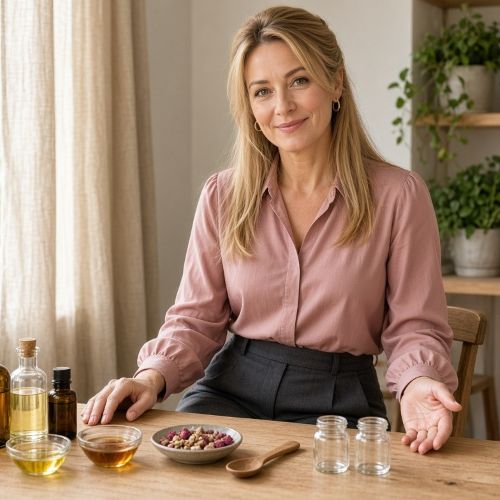
Preparation Step first Disinfect glass beakers, stirring tools, digital scale, and a pump container using isopropyl alcohol. Step second Measure thirty-two milliliters of rose hydrosol into the first beaker. Step third Combine three milliliters of jojoba oil, two milliliters of milk thistle oil, and two and a half grams of Olivem 1000 in the second beaker. Step fourth Heat both beakers in a water bath to seventy-five degrees Celsius. Step fifth Pour the water phase into the oil phase and blend continuously for two minutes to form a stable liquid-crystal structure. Step sixth Sprinkle one gram of low-molecular-weight hyaluronic acid across the mixture while cooling, and stir in two milliliters of Argireline peptide complex and one milliliter of eco preservative once the temperature drops below thirty-five degrees Celsius. Step seventh Confirm the final pH sits at five point five and transfer the cream into your pump container.
Recipe Third Anhydrous Peptide Lipid Fluid for Dry Skin
An oil-based active treatment incorporating oil-soluble peptides for deep nourishment and lipid barrier repair.
Composition twenty milliliters plant squalane ten milliliters organic hemp seed oil eight milliliters argan oil eight milliliters black currant seed oil three milliliters oil-soluble lipopeptide complex one milliliter vitamin E tocopherol
Preparation Step first Thoroughly sanitize a glass beaker, glass stirring rod, digital scale, and a dark glass dropper bottle with isopropyl alcohol. Step second Pour twenty milliliters of plant squalane, ten milliliters of organic hemp seed oil, and eight milliliters of argan oil into the glass beaker. Step third Add eight milliliters of black currant seed oil to supply high levels of gamma-linolenic acid. Step fourth Incorporate three milliliters of oil-soluble lipopeptide complex and one milliliter of vitamin E tocopherol. Step fifth Stir the mixture gently with a glass rod for two minutes at room temperature without applying heat. Step sixth Transfer the finished lipid fluid into your sanitized dark glass dropper bottle.
Application Guidelines and Usage Recommendations
Peptide formulations require consistent, long-term application to deliver cumulative anti-aging benefits.
Apply the peptide serum or cream twice daily, morning and evening, to thoroughly cleansed and toned skin. Distribute a few drops or a single pump across the face, neck, and décolleté using gentle upward tapping motions. Avoid combining peptides in the same routine with high-concentration direct acids like alpha hydroxy acids or pure ascorbic acid, as strongly acidic environments cause peptide denaturation. Maintain a continuous application regimen for at least eight to twelve weeks for optimal results.
Storage Conditions and Product Preservation
Peptide molecules are sensitive to temperature fluctuations, direct light exposure, and oxidation.
Store finished custom emulsions and serums in tightly sealed dark glass bottles or airless pump containers at stable temperatures between eight and twelve degrees Celsius. A dedicated skincare refrigerator or a cool, dark cabinet provides an ideal environment. Keep products away from direct sunlight and heat sources. Aqueous peptide creams and serums maintain full stability for two months when formulated with proper preservatives, while anhydrous lipid fluids remain stable for up to four months.


Cosmetic ingredients and professional formulation blog
This section features expert materials on modern cosmetic actives. We cover peptides, polynucleotides PDRN, different forms of hyaluronic acid, retinoids, ceramides and other key components.
Special focus is given to active stability, ingredient compatibility and correct incorporation into formulas. You will find practical guides on working with anti-age actives, moisturizing complexes and barrier repair ingredients.
We examine how to properly combine myorelaxants with peptides, common mistakes when using unstable vitamin C forms and ways to improve the performance of moisturizing actives.
Separate materials are dedicated to base oils, extracts, emulsifiers and supporting ingredients. This helps create stable and effective formulas for both professional and home cosmetics.
The blog regularly publishes reviews of trending actives, comparisons of similar ingredients and step-by-step formulation recommendations. The content is aimed at formulators, technologists and anyone seriously involved in creating cosmetic products.
Why this blog is useful
Here you will find practical data on eye area care actives, lifting systems and ingredients that improve skin firmness and tone. We rely on real formulation experience and address the actual challenges that arise during product development.
You can also explore materials on skin protection and repair, depigmentation and anti-inflammatory actives. This approach supports a more systematic selection of ingredients.
FAQ
What topics are covered most often
The blog focuses on peptides, PDRN, hyaluronic acid of different molecular weights, retinoids, ceramides and their compatibility rules.
Are there practical recommendations on how to incorporate actives
Yes, most articles include practical notes on pH stability, incorporation temperature and common formulation mistakes.
Is the content only for professionals
The materials are useful both for formulators and technologists and for those who create cosmetics for personal use and want to understand how modern ingredients work.
Where can I go directly to the ingredients
All key actives are collected in the Actives section, while base components are available in base oils and related categories.



