-
 DIY: Video master classes
-
 Aromatherapy
-
 Felting master classes
-
 Eating at home
-
 DIY cosmetics for children
-
 Cooking recipes
-
 Detergents, cleaning products with your own hands
-
 Soap making as a business
-
 Natural cosmetics. Raw materials for cosmetics and soap.
-
 Natural oils in cosmetics
-
 News
-
 Recipes for balms and conditioners
-
 Bath Bomb Recipes
-
 Cream recipes. Cream making.
-
 Lotion recipes. Gel recipes.
-
 Mask recipes
-
 Soap recipes. Base soap. Soap from scratch.
-
 Recipes for all occasions
-
 Natural shampoo recipes
-
 Healthy Nutrition Recipes
-
 Scrub recipes. Massage tiles. Ubtan
-
 DIY candles
-
 Reference materials, questions, tips
-
 Startup - soap production
-
 Hair care. Tips, recipes
-
 Facial skin care. Cleansers.
-
 Body care. Tips, recipes
-
 Photo Reviews
-
 Chocolate Handmade


Conditioner with BTMS and broccoli oil
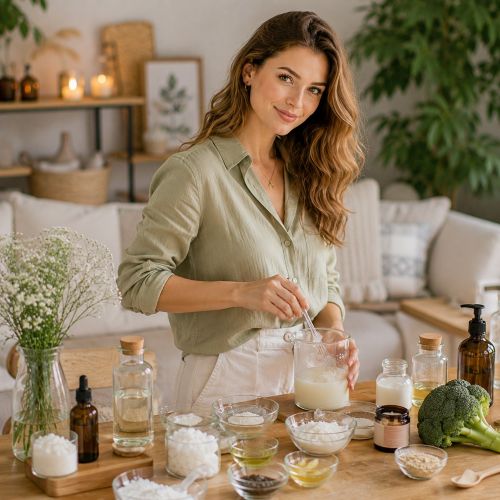 In the world of organic cosmetics the combination of BTMS and broccoli seed oil has gained a reputation as the gold standard for hair restoration. This duo provides a powerful alternative to synthetic silicones by offering deep conditioning and structural repair without the buildup. BTMS is a plant derived cationic emulsifier that excels at detangling and smoothing the hair cuticle while broccoli seed oil acts as a natural silicone substitute delivering incredible luster and protection.
This professional guide covers the biological benefits of these ingredients the technical nuances of creating stable emulsions and three detailed recipes for crafting high performance hair care at home.
Beneficial Properties of BTMS and Broccoli Seed Oil for Hair
BTMS which stands for Behentrimonium Methosulfate is an exceptionally mild yet effective emulsifier derived from Colza oil. Unlike many other conditioning agents it is cationic meaning it carries a positive charge that allows it to bond to the negatively charged damaged areas of the hair shaft. This process neutralizes static electricity smooths the scales of the cuticle and provides an incomparable silky feel. It is known for its ability to leave hair manageable and easy to comb without feeling greasy or heavy.
Broccoli seed oil is often called a natural liquid silicone because of its unique fatty acid profile. It contains high levels of erucic acid an omega nine fatty acid that provides a protective film over the hair. This film reflects light to create a mirror like shine while preventing moisture loss and protecting the hair from thermal damage. Unlike synthetic dimethicone broccoli seed oil is biodegradable and allows the hair to breathe while delivering vitamins and antioxidants directly to the fiber.
Advantages of Handcrafted Conditioners Over Industrial Analogs
Most commercial conditioners rely on cheap petroleum based mineral oils and non biodegradable silicones to provide temporary smoothness. These substances often coat the hair so heavily that moisture cannot penetrate the shaft leading to long term dryness and breakage. By making your own conditioner with BTMS and broccoli oil you ensure that every ingredient serves a functional purpose for the health of your hair.
Custom formulations also allow you to avoid aggressive preservatives like parabens and synthetic fragrances that can irritate the scalp. You have the freedom to adjust the concentration of oils based on your specific hair type whether it is fine and prone to oiliness or thick and severely dehydrated. Handcrafted products are fresher and contain higher concentrations of active botanicals compared to mass market versions where the most beneficial ingredients are often present in negligible amounts.
Technical Nuances of Formulating with Cationic Emulsifiers
Preparing a conditioner with BTMS involves creating a stable oil in water emulsion through a specific heating process. BTMS comes in pellet form and must be melted with the oil phase to approximately seventy degrees to ensure it fully integrates with the water. Because it is a cationic emulsifier it is incompatible with anionic surfactants used in some shampoos so it is vital to rinse the hair thoroughly before applying the conditioner.
One of the most important technical aspects is the pH level. The ideal pH for a hair conditioner is between four point zero and five point zero. This acidic environment is crucial because it helps the hair cuticle scales to close tightly locking in the broccoli oil and the BTMS molecules. If the pH is too high the hair will remain porous and prone to frizz. Always use a natural acid like lactic or citric acid to adjust the final formulation once it has cooled.
Recipe One Deep Recovery Balm for Dry and Damaged Hair
This rich formula provides intensive nourishment and structural repair for hair that has been chemically treated or heat styled.
Composition Seventy milliliters distilled water Ten grams BTMS pellets Seven milliliters broccoli seed oil Five milliliters Shea butter Three milliliters Panthenol Two milliliters silk protein Eco preservative
Preparation Step one Sanitize all beakers glass rods and containers with seventy percent alcohol. Step two Place the distilled water in one heat resistant beaker and the BTMS broccoli oil and Shea butter in another. Step three Heat both beakers in a water bath until the BTMS pellets and Shea butter are completely melted and the liquids are at an equal temperature. Step four Slowly pour the oil phase into the water phase while stirring constantly with a mini mixer until a thick white cream begins to form. Step five Continue to stir the emulsion manually as it cools to room temperature to ensure a smooth texture. Step six Add the Panthenol silk protein and the preservative once the mixture is cool. Step seven Adjust the pH with a drop of lactic acid and transfer the balm to a wide mouth jar.
Recipe Two Lightweight Shine Conditioner for Daily Use
A fluid formula designed for normal to fine hair that needs detangling and gloss without any loss of volume.
Composition Eighty milliliters distilled water Six grams BTMS pellets Four milliliters broccoli seed oil Five milliliters Aloe Vera gel Three milliliters vegetable glycerin One milliliter Vitamin E Preservative
Preparation Step one Ensure all laboratory equipment is clean and sterile. Step two Heat the distilled water and the oil phase consisting of BTMS and broccoli oil in separate containers. Step three Once the pellets have fully dissolved into the oil combine the phases and blend at a high speed for two minutes. Step four Use a cold water bath to speed up the cooling process while stirring the fluid gently. Step five Incorporate the Aloe Vera gel and glycerin which provide lightweight hydration. Step six Add the Vitamin E and the preservative system to ensure the product remains stable. Step seven Check the acidity of the fluid and package it in a bottle with a convenient dispenser.
Recipe Three Leave In Smoothing Cream for Frizz Control
A non greasy cream that can be applied to damp or dry hair ends to prevent split ends and eliminate static.
Composition Sixty milliliters Rose hydrosol Five grams BTMS pellets Eight milliliters broccoli seed oil Two milliliters Keratin protein Three milliliters Jojoba oil Two milliliters D panthenol Preservative
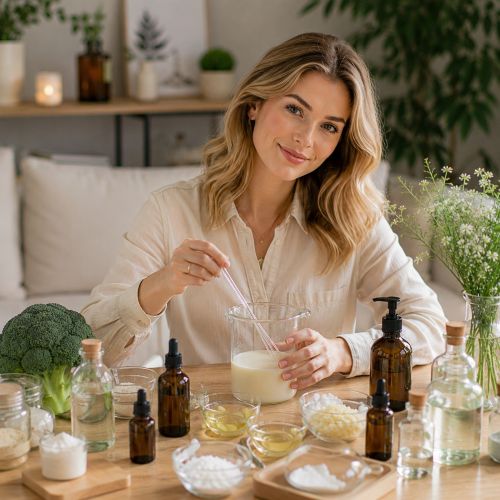
Preparation Step one Disinfect all tools and prepare the workspace. Step two Melt the BTMS with the broccoli oil and Jojoba oil in a heat resistant container. Step three Warm the Rose hydrosol to the same temperature as the oil phase. Step four Combine the phases and emulsify until the mixture reaches a silky and homogeneous consistency. Step five Allow the cream to cool while stirring slowly to prevent the formation of air bubbles. Step six Fold in the Keratin and D panthenol which will help strengthen the hair fiber throughout the day. Step seven Add the preservative and transfer the cream to an airless pump bottle for optimal hygiene.
Recommendations for Application and Rinsing Techniques
To get the most out of your BTMS and broccoli oil conditioner apply it to hair that has been gently towel dried. Excessive water on the hair can dilute the active ingredients and prevent the BTMS from bonding to the damaged sites. Focus the application on the mid lengths and ends where the hair is oldest and most porous. Avoid the roots if you have a tendency toward an oily scalp.
Use a wide tooth comb to distribute the product evenly through the strands. This ensures that every hair is coated in the protective broccoli oil. Leave the conditioner on for at least three to five minutes to allow the cationic charges to stabilize. When rinsing use cool or lukewarm water. Cold water further assists in closing the cuticle which enhances the shine produced by the broccoli seed oil and leaves the hair feeling exceptionally smooth.
Storage Guidelines and Maintaining Product Stability
Conditioners made with BTMS and natural oils are sensitive to heat and bacterial contamination. Because they contain a large amount of water they must be preserved correctly to prevent the growth of mold and yeast. Store your finished products in a cool dark place away from the direct steam of the shower. A bathroom cabinet that remains dry is usually sufficient for daily use items.
The shelf life for these handcrafted conditioners is approximately three to four months when using a broad spectrum eco preservative. Always use clean hands or a spatula to remove product from jars to avoid introducing contaminants. If you notice a change in the scent a separation of the oil and water layers or a change in color discard the product immediately. Using pump bottles instead of open jars is highly recommended as it minimizes the exposure of the conditioner to air and moisture.


Cosmetic ingredients and professional formulation blog
This section features expert materials on modern cosmetic actives. We cover peptides, polynucleotides PDRN, different forms of hyaluronic acid, retinoids, ceramides and other key components.
Special focus is given to active stability, ingredient compatibility and correct incorporation into formulas. You will find practical guides on working with anti-age actives, moisturizing complexes and barrier repair ingredients.
We examine how to properly combine myorelaxants with peptides, common mistakes when using unstable vitamin C forms and ways to improve the performance of moisturizing actives.
Separate materials are dedicated to base oils, extracts, emulsifiers and supporting ingredients. This helps create stable and effective formulas for both professional and home cosmetics.
The blog regularly publishes reviews of trending actives, comparisons of similar ingredients and step-by-step formulation recommendations. The content is aimed at formulators, technologists and anyone seriously involved in creating cosmetic products.
Why this blog is useful
Here you will find practical data on eye area care actives, lifting systems and ingredients that improve skin firmness and tone. We rely on real formulation experience and address the actual challenges that arise during product development.
You can also explore materials on skin protection and repair, depigmentation and anti-inflammatory actives. This approach supports a more systematic selection of ingredients.
FAQ
What topics are covered most often
The blog focuses on peptides, PDRN, hyaluronic acid of different molecular weights, retinoids, ceramides and their compatibility rules.
Are there practical recommendations on how to incorporate actives
Yes, most articles include practical notes on pH stability, incorporation temperature and common formulation mistakes.
Is the content only for professionals
The materials are useful both for formulators and technologists and for those who create cosmetics for personal use and want to understand how modern ingredients work.
Where can I go directly to the ingredients
All key actives are collected in the Actives section, while base components are available in base oils and related categories.