-
 DIY: Video master classes
-
 Aromatherapy
-
 Felting master classes
-
 Eating at home
-
 DIY cosmetics for children
-
 Cooking recipes
-
 Detergents, cleaning products with your own hands
-
 Soap making as a business
-
 Natural cosmetics. Raw materials for cosmetics and soap.
-
 Natural oils in cosmetics
-
 News
-
 Recipes for balms and conditioners
-
 Bath Bomb Recipes
-
 Cream recipes. Cream making.
-
 Lotion recipes. Gel recipes.
-
 Mask recipes
-
 Soap recipes. Base soap. Soap from scratch.
-
 Recipes for all occasions
-
 Natural shampoo recipes
-
 Healthy Nutrition Recipes
-
 Scrub recipes. Massage tiles. Ubtan
-
 DIY candles
-
 Reference materials, questions, tips
-
 Startup - soap production
-
 Hair care. Tips, recipes
-
 Facial skin care. Cleansers.
-
 Body care. Tips, recipes
-
 Photo Reviews
-
 Chocolate Handmade


How to Create Eye Care Products
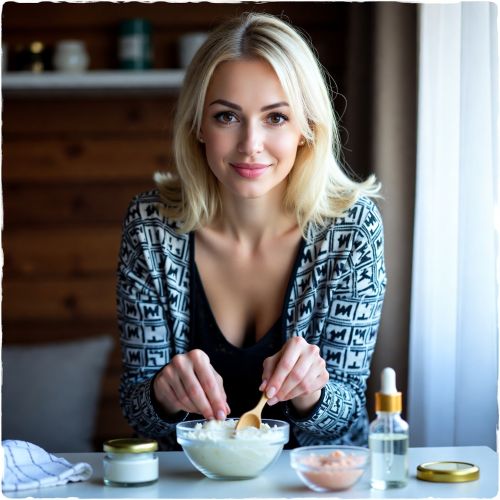 How to create eye care products is a specialized field in cosmetic chemistry because the periorbital area is the most delicate part of the face. The skin around the eyes is significantly thinner than the skin on the cheeks or forehead, lacks subcutaneous fat, and is subject to constant movement from blinking and facial expressions. This makes it prone to early fine lines, puffiness, and dark circles. Professional formulation for this area requires a deep understanding of pH balance, molecular weight of oils, and the exclusion of potential irritants.
In this comprehensive article, we explore the nuances of formulating high-performance eye treatments. You will learn how to create stable, effective products that rival luxury brands by using bio-available ingredients and precise laboratory techniques.
Beneficial Properties and Physiological Action of Eye Skincare
The primary goal of eye care is to provide intense hydration while supporting the fragile capillary network. Effective formulas must address three main concerns: lymphatic drainage to reduce puffiness, collagen synthesis to smooth crow’s feet, and melanin regulation to brighten dark circles. Because this skin has fewer sebaceous glands, the products must provide a lipid barrier that prevents transepidermal water loss without being so heavy that they cause milia.
Natural eye care products utilize botanical extracts rich in flavonoids and saponins, which strengthen vessel walls. Peptides and hyaluronic acid are also crucial for plumping the skin from within. Unlike general face creams, eye-specific formulas are designed to have a lower spreadability index to prevent the product from migrating into the eyes and causing stinging or blurred vision.
Advantages of Handmade Eye Care Over Industrial Analogs
The most significant advantage of handmade professional eye care is the control over the pH level. The pH of the tear film is approximately seven point four, while the skin is typically five point five. Industrial eye creams often lean too far toward acidity to ensure shelf stability, which can cause subtle irritation over time. Formulating your own allows you to create a product with a pH closer to six point zero, which is the perfect "golden mean" for both the skin and ocular safety.
Furthermore, commercial eye creams frequently use synthetic silicones and microplastics to provide a temporary blurring effect. These ingredients offer no long-term biological benefit and can interfere with skin respiration. In a handmade formulation, you can use high-quality vegetable squalane and cold-pressed seed oils that provide real nutritional value. You also eliminate the need for aggressive synthetic fragrances and dyes, which are the leading causes of allergic contact dermatitis in the eye area.
Technical Nuances of Preparation for Eye Area Safety
Safety and purity are the most important technical nuances when creating eye care. All equipment, including glass beakers and stirring rods, must be sterilized with seventy percent isopropyl alcohol. Water-based ingredients must be high-purity distilled or deionized water to prevent microbial growth. A critical nuance is the choice of emulsifier; for the eyes, non-ionic emulsifiers are preferred as they are less likely to disrupt the tear film if accidental contact occurs.
Temperature control is vital for maintaining the integrity of the active ingredients. Many anti-aging components used for the eyes, such as certain peptides or vitamin derivatives, are thermolabile. They must be added only during the cooling phase when the emulsion is below forty degrees Celsius. Additionally, the preservative system must be broad-spectrum but extremely gentle, such as those based on organic acids or fermentation, to ensure the product remains sterile without being harsh.
Recipe One Cooling Caffeine Roller Gel for Morning Puffiness
This water-based gel is designed to provide immediate lymphatic drainage and brighten the under-eye area using a combination of caffeine and botanical extracts.
Composition
Eighty milliliters cornflower hydrosol
Ten milliliters aloe vera gel concentrate
Five milliliters green tea extract
Three grams anhydrous caffeine powder
One gram low molecular weight hyaluronic acid
Two milliliters panthenol
Preservative
Preparation
Step one Sanitize all laboratory tools and glass beakers thoroughly with alcohol.
Step two Gently heat the cornflower hydrosol in a water bath to approximately thirty-five degrees Celsius.
Step three Add the anhydrous caffeine powder to the warm hydrosol and stir until completely dissolved and the liquid is transparent.
Step four Whisk in the low molecular weight hyaluronic acid and allow it to hydrate for fifteen minutes until a light gel forms.
Step five Incorporate the aloe vera gel concentrate and green tea extract while stirring slowly to avoid air bubbles.
Step six Add the panthenol and the gentle preservative, then check the pH to ensure it is between five point eight and six point zero.
Step seven Transfer the gel into a glass roller-ball bottle for a cooling application effect.
Recipe Two Restorative Lamellar Eye Cream with Peptides
A sophisticated emulsion that mimics the skin’s natural lipid structure to repair the barrier and smooth fine lines.
Composition
Sixty milliliters rose hydrosol
Ten milliliters green coffee oil
Five milliliters squalane
Four grams lamellar emulsifier
Three milliliters anti-wrinkle peptide complex
Two grams vegetable glycerin
Preservative
Preparation
Step one Weight all ingredients precisely using a digital scale with a precision of zero point zero one grams.
Step two Combine the rose hydrosol and glycerin in the water phase vessel.
Step three Mix the green coffee oil, squalane, and lamellar emulsifier in the oil phase vessel.
Step four Heat both vessels in a water bath until the emulsifier is fully melted and the temperatures are equal.
Step five Pour the water phase into the oil phase while mixing with a high-shear homogenizer for three minutes to create a stable lamellar structure.
Step six Stir the cream slowly by hand as it cools down to room temperature.
Step seven Add the peptide complex and the preservative once the cream is cool, then transfer to a small airless pump container.
Recipe Three Night Repair Oil Serum for Deep Nutrition
A waterless, anhydrous serum that provides intense lipid replenishment for mature or very dry skin around the eyes.
Composition
Twenty milliliters evening primrose oil
Fifteen milliliters rosehip seed oil
Ten milliliters jojoba oil
Two milliliters vitamin E tocopherol
Three milliliters arnica oil infusion
One milliliter coenzyme Q10 oil-soluble
Preparation
Step one Ensure all oil bottles are at room temperature and have been stored in a dark place.
Step two Clean and dry a dark glass bottle with a pipette dispenser.
Step three Measure and combine the evening primrose oil, rosehip oil, and jojoba oil in a glass beaker.
Step four Add the arnica oil infusion, which is excellent for reducing the appearance of dark circles.
Step five Incorporate the coenzyme Q10 and vitamin E tocopherol while stirring gently with a glass rod for two minutes.
Step six Do not apply heat during this process as it may damage the fragile fatty acids in the rosehip oil.
Step seven Pour the finished serum into the dark glass bottle and store it in a cool, dark cupboard.
Detailed Recommendations for Use and Professional Application
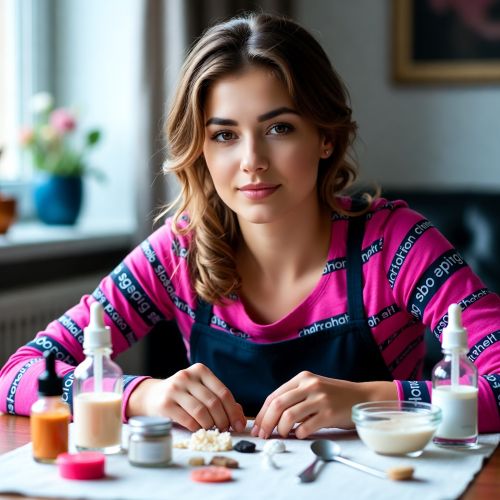
To achieve the best results with your eye care products, application technique is as important as the formula. For the caffeine gel, use the roller ball in a circular motion starting from the inner corner of the eye toward the temple to encourage lymph flow. For creams and oil serums, use the ring finger to gently tap the product onto the orbital bone. Never pull or tug the skin, as this can worsen wrinkles and damage delicate capillaries.
Apply eye products about one centimeter away from the lash line. The heat of the skin will cause the product to naturally migrate slightly toward the eye, and applying it too close to the lashes can cause the product to enter the eye and cause irritation. For the night serum, apply it thirty minutes before bed to allow it to absorb fully and prevent it from being transferred to your pillowcase.
Storage and Maintenance of Handmade Eye Cosmetics
Because the eye area is so sensitive, the storage of your products must be managed strictly. The water-based gel and the lamellar cream should be kept in a cool, dark place, and using a cosmetic refrigerator is highly recommended to enhance the soothing effect and maintain stability. Always use airless pumps or tubes rather than open jars to prevent air exposure and bacterial contamination from fingers.
The shelf life of these handmade products is typically three months for water-based formulas and six months for the anhydrous oil serum. Always label your products with the date of manufacture. If you notice any change in smell, color, or if the emulsion begins to separate, stop using the product immediately. Freshness is the key to safety and efficacy when dealing with the most sensitive skin on your face.


Cosmetic ingredients and professional formulation blog
This section features expert materials on modern cosmetic actives. We cover peptides, polynucleotides PDRN, different forms of hyaluronic acid, retinoids, ceramides and other key components.
Special focus is given to active stability, ingredient compatibility and correct incorporation into formulas. You will find practical guides on working with anti-age actives, moisturizing complexes and barrier repair ingredients.
We examine how to properly combine myorelaxants with peptides, common mistakes when using unstable vitamin C forms and ways to improve the performance of moisturizing actives.
Separate materials are dedicated to base oils, extracts, emulsifiers and supporting ingredients. This helps create stable and effective formulas for both professional and home cosmetics.
The blog regularly publishes reviews of trending actives, comparisons of similar ingredients and step-by-step formulation recommendations. The content is aimed at formulators, technologists and anyone seriously involved in creating cosmetic products.
Why this blog is useful
Here you will find practical data on eye area care actives, lifting systems and ingredients that improve skin firmness and tone. We rely on real formulation experience and address the actual challenges that arise during product development.
You can also explore materials on skin protection and repair, depigmentation and anti-inflammatory actives. This approach supports a more systematic selection of ingredients.
FAQ
What topics are covered most often
The blog focuses on peptides, PDRN, hyaluronic acid of different molecular weights, retinoids, ceramides and their compatibility rules.
Are there practical recommendations on how to incorporate actives
Yes, most articles include practical notes on pH stability, incorporation temperature and common formulation mistakes.
Is the content only for professionals
The materials are useful both for formulators and technologists and for those who create cosmetics for personal use and want to understand how modern ingredients work.
Where can I go directly to the ingredients
All key actives are collected in the Actives section, while base components are available in base oils and related categories.