-
 DIY: Video master classes
-
 Aromatherapy
-
 Felting master classes
-
 Eating at home
-
 DIY cosmetics for children
-
 Cooking recipes
-
 Detergents, cleaning products with your own hands
-
 Soap making as a business
-
 Natural cosmetics. Raw materials for cosmetics and soap.
-
 Natural oils in cosmetics
-
 News
-
 Recipes for balms and conditioners
-
 Bath Bomb Recipes
-
 Cream recipes. Cream making.
-
 Lotion recipes. Gel recipes.
-
 Mask recipes
-
 Soap recipes. Base soap. Soap from scratch.
-
 Recipes for all occasions
-
 Natural shampoo recipes
-
 Healthy Nutrition Recipes
-
 Scrub recipes. Massage tiles. Ubtan
-
 DIY candles
-
 Reference materials, questions, tips
-
 Startup - soap production
-
 Hair care. Tips, recipes
-
 Facial skin care. Cleansers.
-
 Body care. Tips, recipes
-
 Photo Reviews
-
 Chocolate Handmade


How to create a restorative cream with oils, extracts, and peptides for the skin barrier
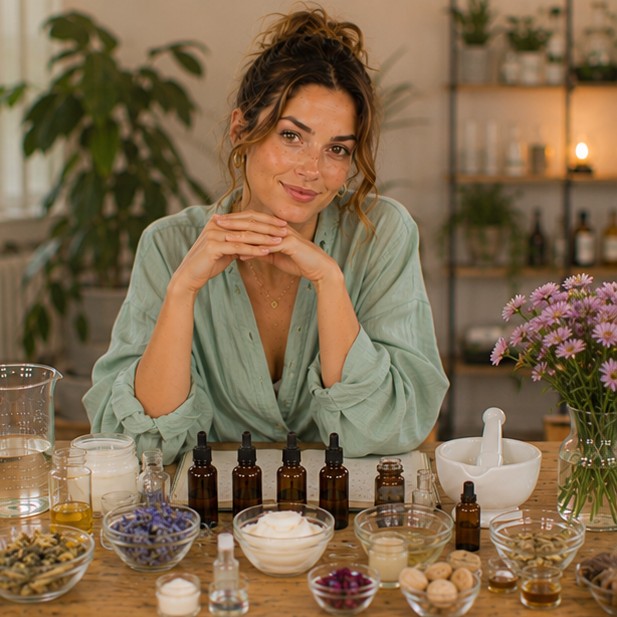 The epidermal barrier is a complex multilamellar structure consisting of corneocytes embedded within an intercellular lipid matrix. This matrix is primarily composed of ceramides, cholesterol, and free fatty acids. Environmental stressors, harsh cleansing, chemical treatments, and climate changes can disrupt this delicate lipid arrangement. When the skin barrier is compromised, transepidermal water loss increases rapidly, leading to chronic dehydration, redness, sensitivity, and premature aging.
Rebuilding a damaged barrier requires a synergistic formulation strategy combining three active pillars: natural plant oils, concentrated botanical extracts, and bioactive peptides. Botanical oils supply essential fatty acids to patch structural lipid gaps. Concentrated extracts provide potent antioxidants to neutralize free radicals and soothe inflammatory cascades. Bioactive peptides act as cellular messengers, signaling fibroblasts to synthesize collagen, elastin, and structural proteins. Together, these three ingredient classes work across multiple skin layers to restore moisture retention and reinforce structural integrity.
Advantages of Custom Barrier Creams Over Commercial Analogs
Industrial skincare manufacturing prioritizes long shelf life and high profit margins over physiological compatibility. Mass-market barrier creams frequently rely on mineral oil, petrolatum, heavy silicones, and synthetic film-formers. While these ingredients create a temporary occlusive barrier, they do not integrate into the intercellular lipid matrix or facilitate genuine structural repair.
Furthermore, commercial formulations often contain synthetic fragrances, aggressive preservatives, and artificial dyes that can trigger inflammation in already compromised skin. To appeal to consumers, industrial products may feature peptides and botanical extracts on the label, but these high-performance ingredients are often added in trace amounts that offer little clinical benefit.
Formulating a custom barrier cream at home provides significant physiological advantages: You select biocompatible plant oils rich in essential fatty acids that actively integrate into the skin matrix. You incorporate clinically proven active dosages of peptides and concentrated extracts without diluting fillers. You exclude comedogenic silicones, synthetic fragrances, microplastics, and harsh preservatives. You control the formulation fresh in small batches, guaranteeing maximum antioxidant and peptide stability.
Selecting Oils, Extracts, and Peptides for Barrier Repair
Creating an effective restorative emulsion requires careful selection of raw materials to match the physiological needs of the skin barrier.
Formulation Principles for Ingredient Selection Criterion first Choose a balanced lipid profile combining stable carrier oils with nutrient-dense botanical oils. Oils high in oleic and linoleic acids, such as jojoba oil, macadamia oil, argan oil, and rosehip oil, reinforce lipid bilayers and restore softness. Criterion second Select concentrated botanical extracts known for skin-soothing and regenerative properties. Supercritical CO2 extracts of chamomile, sea buckthorn, and calendula, alongside water-soluble aloe vera dry extract, deliver potent anti-inflammatory benefits. Criterion third Integrate signal and repair peptides to stimulate extracellular matrix renewal. Peptides such as Matrixyl synthe 6 and GHK-Cu copper peptide work at a cellular level to encourage collagen formation and dermal tissue repair. Criterion fourth Use a biomimetic lamellar emulsifier derived from natural olive oil or lecithin, such as Olivem 1000. Lamellar emulsifiers mimic the liquid-crystal structure of natural skin lipids, enhancing active delivery and barrier protection.
Technical Processing Protocols, Temperature Control, and pH
Formulating a stable, physiological emulsion demands precise physical and chemical controls throughout the preparation process.
Emulsification and Temperature Rules The oil phase, including carrier oils and lamellar emulsifiers, and the aqueous phase must be heated separately in a water bath to seventy degrees Celsius. Slowly pouring the water phase into the oil phase while blending with a mini-whisk creates a smooth, stable lamellar emulsion matrix.
Cool-Down Phase Integration Peptides, supercritical CO2 extracts, pre-dissolved dry extracts, and eco-certified preservatives are thermally sensitive. Exposing these active compounds to high heat denatures delicate peptide proteins and destroys volatile antioxidant molecules. Introduce all active ingredients exclusively during the cool-down phase after the emulsion has cooled below thirty degrees Celsius.
Formulation pH Calibration Maintaining an optimal pH between five point five and six point zero is essential for skin barrier health. This slightly acidic range supports the skin's natural acid mantle, maintains microflora balance, and preserves the structural conformation of active peptides.
Laboratory Sanitation and Equipment Sterilization Protocol
Small-batch formulations created without industrial biocides require immaculate hygiene to prevent bacterial and fungal contamination.
Thoroughly sanitize your workspace using a broad-spectrum surface disinfectant. Wash your hands thoroughly with antibacterial soap and put on sterile disposable gloves. Wash all laboratory equipment, including heat-safe beakers, glass stirring rods, mini-whisks, digital scales, micro-pipettes, and final containers. Rinse all tools with distilled water to remove mineral residue, then spray generously with seventy percent isopropyl alcohol. Allow all equipment to air-dry completely on clean paper towels before weighing raw ingredients.
Recipe First Lamellar Barrier Cream with Matrixyl Peptide and Chamomile CO2
A deeply hydrating daily emulsion formulated to repair compromised barrier lipids, soothe redness, and restore skin elasticity.
Composition thirty-three milliliters distilled water three milliliters Matrixyl synthe 6 peptide complex four milliliters jojoba oil three milliliters argan oil two grams Olivem 1000 emulsifier one milliliter D-panthenol zero point five milliliters chamomile CO2 extract one milliliter Euxyl K712 eco preservative
Preparation Step first Sanitize glass beakers, mini-whisk, digital scale, and an airless pump bottle with seventy percent isopropyl alcohol. Step second Combine thirty-three milliliters of distilled water and one milliliter of D-panthenol in a heat-safe glass beaker. Step third Measure four milliliters of jojoba oil, three milliliters of argan oil, and two grams of Olivem 1000 emulsifier into a second heat-safe glass beaker. Step fourth Heat both beakers in a gentle water bath until reaching seventy degrees Celsius and the emulsifier is fully melted. Step fifth Slowly pour the water phase into the oil phase while whisking rapidly for three minutes until a smooth, glossy emulsion forms. Step sixth Allow the cream to cool below thirty degrees Celsius while stirring gently. Step seventh Stir in three milliliters of Matrixyl synthe 6 peptide complex, zero point five milliliters of chamomile CO2 extract, and one milliliter of Euxyl K712 eco preservative. Step eighth Mix thoroughly for two minutes, confirm the formulation pH measures five point five, and transfer the cream into your sanitized airless pump bottle.
Recipe Second Intensive Regenerative Cream with Copper Peptide and Aloe
A high-performance restorative cream designed for rapid skin recovery following chemical peels, sun exposure, or severe environmental dryness.
Composition thirty-two milliliters lavender hydrosol zero point one grams GHK-Cu copper peptide powder zero point two grams dry aloe vera extract powder five milliliters sweet almond oil three milliliters avocado oil two grams Olivem 1000 emulsifier one milliliter Geogard 221 eco preservative
Preparation Step first Disinfect heat-safe glass beakers, glass stirring rod, digital scale, and a dark glass jar with seventy percent isopropyl alcohol. Step second Dissolve zero point one grams of GHK-Cu copper peptide powder and zero point two grams of dry aloe vera extract powder into five milliliters of room-temperature distilled water until a clear blue liquid forms. Step third Combine twenty-seven milliliters of lavender hydrosol in one heat-safe beaker, and blend five milliliters of sweet almond oil, three milliliters of avocado oil, and two grams of Olivem 1000 emulsifier in a second heat-safe beaker. Step fourth Heat both beakers to seventy degrees Celsius in a water bath, then pour the hydrosol phase into the oil phase while whisking vigorously. Step fifth Allow the emulsion base to cool below thirty degrees Celsius. Step sixth Add the pre-dissolved blue peptide and aloe solution along with one milliliter of Geogard 221 eco preservative. Step seventh Stir continuously for two minutes, verify that the pH measures six point zero, and transfer the finished cream into your sanitized jar.
Recipe Third Soothing Barrier Fluid with Argireline and Sea Buckthorn CO2
A lightweight, non-greasy emulsion crafted for combination and sensitive skin types needing barrier repair and micro-line smoothing.
Composition thirty-five milliliters chamomile hydrosol three milliliters Argireline peptide solution four milliliters macadamia oil zero point five milliliters sea buckthorn CO2 extract one point five grams Olivem 1000 emulsifier one milliliter low molecular weight hyaluronic acid solution one milliliter Sharomix EG10 eco preservative
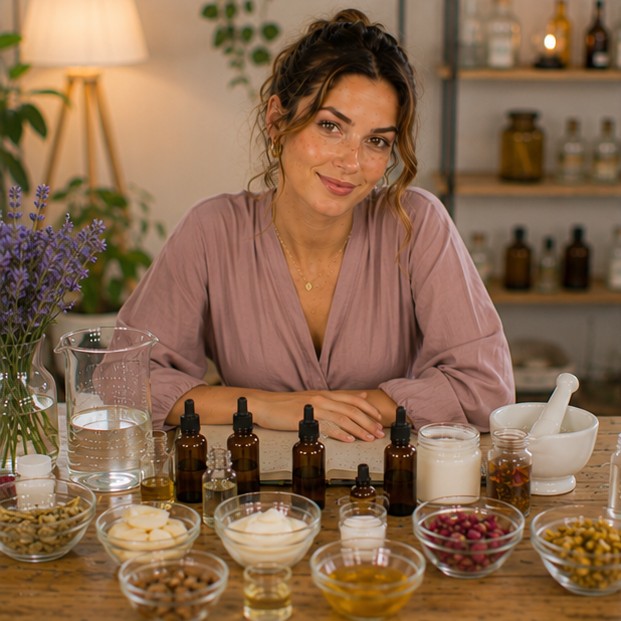
Preparation Step first Sanitize glass beakers, digital scale, mini-whisk, and an airless pump container using seventy percent isopropyl alcohol. Step second Measure thirty-five milliliters of chamomile hydrosol into one heat-safe beaker, and blend four milliliters of macadamia oil with one point five grams of Olivem 1000 emulsifier in a second heat-safe beaker. Step third Heat both beakers in a water bath to seventy degrees Celsius, combine the phases, and whisk into a fluid emulsion. Step fourth Allow the fluid base to cool below thirty degrees Celsius. Step fifth Incorporate three milliliters of Argireline peptide solution, one milliliter of hyaluronic acid solution, zero point five milliliters of sea buckthorn CO2 extract, and one milliliter of Sharomix EG10 eco preservative. Step sixth Stir for two minutes until a uniform golden fluid is obtained, then adjust pH to five point five. Step seventh Decant the soothing barrier fluid into your sanitized airless pump container.
Daily Regimen Integration and Application Protocols
Proper application techniques ensure optimal absorption of active lipids, botanical extracts, and bioactive peptides.
Apply your custom barrier cream twice daily, morning and evening, after cleansing and applying lightweight water-based treatments. Dispense one to two pumps of cream onto clean fingertips. Gently press and smooth the emulsion over the face, neck, and décolleté using upward, sweeping motions without tugging the skin. Allow the cream to absorb completely for two to three minutes before applying sunscreen or makeup. Always conduct a patch test on the inner arm twenty-four hours prior to initial face application to verify individual ingredient tolerance.
Storage Conditions and Product Longevity Standards
Custom barrier creams containing active lipids, botanical extracts, and peptides require proper environmental protection to preserve active stability.
Store finished formulations in airtight airless pump dispensers or opaque glass containers to shield delicate lipids and peptides from exposure to oxygen and light. Keep products in a cool, dark environment at stable temperatures between eight and fourteen degrees Celsius, such as inside a dedicated cosmetic refrigerator. Keep container caps tightly closed after each use to prevent bacterial contamination and moisture loss. Formulated under strict sanitary protocols and preserved with eco-certified preservation systems, custom barrier creams maintain maximum biological activity for six to eight weeks.


Cosmetic ingredients and professional formulation blog
This section features expert materials on modern cosmetic actives. We cover peptides, polynucleotides PDRN, different forms of hyaluronic acid, retinoids, ceramides and other key components.
Special focus is given to active stability, ingredient compatibility and correct incorporation into formulas. You will find practical guides on working with anti-age actives, moisturizing complexes and barrier repair ingredients.
We examine how to properly combine myorelaxants with peptides, common mistakes when using unstable vitamin C forms and ways to improve the performance of moisturizing actives.
Separate materials are dedicated to base oils, extracts, emulsifiers and supporting ingredients. This helps create stable and effective formulas for both professional and home cosmetics.
The blog regularly publishes reviews of trending actives, comparisons of similar ingredients and step-by-step formulation recommendations. The content is aimed at formulators, technologists and anyone seriously involved in creating cosmetic products.
Why this blog is useful
Here you will find practical data on eye area care actives, lifting systems and ingredients that improve skin firmness and tone. We rely on real formulation experience and address the actual challenges that arise during product development.
You can also explore materials on skin protection and repair, depigmentation and anti-inflammatory actives. This approach supports a more systematic selection of ingredients.
FAQ
What topics are covered most often
The blog focuses on peptides, PDRN, hyaluronic acid of different molecular weights, retinoids, ceramides and their compatibility rules.
Are there practical recommendations on how to incorporate actives
Yes, most articles include practical notes on pH stability, incorporation temperature and common formulation mistakes.
Is the content only for professionals
The materials are useful both for formulators and technologists and for those who create cosmetics for personal use and want to understand how modern ingredients work.
Where can I go directly to the ingredients
All key actives are collected in the Actives section, while base components are available in base oils and related categories.



