-
 DIY: Video master classes
-
 Aromatherapy
-
 Felting master classes
-
 Eating at home
-
 DIY cosmetics for children
-
 Cooking recipes
-
 Detergents, cleaning products with your own hands
-
 Soap making as a business
-
 Natural cosmetics. Raw materials for cosmetics and soap.
-
 Natural oils in cosmetics
-
 News
-
 Recipes for balms and conditioners
-
 Bath Bomb Recipes
-
 Cream recipes. Cream making.
-
 Lotion recipes. Gel recipes.
-
 Mask recipes
-
 Soap recipes. Base soap. Soap from scratch.
-
 Recipes for all occasions
-
 Natural shampoo recipes
-
 Healthy Nutrition Recipes
-
 Scrub recipes. Massage tiles. Ubtan
-
 DIY candles
-
 Reference materials, questions, tips
-
 Startup - soap production
-
 Hair care. Tips, recipes
-
 Facial skin care. Cleansers.
-
 Body care. Tips, recipes
-
 Photo Reviews
-
 Chocolate Handmade


How to make peptide cream for barrier repair skincare
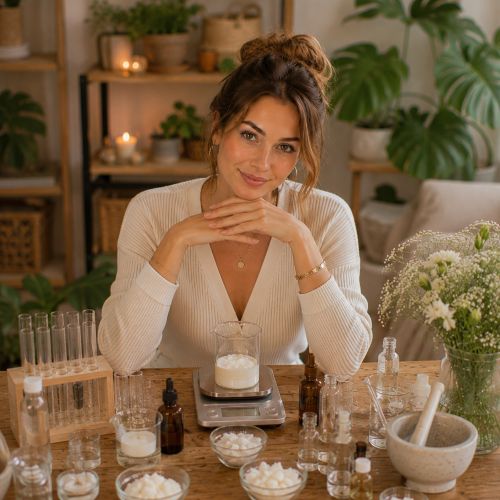 The stratum corneum operates as the primary defensive shield of the human body, sealing in essential cellular moisture and locking out aggressive environmental pathogens, shifting climate elements, and airborne pollutants. When this delicate lipid matrix is disrupted by over-exfoliation, harsh synthetic surfactants, or natural chronological aging, the skin experiences chronic dryness, persistent redness, and heightened reactivity.
To systematically rebuild this compromised barrier, a custom-compounded peptide cream offers an advanced, bio-identical solution. By integrating cellular-signaling peptides with raw lipid building blocks, you can create a targeted emulsion that mirrors the natural physiological structure of healthy skin tissue, accelerating deep epidermal cellular repair.
Why Custom Peptide Barrier Creams Outperform Industrial Skincare Alternatives
The fundamental limitation of mass-market commercial barrier creams lies in their formulation philosophy. Industrial manufacturers prioritize indefinite retail shelf stability and cheap mass production, leading them to rely heavily on inert petroleum derivatives, mineral oils, and synthetic texturizers like dimethicone. While these ingredients create a superficial, temporary feeling of artificial smoothness, they build an impenetrable plastic film over the skin. This occlusion suffocates natural cellular respiration, disrupts the delicate local microbiome, and masks underlying barrier damage without actually repairing it.
Furthermore, commercial formulations are frequently packed with aggressive chemical emulsifiers, synthetic chelators, and paraben-based preservative systems. When applied to an already raw, inflamed skin barrier, these additives act as direct contact allergens, triggering low-grade micro-inflammation that delays the natural healing process.
Compounding a custom peptide cream at home guarantees that every drop contains only active, bio-compatible nutrients. By utilizing plant-derived lamellar emulsifiers and unrefined botanical lipids, you create a breathable, skin-identical matrix that seamlessly fuses with the intercellular lipids of the stratum corneum to restore long-term cellular health.
The Therapeutic Properties of Signalling Peptides and Biomimetic Lipids
The therapeutic efficacy of a handmade barrier repair cream depends on the precise synergy between its active phases. Signal peptides, such as palmitoyl tripeptide or copper complexes, function as molecular messengers. When applied topically, they penetrate the upper layers of the epidermis to send specific bio-chemical signals to fibroblasts, instructing them to accelerate the production of fresh collagen, elastin, and structural glycosaminoglycans. This process thickens a thinned, fragile epidermis from within.
To maximize these regenerative signals, the peptides must be suspended within a biomimetic lipid phase. Unrefined botanical fats like shea butter, avocado oil, and jojoba oil supply an abundance of essential fatty acids, phytosterols, and natural vitamins.
When these unrefined lipids are structurally bound with a lamellar emulsifier, they mimic the natural liquid-crystalline arrangement of the skin lipid shield. This structure allows the cream to patch microscopic gaps in the skin barrier immediately, reducing transepidermal water loss and shielding sensitive nerve endings from external irritation.
Technical Nuances of Phase Inversion and Emulsion Stabilization
Creating a stable, rich peptide cream requires a thorough understanding of the physics of cosmetic emulsification. You must establish two distinct phases in separate heat-resistant glass vessels: the lipid oil phase, containing your base oils, oil-soluble vitamins, and solid wax flakes, and the aqueous water phase, containing your botanical hydrosols, botanical extracts, and water-soluble humectants. Both phases must be heated simultaneously over a gentle, low-heat water bath until all solid components are fully liquefied.
The critical technical secret to a successful barrier emulsion is matching the temperatures of both phases before combining them. If a cold aqueous liquid is poured into a warm lipid phase, the sudden thermal shock causes the emulsifying waxes to instantly solidify and crystalize, resulting in a gritty, unstable texture that separates into layers within hours.
For a true barrier cream, a slow phase inversion technique is preferred, meaning the warm water phase is streamed gradually into the warm oil phase under continuous mechanical agitation to build a tight, robust micellar network.
Rules for Mechanical Agitation and Introducing Heat Sensitive Actives
Once the warm water phase is slowly streamed into the warm lipid phase, mechanical emulsification must begin immediately. You must use a high-powered cosmetic mini-mixer or a specialized laboratory whip to agitate the fluid at high speed for two continuous minutes. This intense mechanical shear forces the lipid and water molecules to lock together, breaking the oils into microscopic droplets and transforming the clear liquids into a thick, uniform white emulsion.
As the whipped mixture naturally cools down toward normal room temperature, its internal viscosity will slowly increase, shifting the texture from a thin lotion into a rich, velvety barrier cream. This cooling stage is the most critical window for introducing your active peptides, delicate botanical extracts, and natural essential oils. Peptides are highly sensitive to thermal degradation; adding them into a hot liquid will denature their protein structures, rendering them useless.
Continuous, gentle hand-stirring with a silicone spatula during the entire cooling cycle is vital to prevent the thickening cream from forming uneven surface crusts or internal air pockets.
Recipe One The Palmitoyl and Shea Intensive Shield Cream
A rich, deeply comforting, lipid-replenishing barrier cream formulated to eliminate chronic flaking, soothe severe windburn, and rebuild a severely compromised stratum corneum.
Composition Thirty milliliters pure lavender hydrosol Fifteen grams raw unrefined shea butter Ten milliliters unrefined avocado oil Five grams olivoyl hydrolyzed wheat protein emulsifier Three milliliters pure vegetable glycerin Two milliliters liquid palmitoyl tripeptide solution Three drops organic frankincense essential oil
Preparation Step first Thoroughly sanitize your formulation workspace, digital scales, two heat-resistant glass beakers, and your mini-mixer attachments with seventy percent isopropyl alcohol and allow them to air dry completely. Step second Weigh out the raw unrefined shea butter, unrefined avocado oil, and olivoyl wheat protein emulsifier flakes into your first glass beaker to establish the lipid phase. Step third Measure the pure lavender hydrosol and vegetable glycerin into your second glass beaker to serve as the hydrating aqueous phase. Step fourth Submerge the bases of both beakers into a wide, low-heat water bath, monitoring them closely until the solid shea butter and emulsifier flakes melt completely into a clear, golden fluid. Step fifth Remove both beakers from the heat source and slowly pour the warm water phase into the warm lipid phase in a thin, steady stream while running your cosmetic mini-mixer on high speed. Step sixth Blend the mixture continuously for two full minutes until a uniform, brilliant white cream forms, then set the beaker down to cool naturally to room temperature. Step seventh Once the container is completely cool to the touch, gently stir in the liquid palmitoyl tripeptide solution and organic frankincense essential oil using a clean silicone spatula for two minutes, then transfer the finished cream into an airtight glass jar.
Recipe Two The Ceramide and Jojoba Daily Repair Fluid
A lightweight, fast-absorbing daily emulsion designed to balance moisture levels, eliminate localized redness, and strengthen the skin defenses under makeup or sunscreen.
Composition Thirty-five milliliters pure cornflower hydrosol Twelve milliliters organic jojoba oil Four grams cetearyl wheat straw glycosides emulsifying flakes Two milliliters liquid ceramide complex Two milliliters pure liquid d-panthenol Zero point five grams active peptide powder dissolved in a splash of water Two drops true chamomile essential oil
Preparation Step first Cleanse all your glass measuring vessels, a glass stirring rod, and an opaque lotion pump bottle with an alcohol spray solution before beginning your work. Step second Combine the organic jojoba oil and the cetearyl wheat straw glycosides emulsifying flakes inside your primary heat-resistant glass beaker. Step third Pour the pure cornflower hydrosol and liquid d-panthenol into your secondary glass beaker to form the water phase. Step fourth Place both containers into your gentle double boiler system, heating slowly until the solid emulsifying fats have completely liquefied into the oil blend. Step fifth Remove the beakers from the bath and slowly stream the warm water phase into the warm lipid mixture while beating vigorously with your mixer at maximum speed for ninety seconds to lock the emulsion. Step sixth Set the beaker aside and let the fluid emulsion cool down completely to room temperature, stirring gently by hand every few minutes to maintain a silky consistency. Step seventh Add the liquid ceramide complex, the pre-dissolved active peptide powder, and the true chamomile essential oil, stir for one final minute until smooth, and pour into your clean lotion dispenser.
Recipe Three The Herbal Aloe and Copper Matrix Rejuvenating Mask
An intensive weekly conditioning treatment cream formulated to deliver vital minerals, draw deep hydration into the skin tissue, and clear away microscopic impurities while sleeping.
Composition Twenty-five milliliters pure organic aloe vera juice distillate Ten milliliters unrefined rosehip seed oil Five milliliters plant-derived squalane Four grams natural olive-derived emulsifying wax Two milliliters concentrated vitamin e oil Zero point three grams dry copper peptide powder dissolved in five drops of water Two drops organic neroli essential oil
Preparation Step first Cleanse your compounding station, mixing bowls, and a flat synthetic application brush with an antiseptic alcohol mist, then let the equipment dry. Step second Measure the unrefined rosehip seed oil, plant-derived squalane, and natural olive-derived emulsifying wax into your primary heat-resistant glass beaker. Step third Pour the pure organic aloe vera juice distillate into your secondary glass beaker to serve as your highly hydrating water phase. Step fourth Place both vessels into a low-heat water bath, heating gently until the solid emulsifying fats are fully liquefied and both containers match in warm temperature. Step fifth Take the vessels out of the water bath and slowly pour the warm aloe phase into the oil phase while operating your cosmetic mixer on high speed for two continuous minutes. Step sixth As the rich cream thickens during the cooling process, let the emulsion sit until it reaches room temperature, stirring manually with a spatula to prevent surface crusts. Step seventh Incorporate the concentrated vitamin E oil, the dissolved blue copper peptide solution, and the organic neroli essential oil, stirring for two minutes until the mask takes on a uniform pale blue tint, then bottle in a clean jar.
Professional Dermatological Application Methods for Maximum Barrier Recovery
To achieve optimal tissue regeneration and maximize the benefits of your custom barrier repair creams, you must follow a gentle application protocol. An inflamed or damaged skin barrier is highly reactive to mechanical friction; heavy rubbing, pulling, or scrubbing will worsen redness and cause fragile surface capillaries to dilate further. Begin your routine by cleansing the skin with lukewarm water and an ultra-mild, soap-free cleanser, then gently pat the skin dry with a fresh paper towel.
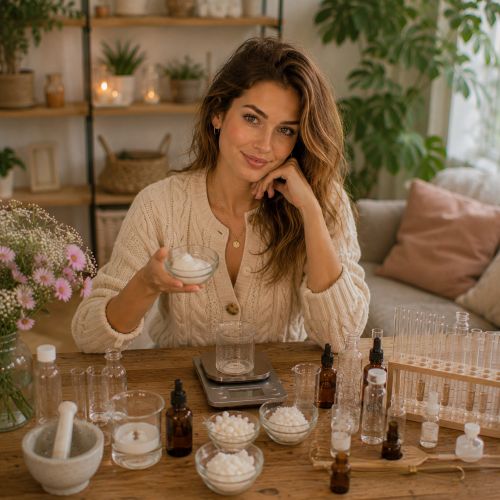
While the skin is still slightly damp and highly receptive to hydration, dispense a pea-sized amount of your custom peptide cream onto your clean fingertips. Instead of rubbing the cream into your face in circular motions, use a gentle pressing or patting technique. Press your fingertips smoothly against your cheeks, forehead, chin, and neck, holding your hands in place for a few seconds to let your natural body warmth facilitate seamless absorption of the biomimetic lipids.
Apply your customized emulsion twice a day, in the morning and immediately before bed. During times of severe seasonal flare-ups or intense irritation, you can safely apply a thin layer every four hours to maintain a continuous, protective hydration shield over the vulnerable epidermis.
Guidelines for Safe Preservation and Disinfection of Custom Emulsions
Because these handcrafted peptide creams are formulated with pure botanical juices, active plant hydrosols, and unrefined oils without any harsh industrial chemical preservatives, they require careful handling to maintain freshness. Fresh water-and-oil mixtures are highly susceptible to contamination by airborne bacteria, mold spores, and household yeasts. To maximize safety, never stick your bare fingers directly into a storage jar; instead, always use a small, sanitized plastic spatula or opt for pump dispenser bottles that prevent ambient air and bacteria from entering the product.
Store your finished peptide creams in a cool, dark, and dry environment completely away from direct sunlight, heating vents, and bathroom steam. The ideal storage location is a dedicated skincare cabinet or the middle shelf of a clean domestic refrigerator. Keeping the emulsions in a stable, cool environment preserves the delicate essential oils, slows down the natural oxidation of unrefined fatty acids, and guarantees that the emulsified micellar structures remain bound together without separating.
When compiled under strict sterile conditions, your custom emulsions will remain fresh and potent for exactly three months. If you ever observe a separation into distinct oil and water layers, a noticeable shift in color, or a sour, unusual smell, discontinue use immediately and compound a fresh batch to ensure complete skin safety.


Cosmetic ingredients and professional formulation blog
This section features expert materials on modern cosmetic actives. We cover peptides, polynucleotides PDRN, different forms of hyaluronic acid, retinoids, ceramides and other key components.
Special focus is given to active stability, ingredient compatibility and correct incorporation into formulas. You will find practical guides on working with anti-age actives, moisturizing complexes and barrier repair ingredients.
We examine how to properly combine myorelaxants with peptides, common mistakes when using unstable vitamin C forms and ways to improve the performance of moisturizing actives.
Separate materials are dedicated to base oils, extracts, emulsifiers and supporting ingredients. This helps create stable and effective formulas for both professional and home cosmetics.
The blog regularly publishes reviews of trending actives, comparisons of similar ingredients and step-by-step formulation recommendations. The content is aimed at formulators, technologists and anyone seriously involved in creating cosmetic products.
Why this blog is useful
Here you will find practical data on eye area care actives, lifting systems and ingredients that improve skin firmness and tone. We rely on real formulation experience and address the actual challenges that arise during product development.
You can also explore materials on skin protection and repair, depigmentation and anti-inflammatory actives. This approach supports a more systematic selection of ingredients.
FAQ
What topics are covered most often
The blog focuses on peptides, PDRN, hyaluronic acid of different molecular weights, retinoids, ceramides and their compatibility rules.
Are there practical recommendations on how to incorporate actives
Yes, most articles include practical notes on pH stability, incorporation temperature and common formulation mistakes.
Is the content only for professionals
The materials are useful both for formulators and technologists and for those who create cosmetics for personal use and want to understand how modern ingredients work.
Where can I go directly to the ingredients
All key actives are collected in the Actives section, while base components are available in base oils and related categories.



