-
 DIY: Video master classes
-
 Aromatherapy
-
 Felting master classes
-
 Eating at home
-
 DIY cosmetics for children
-
 Cooking recipes
-
 Detergents, cleaning products with your own hands
-
 Soap making as a business
-
 Natural cosmetics. Raw materials for cosmetics and soap.
-
 Natural oils in cosmetics
-
 News
-
 Recipes for balms and conditioners
-
 Bath Bomb Recipes
-
 Cream recipes. Cream making.
-
 Lotion recipes. Gel recipes.
-
 Mask recipes
-
 Soap recipes. Base soap. Soap from scratch.
-
 Recipes for all occasions
-
 Natural shampoo recipes
-
 Healthy Nutrition Recipes
-
 Scrub recipes. Massage tiles. Ubtan
-
 DIY candles
-
 Reference materials, questions, tips
-
 Startup - soap production
-
 Hair care. Tips, recipes
-
 Facial skin care. Cleansers.
-
 Body care. Tips, recipes
-
 Photo Reviews
-
 Chocolate Handmade


How to create cosmetics with a lifting effect
 Achieving a visible lifting and firming effect is a primary goal in anti-aging skincare. As we mature, collagen and elastin production naturally decline, leading to a loss of facial contour and elasticity. While the market is saturated with expensive products promising instant results, formulating your own lifting cosmetics allows you to incorporate potent, scientifically backed active ingredients at effective concentrations, ensuring maximum purity and customization. This article provides a comprehensive guide to understanding skin firming, detailing the nuances of using powerful lifting agents and actives, and offering three detailed recipes for creating a lifting serum, a rejuvenating mask, and a firming eye cream at home. You'll learn the secrets of professional formulation and discover the distinct advantages of DIY skincare over its industrial counterparts.
The Science Behind Skin Firming
A true lifting effect in skincare comes from ingredients that address two main issues: collagen degradation and muscle contraction.
-
Collagen Stimulation: Ingredients like specific peptides (e.g., Argireline, Matrixyl) and certain forms of Vitamin C signal the skin cells (fibroblasts) to ramp up the production of new collagen and elastin, restoring the skin's internal support structure.
-
Tightening and Smoothing: Ingredients like DMAE (Dimethylaminoethanol) provide immediate tightening benefits, improving the appearance of facial contours. Pullulan and certain polysaccharides create a thin, invisible film on the skin's surface, resulting in a physical lift.
-
Deep Hydration: Firmness is directly linked to hydration. Ingredients like Hyaluronic Acid plump the skin, instantly smoothing fine lines and wrinkles, which contributes to an overall lifted look.
Three Recipes for Advanced Lifting Cosmetics
These three recipes form a powerful, lifting skincare regimen, using high-performance active ingredients.
Recipe 1: The Instant Lifting and Firming Serum
This serum uses a highly effective blend of immediate and long-term lifting ingredients.
-
Prepare the water phase. In a sterilized beaker, weigh 85g of distilled water.
-
Add the instant lift active. Add 5g of Pullulan solution (or a similar tightening polysaccharide) and stir gently until fully dispersed. This ingredient provides the immediate, visible tightening effect.
-
Add the deep-acting peptide. Add 5g of Argireline peptide solution. This peptide targets expression wrinkles, offering a subtle, relaxing effect similar to botulinum toxin. Stir thoroughly.
-
Add humectants and a preservative. Add 4g of vegetable glycerin for hydration and 1g of a broad-spectrum preservative like Geogard 221. Stir well.
-
Check the pH and package. Check the pH of the serum. It should be between 5.5 and 6.5 for optimal stability. Pour the finished serum into a dark glass dropper bottle.
Recommendations for Use: Apply 2-3 drops to clean skin in the morning, focusing on the forehead and eye area, before applying your moisturizer.
Storage: Store in a cool, dark place. The shelf life is up to 6 months.
Recipe 2: DMAE Contouring Night Cream
This cream leverages DMAE for its cumulative firming benefits and uses rich oils for overnight repair.
-
Prepare the water phase. In a sterilized beaker, weigh 65g of distilled water. Heat to 70°C.
-
Prepare the oil phase. In a separate beaker, combine 15g of Rosehip Oil (rich in Vitamin A), 10g of Shea Butter, and 5g of an emulsifying wax like Olivem 1000. Heat to 70°C, stirring until all ingredients are melted.
-
Emulsify. Slowly pour the hot water phase into the hot oil phase, mixing with a hand blender in short pulses until a creamy emulsion forms. Continue mixing as the cream cools.
-
Add the lifting active. When the cream cools to below 40°C, add 4g of DMAE solution. This active promotes firmness and improves skin tone over time.
-
Add the final actives and preservative. Add 1g of Vitamin E (Tocopherol) and 1g of a broad-spectrum preservative. Stir well and transfer to a clean jar.
Recommendations for Use: Apply a generous layer to the face, jawline, and neck area every evening, massaging upwards to enhance the lifting effect.
Storage: Store in a cool, dark place. The shelf life is up to 3 months.
Recipe 3: Intensive Lifting Eye Gel Mask
The delicate skin around the eyes requires special attention. This gel mask is designed for weekly use to reduce puffiness and tighten the skin.
-
Prepare the water phase. In a sterilized beaker, weigh 85g of distilled water and 5g of cucumber hydrosol for its cooling effect.
-
Hydrate the gelling agent. Slowly sprinkle 1g of Carbomer over the solution, stirring until a smooth gel begins to form.
-
Add the high-power humectant. Add 5g of High Molecular Weight Hyaluronic Acid solution. This provides an immediate plumping effect that smooths crepiness around the eyes.
-
Add the peptide and preservative. Add 4g of Matrixyl peptide solution and 1g of a broad-spectrum preservative. Stir until all components are integrated.
-
Check the pH and package. Adjust the pH to be between 5.0 and 6.0. Pour the gel into a small, airtight pump container.
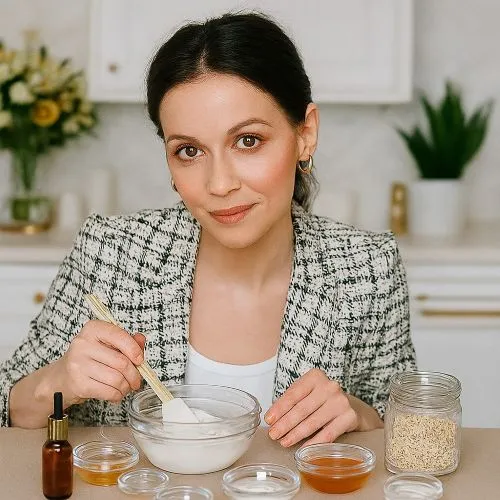 Recommendations for Use: Apply a thick layer to the entire under-eye area, avoiding direct contact with the eyes. Leave on for 15 minutes as a mask, then gently pat the residue into the skin. Use 1-2 times per week.
Storage: Store in the refrigerator for an enhanced cooling and anti-puffiness effect. The shelf life is up to 6 months.
Advantages Over Industrial Lifting Cosmetics
Opting for homemade lifting cosmetics provides superior benefits compared to mass-produced alternatives.
-
Optimal Active Concentration: High-performance lifting peptides and DMAE are expensive, so commercial brands often use them sparingly. By formulating your own, you ensure these costly actives are present at their recommended, effective concentrations for true results.
-
No Irritating Fillers: Commercial lifting products often contain high levels of synthetic fragrances, alcohol, or harsh preservatives to stabilize complex formulas for years. Your homemade cosmetics contain only what is necessary, eliminating common skin irritants that can undermine the anti-aging benefits.
-
Ingredient Purity and Freshness: You select and use fresh, high-quality botanical oils and make products in small batches. This means the antioxidants and beneficial compounds are at their peak potency when you apply them to your skin.
-
Customization for Your Needs: You can tailor the oil phase for your skin type (e.g., lighter oils for oily skin) and choose specific peptides to target your primary concerns (e.g., Argireline for expression lines or Matrixyl for overall collagen loss).
By mastering these recipes, you gain a powerful, personalized, and cost-effective tool for achieving a visible lifting effect without relying on potentially irritating or ineffective commercial formulas.


Cosmetic ingredients and professional formulation blog
This section features expert materials on modern cosmetic actives. We cover peptides, polynucleotides PDRN, different forms of hyaluronic acid, retinoids, ceramides and other key components.
Special focus is given to active stability, ingredient compatibility and correct incorporation into formulas. You will find practical guides on working with anti-age actives, moisturizing complexes and barrier repair ingredients.
We examine how to properly combine myorelaxants with peptides, common mistakes when using unstable vitamin C forms and ways to improve the performance of moisturizing actives.
Separate materials are dedicated to base oils, extracts, emulsifiers and supporting ingredients. This helps create stable and effective formulas for both professional and home cosmetics.
The blog regularly publishes reviews of trending actives, comparisons of similar ingredients and step-by-step formulation recommendations. The content is aimed at formulators, technologists and anyone seriously involved in creating cosmetic products.
Why this blog is useful
Here you will find practical data on eye area care actives, lifting systems and ingredients that improve skin firmness and tone. We rely on real formulation experience and address the actual challenges that arise during product development.
You can also explore materials on skin protection and repair, depigmentation and anti-inflammatory actives. This approach supports a more systematic selection of ingredients.
FAQ
What topics are covered most often
The blog focuses on peptides, PDRN, hyaluronic acid of different molecular weights, retinoids, ceramides and their compatibility rules.
Are there practical recommendations on how to incorporate actives
Yes, most articles include practical notes on pH stability, incorporation temperature and common formulation mistakes.
Is the content only for professionals
The materials are useful both for formulators and technologists and for those who create cosmetics for personal use and want to understand how modern ingredients work.
Where can I go directly to the ingredients
All key actives are collected in the Actives section, while base components are available in base oils and related categories.