-
 DIY: Video master classes
-
 Aromatherapy
-
 Felting master classes
-
 Eating at home
-
 DIY cosmetics for children
-
 Cooking recipes
-
 Detergents, cleaning products with your own hands
-
 Soap making as a business
-
 Natural cosmetics. Raw materials for cosmetics and soap.
-
 Natural oils in cosmetics
-
 News
-
 Recipes for balms and conditioners
-
 Bath Bomb Recipes
-
 Cream recipes. Cream making.
-
 Lotion recipes. Gel recipes.
-
 Mask recipes
-
 Soap recipes. Base soap. Soap from scratch.
-
 Recipes for all occasions
-
 Natural shampoo recipes
-
 Healthy Nutrition Recipes
-
 Scrub recipes. Massage tiles. Ubtan
-
 DIY candles
-
 Reference materials, questions, tips
-
 Startup - soap production
-
 Hair care. Tips, recipes
-
 Facial skin care. Cleansers.
-
 Body care. Tips, recipes
-
 Photo Reviews
-
 Chocolate Handmade


How to work with emulsifiers: the secrets of an ideal emulsion
 Emulsions are everywhere in our daily lives, from creamy salad dressings and moisturizers to the life-saving vaccines we receive. But what exactly is an emulsion, and how can you achieve that perfect blend? This article delves into the world of emulsifiers, unlocking the secrets to creating stable and desirable emulsions.
Understanding Emulsions: Oil and Water Don't Mix (Usually)
At their core, emulsions are mixtures of two immiscible liquids, typically oil and water. These liquids naturally want to separate, but emulsifiers come to the rescue, acting as stabilizers that prevent this separation. Emulsifiers are amphiphilic molecules, meaning they have a "head" that loves water (hydrophilic) and a "tail" that loves oil (lipophilic). This unique structure allows them to bridge the gap between the two phases, creating a uniform blend.
Choosing the Right Emulsifier: It's All About Balance
The key to a successful emulsion lies in selecting the right emulsifier. Different emulsifiers have varying Hydrophilic-Lipophilic Balance (HLB) values. HLB is a numerical scale that indicates the emulsifier's affinity for water (low HLB) or oil (high HLB). For a stable emulsion, the HLB of the emulsifier needs to match the overall HLB of the oil and water phase you're working with.
Here are some resources to help you determine the ideal HLB for your specific emulsion [resources on HLB calculation for emulsions].
Emulsion Formation: A Delicate Dance
Once you've chosen your emulsifier, it's time to create your emulsion. Here are some general steps to follow, but remember, specific techniques may vary depending on your ingredients:
- Preparation is Key: Ensure all your ingredients are accurately measured and at appropriate temperatures, as specified in your recipe.
- Phase Order Matters: Typically, the oil phase is added slowly to the water phase while mixing continuously. This allows for efficient distribution of the oil droplets.
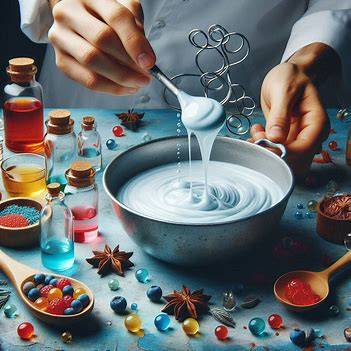
- Mixing Matters Even More: Proper mixing is crucial for creating a stable emulsion. Use appropriate equipment like a hand mixer or homogenizer to achieve a smooth and uniform consistency.
 Troubleshooting Common Emulsion Issues:
Even with the best intentions, emulsions can sometimes go wrong. Here are some common problems and solutions:
- Splitting: This occurs when the emulsion separates. It can be caused by using the wrong emulsifier, improper mixing, or temperature fluctuations. Try adjusting your HLB selection, mixing technique, or following a recipe that incorporates heating or cooling steps.
- Uneven Texture: Lumpy emulsions might indicate insufficient mixing or using an inappropriate emulsifier amount. Try increasing mixing time or adjusting the emulsifier dosage based on the recipe or manufacturer's recommendations.
The Emulsifier Advantage: A World of Possibilities
Emulsifiers unlock a vast array of applications in various industries. In cosmetics, they create luxurious lotions and creams. In the culinary world, they are essential for mayonnaise, salad dressings, and even ice cream. The pharmaceutical industry relies on them for stable delivery systems.
By understanding emulsifiers and their role in creating stable emulsions, you can unlock a world of possibilities, from crafting delicious homemade treats to developing innovative products. So, the next time you encounter a creamy emulsion, remember the fascinating science behind it and the power of these little stabilizing molecules called emulsifiers.
"


Cosmetic ingredients and professional formulation blog
This section features expert materials on modern cosmetic actives. We cover peptides, polynucleotides PDRN, different forms of hyaluronic acid, retinoids, ceramides and other key components.
Special focus is given to active stability, ingredient compatibility and correct incorporation into formulas. You will find practical guides on working with anti-age actives, moisturizing complexes and barrier repair ingredients.
We examine how to properly combine myorelaxants with peptides, common mistakes when using unstable vitamin C forms and ways to improve the performance of moisturizing actives.
Separate materials are dedicated to base oils, extracts, emulsifiers and supporting ingredients. This helps create stable and effective formulas for both professional and home cosmetics.
The blog regularly publishes reviews of trending actives, comparisons of similar ingredients and step-by-step formulation recommendations. The content is aimed at formulators, technologists and anyone seriously involved in creating cosmetic products.
Why this blog is useful
Here you will find practical data on eye area care actives, lifting systems and ingredients that improve skin firmness and tone. We rely on real formulation experience and address the actual challenges that arise during product development.
You can also explore materials on skin protection and repair, depigmentation and anti-inflammatory actives. This approach supports a more systematic selection of ingredients.
FAQ
What topics are covered most often
The blog focuses on peptides, PDRN, hyaluronic acid of different molecular weights, retinoids, ceramides and their compatibility rules.
Are there practical recommendations on how to incorporate actives
Yes, most articles include practical notes on pH stability, incorporation temperature and common formulation mistakes.
Is the content only for professionals
The materials are useful both for formulators and technologists and for those who create cosmetics for personal use and want to understand how modern ingredients work.
Where can I go directly to the ingredients
All key actives are collected in the Actives section, while base components are available in base oils and related categories.



