-
 DIY: Video master classes
-
 Aromatherapy
-
 Felting master classes
-
 Eating at home
-
 DIY cosmetics for children
-
 Cooking recipes
-
 Detergents, cleaning products with your own hands
-
 Soap making as a business
-
 Natural cosmetics. Raw materials for cosmetics and soap.
-
 Natural oils in cosmetics
-
 News
-
 Recipes for balms and conditioners
-
 Bath Bomb Recipes
-
 Cream recipes. Cream making.
-
 Lotion recipes. Gel recipes.
-
 Mask recipes
-
 Soap recipes. Base soap. Soap from scratch.
-
 Recipes for all occasions
-
 Natural shampoo recipes
-
 Healthy Nutrition Recipes
-
 Scrub recipes. Massage tiles. Ubtan
-
 DIY candles
-
 Reference materials, questions, tips
-
 Startup - soap production
-
 Hair care. Tips, recipes
-
 Facial skin care. Cleansers.
-
 Body care. Tips, recipes
-
 Photo Reviews
-
 Chocolate Handmade


How to choose a preservative for peptide cosmetics
 Peptides are short chains of amino acids that serve as cellular messengers in the skin, signaling fibroblasts to synthesize new collagen, elastin, and hyaluronic acid. Because of their precise target actions, they are highly valued in premium anti-aging formulations, targeted eye treatments, and cellular repair serums. However, the exact biological structure that makes peptides so effective also makes them highly vulnerable.
Chemically, peptides are chains of proteins, which serve as an ideal nutrient source for opportunistic pathogens like bacteria, mold, and wild yeasts. Unlike basic mineral oils or inert silicones, amino acid chains are easily broken down by microbial enzymes. Without a robust and compatible preservation system, a peptide formula will degrade within days, transforming a luxury anti-aging treatment into a dangerous source of infection that can cause contact dermatitis, breakouts, and severe skin irritation.
The Chemical Mechanism of Preservation and Peptide Bonding Stability
Selecting a preservative for peptide cosmetics requires a deeper understanding of raw material compatibility than crafting a basic hydrating lotion. Many common broad-spectrum preservatives function by aggressively disrupting or cross-linking protein structures to kill microbial cells. If a highly reactive or aggressive preservative is introduced into a peptide formula, it will not distinguish between the proteins of the bacteria and the expensive peptide chains.
When an incompatible preservative is used, the active peptides undergo denaturation. The delicate peptide bonds break or deform, completely stripping the ingredient of its cosmetic benefits and turning it into an inert, useless filler. Furthermore, peptides require a stable environment with a pH value kept strictly between five and six and a half units. The chosen preservative must not only protect the water phase from microbial growth but must also remain completely stable and effective within this exact physical range without causing the emulsion to split.
Sourcing Safe Eco Certified Preservatives for Artisan Anti Aging Formulations
For clean beauty formulators, the ideal preservation system must be mild, eco-certified, and globally approved, while remaining completely inert toward amino acid chains. The best choices are synergistic blends of organic acids and their salts. Mixtures utilizing benzyl alcohol combined with dehydroacetic acid, or combinations of potassium sorbate and sodium benzoates, offer excellent broad-spectrum protection against Gram-positive bacteria, Gram-negative bacteria, and fungal colonies without altering protein bonds.
Conversely, you must completely avoid formaldehyde-releasing preservatives like diazolidinyl urea or DMDM hydantoin, as well as aggressive halogenated compounds. These chemicals release free molecules that bind directly to the amino groups of your peptides, causing immediate chemical breakdown. Solubility is another key factor. Because bacteria grow exclusively in water, your chosen preservative must be fully water-soluble or added during the final cooling phase when the temperature drops to room temperature to protect both the formula and the active ingredients.
Strict Cleanliness Protocols and Professional Compounding Equipment Preparation
Creating premium handmade peptide cosmetics requires a clean, controlled compounding environment. Because gentle eco-preservatives work preventatively, introducing a heavy bacterial load during mixing will exhaust the preservative's strength immediately, leaving the final cream unprotected during daily use.
Before weighing out your raw materials, clear your workspace entirely, wash your hands thoroughly, and put on clean nitrilled laboratory gloves. Spray all heat-safe glass laboratory beakers, stainless steel mini whisks, digital scales, and final storage pumps with a seventy percent isopropyl alcohol mist, allowing them to air-dry completely on clean paper towels. Avoid using cloth towels, which shed micro-fibers and harbor hidden bacteria that can contaminate your equipment.
Recipe First The Cellular Renewal Matrixyl Anti Aging Day Cream
A rich, velvety anti-aging facial moisturizer packed with signaling peptides to lift the skin barrier, safely preserved with a gentle benzyl alcohol blend.
Composition Fifty-five milliliters organic everlasting flower hydrosol Twenty milliliters unrefined Moroccan argan oil Eight grams plant derived emulsifying wax Five milliliters Matrixyl peptide complex solution Three milliliters pure vegetable glycerin One milliliter liquid benzyl alcohol dehydroacetic acid eco preservative blend Two drops pure organic neroli essential oil
Preparation Step first Thoroughly sanitize your glass mixing beakers, stainless steel mini whisk, and a dark amber glass cosmetic jar with a seventy percent isopropyl alcohol mist. Step second Combine the organic everlasting flower hydrosol and pure vegetable glycerin in your first glass beaker to form the clean water phase. Step third Measure out the unrefined Moroccan argan oil and the plant-derived emulsifying wax into your second heat-safe glass beaker for the lipid phase. Step fourth Place both glass beakers into a low-heat double boiler water bath, heating gently until the emulsifying wax melts completely into the argan oil. Step fifth Remove both containers from the water bath and slowly pour the warm water phase into the oil phase while whisking rapidly with your mini whisk. Step sixth Continue stirring the fresh emulsion slowly as it cools down naturally to a warm room temperature, watching it thicken into a smooth white cream. Step seventh Whisk the Matrixyl peptide complex solution, organic neroli essential oil, and the liquid eco-preservative blend into the cooled cream, then ladle the mixture into your sterilized jar.
Recipe Second The Ultimate Hydration Hyaluronic Peptide Facial Serum
An oil-free, fast-absorbing hydrating fluid designed to instantly plump fine lines, protected by a highly stable water-soluble preservative system.
Composition Seventy milliliters organic Bulgarian rose hydrosol Sixteen milliliters steam distilled water Seven milliliters of a one percent low molecular weight hyaluronic acid solution Five milliliters hydration peptide complex solution One milliliter liquid water soluble eco preservative One milliliter liquid sodium lactate to balance acidity levels
Preparation Step first Sanitize your pouring beakers, an electronic scale, a long glass stirring rod, and a sterile glass dropper bottle using an alcohol rinse. Step second Pour the organic Bulgarian rose hydrosol and steam-distilled water into your main glass beaker and stir to combine. Step third Drizzle the low molecular weight hyaluronic acid solution slowly into the water base, stirring smoothly with your glass rod until a light gel forms. Step fourth Add the liquid sodium lactate into the gel matrix to stabilize the formula's acidity level right at five and a half units. Step fifth Pour the hydration peptide complex solution into the clear gel base, blending slowly to prevent trapping excess air bubbles in the fluid serum. Step sixth Introduce the liquid water-soluble eco-preservative into the mixture, ensuring the active biocides distribute evenly through the water channels. Step seventh Stir the finished serum for two full minutes, then carefully transfer the clear rejuvenating fluid into your sterilized dropper bottle.
Recipe Third The Orbital Silk Anti Puffiness Eye Cream Gel
An ultra-lightweight, cooling hybrid gel cream built with cornflower hydrosol to drain puffiness and smooth out fine lines around delicate eye contours.
Composition Sixty milliliters organic cornflower hydrosol Twenty milliliters pure organic aloe vera juice Ten milliliters unrefined organic golden jojoba oil Four grams natural konjac mannan gelling powder Five milliliters anti puffiness peptide complex solution One milliliter mild liquid cosmetic preservative Two drops non gmo vitamin e oil
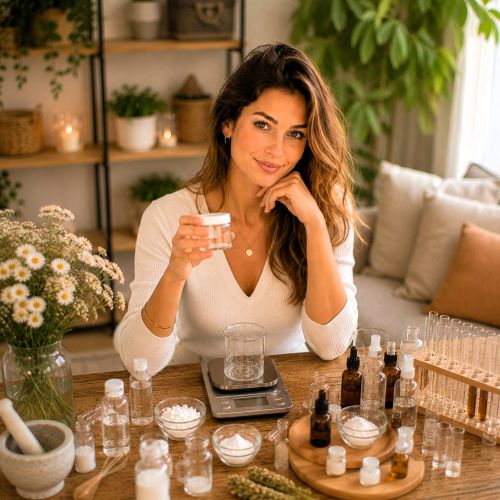
Preparation Step first Disinfect all measuring cups, glass rods, scrapers, and an airless cosmetic dispenser bottle thoroughly with your isopropyl sanitizing spray. Step second Pour the organic cornflower hydrosol and pure organic aloe vera juice into a glass beaker, stirring until completely uniform. Step third Sprinkle the natural konjac mannan gelling powder slowly over the liquid mixture, whisking quickly to ensure no lumps form in the base. Step fourth Allow the mixture to sit undisturbed for twenty minutes until the natural botanical sugars swell into a rich, transparent gel. Step fifth Slowly stream the organic golden jojoba oil and non-gmo vitamin e oil into the gel base, beating rapidly with your mini whisk to emulsify the oils. Step sixth Once the texture turns into a smooth, milky gel cream, add the anti-puffiness peptide complex solution and the mild liquid cosmetic preservative. Step seventh Give the hybrid formula a final thorough stir with a glass rod, then pour the eye gel cream into your clean airless dispenser bottle.
Strategic Application Protocols for Acid Sensitive Peptide Skincare
To maximize the cellular benefits of these handmade peptide formulas, you must avoid combining them with conflicting skincare products. Peptides should be used consistently twice per day for at least two months to experience full anti-aging benefits, as their mechanism relies on a steady accumulation within the tissue cells. Apply your formulas to thoroughly cleansed skin that has been balanced with a mild, alcohol-free toner.
Never layer peptide creams or serums immediately after using products that contain high concentrations of alpha-hydroxy acids, beta-hydroxy acids, or pure ascorbic acid. A highly acidic skin environment drops the surface pH too low, which instantly shatters the delicate peptide strings right on top of the epidermis, neutralizing their skin-smoothing effects. Instruct your users to split these treatments by applying exfoliating acids or vitamin C during the morning routine, and using their advanced peptide lift formulas during the evening routine.
Moisture Shielded Storage Rules and Freshness Preservation Standards
Because clean, artisan peptide cosmetics utilize gentle eco-preservatives rather than aggressive industrial stabilizers, they require careful handling to maintain freshness. If you choose to store your creams in open-mouth jars, never dip bare fingers directly into the product. This habit introduces moisture and ambient bacteria that can overwhelm the mild preservation system. Always use a small, sanitized plastic cosmetic spatula to scoop out the desired amount for each application.
For the best results, use airless pump bottles or vacuum dispensers that keep the formulas away from ambient air, dust, and direct skin contact. Store your completed creams, serums, and eye gels inside a cool, dry bedroom cabinet or on the middle shelf of a dedicated beauty refrigerator kept at a steady temperature. High heat and bathroom steam can cause the natural emulsions to separate, while cool storage keeps the active peptides stable and provides a wonderful, anti-inflammatory cooling sensation. When kept under these ideal conditions, your fresh peptide skincare products will remain potent, safe, and highly effective for three to four months.


Cosmetic ingredients and professional formulation blog
This section features expert materials on modern cosmetic actives. We cover peptides, polynucleotides PDRN, different forms of hyaluronic acid, retinoids, ceramides and other key components.
Special focus is given to active stability, ingredient compatibility and correct incorporation into formulas. You will find practical guides on working with anti-age actives, moisturizing complexes and barrier repair ingredients.
We examine how to properly combine myorelaxants with peptides, common mistakes when using unstable vitamin C forms and ways to improve the performance of moisturizing actives.
Separate materials are dedicated to base oils, extracts, emulsifiers and supporting ingredients. This helps create stable and effective formulas for both professional and home cosmetics.
The blog regularly publishes reviews of trending actives, comparisons of similar ingredients and step-by-step formulation recommendations. The content is aimed at formulators, technologists and anyone seriously involved in creating cosmetic products.
Why this blog is useful
Here you will find practical data on eye area care actives, lifting systems and ingredients that improve skin firmness and tone. We rely on real formulation experience and address the actual challenges that arise during product development.
You can also explore materials on skin protection and repair, depigmentation and anti-inflammatory actives. This approach supports a more systematic selection of ingredients.
FAQ
What topics are covered most often
The blog focuses on peptides, PDRN, hyaluronic acid of different molecular weights, retinoids, ceramides and their compatibility rules.
Are there practical recommendations on how to incorporate actives
Yes, most articles include practical notes on pH stability, incorporation temperature and common formulation mistakes.
Is the content only for professionals
The materials are useful both for formulators and technologists and for those who create cosmetics for personal use and want to understand how modern ingredients work.
Where can I go directly to the ingredients
All key actives are collected in the Actives section, while base components are available in base oils and related categories.



