-
 DIY: Video master classes
-
 Aromatherapy
-
 Felting master classes
-
 Eating at home
-
 DIY cosmetics for children
-
 Cooking recipes
-
 Detergents, cleaning products with your own hands
-
 Soap making as a business
-
 Natural cosmetics. Raw materials for cosmetics and soap.
-
 Natural oils in cosmetics
-
 News
-
 Recipes for balms and conditioners
-
 Bath Bomb Recipes
-
 Cream recipes. Cream making.
-
 Lotion recipes. Gel recipes.
-
 Mask recipes
-
 Soap recipes. Base soap. Soap from scratch.
-
 Recipes for all occasions
-
 Natural shampoo recipes
-
 Healthy Nutrition Recipes
-
 Scrub recipes. Massage tiles. Ubtan
-
 DIY candles
-
 Reference materials, questions, tips
-
 Startup - soap production
-
 Hair care. Tips, recipes
-
 Facial skin care. Cleansers.
-
 Body care. Tips, recipes
-
 Photo Reviews
-
 Chocolate Handmade


Hexapeptide-9 in cosmetics: How the rejuvenating peptide works and the recipe for an anti-aging serum
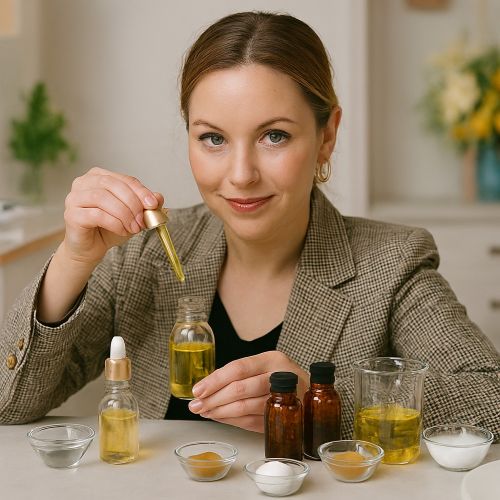 In the ever-evolving world of anti-aging skincare, peptides stand out as some of the most effective communication tools for your skin cells. Among them, Hexapeptide-9 (also often marketed under trade names like Collaxyl) has gained significant attention for its remarkable ability to support skin repair and stimulate collagen production. This powerful molecule is a synthetic peptide fragment derived from collagen, specifically designed to target the signs of aging that result from cell damage and degradation. While high-end serums featuring this peptide come with a hefty price tag, formulating your own at home allows you to utilize this potent active ingredient at its most effective concentration. This article provides a detailed guide to understanding Hexapeptide-9's rejuvenating properties, covers all the nuances of preparation, and offers three detailed recipes for potent anti-aging serums, highlighting the distinct advantages of DIY formulation over commercial products.
The Science of Hexapeptide-9: The Regeneration Messenger
Hexapeptide-9 is a signaling peptide that mimics the body’s natural regenerative processes. Its unique mechanism of action focuses primarily on the Dermo-Epidermal Junction (DEJ), which is the layer connecting the dermis and epidermis. This junction is critical for skin structural integrity and nutrient exchange. As we age, the DEJ flattens, contributing to the formation of wrinkles and saggy skin.
Key benefits of incorporating Hexapeptide-9 into your skincare include:
-
Collagen Synthesis Stimulation: Hexapeptide-9 acts as a messenger, promoting the synthesis of essential DEJ components like collagen (specifically Type I, III, and IV) and laminin. This effectively rebuilds the skin’s supportive structure.
-
Accelerated Skin Repair: The peptide is recognized for its ability to speed up the repair process in wounded or damaged skin. This translates into faster recovery from breakouts, reduced scar appearance, and overall enhanced skin resilience.
-
Significant Wrinkle Reduction: By strengthening the DEJ and boosting new collagen, Hexapeptide-9 visibly reduces the length and depth of wrinkles, particularly around the eyes and forehead.
-
Improved Epidermal Regeneration: It supports the renewal of the outer skin layer, leading to smoother texture and improved skin thickness.
This makes Hexapeptide-9 a superior choice for targeting mature skin that requires deep repair and firming.
Three Recipes for Potent Hexapeptide-9 Serums
Hexapeptide-9 is a water-soluble active, making it ideal for integration into lightweight serums and gels. Always use the powder or liquid solution according to the supplier's instructions regarding concentration.
Recipe 1: The Core Hexapeptide-9 Daily Serum
This minimalist serum maximizes the power of Hexapeptide-9 for daily use.
-
Prepare the base water. In a sterilized beaker, weigh 90g of distilled water.
-
Add the key active. Add 5g of Hexapeptide-9 solution (check manufacturer's recommended usage rate, typically 1-5%). Stir gently until fully dispersed.
-
Add humectant and thickening agent. Add 4g of vegetable glycerin to boost hydration and 0.5g of Xanthan Gum solution (pre-mixed with a small amount of glycerin to prevent clumping) to give the serum a pleasant, silky texture. Stir until uniform.
-
Add the preservative. Add 1g of a broad-spectrum preservative like Euxyl PE 9010. This is crucial for any water-based product.
-
Check the pH and package. Check the pH of the serum; it should ideally be between 4.0 and 7.0 (consult the peptide supplier for the optimal range, typically 4.5-5.5). Pour the finished serum into a dark glass dropper bottle.
Recommendations for Use: Apply 2-3 drops to clean skin twice daily—morning and night—before your moisturizer.
Storage: Store in a cool, dark place, ideally below 25°C. The shelf life is up to 6 months.
Recipe 2: Hexapeptide-9 and Hyaluronic Acid Plumping Serum
This formula pairs the collagen-boosting effects of the peptide with the intense plumping hydration of hyaluronic acid.
-
Prepare the hyaluronic acid base. In a sterilized beaker, weigh 85g of distilled water. Slowly add 2g of High Molecular Weight Hyaluronic Acid powder, stirring occasionally until a uniform gel forms (this may take several hours or require continuous mixing).
-
Add the peptides. Add 5g of Hexapeptide-9 solution. Gently stir the peptide into the hyaluronic gel until fully mixed.
-
Add a soothing agent. Add 5g of Panthenol (Vitamin B5) solution, which acts as a powerful humectant and soother.
-
Add the preservative. Add 1g of a broad-spectrum preservative. Stir well.
-
Check the pH and package. Verify the pH and adjust if necessary to the optimal peptide range. Package into an airless pump bottle to maintain stability.
Recommendations for Use: Apply morning or evening to damp skin to maximize the hydrating effects of the hyaluronic acid.
Storage: Store in a cool, dark place. The shelf life is up to 6 months.
Recipe 3: Nighttime Anti-Wrinkle Elixir (Water-Oil Biphasic)
This water-oil serum targets both the water-soluble benefits of the peptide and the oil-soluble benefits of Vitamin E and squalane.
-
Prepare the water phase (70%). In a beaker, combine 69g of distilled water, 5g of Hexapeptide-9 solution, and 1g of a broad-spectrum preservative. Stir well.
-
Prepare the oil phase (30%). In a separate beaker, combine 20g of Squalane oil (a non-comedogenic emollient) and 4g of Vitamin E (Tocopherol) oil. Add 1g of a solubilizer (like Polysorbate 20) to help blend the phases.
-
Combine and package. Slowly pour the oil phase into the water phase. The two phases will naturally separate. Pour the mixture into a clear dropper bottle.
Recommendations for Use: Shake well before each use to combine the phases. Apply 3-4 drops to the face in the evening to lock in moisture and support overnight repair.
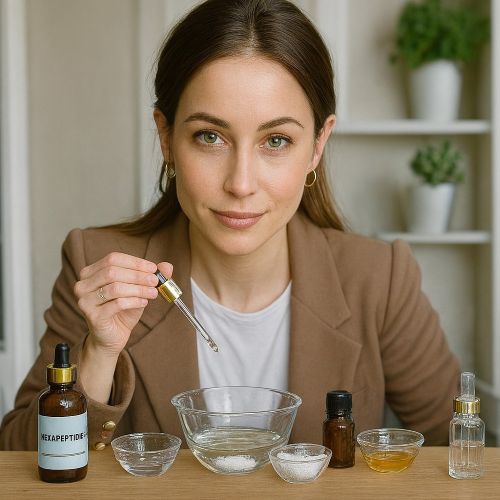 Storage: Store in a cool, dark place. The shelf life is up to 6 months.
Advantages of Homemade Hexapeptide-9 Serums
Choosing to make your own Hexapeptide-9 serum offers substantial advantages over purchasing commercial options.
-
Optimal Concentration and Potency: Hexapeptide-9 is a premium, costly ingredient. Industrial cosmetics often feature minimal concentrations—sometimes barely enough to be effective—to keep their profit margins high. By formulating your own, you ensure the peptide is included at the maximum recommended effective concentration (typically up to 5%), guaranteeing maximum regenerative power.
-
Purity and Minimization of Irritants: Sensitive skin can react to the complex fillers, synthetic fragrances, and aggressive preservatives used to stabilize commercial products for years. Your homemade serum is minimalist and clean, containing only the active peptide, a safe preservative, and necessary hydrators.
-
Cost-Effectiveness: A high-end serum featuring Hexapeptide-9 can easily cost over 100 EUR/USD. The cost of raw materials for an equally potent, pure, and fresh DIY version is a small fraction of that price.
-
Freshness: You create small batches that are used within a few months, ensuring the active ingredients are at their peak potency. Commercial products often sit on shelves for years, slowly degrading the effectiveness of sensitive peptides.
By taking control of your skincare formulation, you create a powerful, customized, and economically smart anti-aging treatment centered around the proven regenerative benefits of Hexapeptide-9.


Cosmetic ingredients and professional formulation blog
This section features expert materials on modern cosmetic actives. We cover peptides, polynucleotides PDRN, different forms of hyaluronic acid, retinoids, ceramides and other key components.
Special focus is given to active stability, ingredient compatibility and correct incorporation into formulas. You will find practical guides on working with anti-age actives, moisturizing complexes and barrier repair ingredients.
We examine how to properly combine myorelaxants with peptides, common mistakes when using unstable vitamin C forms and ways to improve the performance of moisturizing actives.
Separate materials are dedicated to base oils, extracts, emulsifiers and supporting ingredients. This helps create stable and effective formulas for both professional and home cosmetics.
The blog regularly publishes reviews of trending actives, comparisons of similar ingredients and step-by-step formulation recommendations. The content is aimed at formulators, technologists and anyone seriously involved in creating cosmetic products.
Why this blog is useful
Here you will find practical data on eye area care actives, lifting systems and ingredients that improve skin firmness and tone. We rely on real formulation experience and address the actual challenges that arise during product development.
You can also explore materials on skin protection and repair, depigmentation and anti-inflammatory actives. This approach supports a more systematic selection of ingredients.
FAQ
What topics are covered most often
The blog focuses on peptides, PDRN, hyaluronic acid of different molecular weights, retinoids, ceramides and their compatibility rules.
Are there practical recommendations on how to incorporate actives
Yes, most articles include practical notes on pH stability, incorporation temperature and common formulation mistakes.
Is the content only for professionals
The materials are useful both for formulators and technologists and for those who create cosmetics for personal use and want to understand how modern ingredients work.
Where can I go directly to the ingredients
All key actives are collected in the Actives section, while base components are available in base oils and related categories.



