-
 DIY: Video master classes
-
 Aromatherapy
-
 Felting master classes
-
 Eating at home
-
 DIY cosmetics for children
-
 Cooking recipes
-
 Detergents, cleaning products with your own hands
-
 Soap making as a business
-
 Natural cosmetics. Raw materials for cosmetics and soap.
-
 Natural oils in cosmetics
-
 News
-
 Recipes for balms and conditioners
-
 Bath Bomb Recipes
-
 Cream recipes. Cream making.
-
 Lotion recipes. Gel recipes.
-
 Mask recipes
-
 Soap recipes. Base soap. Soap from scratch.
-
 Recipes for all occasions
-
 Natural shampoo recipes
-
 Healthy Nutrition Recipes
-
 Scrub recipes. Massage tiles. Ubtan
-
 DIY candles
-
 Reference materials, questions, tips
-
 Startup - soap production
-
 Hair care. Tips, recipes
-
 Facial skin care. Cleansers.
-
 Body care. Tips, recipes
-
 Photo Reviews
-
 Chocolate Handmade


PDRN and Aloe Vera Skin Repair Gel
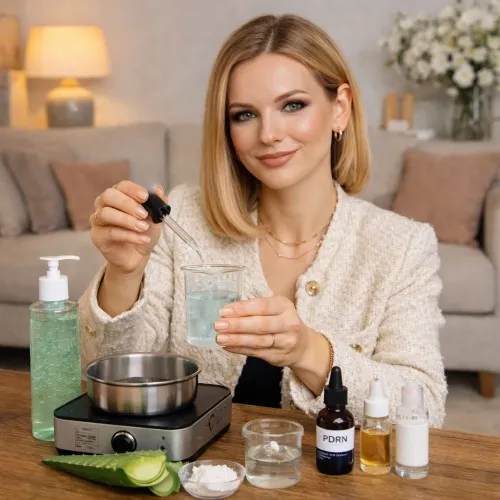 Gel with PDRN and aloe vera for skin restoration has become a revolutionary solution in the field of advanced dermatological care. Polynucleotides also known as PDRN are DNA fragments extracted from salmon trout that are highly biocompatible with human skin cells. These molecules act as a biological building block that stimulates the production of collagen and elastin at a cellular level. When combined with the soothing properties of aloe vera this gel provides not only immediate relief for irritated skin but also long term deep tissue regeneration.
In this professional guide we will explore the mechanisms of polynucleotide action and provide three detailed recipes for creating high performance restoration gels in a laboratory or home environment.
Beneficial Properties and Biological Action of PDRN and Aloe Vera
The primary function of PDRN in skincare is its ability to recognize damaged DNA segments in skin cells and facilitate their repair. Polynucleotides activate specific receptors responsible for tissue growth which leads to rapid healing of microcracks and the smoothing of wrinkles. This is not merely a surface level moisturizing effect but a true replacement of old damaged structures with new healthy cells.
Aloe vera acts as the perfect carrier and soothing agent in this formula. It contains over two hundred active compounds including vitamins minerals and amino acids. Due to its high penetrating power aloe vera helps PDRN molecules reach the deeper layers of the epidermis where they begin their regenerative work. This synergy allows for a biorevitalization effect similar to clinical injections but delivered through a non invasive topical gel.
Advantages of Professional PDRN Gels Over Industrial Analogues
Most mass market restoration products rely heavily on silicones or mineral oils to create an occlusive film. While this temporarily protects a damaged area these ingredients do not contribute to actual cellular division or healing. A professional handmade gel with PDRN works in the opposite way by giving cells the resources they need to renew themselves. You maintain full control over the quality and concentration of actives avoiding cheap fillers and aggressive synthetic dyes.
Industrial formulas containing polynucleotides are often extremely expensive and frequently contain only a minimal percentage of the active substance for marketing purposes. By formulating the gel yourself you can ensure a therapeutic dose of PDRN that truly delivers results. Furthermore the absence of synthetic fragrances makes this type of gel hypoallergenic which is crucial for skin that is already compromised or inflamed.
Technical Nuances of Preparation for Polynucleotide Gels
PDRN is a delicate biochemical ingredient that requires strict adherence to temperature and acidity levels. Polynucleotides should not be heated above forty degrees Celsius because their molecular structure can become deformed causing them to lose biological activity. Therefore the introduction of PDRN occurs exclusively during the cool down phase of the finished gel.
The optimal pH level for PDRN stability and skin comfort is between five point five and six point zero. When creating the gel base it is important to choose the right gelling agent. High purity konjac gum or xanthan gum provides a crystal clear texture without leaving a sticky residue. It is also necessary to use high quality distilled water or botanical hydrosols to avoid any ion interference with the DNA molecules.
Recipe One Intensive Restoration Gel Concentrate
This formulation is designed for rapid regeneration after aggressive cosmetic procedures or severe environmental irritation.
Composition Seventy milliliters helichrysum hydrosol Five milliliters PDRN concentrate Ten milliliters ten fold purified aloe vera gel Five milliliters d panthenol One gram konjac gum Eco friendly preservative
Preparation Step one Thoroughly disinfect all glass beakers and stirring rods with seventy percent isopropyl alcohol. Step two In the helichrysum hydrosol dissolve the d panthenol and the aloe vera concentrate. Step three Evenly sprinkle the gelling agent over the surface of the liquid and allow it to hydrate for thirty minutes. Step four Mix the mass thoroughly until a uniform transparent gel without lumps is formed. Step five Once the texture is stable introduce the PDRN concentrate while stirring slowly with a spatula. Step six Add the preservative check the pH level and transfer the gel into a sterile vacuum pump dispenser.
Recipe Two Cooling After Sun and Burn Recovery Gel
A specialized formula that immediately reduces heat and redness while preventing skin peeling thanks to high concentrations of aloe and nucleotides.
Composition Sixty milliliters distilled water Ten milliliters pure aloe vera juice Three milliliters PDRN Five milliliters centella asiatica extract One gram high purity xanthan gum Two drops peppermint essential oil Preservative
Preparation Step one Clean the workspace and prepare all active ingredients. Step two Mix the distilled water with the aloe juice and centella extract. Step three Add the xanthan gum and use a high speed mini mixer to create a stable gel base. Step four Separately mix the peppermint oil with a small amount of the gel and then reintroduce it to the main batch. Step five Add the active PDRN component and the preservative. Step six Stir for two minutes to ensure even distribution of the active molecules. Step seven Store the finished gel in a dark place to protect it from oxidation.
Recipe Three Daily Biorevitalizing Facial Fluid
A lightweight formula for maintaining skin elasticity and preventing age related changes in a daily skincare routine.
Composition Eighty milliliters lavender hydrosol Two milliliters PDRN Five milliliters low molecular weight hyaluronic acid Five milliliters aloe vera gel Three milliliters niacinamide One gram gelling agent Preservative
Preparation Step one Perform full disinfection of laboratory equipment. Step two Dissolve the niacinamide into the lavender hydrosol until all crystals disappear. Step three Add the hyaluronic acid and aloe vera then stir well. Step four Introduce the gelling agent and wait for a light flowing fluid texture to form. Step five Add the PDRN which will provide cellular renewal throughout the day. Step six Incorporate the preservative and check that the pH is near neutral. Step seven Pour into a dropper bottle or a pump dispenser.
Detailed Recommendations for Application and Layering
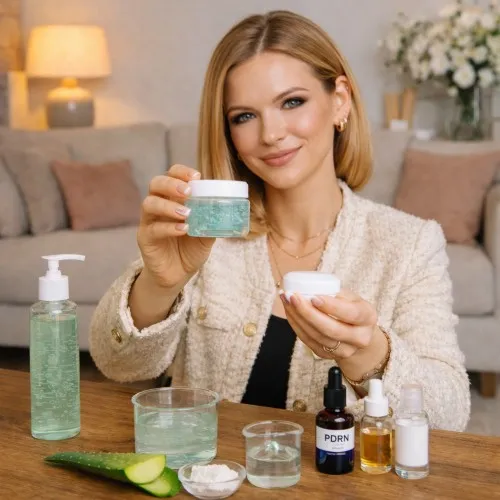
Gel with PDRN works best when applied to thoroughly cleansed skin. To enhance the effect you can use the layering method: apply a thin layer of gel allow it to absorb and then repeat the procedure on the most damaged areas. Since PDRN stimulates metabolic processes the best time for use is in the evening before sleep when skin regeneration is most active.
If you are using the gel after a sunburn apply it in a thick layer like a mask for twenty minutes then gently tap the remains into the skin. This product can be combined with a microneedler for deeper nucleotide penetration however in such cases the sterilization requirements for preparation must be absolute. Avoid combining with aggressive acid peels in the same procedure to prevent unexpected irritation.
Storage Guidelines and Maintenance of Formula Stability
Due to the presence of biologically active nucleotides this gel requires specific storage conditions. It is best to keep the product in a refrigerator at a temperature between four and ten degrees Celsius. The cold not only extends the life of the PDRN but also enhances the soothing effect of the gel upon application. Avoid direct sunlight and heat sources which can break down the DNA fragment structure.
The shelf life of the finished gel with a high quality preservative is up to three months. If you notice a change in odor the appearance of cloudiness or separation of the emulsion it indicates that the product has spoiled. Using vacuum pump bottles significantly extends the freshness of the product as it minimizes contact with air and fingers. Always mark the date of manufacture on the packaging to ensure your skincare remains safe and effective.


Cosmetic ingredients and professional formulation blog
This section features expert materials on modern cosmetic actives. We cover peptides, polynucleotides PDRN, different forms of hyaluronic acid, retinoids, ceramides and other key components.
Special focus is given to active stability, ingredient compatibility and correct incorporation into formulas. You will find practical guides on working with anti-age actives, moisturizing complexes and barrier repair ingredients.
We examine how to properly combine myorelaxants with peptides, common mistakes when using unstable vitamin C forms and ways to improve the performance of moisturizing actives.
Separate materials are dedicated to base oils, extracts, emulsifiers and supporting ingredients. This helps create stable and effective formulas for both professional and home cosmetics.
The blog regularly publishes reviews of trending actives, comparisons of similar ingredients and step-by-step formulation recommendations. The content is aimed at formulators, technologists and anyone seriously involved in creating cosmetic products.
Why this blog is useful
Here you will find practical data on eye area care actives, lifting systems and ingredients that improve skin firmness and tone. We rely on real formulation experience and address the actual challenges that arise during product development.
You can also explore materials on skin protection and repair, depigmentation and anti-inflammatory actives. This approach supports a more systematic selection of ingredients.
FAQ
What topics are covered most often
The blog focuses on peptides, PDRN, hyaluronic acid of different molecular weights, retinoids, ceramides and their compatibility rules.
Are there practical recommendations on how to incorporate actives
Yes, most articles include practical notes on pH stability, incorporation temperature and common formulation mistakes.
Is the content only for professionals
The materials are useful both for formulators and technologists and for those who create cosmetics for personal use and want to understand how modern ingredients work.
Where can I go directly to the ingredients
All key actives are collected in the Actives section, while base components are available in base oils and related categories.


