-
 DIY: Video master classes
-
 Aromatherapy
-
 Felting master classes
-
 Eating at home
-
 DIY cosmetics for children
-
 Cooking recipes
-
 Detergents, cleaning products with your own hands
-
 Soap making as a business
-
 Natural cosmetics. Raw materials for cosmetics and soap.
-
 Natural oils in cosmetics
-
 News
-
 Recipes for balms and conditioners
-
 Bath Bomb Recipes
-
 Cream recipes. Cream making.
-
 Lotion recipes. Gel recipes.
-
 Mask recipes
-
 Soap recipes. Base soap. Soap from scratch.
-
 Recipes for all occasions
-
 Natural shampoo recipes
-
 Healthy Nutrition Recipes
-
 Scrub recipes. Massage tiles. Ubtan
-
 DIY candles
-
 Reference materials, questions, tips
-
 Startup - soap production
-
 Hair care. Tips, recipes
-
 Facial skin care. Cleansers.
-
 Body care. Tips, recipes
-
 Photo Reviews
-
 Chocolate Handmade


CO₂ extracts are the most effective natural active ingredients for cosmetics. A recipe for a mask with chamomile CO₂ extract.
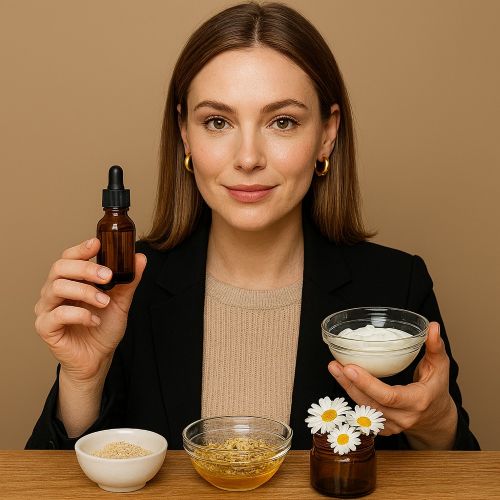 For those committed to natural and effective skincare, CO2 extracts represent the pinnacle of botanical ingredients. Unlike traditional extracts (like tinctures or macerated oils), which use solvents, heat, or alcohol, CO2 extracts utilize supercritical carbon dioxide as the solvent. This process yields an incredibly pure, highly concentrated, and complete profile of the plant's beneficial compounds, free from residual solvents and impurities. The result is a natural active that is exponentially more potent and safer than its conventional counterparts. This article explores the unique advantages of CO2 extracts, focusing on the remarkable properties of chamomile CO2 extract, and provides three detailed recipes, including a soothing face mask, for maximizing their power in your homemade cosmetics.
The Superiority of CO2 Extraction
CO2 extraction, specifically using the supercritical fluid extraction (SFE) method, is a cutting-edge technique that ensures the integrity and purity of botanical compounds.
How the Process Works
Under specific temperatures and pressures, carbon dioxide reaches a supercritical state, where it possesses properties of both a liquid and a gas. In this state, the CO2 penetrates the plant material, acting as a highly selective solvent that dissolves the desired lipophilic (oil-soluble) and sometimes hydrophilic compounds.
Key Advantages Over Traditional Methods
-
Purity: Since CO2 is a natural gas, once the pressure is released, it evaporates completely, leaving zero residual solvent in the final extract. Traditional methods often leave trace amounts of hexane, alcohol, or other chemicals.
-
Completeness: The mild temperatures used in SFE prevent the heat degradation of sensitive compounds (like vitamins and volatile oils). The resulting extract contains the full spectrum of the plant's beneficial molecules, making it a "truer" representation of the source material.
-
Concentration: CO2 extracts are significantly more concentrated than infused oils or glycerites. This means you need to use far less of the active ingredient in your final product to achieve a therapeutic effect.
-
Stability: The high concentration of antioxidants and the purity of the extract often lead to a longer shelf life compared to conventional extracts.
Focusing on Chamomile CO2 Extract
Chamomile (Matricaria recutita) is revered for its potent soothing and anti-inflammatory properties. Its CO2 extract concentrates the most valuable compounds, making it a superstar for sensitive and irritated skin.
-
Alpha-Bisabolol: Highly concentrated in the CO2 extract, this compound is a powerful anti-inflammatory agent that significantly reduces redness and irritation.
-
Chamazulene: Possesses strong antioxidant and anti-allergic properties, contributing to the extract’s ability to calm reactive skin and aid in tissue regeneration.
-
Deep Soothing: The highly concentrated nature means the extract works quickly to suppress inflammation associated with acne, sensitivity, sunburn, and rosacea, making it essential for any calming formula.
Three Recipes Using CO2 Extracts
CO2 extracts are typically oil-soluble and extremely concentrated. They should be treated like fragile essential oils: always added during the cool-down phase (below 40∘C) and used in very low concentrations (usually 0.1% to 1.0%).
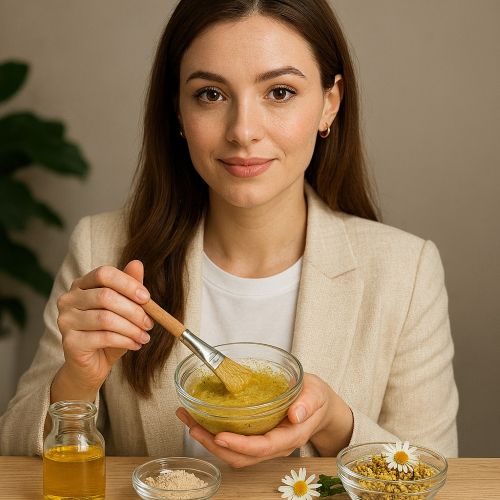
Recipe 1: Calming Chamomile CO2 Face Mask
This simple yet effective mask is formulated to soothe, hydrate, and reduce facial redness instantly.
-
Prepare the water phase. In a sterilized bowl, weigh 75g of distilled water or Aloe Vera Juice.
-
Activate the thickener. Gently whisk in 5g of Bentonite Clay or a thickening agent like Xanthan Gum until a smooth, uniform gel or paste forms.
-
Prepare the oil phase and CO2. In a separate small dish, weigh 10g of Squalane Oil (light and non-comedogenic). Add 0.5g of Chamomile CO2 Extract and 0.5g of Sea Buckthorn CO2 Extract (for added repair and color). Stir gently until the extracts are fully dissolved in the oil.
-
Combine the phases. Slowly add the oil/extract mixture to the water/gel phase, stirring gently until fully homogeneous.
-
Add the finishing touches and preservative. Add 8g of Kaolin Clay (gentle cleansing) and 1g of a broad-spectrum preservative. Stir well.
Recommendations for Use: Apply a thin layer to the face, avoiding the eye area. Leave on for 10-15 minutes, then rinse with lukewarm water. Use 1-2 times per week.
Storage: Store in a cool, dark place in an airtight jar. Shelf life is up to 3 months.
Recipe 2: Targeted Repair Serum with Calendula CO2
This serum is designed for skin healing and regeneration, leveraging the power of Calendula CO2 extract.
-
Prepare the oil base. In a sterilized dropper bottle, weigh 70g of Jojoba Oil and 28.5g of Hemp Seed Oil. Jojoba provides a stable, light base, and Hemp Seed Oil offers omega fatty acids.
-
Add the CO2 actives. Add 0.5g of Calendula CO2 Extract (renowned for wound healing) and 0.5g of Rosemary CO2 Extract (antioxidant and shelf-life booster).
-
Introduce an antioxidant. Add 0.5g of Vitamin E (Tocopherol) to further protect the oils and the skin.
-
Gently mix. Cap the bottle and shake gently to fully mix the highly concentrated extracts into the carrier oils.
Recommendations for Use: Apply 3-4 drops to clean skin in the evening, focusing on areas with scars, blemishes, or irritation.
Storage: Due to the high concentration of antioxidants, this serum has a longer natural shelf life, typically 6-9 months, especially if stored in a dark glass bottle in a cool place.
Recipe 3: Nourishing Hair Mask with Burdock Root CO2
CO2 extracts are excellent for hair health, boosting follicle stimulation and shine.
-
Prepare the base. In a sterilized bowl, combine 50g of a ready-made, unfragranced hair conditioner base and 40g of Coconut Milk (from a can, not carton). Gently stir.
-
Prepare the CO2 oil mixture. In a separate small container, mix 5g of Castor Oil (known for hair growth) with 1g of Burdock Root CO2 Extract and 0.5g of Nettle CO2 Extract. These extracts are known to stimulate scalp circulation and reduce hair loss.
-
Combine and emulsify. Add the CO2 oil mixture to the conditioner base. Stir gently but thoroughly with a spatula to ensure the oil is dispersed throughout the conditioner.
-
Add the final touches. Add 3g of D-Panthenol (Vitamin B5) for moisture and 0.5g of a broad-spectrum preservative, if you plan to store the product longer than a week.
Recommendations for Use: Apply generously to the scalp and hair strands. Leave on for 15-30 minutes under a warm towel before washing out thoroughly with shampoo. Use weekly.
Storage: Store in a cool place. Due to the fresh ingredients (coconut milk), this recipe is best made in small batches and used within 1-2 weeks or preserved appropriately.
Advantages Over Industrial Analogues
Using CO2 extracts in DIY cosmetics offers substantial benefits over purchasing commercial products that may contain traditional extracts.
-
Guaranteed Purity and Safety: Commercial products often use cheaper extracts derived using solvents like hexane or ethanol, which can be harsh or leave behind residues. Your CO2 extract formulas are cleaner and safer, perfect for hypersensitive skin.
-
Superior Concentration and Efficacy: The extremely concentrated nature of CO2 extracts means that even a tiny amount in your homemade formula delivers a higher therapeutic dose than large amounts of a diluted industrial extract, providing measurable results faster.
-
Complete Phytochemical Profile: You are using the full, intact profile of the plant (e.g., all the anti-inflammatory compounds of chamomile), maximizing the synergistic effect, which is often lost in fractionated or heavily processed industrial extracts.
-
Cost-Effectiveness at Active Level: While the raw CO2 extract may seem expensive, its high concentration means you need very little per batch. This makes the final product far more cost-effective at a therapeutic level than a premium commercial cream featuring a diluted extract.
By incorporating CO2 extracts into your routine, you are choosing the most advanced, potent, and pure form of botanical science available for your skin and hair care needs.


Cosmetic ingredients and professional formulation blog
This section features expert materials on modern cosmetic actives. We cover peptides, polynucleotides PDRN, different forms of hyaluronic acid, retinoids, ceramides and other key components.
Special focus is given to active stability, ingredient compatibility and correct incorporation into formulas. You will find practical guides on working with anti-age actives, moisturizing complexes and barrier repair ingredients.
We examine how to properly combine myorelaxants with peptides, common mistakes when using unstable vitamin C forms and ways to improve the performance of moisturizing actives.
Separate materials are dedicated to base oils, extracts, emulsifiers and supporting ingredients. This helps create stable and effective formulas for both professional and home cosmetics.
The blog regularly publishes reviews of trending actives, comparisons of similar ingredients and step-by-step formulation recommendations. The content is aimed at formulators, technologists and anyone seriously involved in creating cosmetic products.
Why this blog is useful
Here you will find practical data on eye area care actives, lifting systems and ingredients that improve skin firmness and tone. We rely on real formulation experience and address the actual challenges that arise during product development.
You can also explore materials on skin protection and repair, depigmentation and anti-inflammatory actives. This approach supports a more systematic selection of ingredients.
FAQ
What topics are covered most often
The blog focuses on peptides, PDRN, hyaluronic acid of different molecular weights, retinoids, ceramides and their compatibility rules.
Are there practical recommendations on how to incorporate actives
Yes, most articles include practical notes on pH stability, incorporation temperature and common formulation mistakes.
Is the content only for professionals
The materials are useful both for formulators and technologists and for those who create cosmetics for personal use and want to understand how modern ingredients work.
Where can I go directly to the ingredients
All key actives are collected in the Actives section, while base components are available in base oils and related categories.



