-
 DIY: Video master classes
-
 Aromatherapy
-
 Felting master classes
-
 Eating at home
-
 DIY cosmetics for children
-
 Cooking recipes
-
 Detergents, cleaning products with your own hands
-
 Soap making as a business
-
 Natural cosmetics. Raw materials for cosmetics and soap.
-
 Natural oils in cosmetics
-
 News
-
 Recipes for balms and conditioners
-
 Bath Bomb Recipes
-
 Cream recipes. Cream making.
-
 Lotion recipes. Gel recipes.
-
 Mask recipes
-
 Soap recipes. Base soap. Soap from scratch.
-
 Recipes for all occasions
-
 Natural shampoo recipes
-
 Healthy Nutrition Recipes
-
 Scrub recipes. Massage tiles. Ubtan
-
 DIY candles
-
 Reference materials, questions, tips
-
 Startup - soap production
-
 Hair care. Tips, recipes
-
 Facial skin care. Cleansers.
-
 Body care. Tips, recipes
-
 Photo Reviews
-
 Chocolate Handmade


What are actives in cosmetics and why are they needed a complete application guide
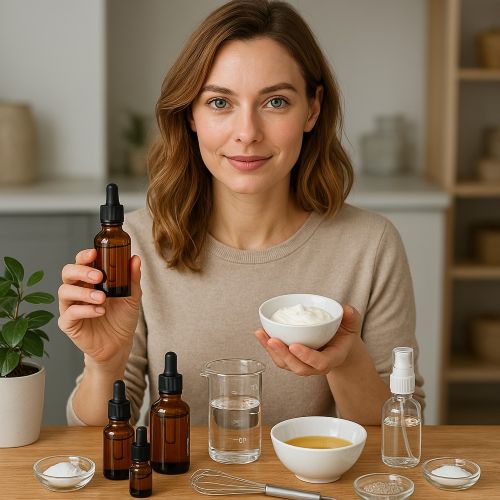 In the vast world of skincare, it's easy to get lost in a sea of product claims and complex ingredient lists. But at the heart of every effective cosmetic product are its active ingredients—the powerful components that do the real work. These are the molecules that go beyond basic cleansing and moisturizing to address specific skin concerns, from fine lines and hyperpigmentation to acne and dryness. Understanding what cosmetic actives are and how to use them is the key to unlocking your skin's full potential and building a truly effective routine. This comprehensive guide will demystify actives, explain why they are crucial, and provide you with three detailed recipes to create your own potent, customized skincare, highlighting the major advantages of a do-it-yourself approach.
What Are Cosmetic Actives and Why Are They Essential?
Think of a cosmetic product as a vehicle. The base, like a cream or a serum, is the chassis—it provides structure and a pleasant feel. The active ingredients are the engine—they are the components that drive the intended change. An active ingredient is any component in a cosmetic formula that is biologically active and intended to deliver a specific benefit to the skin, hair, or nails. Unlike fillers, emulsifiers, or preservatives, which are necessary for product stability and texture, actives are the "workhorses" that produce visible results.
Here’s why they are so important:
-
Targeted Results: Actives allow you to target specific skin problems with precision. Instead of a general-purpose moisturizer, you can use a serum with salicylic acid to fight acne or a cream with retinol to address signs of aging.
-
Potency and Efficacy: They are included in formulas at concentrations high enough to elicit a biological response. This means they actually change the skin's function or structure at a cellular level, not just on the surface.
-
Problem-Solving Power: Whether your goal is to brighten a dull complexion, soothe inflammation, reduce wrinkles, or hydrate deeply, there's an active ingredient designed for the job.
A Primer on Common Cosmetic Actives
Navigating the world of actives can be overwhelming, so here is a breakdown of some of the most popular and effective categories:
-
Vitamins:
-
Vitamin C (L-Ascorbic Acid, Ascorbyl Glucoside): A powerful antioxidant that protects skin from environmental damage, brightens complexion, fades hyperpigmentation, and stimulates collagen production. It's great for morning use.
-
Vitamin B3 (Niacinamide): A versatile active that strengthens the skin barrier, regulates sebum production, minimizes pores, and soothes redness. It's well-tolerated by most skin types.
-
Vitamin A (Retinol, Retinaldehyde): A gold-standard anti-aging ingredient that accelerates cell turnover, reduces fine lines and wrinkles, and improves skin texture. It's best used at night due to its photosensitivity.
-
-
Acids:
-
Alpha Hydroxy Acids (AHAs - Glycolic, Lactic): Water-soluble chemical exfoliants that remove dead skin cells from the surface, improving texture and brightness. Lactic acid is gentler and more hydrating than glycolic acid.
-
Beta Hydroxy Acids (BHAs - Salicylic Acid): An oil-soluble acid that penetrates deep into pores to dissolve sebum and dead skin, making it a hero for acne-prone skin.
-
-
Antioxidants:
-
Ferulic Acid & Vitamin E: Often paired with Vitamin C to enhance its stability and boost its antioxidant power.
-
Green Tea & Resveratrol: Potent plant-derived compounds that protect skin from oxidative stress and inflammation.
-
-
Peptides:
-
Short-chain amino acids: Act as signaling molecules, telling your cells to produce more collagen or to relax facial muscles (like Argireline). They are excellent for improving firmness and reducing fine lines.
-
The Advantages of Formulating with Actives Yourself
While many excellent commercial products contain these actives, crafting your own skincare provides unique benefits that industrial products simply cannot match.
-
Ingredient Control and Purity: You have complete control over every single ingredient. This means you can avoid harsh fillers, irritating fragrances, unnecessary dyes, and common allergens. You can use the highest quality raw materials available, ensuring the purity and integrity of your final product.
-
Maximum Potency and Freshness: Commercial products often contain lower concentrations of actives to ensure stability over a long shelf life. When you formulate at home, you can use the optimal percentage for your skin and make small batches to guarantee your product is always fresh and its actives are at their peak potency.
-
Tailored Customization: Your skin is unique. DIY formulation allows you to adjust the concentration of an active to suit your skin’s tolerance, and combine multiple actives in a single formula to address all of your concerns simultaneously. For example, you can create a serum that combines niacinamide for barrier support with a peptide for anti-aging.
-
Cost-Effectiveness: Purchasing high-quality raw ingredients can seem expensive at first, but the cost per finished product is dramatically lower than buying equivalent, high-end commercial products.
The Nuances of Working with Actives at Home
Working with active ingredients requires precision and caution to ensure both safety and effectiveness.
-
Start Low and Go Slow: Always begin with a low concentration of a new active (e.g., 2% for Niacinamide, 0.5% for Vitamin C). Perform a patch test on a small area of your skin before applying it to your face. Gradually increase the concentration as your skin builds tolerance.
-
pH is Critical: Many actives, especially Vitamin C and acids, are pH-dependent. If the pH is too high or too low, the active may become inactive or cause severe skin irritation. Always use pH strips or a pH meter to test and adjust your final product.
-
Accurate Measurement: Use a digital scale with at least 0.01g accuracy for all your measurements. Active ingredients are potent, and a tiny mistake in dosage can be the difference between a beneficial product and a harmful one.
-
Sanitation is Non-Negotiable: Because you're working with water-based products, there is a risk of bacterial contamination. Sterilize all your equipment and containers with boiling water or 70% isopropyl alcohol and always include a broad-spectrum cosmetic preservative to ensure product safety and a stable shelf life.
Three Detailed Recipes for Formulating with Actives
Here are three detailed recipes for potent, active-rich skincare products. Each recipe is designed for a finished product of 50 grams.
Recipe 1: The Brightening & Antioxidant Vitamin C Serum
This serum is designed to protect your skin from daily environmental damage, brighten your complexion, and boost collagen production. It's best used in the morning.
-
Ingredients (for 50g):
-
Distilled Water: 43g
-
L-Ascorbic Acid (Vitamin C) Powder: 5g (for a 10% concentration)
-
Vegetable Glycerin: 1g (Humectant, helps dissolve Vitamin C)
-
Ferulic Acid Powder: 0.5g (Enhances Vitamin C's stability and efficacy)
-
Broad-Spectrum Preservative (e.g., Geogard 221): 0.5g (Follow manufacturer's specific dosage)
-
pH Adjuster (e.g., Sodium Bicarbonate Solution): q.s.
-
-
Preparation Nuances & Instructions:
-
Combine Ingredients: In a sterilized glass beaker, weigh out the Distilled Water and Vegetable Glycerin. Gently stir until combined.
-
Dissolve Actives: Add the Ferulic Acid and L-Ascorbic Acid powders. Stir gently until completely dissolved. This may take some time. Avoid shaking to prevent oxygen incorporation.
-
Adjust pH: Use pH strips to check the pH of the mixture. It should be between 2.5 and 3.5 for optimal Vitamin C efficacy and stability. If it's too low, add a tiny amount of Sodium Bicarbonate solution drop by drop, stirring and re-testing after each addition, until the correct range is reached.
-
Add Preservative: Add the preservative and stir well for a full minute to ensure even distribution.
-
Bottle and Store: Carefully pour the finished serum into a sterilized, opaque airless pump bottle to protect the light-sensitive Vitamin C from degradation.
-
-
Recommendations for Use & Storage:
-
Apply 2-3 drops to a clean, dry face in the morning before moisturizer and sunscreen.
-
Store in a cool, dark place, away from sunlight. The serum will oxidize over time; discard if it turns a dark orange or brown color.
-
Shelf Life: Properly preserved, the serum is typically stable for 3-4 months.
-
Recipe 2: The Mattifying & Barrier-Supporting Niacinamide Serum
This serum is perfect for oily, combination, or acne-prone skin. It balances oil production, strengthens the skin barrier, and minimizes the appearance of pores.
-
Ingredients (for 50g):
-
Distilled Water: 42.5g
-
Niacinamide Powder: 5g (for a 10% concentration)
-
Zinc PCA: 2g (Regulates sebum, soothes skin)
-
Xanthan Gum: 0.5g (Thickener, gives a nice slip)
-
Broad-Spectrum Preservative (e.g., Euxyl PE 9010): q.s. (approx. 0.5g)
-
-
Preparation Nuances & Instructions:
-
Combine and Dissolve: In a sterilized beaker, combine Distilled Water, Niacinamide powder, and Zinc PCA. Stir until both powders are fully dissolved.
-
Hydrate Thickener: Slowly sprinkle the Xanthan Gum into the mixture while whisking vigorously to prevent clumping. Continue whisking until the mixture becomes a smooth, gel-like consistency.
-
Add Preservative & Adjust pH: Add the preservative and stir well. The pH of this mixture is typically within the optimal range for niacinamide (5.0-6.0), but always double-check with pH strips and adjust with lactic acid if needed.
-
Bottle: Transfer the finished serum into a sterilized bottle with a dropper or pump.
-
-
Recommendations for Use & Storage:
-
Apply 2-3 drops to clean skin, morning and night, after toner and before moisturizer.
-
Store in a cool, dark place.
-
Shelf Life: Properly preserved, the serum is stable for 3-6 months.
-
Recipe 3: The Soothing & Regenerating Peptide Cream
This cream is designed to moisturize deeply while delivering powerful peptides to boost collagen, improve firmness, and soothe sensitive skin.
-
Ingredients (for 50g):
-
Distilled Water (Water Phase): 36g
-
Emulsifier (e.g., Olivem 1000): 3g
-
Carrier Oil (e.g., Jojoba Oil): 5g (Oil Phase)
-
Palmitoyl Tripeptide-5: 1g (Signals for collagen production)
-
Glycerin: 4g (Humectant, for hydration)
-
Broad-Spectrum Preservative (e.g., Geogard 221): 1g
-
Lactic Acid Solution: q.s.
-
-
Preparation Nuances & Instructions:
-
Heat Phases: In two separate sterilized beakers, combine the ingredients for the Water Phase and the Oil Phase. Heat both beakers on a double boiler to approximately 70°C (158°F), until the emulsifier is fully melted in the oil phase.
-
Emulsify: Slowly pour the Water Phase into the Oil Phase while using a mini-mixer to blend vigorously for 2-3 minutes. The mixture will turn into a creamy white emulsion.
-
Cool Down: Continue stirring occasionally as the cream cools.
-
Add Actives & Preservative: When the cream cools to below 40°C (104°F), add the Palmitoyl Tripeptide-5, Glycerin, and the preservative. Stir well to fully incorporate.
-
Adjust pH: Check the pH. The final pH should be between 5.0 and 6.0. Adjust with Lactic Acid solution if needed.
-
Bottle: Transfer the finished cream into a sterilized jar or pump bottle.
-
-
Recommendations for Use & Storage:
-
Apply to clean skin, morning and night, after your toner and serum.
-
Store in a cool, dark place.
-
Shelf Life: Properly preserved, the cream is stable for 3-6 months.
-
Conclusion: Actives as the Key to Your Skincare Journey
Cosmetic actives are the backbone of effective skincare. They allow you to move beyond simple maintenance and actively improve the health and appearance of your skin. By understanding what they are, how to work with them, and the crucial role of proper formulation, you gain the power to create a skincare routine that is not only purer and fresher but also perfectly designed for you. The journey into DIY cosmetics is a rewarding one that empowers you with knowledge and delivers unparalleled results that industrial products simply can't match.


Cosmetic ingredients and professional formulation blog
This section features expert materials on modern cosmetic actives. We cover peptides, polynucleotides PDRN, different forms of hyaluronic acid, retinoids, ceramides and other key components.
Special focus is given to active stability, ingredient compatibility and correct incorporation into formulas. You will find practical guides on working with anti-age actives, moisturizing complexes and barrier repair ingredients.
We examine how to properly combine myorelaxants with peptides, common mistakes when using unstable vitamin C forms and ways to improve the performance of moisturizing actives.
Separate materials are dedicated to base oils, extracts, emulsifiers and supporting ingredients. This helps create stable and effective formulas for both professional and home cosmetics.
The blog regularly publishes reviews of trending actives, comparisons of similar ingredients and step-by-step formulation recommendations. The content is aimed at formulators, technologists and anyone seriously involved in creating cosmetic products.
Why this blog is useful
Here you will find practical data on eye area care actives, lifting systems and ingredients that improve skin firmness and tone. We rely on real formulation experience and address the actual challenges that arise during product development.
You can also explore materials on skin protection and repair, depigmentation and anti-inflammatory actives. This approach supports a more systematic selection of ingredients.
FAQ
What topics are covered most often
The blog focuses on peptides, PDRN, hyaluronic acid of different molecular weights, retinoids, ceramides and their compatibility rules.
Are there practical recommendations on how to incorporate actives
Yes, most articles include practical notes on pH stability, incorporation temperature and common formulation mistakes.
Is the content only for professionals
The materials are useful both for formulators and technologists and for those who create cosmetics for personal use and want to understand how modern ingredients work.
Where can I go directly to the ingredients
All key actives are collected in the Actives section, while base components are available in base oils and related categories.



