-
 DIY: Video master classes
-
 Aromatherapy
-
 Felting master classes
-
 Eating at home
-
 DIY cosmetics for children
-
 Cooking recipes
-
 Detergents, cleaning products with your own hands
-
 Soap making as a business
-
 Natural cosmetics. Raw materials for cosmetics and soap.
-
 Natural oils in cosmetics
-
 News
-
 Recipes for balms and conditioners
-
 Bath Bomb Recipes
-
 Cream recipes. Cream making.
-
 Lotion recipes. Gel recipes.
-
 Mask recipes
-
 Soap recipes. Base soap. Soap from scratch.
-
 Recipes for all occasions
-
 Natural shampoo recipes
-
 Healthy Nutrition Recipes
-
 Scrub recipes. Massage tiles. Ubtan
-
 DIY candles
-
 Reference materials, questions, tips
-
 Startup - soap production
-
 Hair care. Tips, recipes
-
 Facial skin care. Cleansers.
-
 Body care. Tips, recipes
-
 Photo Reviews
-
 Chocolate Handmade
Lumiskin for tone-evening formulas: handling a lipophilic active correctly

Lumiskin 100 ml is listed with INCI Caprylic/Capric Triglyceride and Diacetyl Boldine, oil solubility and cool-down addition to a warm finished emulsion below 40 °C. Formulation should therefore treat it as a lipophilic complex rather than relying on a broad marketing category.
Why phase placement matters
An oil-soluble active should be distributed in a compatible lipid/emulsion environment. Treating it as an aqueous active can create uniformity or stability problems.
Workflow
1. Build a stable emulsion base.
2. Confirm lipid compatibility.
3. Cool to the permitted temperature.
4. Add Lumiskin uniformly.
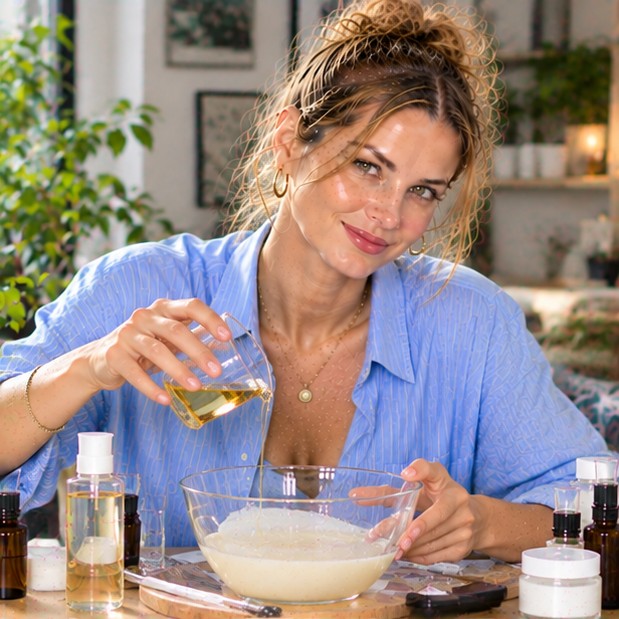
5. Check pH and appearance.
6. Run stability and color observations.
Avoid unnecessary active stacking
Establish Lumiskin stability in the base first, then add secondary tone-evening ingredients one at a time.
Internal navigation
Lumiskin can be evaluated alongside other cosmetic actives according to physical form and compatibility.
Conclusion
The practical formulation keys are Lumiskin's actual INCI, lipophilic character and below-40 °C addition requirement.





