-
 DIY: Video master classes
-
 Aromatherapy
-
 Felting master classes
-
 Eating at home
-
 DIY cosmetics for children
-
 Cooking recipes
-
 Detergents, cleaning products with your own hands
-
 Soap making as a business
-
 Natural cosmetics. Raw materials for cosmetics and soap.
-
 Natural oils in cosmetics
-
 News
-
 Recipes for balms and conditioners
-
 Bath Bomb Recipes
-
 Cream recipes. Cream making.
-
 Lotion recipes. Gel recipes.
-
 Mask recipes
-
 Soap recipes. Base soap. Soap from scratch.
-
 Recipes for all occasions
-
 Natural shampoo recipes
-
 Healthy Nutrition Recipes
-
 Scrub recipes. Massage tiles. Ubtan
-
 DIY candles
-
 Reference materials, questions, tips
-
 Startup - soap production
-
 Hair care. Tips, recipes
-
 Facial skin care. Cleansers.
-
 Body care. Tips, recipes
-
 Photo Reviews
-
 Chocolate Handmade
Hydroxyapatite in toothpaste and cosmetics: formulating with a mineral powder
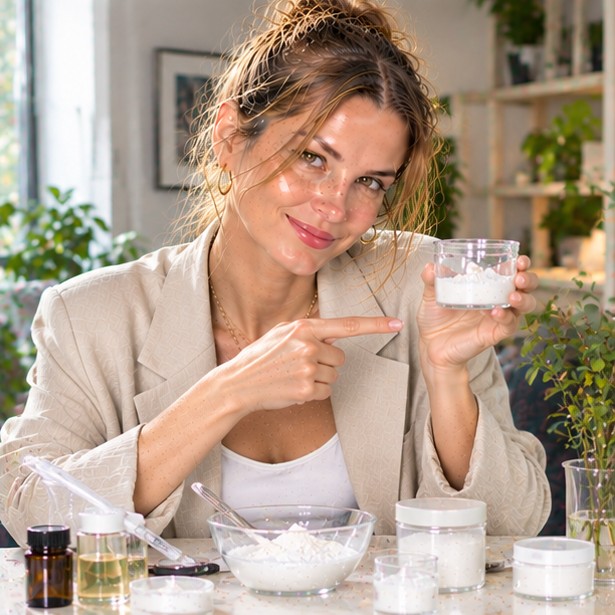
Hydroxyapatite 20 g is primarily relevant to oral-care formats such as toothpaste and gels. For formulation, particle specification matters alongside chemical identity because particle size affects suspension, mouthfeel and processing.
Why oral care is the primary use case
Hydroxyapatite is chemically related to the mineral component of enamel, but finished-product performance depends on particle characteristics, concentration, contact conditions and the complete abrasive system.
Disperse the powder uniformly
Adding dry mineral directly to a finished viscous paste can create agglomerates. A controlled pre-dispersion in part of the liquid phase usually gives a more uniform starting point.
Toothpaste checks
· uniformity without dry particles
· suspension stability
· tube extrusion and viscosity
· sensory abrasiveness of the complete mineral system
· final pH
· compatibility with surfactant, flavor and preservation
Skin-care applications
Hydroxyapatite can also be explored in mattifying or cleansing mineral systems, but particle feel and formulation requirements differ from oral care. A toothpaste process should not simply be copied into a facial product.
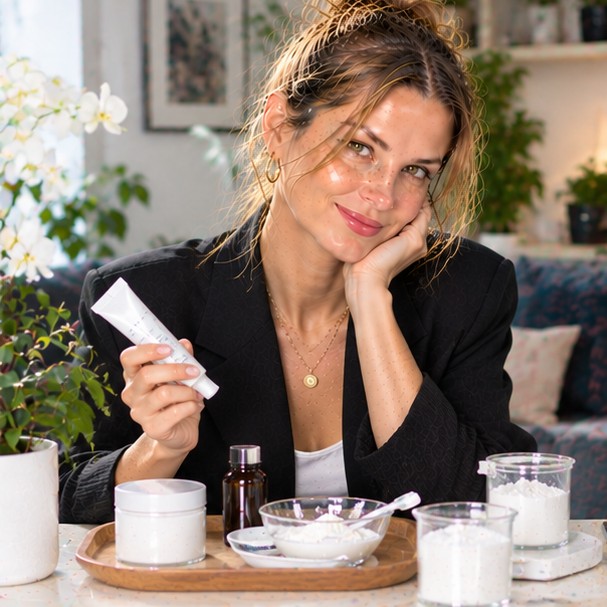
Bench workflow
1. Confirm particle specification.
2. Weigh the powder separately.
3. Prepare the dispersion system.
4. Add hydroxyapatite gradually.
5. Complete the remaining formula.
6. Check final pH, viscosity and uniformity.
Internal navigation
Start with the hydroxyapatite product and use the broader actives category when selecting supporting functional ingredients.
Conclusion
The main formulation challenge with hydroxyapatite is creating a uniform stable mineral dispersion. Particle specification, suspension, rheology and final-product control are especially important in oral-care development.





