-
 DIY: Video master classes
-
 Aromatherapy
-
 Felting master classes
-
 Eating at home
-
 DIY cosmetics for children
-
 Cooking recipes
-
 Detergents, cleaning products with your own hands
-
 Soap making as a business
-
 Natural cosmetics. Raw materials for cosmetics and soap.
-
 Natural oils in cosmetics
-
 News
-
 Recipes for balms and conditioners
-
 Bath Bomb Recipes
-
 Cream recipes. Cream making.
-
 Lotion recipes. Gel recipes.
-
 Mask recipes
-
 Soap recipes. Base soap. Soap from scratch.
-
 Recipes for all occasions
-
 Natural shampoo recipes
-
 Healthy Nutrition Recipes
-
 Scrub recipes. Massage tiles. Ubtan
-
 DIY candles
-
 Reference materials, questions, tips
-
 Startup - soap production
-
 Hair care. Tips, recipes
-
 Facial skin care. Cleansers.
-
 Body care. Tips, recipes
-
 Photo Reviews
-
 Chocolate Handmade
Body shimmer formulation: even glow and suspension
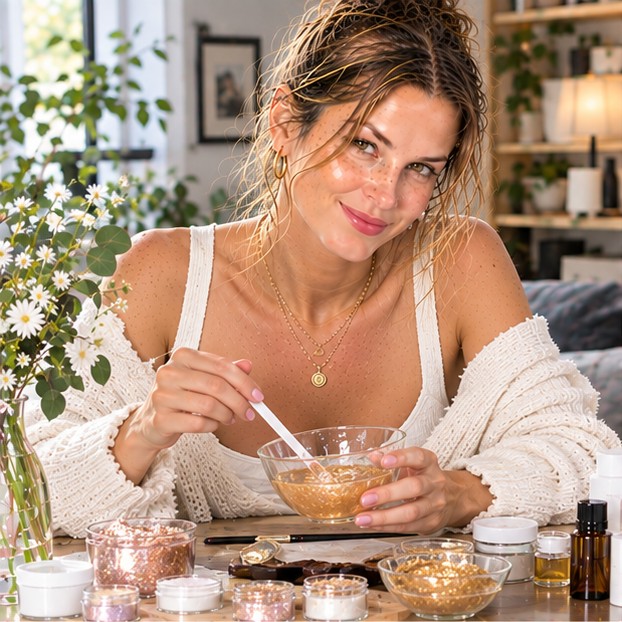 Body shimmer formulation: even glow and suspension is a practical formulation guide for small manufacturers, product developers and private-label teams that need repeatable batches rather than a one-off successful sample. The focus is raw-material selection, processing order, stability and scale-up.
What determines finished-product quality
Start with product function and base behavior. Solubility of the aromatic phase, medium polarity, processing temperature, particle size and viscosity influence clarity, uniformity and stability. The same ingredient level can perform very differently in water, alcohol, oil, wax or powder systems.
Pigment example: Pearl mica
How to select raw materials without overloading the formula
For repeatable manufacturing, build a 100 g laboratory sample first, review it again after 24–72 hours and only then scale. Odor, color and rheology can change during maturation. Raw materials from the Mylo Opt catalog should be used according to the technical information for the specific grade and tested in the complete formulation.
Working 100 g formulation framework
A useful development framework is base 88 g, functional phase 7 g, fragrance or active phase 4 g and processing aid 1 g. Adjust these proportions for the actual product. Water-containing products require an appropriate validated preservation strategy; anhydrous systems have lower microbial risk but still require physical, oxidative and packaging stability work.
Manufacturing procedure
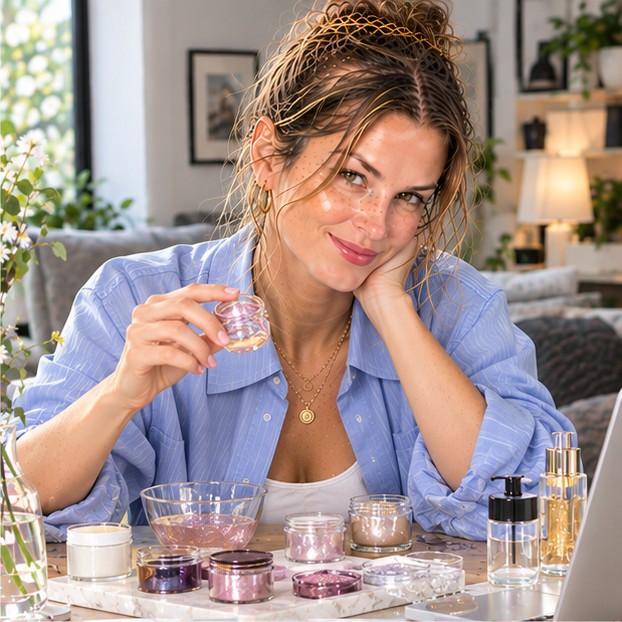
Prepare clean, dry equipment. Pre-dissolve or pre-disperse materials that require it. Bring the base to its processing temperature, then add functional ingredients gradually. Introduce volatile fragrance materials at a stage where excessive heat will not strip the profile. Mix to uniformity without unnecessary aeration and allow the sample to equilibrate before evaluation.
Common scale-up mistakes
A frequent mistake is copying percentages from one base into another without testing. Cloudiness or sediment may be caused by phase incompatibility rather than insufficient mixing. During scale-up to 5–20 kg, control impeller geometry, shear, mixing time, temperature and addition order as carefully as ingredient percentages.
Formulator FAQ
Can the fragrance be changed? Yes, but clarity, color and stability should be rechecked. Can dosage be increased? Only within the supplier guidance and applicable safety requirements. Does a commercial product need testing? Yes, including stability and packaging compatibility plus any safety testing appropriate to the product category.





