-
 DIY: Video master classes
-
 Aromatherapy
-
 Felting master classes
-
 Eating at home
-
 DIY cosmetics for children
-
 Cooking recipes
-
 Detergents, cleaning products with your own hands
-
 Soap making as a business
-
 Natural cosmetics. Raw materials for cosmetics and soap.
-
 Natural oils in cosmetics
-
 News
-
 Recipes for balms and conditioners
-
 Bath Bomb Recipes
-
 Cream recipes. Cream making.
-
 Lotion recipes. Gel recipes.
-
 Mask recipes
-
 Soap recipes. Base soap. Soap from scratch.
-
 Recipes for all occasions
-
 Natural shampoo recipes
-
 Healthy Nutrition Recipes
-
 Scrub recipes. Massage tiles. Ubtan
-
 DIY candles
-
 Reference materials, questions, tips
-
 Startup - soap production
-
 Hair care. Tips, recipes
-
 Facial skin care. Cleansers.
-
 Body care. Tips, recipes
-
 Photo Reviews
-
 Chocolate Handmade


How to put together a minimal effective anti-aging kit of 3-4 active ingredients
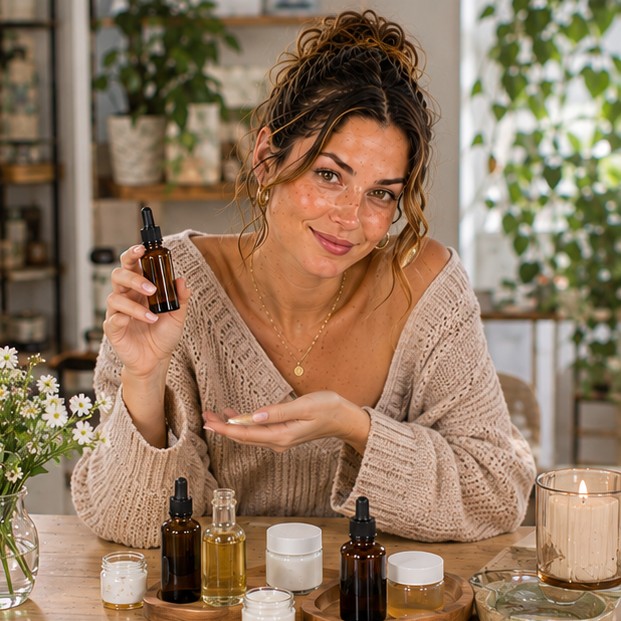 Modern dermatology and cosmetic chemistry are moving away from multi-step skincare routines. Layering dozens of mismatched commercial products often causes skin sensitization, compromises the stratum corneum, triggers chronic low-grade inflammation, and accelerates skin aging. A minimalist anti-aging strategy relies on corneotherapy: selecting three to four clinically proven active ingredients that work in synergy without causing chemical conflicts or skin overload.
A focused set of four active ingredients covers every fundamental need of aging skin: accelerating cellular turnover, stimulating collagen synthesis, neutralizing free radicals, and rebuilding the epidermal barrier.
Core Components of a Minimalist Anti-Aging Routine
First Active Retinoids or plant-based bio-mimetics such as bakuchiol. These accelerate epidermal exfoliation and cell renewal, signal fibroblasts to synthesize collagen types one and three, and reduce wrinkle depth.
Second Active Signal and restructuring peptides. These serve as cellular messengers that prompt skin cells to repair the extracellular matrix, restoring density without causing irritation.
Third Active Stable forms of vitamin C or niacinamide. These deliver antioxidant protection against photoaging, even out skin tone, inhibit excess melanin synthesis, and boost ceramide production.
Fourth Active Phytosterols or squalane. These replenish critical skin barrier lipids, preventing transepidermal water loss and creating an optimal microenvironment for other active ingredients to penetrate.
Biochemical Compatibility Rules and Eliminating Ingredient Conflicts
Designing an effective minimalist anti-aging arsenal requires avoiding chemical and physical incompatibilities among ingredients.
Principles of Formulation Compatibility
Combining pure L-ascorbic acid and retinoids in a single formula is a common formulation error because they require vastly different pH levels to remain stable and active. Highly acidic vitamin C environments degrade peptide bonds and disrupt skin barrier equilibrium. The solution is separating ingredients by time of day or utilizing stable, neutral-pH derivatives like sodium ascorbyl phosphate or encapsulated bio-retinoids.
Combining niacinamide with peptides and squalane provides daytime protection and barrier support, while pairing copper peptides with plant-based bakuchiol unlocks nighttime cellular repair.
Temperature Standards and Phase Addition Techniques
Strict adherence to thermal limits during formulation preserves the molecular integrity of sensitive botanical and synthetic compounds.
Thermal Boundaries
Peptides, stable vitamin C, encapsulated retinoids, and unrefined botanical oils lose efficacy when exposed to high heat. When preparing emulsions, heat the oil phase and water phase in separate heat-resistant containers to temperatures between sixty-five and seventy degrees Celsius, strictly to melt emulsifiers. Once combined and emulsified, allow the base to cool down. Introduce all heat-sensitive anti-aging active complexes, botanical extracts, and preservatives during the cool-down phase after the temperature drops below thirty degrees Celsius.
Mixing Techniques
After cooling the emulsion base, add active ingredients one by one while stirring thoroughly with a glass rod. Avoid high-speed air incorporation during the final phase to prevent oxygen entrapment, which speeds up active degradation and lipid oxidation.
Advantages of Custom Anti-Aging Formulations Over Commercial Products
Mass-market anti-aging products are formulated for long shelf life and thermal stability during global transport rather than bio-identical compatibility with skin.
To prevent separation over months on store shelves, commercial brands rely heavily on synthetic silicones, mineral oils, and harsh preservative systems. Silicones create a temporary illusion of smoothness but offer zero biological benefit to cellular regeneration. Furthermore, active ingredients are often added at minimal levels purely for marketing claims.
Creating custom formulations offers distinct advantages: Therapeutic concentrations of peptide complexes, vitamins, and phytosterols can be included directly in the formula. Three targeted products can fully replace a shelf full of redundant skincare items. Formulas remain completely free of silicones, synthetic fragrances, petrochemical derivatives, and drying alcohols. Emulsions built with biomimetic lamellar emulsifiers mirror the natural structure of the skin barrier for deeper delivery.
Sanitation Standards and Equipment Preparation
Strict hygienic measures ensure custom skincare products remain safe, stable, and free from microbial contamination.
Sanitize your workspace with a broad-spectrum disinfectant. Wash hands thoroughly with antibacterial soap and put on sterile gloves. Wash all equipment, including beaker glasses, glass stirring rods, precision scales, pipettes, and dark glass bottles. Rinse everything with distilled water, spray liberally with seventy percent isopropyl alcohol, and allow all items to air-dry completely on clean paper towels before starting.
Recipe One: Antioxidant Day Fluid with Niacinamide and Vitamin C
A lightweight protective emulsion that neutralizes free radicals, brightens skin tone, and strengthens the epidermal barrier.
Ingredients
forty-eight milliliters green tea hydrosol eight milliliters squalane four grams Olivem 1000 emulsifier three grams niacinamide two grams sodium ascorbyl phosphate two milliliters plant-derived glycerin zero point six milliliters Geogard 221 preservative
Preparation Protocol
Phase One Sanitize glass beakers, stirring rod, digital scale, and an airless pump bottle with isopropyl alcohol. Phase Two Combine eight milliliters squalane and four grams Olivem 1000 emulsifier in a heat-resistant beaker for the oil phase. Phase Three In a second beaker for the water phase, dissolve three grams niacinamide, two grams sodium ascorbyl phosphate, and two milliliters glycerin into forty-eight milliliters green tea hydrosol. Phase Four Heat both beakers in a double boiler until the emulsifier is completely melted. Phase Five Pour the water phase into the oil phase while blending with a mini-mixer for three minutes until a smooth emulsion forms. Phase Six Allow the fluid to cool while stirring gently with a glass rod until the temperature drops below thirty degrees Celsius. Phase Seven Add zero point six milliliters Geogard 221 preservative. Phase Eight Stir for two minutes, confirm the pH level measures six point zero using pH strips, and transfer the final product into an airless pump bottle.
Recipe Two: Restructuring Night Cream with Peptides and Bakuchiol
A deep-nourishing night treatment designed to stimulate collagen production and smooth skin texture while you sleep.
Ingredients
forty-five milliliters distilled water ten milliliters argan oil five grams Montanov 68 emulsifier four milliliters Matrixyl peptide complex one milliliter bakuchiol three milliliters ceramide complex zero point six milliliters Sharomix EG10 preservative
Preparation Protocol
Phase One Disinfect all formulation tools, precision scale, and a dark glass jar using seventy percent alcohol solution. Phase Two Combine ten milliliters argan oil and five grams Montanov 68 emulsifier in a glass beaker. Phase Three Measure forty-five milliliters distilled water into a second glass beaker. Phase Four Warm both beakers in a water bath until the emulsifier melts completely into the oil phase. Phase Five Combine both phases and blend using a mini-mixer for three minutes. Phase Six Allow the cream base to cool while stirring continuously until the temperature drops below thirty degrees Celsius. Phase Seven Add four milliliters Matrixyl peptide complex, one milliliter bakuchiol, three milliliters ceramide complex, and zero point six milliliters Sharomix EG10 preservative. Phase Eight Stir thoroughly with a glass rod, adjust the pH level to five point five, and transfer the cream into a dark glass jar.
Recipe Three: Soothing Serum with Phytosterols and Hyaluronic Acid
An intensive liquid serum formulated to relieve inflammation, restore deep hydration, and repair compromised lipid barriers.
Ingredients
fifty milliliters rose hydrosol three milliliters phytosterol complex two milliliters squalane one gram low-molecular-weight hyaluronic acid two milliliters betaine solution zero point five milliliters Euxyl K712 preservative
Preparation Protocol
Phase One Sanitize glass beakers, mixing tools, precision scale, and a dark glass dropper bottle with isopropyl alcohol. Phase Two Measure fifty milliliters rose hydrosol and two milliliters betaine solution into a clean glass beaker. Phase Three Sprinkle one gram hyaluronic acid powder evenly across the liquid surface and leave untouched for twenty minutes until fully hydrated into a clear gel base. Phase Four Ensure the temperature of the gel base is below thirty degrees Celsius. Phase Five Slowly incorporate three milliliters phytosterol complex and two milliliters squalane, stirring gently with a glass rod until uniform. Phase Six Add zero point five milliliters Euxyl K712 preservative. Phase Seven Verify the pH level reads five point five, then pour the finished serum into a dark glass dropper bottle.

Step-by-Step Layering Recommendations for Daily Skincare
Following a consistent application sequence maximizes the bioavailability and performance of your minimalist anti-aging products.
Morning Routine
After cleansing your face with lukewarm water or a gentle non-stripping cleanser, apply two pumps of the Antioxidant Day Fluid with Niacinamide and Vitamin C. This shield protects skin cells against environmental stressors and prepares the skin surface for broad-spectrum sun protection.
Evening Routine
Begin with double cleansing to remove daytime pollutants and sunscreen. Next, apply three drops of the Soothing Serum with Phytosterols and Hyaluronic Acid, pressing gently into the skin. Allow it to absorb for three minutes, then seal in moisture with the Restructuring Night Cream with Peptides and Bakuchiol. This sequence prevents ingredient blocking and supports cellular repair throughout the night.
Perform a patch test on your inner forearm twenty-four hours before using new formulas on your face.
Storage Conditions and Expiration Standards
Maintaining proper environmental conditions prevents active ingredient degradation and microbial growth.
Store finished products in dark glass containers or airless dispenser bottles to shield sensitive compounds from ambient light and oxygen exposure. Keep formulas containing peptides, bakuchiol, and vitamin C inside a cosmetic refrigerator maintained between four and eight degrees Celsius. Cold storage slows lipid oxidation and maintains peptide stability. Avoid storing cosmetics in humid, temperature-variable environments like bathrooms. When prepared under strict sanitary conditions using clean equipment and broad-spectrum eco-preservatives, custom minimalist anti-aging products maintain optimal potency for three to four months.


Cosmetic ingredients and professional formulation blog
This section features expert materials on modern cosmetic actives. We cover peptides, polynucleotides PDRN, different forms of hyaluronic acid, retinoids, ceramides and other key components.
Special focus is given to active stability, ingredient compatibility and correct incorporation into formulas. You will find practical guides on working with anti-age actives, moisturizing complexes and barrier repair ingredients.
We examine how to properly combine myorelaxants with peptides, common mistakes when using unstable vitamin C forms and ways to improve the performance of moisturizing actives.
Separate materials are dedicated to base oils, extracts, emulsifiers and supporting ingredients. This helps create stable and effective formulas for both professional and home cosmetics.
The blog regularly publishes reviews of trending actives, comparisons of similar ingredients and step-by-step formulation recommendations. The content is aimed at formulators, technologists and anyone seriously involved in creating cosmetic products.
Why this blog is useful
Here you will find practical data on eye area care actives, lifting systems and ingredients that improve skin firmness and tone. We rely on real formulation experience and address the actual challenges that arise during product development.
You can also explore materials on skin protection and repair, depigmentation and anti-inflammatory actives. This approach supports a more systematic selection of ingredients.
FAQ
What topics are covered most often
The blog focuses on peptides, PDRN, hyaluronic acid of different molecular weights, retinoids, ceramides and their compatibility rules.
Are there practical recommendations on how to incorporate actives
Yes, most articles include practical notes on pH stability, incorporation temperature and common formulation mistakes.
Is the content only for professionals
The materials are useful both for formulators and technologists and for those who create cosmetics for personal use and want to understand how modern ingredients work.
Where can I go directly to the ingredients
All key actives are collected in the Actives section, while base components are available in base oils and related categories.



