-
 DIY: Video master classes
-
 Aromatherapy
-
 Felting master classes
-
 Eating at home
-
 DIY cosmetics for children
-
 Cooking recipes
-
 Detergents, cleaning products with your own hands
-
 Soap making as a business
-
 Natural cosmetics. Raw materials for cosmetics and soap.
-
 Natural oils in cosmetics
-
 News
-
 Recipes for balms and conditioners
-
 Bath Bomb Recipes
-
 Cream recipes. Cream making.
-
 Lotion recipes. Gel recipes.
-
 Mask recipes
-
 Soap recipes. Base soap. Soap from scratch.
-
 Recipes for all occasions
-
 Natural shampoo recipes
-
 Healthy Nutrition Recipes
-
 Scrub recipes. Massage tiles. Ubtan
-
 DIY candles
-
 Reference materials, questions, tips
-
 Startup - soap production
-
 Hair care. Tips, recipes
-
 Facial skin care. Cleansers.
-
 Body care. Tips, recipes
-
 Photo Reviews
-
 Chocolate Handmade


How to choose active ingredients for skin after 35, 45, and 55 years
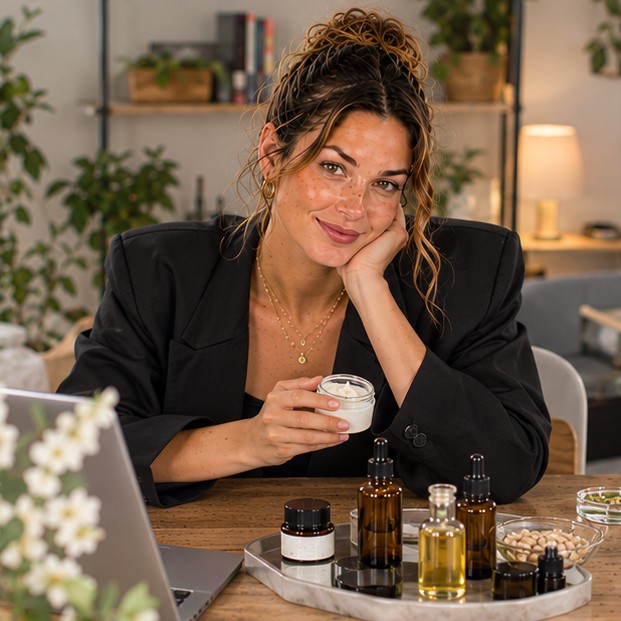 Skincare formulation requires an understanding of physiological changes within the dermis and epidermis across different life stages. As skin matures, cellular turnover slows, structural protein synthesis declines, and natural lipid production drops. Selecting active ingredients based on biological age allows for targeted interventions that support skin health at every decade.
Biological Characteristics and Active Focus for Age Thirty-Five
At age thirty-five, early signs of chronological and photo-aging begin to manifest. Fibroblast activity decreases, leading to a subtle reduction in collagen types one and three. Endogenous hyaluronic acid synthesis slows, while stress and urban exposure accelerate free radical damage.
The priority at thirty-five is prevention, antioxidants, and early structural support. Key actives include stable vitamin C derivatives, niacinamide, low-molecular-weight hyaluronic acid, and early signal peptides like Matrixyl.
Biological Characteristics and Active Focus for Age Forty-Five
By age forty-five, structural degradation accelerates. Collagen and elastin fiber networks break down, causing loss of skin firmness and deepening of expression lines. Transepidermal water loss increases due to altered epidermal lipid ratios, and microcirculation slows.
The strategy for age forty-five centers on cellular renewal and extracellular matrix repair. Essential actives include bio-retinoids such as bakuchiol, copper tripeptides, matrix-restoring peptide complexes, and skin-identical ceramides.
Biological Characteristics and Active Focus for Age Fifty-Five
At age fifty-five, hormonal changes during menopause cause a drop in estrogen levels, leading to rapid dermal thinning, bone resorption, loss of facial volume, and severe dryness. The skin barrier becomes fragile, and hyperpigmentation becomes more pronounced.
The formulation priority for age fifty-five is deep lipid restoration, phytoestrogen support, density enhancement, and intense pigmentation control. Key ingredients include resveratrol, soy or red clover phytoestrogens, liposomal ceramide NP, phytosterols, and high-concentration neurotransmitter-inhibiting peptides.
Temperature Limits and Phase Integration Rules
Maintaining strict temperature controls during formulating prevents the thermal destruction of heat-sensitive botanical and peptide ingredients.
Temperature Boundaries
Heat-sensitive active ingredients, such as cold-pressed seed oils, peptide solutions, botanical extracts, vitamins, and natural preservatives, decompose when subjected to high heat. When preparing oil-in-water emulsions, heat the primary oil phase and water phase in separate heat-resistant containers to temperatures between sixty-five and seventy degrees Celsius strictly to melt emulsifiers and solid waxes. Allow the base emulsion to cool under continuous, slow stirring. Introduce all heat-sensitive actives, bio-retinoids, peptides, and broad-spectrum preservatives exclusively during the cool-down phase after the temperature drops below thirty degrees Celsius.
Mixing Techniques
Incorporate fragile active ingredients into the cooled base emulsion using deliberate manual stirring with a sanitized glass rod or low-shear propeller mixer. Avoid high-speed homogenizers during the cool-down phase to prevent shearing delicate liposomes and complex protein structures.
Advantages of Targeted Custom Formulations Over Mass-Market Products
Commercial mass-market skincare products are typically formulated for long shelf stability under varying climate conditions, prioritizing shelf longevity over active concentration.
To achieve extended shelf stability, commercial manufacturers often rely on heavily refined mineral oils, synthetic silicones, and aggressive preservative systems. Highly refined oils do not spoil easily, but they lack essential fatty acids and native antioxidants. Heavy silicones offer immediate surface smoothing, but they do not contribute to long-term dermal repair. Furthermore, active ingredients are frequently used at minimal concentrations simply to fulfill marketing claims.
Custom formulations designed for specific age groups provide distinct advantages: Ingredients are incorporated at proven, therapeutic concentrations for maximum bio-availability. Formulas utilize cold-pressed, unrefined vegetable oils rich in native vitamins and essential omega fatty acids. Formulations omit synthetic silicones, mineral oil derivatives, artificial colorants, and aggressive synthetic fragrances. Products employ gentle, eco-certified broad-spectrum preservative systems that preserve product integrity while protecting the cutaneous microbiome.
Sanitation Standards and Equipment Disinfection
Proper laboratory sanitation prevents microbial contamination, ensuring formula stability and product safety.
Sanitize your entire workspace using a seventy percent isopropyl alcohol spray. Wash your hands thoroughly with antibacterial soap and wear sterile gloves. Clean all laboratory equipment, including heat-resistant glass beakers, stirring rods, digital precision scales, pipettes, and glass storage containers. Rinse every item thoroughly with distilled water to remove mineral residue, then spray liberally with seventy percent isopropyl alcohol. Allow all instruments and jars to air-dry completely on clean paper towels prior to weighing ingredients.
Recipe One: Radiance Boosting Antioxidant Fluid for Age Thirty-Five
A lightweight protective emulsion formulated to prevent early fine lines, boost cellular hydration, and neutralize environmental free radicals.
Ingredients
forty-six milliliters orange blossom hydrosol eight milliliters jojoba oil four grams Olivem 1000 emulsifier three grams niacinamide powder two grams sodium ascorbyl phosphate two milliliters vegetable glycerin zero point six milliliters Geogard 221 preservative
Preparation Steps
Step One Disinfect all glass beakers, stirring rods, precision scales, and airless pump bottles using seventy percent isopropyl alcohol. Step Two Combine eight milliliters of jojoba oil and four grams of Olivem 1000 emulsifier in a heat-resistant glass beaker for the oil phase. Step Three Measure forty-six milliliters of orange blossom hydrosol, three grams of niacinamide powder, two grams of sodium ascorbyl phosphate, and two milliliters of glycerin into a second beaker for the water phase. Step Four Heat both beakers in a gentle water bath until the emulsifier melts completely. Step Five Pour the heated water phase into the oil phase while blending with a mini-mixer for three minutes to form a uniform emulsion. Step Six Stir the emulsion slowly with a glass rod while allowing it to cool down below thirty degrees Celsius. Step Seven Add zero point six milliliters of Geogard 221 preservative to the cooled mixture. Step Eight Mix thoroughly for two minutes, verify the pH rests between five point five and six point zero, and transfer into a sterile opaque airless pump bottle.
Recipe Two: Firming Peptide Matrix Cream for Age Forty-Five
A restructuring emulsion designed to stimulate collagen synthesis, improve skin firmness, and restore barrier lipids.
Ingredients
forty-four milliliters rose hydrosol ten milliliters argan oil five grams Montanov 68 emulsifier four milliliters Matrixyl 3000 peptide complex one milliliter bakuchiol two milliliters ceramide complex zero point six milliliters Sharomix EG10 preservative
Preparation Steps
Step One Sanitize all glass containers, mixing rods, digital scales, and dark glass jars with isopropyl alcohol spray. Step Two Combine ten milliliters of argan oil and five grams of Montanov 68 emulsifier in the lipid phase beaker. Step Three Measure forty-four milliliters of rose hydrosol into the aqueous phase beaker. Step Four Heat both beakers in a water bath until the emulsifier is completely melted. Step Five Pour the water phase into the oil phase while mixing at high speed for three minutes until a smooth cream forms. Step Six Cool the cream base under gentle manual stirring until the temperature drops below thirty degrees Celsius. Step Seven Stir in four milliliters of Matrixyl 3000 peptide complex, one milliliter of bakuchiol, two milliliters of ceramide complex, and zero point six milliliters of Sharomix EG10 preservative. Step Eight Mix thoroughly, adjust the pH to five point five using a citric acid solution if necessary, and decant into a sterile dark amber glass jar.
Recipe Three: Deep Nourishing Lipid Density Cream for Age Fifty-Five
A rich, barrier-repairing formula created to address dermal thinning, severe dryness, and hormone-related elasticity loss.
Ingredients
forty milliliters lavender hydrosol twelve milliliters rosehip seed oil five grams Lamecreme emulsifier three milliliters red clover extract three milliliters phytosterol complex two grams d-panthenol zero point five milliliters Euxyl K712 preservative
Preparation Steps
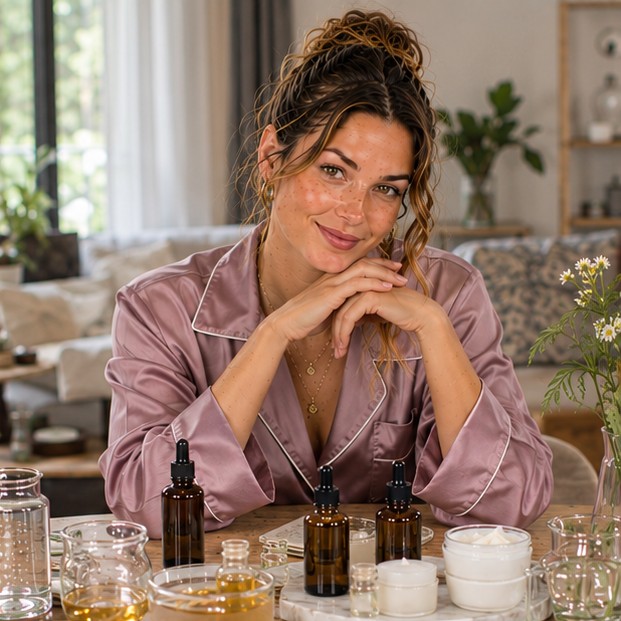 Step One Sterilize all laboratory tools, digital scales, glass pipettes, and airless dispenser bottles with isopropyl alcohol. Step Two Combine twelve milliliters of rosehip seed oil and five grams of Lamecreme emulsifier in the lipid phase beaker. Step Three Measure forty milliliters of lavender hydrosol and two grams of d-panthenol in the water phase beaker. Step Four Heat both beakers in a water bath until the emulsifier melts into a smooth liquid. Step Five Combine both phases and blend using a mini-mixer for three minutes until emulsified. Step Six Allow the cream to cool under slow stirring until the processing temperature drops below thirty degrees Celsius. Step Seven Add three milliliters of red clover extract, three milliliters of phytosterol complex, and zero point five milliliters of Euxyl K712 preservative. Step Eight Stir gently for two minutes, verify the pH reads between five point zero and five point five, and transfer the finished cream into a sterile airless container.
Application Guidelines and Layering Protocols
Adhering to proper hygienic practices and application methods ensures active ingredient bioavailability and prevents formulation contamination.
Dispense creams and fluids using sanitized cosmetic spatulas or airless pump packaging. Never insert unwashed fingers into open jars, as introduced bacteria can degrade active ingredients and overwhelm preservation systems. Apply products to freshly cleansed, slightly damp skin to enhance absorption. Allow each product layer to absorb for two to three minutes before applying subsequent products or sun protection. Always conduct a patch test on the inner forearm twenty-four hours before introducing a new formula to your face.
Storage Conditions and Product Shelf Life
Proper storage environments preserve active ingredient potency and prevent premature oxidation.
Store all finished cosmetics in dark amber glass containers or opaque airless pump bottles to shield light-sensitive lipids, peptides, and botanical extracts from ultraviolet radiation. Keep custom formulas inside a dedicated cosmetic refrigerator at stable temperatures between four and eight degrees Celsius. Cold storage slows lipid oxidation, preserves peptide structure, and inhibits microbial activity. Avoid storing cosmetics in bathrooms, where temperature and humidity fluctuate significantly. When prepared under sanitary conditions with appropriate broad-spectrum preservatives, custom formulations maintain full biological activity for three to four months.


Cosmetic ingredients and professional formulation blog
This section features expert materials on modern cosmetic actives. We cover peptides, polynucleotides PDRN, different forms of hyaluronic acid, retinoids, ceramides and other key components.
Special focus is given to active stability, ingredient compatibility and correct incorporation into formulas. You will find practical guides on working with anti-age actives, moisturizing complexes and barrier repair ingredients.
We examine how to properly combine myorelaxants with peptides, common mistakes when using unstable vitamin C forms and ways to improve the performance of moisturizing actives.
Separate materials are dedicated to base oils, extracts, emulsifiers and supporting ingredients. This helps create stable and effective formulas for both professional and home cosmetics.
The blog regularly publishes reviews of trending actives, comparisons of similar ingredients and step-by-step formulation recommendations. The content is aimed at formulators, technologists and anyone seriously involved in creating cosmetic products.
Why this blog is useful
Here you will find practical data on eye area care actives, lifting systems and ingredients that improve skin firmness and tone. We rely on real formulation experience and address the actual challenges that arise during product development.
You can also explore materials on skin protection and repair, depigmentation and anti-inflammatory actives. This approach supports a more systematic selection of ingredients.
FAQ
What topics are covered most often
The blog focuses on peptides, PDRN, hyaluronic acid of different molecular weights, retinoids, ceramides and their compatibility rules.
Are there practical recommendations on how to incorporate actives
Yes, most articles include practical notes on pH stability, incorporation temperature and common formulation mistakes.
Is the content only for professionals
The materials are useful both for formulators and technologists and for those who create cosmetics for personal use and want to understand how modern ingredients work.
Where can I go directly to the ingredients
All key actives are collected in the Actives section, while base components are available in base oils and related categories.



